
제출문 환경부장관귀하 본보고서를 베트남의환경산업시장현황조사및성공적진출전략수립 의 최종보고서로제출합니다. 연구책임자 : 노구해사무국장연구참여자 : 김태훈과장이재우주임유경숙주임 Le Dang Hoan 박사 ( 한-베환경산업협력센터 ) ( 사 ) 한국환경산업
|
|
|
- 의갑 마
- 7 years ago
- Views:
Transcription
1 최종보고서 베트남환경산업시장현황조사및 성공적진출전략수립 연구수행기관 ( 사 ) 한국환경산업협회 환경부 htp:/
2 제출문 환경부장관귀하 본보고서를 베트남의환경산업시장현황조사및성공적진출전략수립 의 최종보고서로제출합니다. 연구책임자 : 노구해사무국장연구참여자 : 김태훈과장이재우주임유경숙주임 Le Dang Hoan 박사 ( 한-베환경산업협력센터 ) ( 사 ) 한국환경산업협회
3 Abbreviation ADB AusAID CEETIA CENTEMA CITENCO CPRGS DANIDA DOE EPZ EIA FDI HCMC IP JICA JBIC MARD MDGs MOC MOF MOH MOI MONRE MOT MPI MRC MSW NEA NSEP Asian Development Bank Australian Agency International Development Centre for Environmental Engineering of Towns and Industrial Area Centre for Environmental Technology and Management City Environmental Company Comprehensive Poverty Reduction and Growth Strategy Danish International Development Agency Department of Environment Export Processing Zone Environment Impact Assessment Foreign Direct Investment Ho Chi Minh City Industrial Park Japan International Cooperation Agency Japan Bank for International Cooperation Ministry of Agriculture & Rural Development Millenium Development Goals Ministry of Construction Ministry of Fisheries Ministry of Health Ministry of Industry Ministry of Natural Resource and Environment Ministry of Transport Ministry of Planning and Investment Mekong River Commission Municipal Solid Waste National Environmental Agency National Strategies for Environmental Protection
4 SWM TCVN UNDP URENCO USAEP USAID USD VEPA VND VWSA WB WSS Solid Waste Management Vietnam National Standards United Nations Development Programme Urban Environment Company United States Asia Environmental Partnership United States Agency for International Development United States Dollar Vietnam Environment Protection Agency Vietnamese Dong The Vietnam Water Supply and Sewage Association World Bank Water Supply and Sanitation
5 차 례 제 1 장서론 1 1. 연구의필요성과목적 1 2. 연구의범위와내용 1 제 2 장베트남의일반개황 3 1. 국가일반개황 3 가. 일반개관 3 나. 정치및사회문화 4 2. 경제및산업발전동향 7 가. 경제지표및동향 7 나. 산업발전동향 9 제 3 장환경현황및주요정책 환경오염개황 분야별환경관리현황 20 가. 수질분야오염현황 20 나. 대기분야오염현황 30 다. 폐기물분야오염현황 33 라. 기타분야오염현황 환경행정조직체계 40 가.MoNRE 40 나.VEPA 43 다.MPI 주요규제기준및환경정책 45 가. 신환경보호법 45 나. 주요환경규제기준 46 다. 환경관련주요정책 49
6 제 4 장환경산업현황및시장동향 분야별환경기술및산업현황 52 가. 베트남의환경기술개관 52 나. 베트남의환경기술개발배경 53 다. 베트남의환경산업현황 환경시장규모 54 가. 전체환경시장규모 55 나. 분야별환경시장규모 분야별환경시장동향 66 가. 수질환경시장동향 66 나. 대기환경시장동향 68 다. 폐기물환경시장동향 주요국책환경사업및재원조달현황 72 가. 주요국책환경사업현황 72 나. 외국정부및국제기구와의프로젝트추진동향 76 다. 주요국책환경사업재원조달현황 경쟁국의베트남환경시장진출동향 82 가. 일본 82 다. 미국 83 다. 덴마크 84 제 5 장베트남환경시장진출전략 환경프로젝트발굴및입찰제도 85 가. 환경프로젝트형성단계에서의발굴 85 나.ODA 자금을활용한환경프로젝트접근 87 다. 베트남의입찰제도 국내업체진출현황및진출장애요인 94 가. 환경시장진출현황및국내건설업체진출동향 94 나. 프로젝트진행에따른진출장애요인과사업수행상의애로점 베트남환경시장특성및분야별진출유망분야 102 가. 베트남환경시장의특성 102
7 나. 분야별진출유망분야 베트남환경시장진출전략 114 가. 산업기반시설의시장수요에근거한매체별진출전략 114 나. 산업기반시설의시장수요에근거한매체별진출전략 116 다. 산업기반시설의시장수요에근거한매체별진출전략 120 베트남시장진출가이드 1. 사전준비 122 가. 진출전고려사항 122 나. 사업타당성조사 125 다. 베트남외국인투자관련정책및현황 법인설립단계 133 가. 법인설립 133 나. 대표사무소설립 136 다. 베트남기업의유형별분류 137 라. 법인설립시유의사항 교역단계 139 가. 통관 139 나. 수입관세 140 4현지경영 142 가. 노무관리 142 나. 금융및외환관리 144 다. 지적재산권관리 145 라. 경영시유의사항 상사분쟁처리 비즈니스관행및기타 148 가. 사전준비단계 148 나. 상담단계 149 다. 상담이후 150 라. 기타주의사항 베트남진출성공실패사례 152
8 부 록 A. 베트남신환경법전문 158 B. 베트남분야별환경규제기준 229 C.2010 년까지국제협력을필요로하는국책사업프로젝트 D. 현재진행중인對베트남환경협력프로젝트리스트 256 E. 베트남자연자원환경부및각성환경청연락망 258 F. 베트남환경관련단체및국제기구연락처 272 G. 베트남현지주요기업연락처 287 H.URENCO 조직도 296 I. 베트남건설규정 297 참고문헌 303
9 표 차례 < 표 2-1> 베트남의국가일반개황 3 < 표 2-2> 베트남국내경제지표 8 < 표 2-3> 주요대외거래지표 8 < 표 2-4> 업종별 GDP 구성비율 10 < 표 2-5>2010 년까지의베트남의각산업별성장률및비중목표 10 < 표 2-6>2010 년까지의베트남의주요지역별산업발전기본목표 11 < 표 2-7> 산업발전을위한투자금액수요 13 < 표 2-8> 베트남산업전반의투자재원조달계획 (2006 년 ~2010 년 ) 13 < 표 2-9> 한-베트남교역추이 14 < 표 2-10>2005 년한국의對베트남산업별투자 15 < 표 2-11>2005 년한국의對베트남지역별투자 17 < 표 3-1> 베트남주요도시의수자원지표 20 < 표 3-2> 지역별수자원량현황 21 < 표 3-3> 베트남물수요량변화에대한추산 22 < 표 3-4> 지역별수질현황 23 < 표 3-5> 홍강삼각주지역의연안수질오염현황 24 < 표 3-6> 메콩강삼각주지역의연안수질오염현황 26 < 표 3-7> 주요도시의하천수질 28 < 표 3-8>6 개의강어귀의오염물질총용해도 29 < 표 3-9> 베트남연안지역의기름유출통계 29 < 표 3-10> 주요도시의 CO 및 NO 2 농도비교 31 < 표 3-11> 베트남산업분야의주요대기오염원 32 < 표 3-12>2003 년베트남폐기물발생량 34 < 표 3-13> 베트남주요도시의도시고형폐기물성분 35 < 표 3-14> 베트남의료폐기물성분 35 < 표 3-15> 베트남대도시의산업폐기물발생량 36 < 표 3-16> 하노이폐기물의성분함량및변화 37 < 표 3-17> 몇몇주요도시매립지의침출수수질비교 38 < 표 3-18> 아시아국가들의도시폐기물재활용률비교 39 < 표 3-19> 각강우관측소에서의 ph5.5 의강우빈도 39 < 표 3-20> 베트남의수자원관리핵심책임부서의기능 42 < 표 3-21> 베트남의수자원관리책임부서규모 42
10 < 표 3-22> 지표수수질기준 47 < 표 3-23> 연안수질기준 47 < 표 3-24> 지하수수질기준 47 < 표 3-25> 대기환경질기준 48 < 표 3-26> 의료폐기물허용배출기준 48 < 표 3-27> 공공지역및거주지역의최대소음허용기준 49 < 표 3-28> 토양내살충제잔류농도최대허용기준 49 < 표 3-29> 분야별배출부과금적용기준 51 < 표 4-1> 베트남환경설비및서비스시장규모 56 < 표 4-2> 과거 10 년간베트남 WSS 프로젝트투자규모 (2003 년 ) 59 < 표 4-3> 베트남정부의 2010 년용수공급계획목표 60 < 표 4-4> 폐기물시장규모및예상성장률 61 < 표 4-5> 폐기물의종류별발생현황예측및투자수요 62 < 표 4-6> 과거및향후폐기물관리예산 65 < 표 4-7> 주요도시의국제협력을통한하수시스템구축프로젝트 68 < 표 4-8> 베트남전력량의향후수요전망 69 < 표 4-9> 국가환경보호전략 (NSEP) 의고형폐기물관리목표 70 < 표 4-10> 폐기물유형별연간발생량변화 72 < 표 4-11> 베트남 NSEP 의주요장단기목표 73 < 표 4-12> 월드뱅크와협력중인프로젝트리스트현황 76 < 표 4-13>ADB 와협력중인프로젝트리스트현황 78 < 표 4-14> 베트남의자원세징수현황 81 < 표 4-15> 공업폐수비의분류 82 < 표 4-16>EbaraGroup 의베트남환경시장에서의최근실적 83 < 표 4-17> 주요경쟁국과베트남과의환경협력프로젝트진행현황 84 < 표 5-1> 투자관련시행령의주요내용비교 90 < 표 5-2> 베트남의주요입찰사이트비교 93 < 표 5-3> 국내환경업체의베트남환경시장진출현황 94 < 표 5-4>2006 년도국내건설업체베트남진출현황 95 < 표 5-5> 하노이시상수도보급률및서비스만족도 104 < 표 5-6> 호치민시의오염배출원및오염물질배출현황 107 < 표 5-7> 호치민시자동차수증가와오염물질배출현황 108 < 표 5-8>BOT 및외국인투자의발전소건설계획 108
11 < 표 5-9>2006~2010 년주요발전소건설지역및프로젝트리스트 109 < 표 5-10> 베트남석유정제시설설립계획 115 < 표 5-11> 제지산업분야연간생산규모 115 < 표 6-1> 남부와북부투자지역비교 126 < 표 6-2> 투자허가기관비교 127 < 표 6-3> 베트남의투자진행절차 128 < 표 6-4> 중국- 베트남투자여건비교 129 < 표 6-5> 투자허가를위한준비서류 129 < 표 6-6> 주요국별對베트남투자현황 130 < 표 6-7> 각각의투자형태에따른장단점비교 135 < 표 6-8> 베트남내외국기업연락사무소및지사설립조건변화 136 < 표 6-9> 상법시행령 72 조시행에따른대표사무소설립여건의변화 137 < 표 6-10> 베트남직종별임금수준 143 < 표 6-11> 투자프로젝트의분쟁해결 147 그림 차례 < 그림 1-1> 연구조사의주요내용 2 < 그림 2-1> 베트남의지형 4 < 그림 2-2> 베트남주요행정구역지도 12 < 그림 3-1> 지역별환경오염분포현황 19 < 그림 3-2> 베트남주요하천의 BOD 5 농도변화 27 < 그림 3-3> 베트남주요하천의 NH 4 농도변화 27 < 그림 3-4> 산업단지에서의연평균미세먼지농도변화 30 < 그림 3-5> 산업별유해성폐기물발생원 37 < 그림 3-6> 지역별폐기물발생비율 37 < 그림 3-7>MoNRE 조직도 41 < 그림 3-8>VEPA 조직도 43 < 그림 3-9>MPI 조직도 45 < 그림 4-1> 산업단지에대한국가별직접투자규모 55 < 그림 4-2> 수처리분야총지출현황 58 < 그림 4-3> 베트남의수처리프로젝트재원조달현황 60
12 < 그림 4-4> 폐기물관리투자액증가추이 62 < 그림 4-5> 폐기물관리분야의투자재원구성비 63 < 그림 4-6> 고형폐기물관리시스템의운영및유지비지출현황 64 < 그림 4-7> 고형폐기물관리를위한투자대비지출현황 64 < 그림 4-8> 베트남수처리시장진입의장애요인 66 < 그림 5-1> 베트남의산업단지분포현황 117
13 제 1 장서론 1. 연구의필요성과목적 o 최근중국에이어아시아국가의핵심적인시장으로부상하고있는베트남은 8,000 만이상의인구와풍부한자원, 주변국가들로확대진출을모색할수있는지정학적위치, 정치적사회적안정성등의강점을바탕으로주목받고있다. 특히최근수년간 7~8% 이상의 GDP 증가율을보이면서꾸준한고성장을기록하고있으며이러한성장세는앞으로도계속해서이어질것으로 ADB는전망하고있어일본을비롯한많은국가들이베트남시장에커다란관심을기울이고있다. o 우리나라의경우도 2005년기준총투자금액규모면에서 4위를기록하는등다양한투자활동을통해베트남과의교역량을점차확대해나가는추세이며최근산업화, 도시화에따른환경시장의수요증가에힘입어정부차원의교류강화및민간기업의진출이활발해지고있는추세이다. o 이에베트남환경시장의동향을파악하고주요프로젝트사례들을수집하여현지 환경수요를예측하고이를바탕으로국내환경산업의베트남환경시장진출을지원하 기위한방안을마련하는데본조사의목적이있다. 2. 연구의범위와내용 본조사의수행을위해서각종문헌을비롯하여연구수행기관이확보하고있는베트남시장에관한다양한자료를기초로하여보고서를작성하며특히베트남현지의한-베환경산업협력센터의협조하에베트남자연자원환경부, 공업부및환경유관기관들을통한자료획득에전력한다. 또한, 현지전문가의의견및중간 최종보고회를통한자문위원의의견을적극수렴하여최대한반영한다. 아울러연구의주요조사항목은대기, 수질, 폐기물등의베트남의매체별환경현황과환경법규, 정부조직및유관기관현황, 시장동향및진출전략으로범위를제한한다
14 주요항목 세부내용 환경현황및주요정책 베트남의환경오염현황환경조직, 주요규제기준등에관한조사 환경산업및시장동향 진출전략수립 베트남시장진출가이드 베트남의매체별환경시장현황및주요환경프로젝트연구상기의자료를바탕으로진출유망분야를선정하고효과적인진출방안을제시베트남시장진출시절차와유의사항등에대해소개 결론 결론도출및요약 < 그림 1-1> 연구조사의주요내용 - 2 -
15 제 2 장베트남의일반개황 1. 국가일반개황 가. 일반개관 < 표 2-1> 베트남의국가일반개황 국명베트남사회주의공화국 (SocialistRepublicofVietnam) 건국일 정치사회주의공화제 ( 공산당이유일정당 ) 행정구역 5 개직할시와 59 개성으로구성, 주요도시로는호치민시 (573 만명 ), 하노이시 (300 만명 ), 하이퐁시 (177 만명 ), 다낭시 (76 만명 ), 껀터시 (112 만명 ) 수도하노이시 ( 인구 300 만명 ) 면적 331,114 km2 ( 한반도의약 1.5 배 ) 기 후 남부는열대성기후, 북부는고온의몬순기후, 우기 (5~9 월 ), 건기 (10 월 ~3 월 ) 인구 8,440 만 (2006 년기준 ), 인구의 50% 이상이 25 세이하 민 족 언어베트남어 국정공휴일 베트남족 89%, 타이, 므엉, 크메르등 53 개산악소수민족, 화교 ( 약 100 만 ) 신정 (1.1), 구정 ( 음력 12.30~1.3), 전승기념일 (4.30), 노동절 (5.1), 건국기념일 (9.2) 종교불교 (1,500 만명 ), 카톨릭 (600 만명 ), 개신교 (30 만명 ) 주요자원 석유, 석탄, 망간, 크롬, 니켈, 조림자원등풍부 산업구조농업 (56.8%), 산업 (37%), 서비스업 (6.2%) 시차한국보다 2 시간늦음 경제지표 (2005 년 ) 한 - 베관계 GDP 교역 총규모 :517 억불 ( 전년대비 8.4% 증가 ) 1 인당 :617 불 약 657 억불 - 수출 :322 억불, 수입 :335 억불 - 무역수지 :13 억불적자 환율 US$= 15,842dong( 월현재 ) 월수교교역규모 39 억불 ( 우리나라흑자 25.8 억불 ) *2005 년도기준우리나라는베트남의제 6 위교역대상국 자료 : World FactBook, 국가정보원, 주베트남대사관 - 3 -
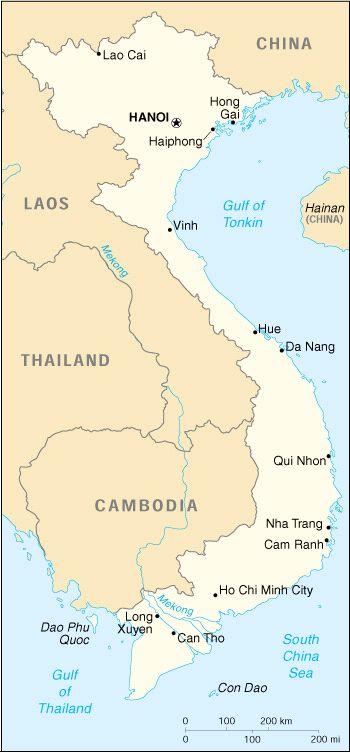
16 인도차이나반도동부에위치 -중국, 라오스, 캄보디아에인접 -최북단과최남단거리는 1,750 km 북부홍강과남부의메콩강이주요생활중심지 -홍강은중국운남성에서발원하여통킹만으로흐르는 1,200 km ( 베트남통과구간은 475 km ) 에달하는북부지역의젖줄 -메콩강은연장 4,220 km ( 베트남통과구간은 200 km ) 으로티벳에서발원해중국, 미얀마, 라오스, 캄보디아등을통과 높이 2,400m 이상되는산이 11 개있으며, 가장높은산은판시판 (PhanSiPan,3,143m) 베트남동쪽의바다는일반적으로 남중국해 (South ChinaSea) 로표기되나, 베트남은 동해 (EastSea) 로표기 -동해에있는 쯔엉사 (TruongSa) 군도는원유와구리, 망간, 주석, 알루미늄등많은천연자원이매장되어있어베트남, 중국, 필리핀, 말련등주변여러나라들이영유권을주장 < 그림 2-1> 베트남의지형 나. 정치및사회문화 (1) 정치동향및국제관계베트남은 1986년제6차공산당전당대회에서응우옌반린이서기장에취임하면서 도이머이 ( 刷新 ) 정책을채택하고, 정부권한을강화하면서경제개혁을추진년8% 이상의경제성장률을기록하는괄목할만한성장을이루어내어여타동남아국가에비해정치경제사회적으로안정된국정운영을보이고있다. 베트남사회를지배하는유일한세력은공산당이며, 당원수는약 248 만명이다 년 4 월제 9 차전당대회에서농득마인 (Nong Duc Manh) 이당서기장으로선 출되어현재 2006 년 4 월 10 차전당대회에서유임되었으며, 공산당의주요의사결 - 4 -
17 정기구로는정치국상무위원회, 정치국, 중앙집행위원회가있다. 국가주석은임기 5 년으로국회의원중에서국회에서선출되고국가원수로서대내외적으로국가를대표한다. 아울러 2006년 6월국회주석에윙푸쫑, 국가주석에윙민찍, 수상에윙떵융이새롭게임명되었다. 국가의최고권력기관이며, 유일한입법기관인국회는의원수 550명 ( 임기 4년 ) 으로매년 2회의정기회의를갖는다. 최근의동향으로베트남공산당체제하에 1976년통일이후남부출신의수상, 중부출신의국가주석, 북부출신의당서기장등권력의 3축을중심으로안정적인정권을유지해오고있었으나, 열린이번 10차공산당전당대회를통해현농득마인당서기를제외하고국가주석과수상, 서기국서기까지남부출신의경제전문가들이장악한것으로알려지면서향후베트남의경제개혁이가속화될것으로기대되고있다. 또한이번전당대회를통해지난 1930년노동자의당으로출범한베트남공산당이당헌을개정, 자본가의공산당영입을허용함으로써막대한사회경제적영향을미칠것으로전망되고있다. 국제관계는러시아와의동맹관계가기조를이뤘으나경제실리위주로전환하여 1995년 ASEAN(Association of South-East Asian Nations: 동남아시아국가연합 ) 에가입하였고, 1964년이래단절된미국과의국교는 1995년정상화되었다 년전쟁까지치렀던중국과는캄보디아문제, 국경분쟁등으로한때멀어졌으나 1991년관계회복에도달했다. 최근의중국및미국과의관계개선은 월종전후최초로판반카이수상가미국을성공적으로방문하였고국경마찰등역사적으로잦은분쟁을겪은중국과의대외관계도동년 7월루옹국가주석이중국을방문하여중국과의해상및육상국경분쟁을 2008년까지해결하기로합의하는등주변강대국들과의관계가호전되고있다. (2) 사회동향현재베트남은공무원및국영기업간부의부정부패만연으로인해경제전체의효율성이저하되고있으며. 부정부패해소를위해판반카이수상은반부패위원회를신설하였고국회도국가감사원의설립을검토하고있다
18 10차전당대회를앞두고발각된 1) PMU18(Project Management Unit : 사업관리단 ) 프로젝트횡령사건 으로불리는일본 ODA 자금의대규모횡령사건에정부내많은고위관리들이연류된것으로알려지면서전당대회에까지영향을미치는등큰파문을초래하고있으며, 10차공산당전당대회이후부정부패척결을위한조치가강화될것으로기대고있다. 베트남은중앙고원지역에많은소수종족이산재해있는데이들의생활여건향상과경제여건개선조치를통해 2001년초에있었던것과같은대규모소요사태예방에주력하고있으며, 특히라오스와의국경산악지대에거주하고있는몽족과의마찰이지속되고있는데이는몽족들이과거베트남전쟁시미국을도와북베트남과대립하였고현재에도체제불안요인으로작용하고있다. 빈곤퇴치와관련해서는최근들어정부의각종지원사업과국제원조에힘입어빈곤퇴치에성과를거둬빈곤층이감소한것으로나타나원조국들의긍정적인반응을얻고있으며, 2004년기준베트남내빈곤층 ( 한달수입이약 6.3달러 ) 이전체인구의 9% 미만으로감소한것으로발표한바있다. 특히베트남정부는 2005년 9월초대대적인빈곤층지원사업을위해 2010년까지 39억 2,000만달러를투입하기로결정하고빈곤층에대한우대금리대출, 재활사업, 보건, 직업훈련, 교육부문등에대한장기적지원을계획하고있다. (3) 문화 ( 가 ) 종교베트남에는불교신자가가장많으며신자수는 1,500만명정도이고, 도시나지방을막론하고전국적으로사찰이많이산재되어있다. 가톨릭은 16세기경부터포르투갈이나프랑스사제들에의해전파된것으로알려지고있는데, 신자는약 600만명이며, 17세기경에전해진기독교는신자가인구의약 30만명정도로알려지고있다. 베트남의토속신앙은도교와유교, 불교의영향을많이받았는데, 일상생활속에는미신적요소가많이남아있어가정과사무실, 상점등에지신 ( 地神 ), 부 ( 富 ) 의신을모셔놓고복을기원하기도하고, 고사를지내거나굿을하는풍속도있으며, 사람이죽었을때는길일을택해장례날짜를정하기도한다. 1) 교통수산하 PMU( 사업관리단 ) 의단장이사업자금 120 만달러를착복한사건임. 아울러, PMU 가감독하는대형인프라구축사업이대부분 JBIC( 일본국제협력은행 ) 을통한일본 ODA( 공공개발자금 ) 자금이많음
19 ( 나 ) 전통문화ㆍ의상베트남여성들이즐겨입는전통의상인아오자이 (ao dai, 아오는옷또는저고리, 자이는길다는의미, 남부에서는아오야이로발음 ) 는 ' 긴옷 ' 이란의미를갖고있으며, 19세기부터입기시작한것으로알려지고있으며, 76년사회주의정부가노동에부적합하고퇴폐적이라고착용을금지했다가 86년도이머이정책추진이후완화되었으며, 최근에는각종예식에서즐겨착용하고여고생들의교복이나주요기업체의제복으로도사용되고있다. ( 다 ) 생활풍습음력정월초하루 ( 뗏, Tet) 는베트남에서가장큰명절로서초하루에는일가친척, 스승, 이웃들을방문해서로덕담을나누고복을기원하며, 어린이들에게는세배돈을주는풍습이있다. 또한베트남인들은 9를으뜸이자신성한수로 13은액운의상징으로여기며, 숫자 5는베트남어로위험의뜻과비슷하여숫자의합이 5가되거나 15, 25등 5로끝나면이를기피한다. ( 라 ) 민족성베트남인들은스스로근면ㆍ성실ㆍ인내ㆍ친절ㆍ용감성등의국민성을지니고있다고생각 " 오랜세월동안의끊임없는외침을성공적으로물리친국민 " 으로자신들을표현하고자하며, 무엇보다외세에굴복하지않은역사를지닌나라라는자부심이매우강하다. 북부지역출신사람들은근면형으로인내심이강하고호치민주석등베트남혁명가의대부분이북부출신인반면, 남부지역의사람들은풍부한농산물등자연조건의영향을받아개방적이고낙천적이며자유분망한성격을지닌사람들이많다. 하노이와호치민간에는인구 ( 하노이약 3백만, 호치민약 6백만 ) 와소득 ( 하노이약 8백불, 호치민약 1천4백불 ) 에서상당한차이를보이고있다. 2. 경제및산업발전동향 가. 경제지표및동향 사회주의공화국인베트남은 1986 년대외개방정책인도이머이 ( 刷新 ) 정책을추진하면 서경제가비약적으로발전하게되었으며특히아시아외환위기이후미국과의무역협 - 7 -
20 정이발효되면서연평균 7% 이상의고속경제성장을지속하고있다. 2005년에는제2위수출품목인섬유및직물산업을중심으로하는제조업부문이 3년연속 10% 이상의성장을보이고있는가운데소매, 금융, 통신등의민간부문이확대되면서 8.4% 의고도성장을이루었으며, 금년에는고유가지속과선진국의수입수요감소전망에도불구하고베트남의 WTO 가입가능성이더욱커짐에따라그동안쿼터제한을받아오던베트남섬유류의대미수출이증대될것으로예상되는등섬유산업의호조지속으로 7.7% 의성장을달성할것으로전망되고있다. < 표 2-2> 베트남국내경제지표 ( 단위 : %) 구 분 ( 예상치 ) 경제성장률 재정수지 /GDP 소비자물가상승률 아울러, 내수활황에힘입어제조업이성장을주도하고있으며, 산업생산의중심이종래 의호치민중심남부지역에서하노이, 하이퐁지역으로확대되고있다. 베트남의주요수출품목으로는원유 (22.1%), 섬유 의류 (17.1%), 신발 (10.5%), 수산물 (9.4%) 이며, 베트남의주요수입품목으로는기계 (17.5%), 정유제품 (11.5%), 철강 (8.3%), 섬유부자재 (7.2%) 등이큰비중을차지한다. < 표 2-3> 주요대외거래지표 ( 단위 : 억달러, %) 구분 경상수지 경상수지 /GDP 상품수지 수출 수입 FDI유입액 외환보유액
21 < 표 2-3> 에서와같이베트남의외환보유액은상품수지적자의확대에도불구하고외국인투자및대외원조의유입확대와함께베트남해외교포의송금이증가하면서지속적으로증가하고있으며, 특히베트남중앙은행은베트남해외교포로부터의송금이 2005년중 40억달러에이른것으로추정하고있으며 2007년에는비공식적인송금까지포함할경우 70억달러에이를것으로전망하고있다. 아울러, 베트남은 WTO 가입을위한사전신청을제출해놓고있으며, EU, 한국, 중국, 일본, 스위스등 20 개국과는 WTO 가입의전제조건인양자협상을이미타결하는등 2006 년까지정식가입하는것을목표로하고있다. 베트남 WTO가입의최대이해당사국인미국과의양자협상이금융, 정보통신, 유통업, 농업, 서비스부문에의의견차이가심하고, 국내적으로도 30여개의관련국내법을개정해야하는등어려움이많으나, 양국이적극적인협상을진행하고있어금년내가입가능성이커지고있다. 2003년외국인투자법시행령, 노동법등을개정하여외국인투자허용분야및인센티브를확대하고제조업및유전개발분야에대한투자를장려함으로써 FDI( 외국인직접투자 ) 유입액이증가세를보이고있으며, 베트남계획투자부 (MPI) 는 2005년중외국인투자승인액이약 798건, 40억달러를기록하였다고발표하였으며, 동년말기준외국인투자유입잔액은 270억달러에이르고있다. 또한, 2005 년중외국인투자를형태별로보면전체승인액의 60% 가공업부문에집중 되어있으며, 지역별로는공업지대및수출가공지대로의투자가 1/3 을차지하고있어 외국인직접투자가베트남경제발전에중요한역할을하고있다. 나. 산업발전동향 (1) 현황 2005년까지전국에 20,000여개의산업체가활동하고있는데이는 2000년보다 2배증가한수치이다. 베트남수출액은 2000년에 144억 USD에서 2005년에는 322.3억 USD로크게증가하였고이중공업품수출금액이 76% 의비율을차지하고있으며, 또한공업발전분야에서국내원자재사용에의한가공공업비중이증가할추세이다
22 그러나이러한베트남산업의발전을위해서는극복해야할문제가많이남아있다. 베트남이 WTO에가입한후지속적인발전을유지할수있는대책을수립해야하고국제사회의수요에걸맞는방안을강구해야한다. 이는베트남산업에서기술이아직낙후되어있으며생산능률이낮고생산품질이아직높지않으며관리능력이아직취약해서생산품들의경쟁력이낮기때문이다. 특히환경분야에서문제는매우심각하다. 기술과시설이낙후되고관리자및근로자의환경의식이아직낮아서지속가능한개발을위해서는환경산업에역량을집중해야할필요성이제기되고있다. (2) 베트남산업발전계획높은성장률의유지및 GDP에서의공업부문비중증가를위해 2006년 4월 4일베트남수상은 2020년을목표로한베트남 개년산업개발전략결정서 (Decision 73/2003/QD-TTg) 를승인하였으며, 이전략은국내산업개발을위한주요목표및전략을수립하는것으로서특히베트남을 6개지역으로나누어각해당지역에적합한산업및개발목표를설정하였다. < 표 2-4> 업종별 GDP 구성비율 영역별구분 비중 (%) 농 임 수산업 21 공업 & 건설 41 서비스업 38 자료 : 통계청 (General Statistical Office) < 표 2-5> 2010 년까지의베트남의각산업별성장률및비중목표 분야별산업 총분야자원개발산업기간산업기계산업금속제련산업전자및 IT 산업화학농임수산물가공섬유, 봉제, 가죽및신발건축자재생산전력가스등에너지산업기타산업 성장률 (%) 비중 (%)
23 < 표 2-6> 2010 년까지의베트남의주요지역별산업발전기본목표 구분지역주요산업부문발전목표 지역 1 북부산악지역 14 개성 : 박깐 (BacKan), 박장 (BacGiang), 까오방수력발전소, (CaoBang), 디엔비엔 (DienBien), 화빙 (Hoa 화학제품, 비료, Binh), 하장 (HaGiang), 라이쩌우 (LaiChau), 광산개발, 랑썬 (LangSon), 라오까이 (LaoCai), 푸토농산-임산물, (PhuTho), 썬라 (SonLa), 타이응웬 (Thai 야금, 건축재료 Nguyen), 뚜웬꽝 (TuyenQuang), 옌바이생산, 농기계생산 (YenBai) -GDP 비중 : 23~24% - 연간성장률 : 14.5%~15.5% 홍하델타및북부중심지역 15 개성 : 박닝 (BacNinh), 하노이 (HaNoi), 하떠이 (Ha 화력발전소, 기계, -GDP 비중 : Tay), 하이즈엉 (HaiDuong), 하이퐁 (Hai 전자, 통신기술, 46~47% 지역 2 Phong), 하남 (HaNam), 흥옌 (HungYen), 화학제품, 야금 -연간성장률 : 남딩 (Nam Dinh), 닝빙 (NinhBinh), 응에안광산개발, 14.5~15.5% (NgheAn), 꽝닝 (QuangNinh), 타이빙 (Thai 건축재료생산 Binh), 타잉화 (ThanhHoa), 빈푹 (VinhPhuc) 해안지역 10 개성 : 빙딩 (BinhDinh), 다낭 (DaNang), 카인화 (KhanhHoa), 닝투언 (NinhThuan), 푸옌지역 3 (PhuYen), 꽝빙 (QuangBinh), 꽝남 (Quang Nam), 꽝응아이 (QuangNgai), 꽝찌 (Quang Tri), 트어티엔-후에 (ThuaThien-Hue) 고원지대 4개성 : 지역 4 닥락 (Daklak), 닥농 (DakNong), 자라이 (Gia Lai), 꼰뚬 (KonTum) 동, 남부지역 8개성 : 바리어-붕따우 (BaRia-VungTau), 빙즈엉 (BinhDuong), 빈푹 (Binh 지역 5 Phuoc), 빙투언 (BinhThuan), 동나이 (DongNai), 럼동 (Lam Dong), 호치민시 (Hochiminhcity), 떠이닝 (TayNinh) 메콩델타지역 13 개성 : 안장 (AnGian), 박리에우 (BacLieu), 벤쩨 (BenTre), 껀터 (CanTho), 동탑 (Dong 지역 6 Thap), 허우장 (Hau Giang), 끼엔장 (Kien Giang), 롱안 (LongAn), 까마우 (CaMau), 쏙장 (SocTrang), 띠엔장 (TienGiang), 짜빈 (TraVinh), 빈롱 (VinhLong) 농임수산가공업, 석유정제, 기계제조, 건축재료생산 -GDP 비중 : 46~47% - 연간성장률 : 15.5~16.5% -GDP 비중 : 수력발전소, 고무, 13~14% 종이, 광산개발, -연간성장률 : bauxite 17.8~18.7% 석유개발, 전기, 농임토산, 전자, 소프트웨어, 화학약품 농임수산가공업, 농산물처리및보관시설, 조선업 -GDP 비중 : 51%~52% - 연간성장률 : 13.2%~14.2% -GDP 비중 : 26~27% - 연간성장률 : 14.4~15.4%
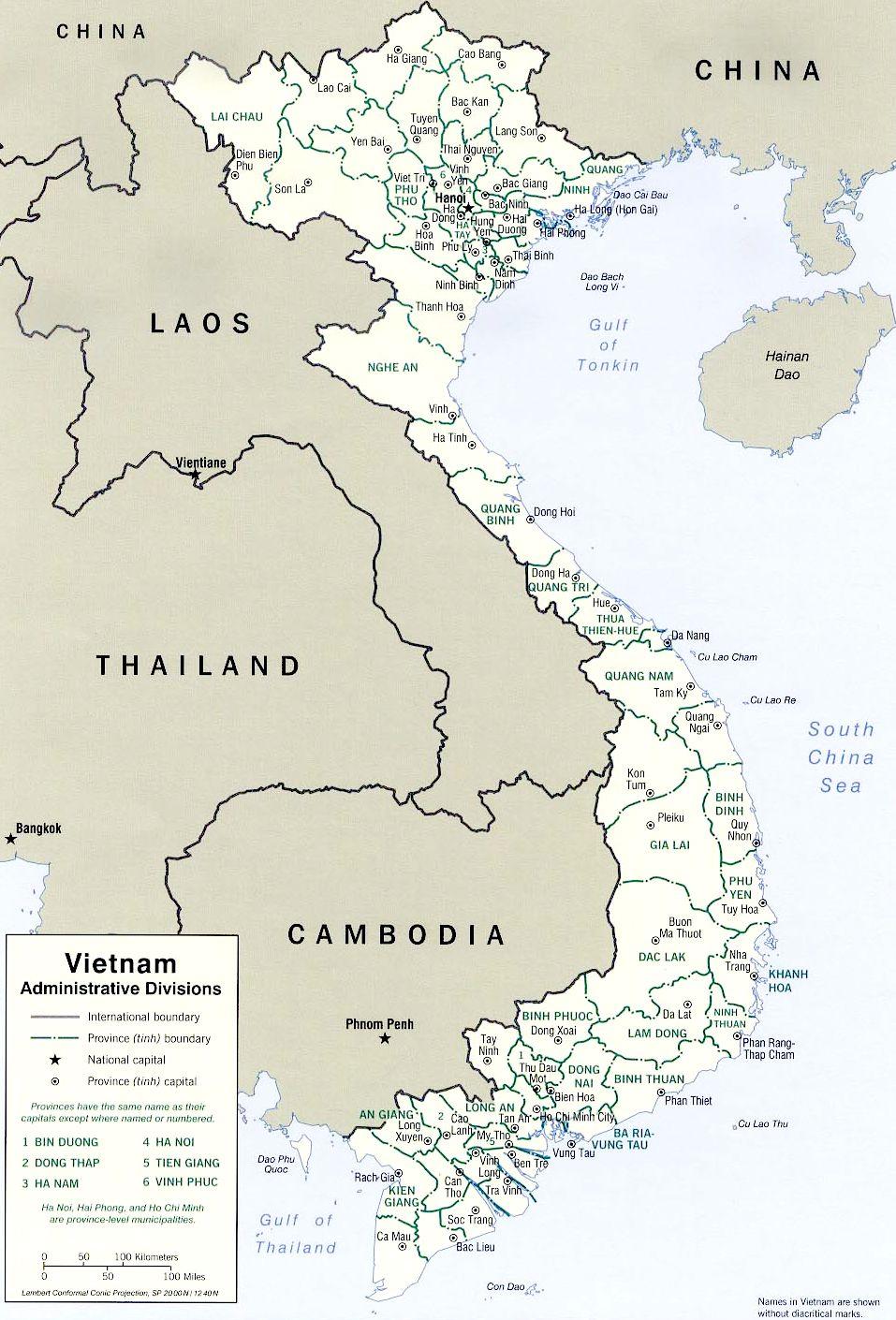
24 < 그림 2-2> 베트남주요행정구역지도
25 < 표 2-7> 산업발전을위한투자금액수요 산업전체 (10 억 VND) 2006 년 ~2010 년 지역 1 3,5~4 (%) 지역 2 23~24 (%) 지역 3 6~7 (%) 지역 4 1~1,5 (%) 지역 5 54~55 (%) 지역 6 10~11 (%) 자료 : 베트남공업부내부보고서 위표에서볼수있듯이주로하노이와호치민시가있는제 2 지역과 5 지역이집중적 이투자와더불어산업발전을이룰것으로예상된다. < 표 2-8> 베트남산업전반의투자재원조달계획 (2006년 ~2010년 ) 투자재원 재원비율 (%, 2006년 ~2010년 ) 총 100 ODA 5 ~ 6 FDI 26 ~ 27 국가예산 21 ~ 22 예산내국가신용 13 ~ 14 기타금액 46 ~ 47 자료 : 베트남공업부내부보고서 베트남산업단지는 2005년현재전국에 131개의산업단지 (IPs: Industry Parks) 가분포하고있으며용지면적은 18,000 ha에이른다. 베트남정부는 2020년까지산업단지면적을 60,000~80,000ha까지확장시키는한편, 외국투자사업을더많이유치하여전산업단지를공장이나기업의입주를완료시키는것을기본적인발전방향으로삼고있다. 또한공업단지내의환경보호시설을위해선진적인우수환경처리시설을확보할수있도록환경처리문제에관심을높여가기위한노력을기울일계획이다. (3) 한국의對베트남진출동향 한국과베트남은 수교이후양국관계가지속적으로심화발전시켜나
26 가고있으며, 특히교역부분에서는 2004 년도기준 39 억달러로우리나라는베트 남의제 6 위교역대상국이다. < 표 2-9> 한 베트남교역추이 ( 단위 : 백만불, %) 구분 총교역 1,831.2 (18.6) 1,841.7 (0.6) 1,545.2 (-16.1) 1,709.4 (10.6) 2,008.5 (17.5) 2,117.4 (5.4) 2,710.5 (28.0) 3,071.9 (13.3) 3,928.9 (27.9) 수출 1,599.1 (18.4) 1,603.1 (0.3) 1,361.4 (-15.1) 1,445.2 (6.2) 1,686.0 (16.7) 1,731.7 (2.7) (29.4) 2,561.2 (14.3) 3,255.6 (27.1) 수입 (19.9) (2.8) (-22.9) (43.7) (22.0) (19.6) (21.9) (8.6) (31.8) 무역수지 1, , , , , , , , ,582.3 * 자료 : 한국무역협회, ( ) 는전년대비증가율 주요교역품목으로는수출은섬유류 ( 직물및원부자재 ), 자동차, 철강금속제품, 화 학 공업제품, 전기 전자제품이, 수입은수산물, 섬유제품, 농산물등이주를이루고 있다. ( 가 ) 투자동향추이및특징누계기준으로한국은총 1,042건 52억 9,500만불을투자하여건수기준 2위, 금액기준 4위의투자국이고, 이중 23억 8,310만불이실행되어실행률은 45% 를기록했다. 한국투자금액의총매출액은 88억 6,370만불이며, 약 13만명의베트남근로자를고용하고있다. 특히, 2005 년에는 206 건, 5 억 8080 만불투자로건수기준 1 위, 금액기준 3 위를기 록하여對베트남투자가나날이증가하고있다. 최근, 한국투자의특징으로는그동안전통적으로높았던제조업투자의비중이줄어 드는대신서비스업의비중이높아지고있다는점이다. 누계기준으로서비스업투 자비율은 25.5% 이나 2005 년한해서비스업비율은 49.1% 로크게올라갔다. 이는
27 건설, 부동산개발등의투자가크게증가하고있는것에기인한다. 투자형태로는 100% 단독투자가총 1,42건중 870건을차지하여 83.5% 의비중을나타내고있다. 베트남은사회주의국가로합작의경우, 주요의사결정 ( 정관개정, 대표이사선임등 ) 시만장일치제라는독소조항이있어, 일반제조업이대부분인한국기업들은의사결정이신속한 100% 단독투자를선호하고있다. 합작은토지와관련된투자 ( 오피스빌딩건설등 ) 시베트남측이토지를출자하여합작하는경우와 100% 내수판매대상투자시베트남시장에영향력있는파트너와합작등일부경우에한하는것이일반적이다. ( 나 ) 산업별, 지역별투자동향ㅇ산업별투자동향누계기준으로경공업이 40.04% 로가장많으며, 중공업 (27.00%), 아파트ㆍ오피스건설 (9.16%), 교통ㆍ통신 (5.04), 교육ㆍ건강ㆍ문화 (4.90) 가그뒤를따르고있다. 2005년에는교육ㆍ건강ㆍ문화 35.05%, 경공업 29.38%, 중공업 10.93%, 식품 7.15%, 아파트ㆍ오피스건설 7.06% 로나타났다. 교육ㆍ건강ㆍ문화투자가가장큰이유는광명병원의 1억9800만불투자 ( 05.9) 때문으로보이며, 식품은오리온의 4000만불투자 ( 05.9) 에기인한다. 전통적인주투자업종인제조업이여전히많으나, 대규모서비스투자도증가추세에있다. < 표 2-10> 2005년한국의對베트남산업별투자 ( 단위 : US$) 연번 산업 건수 투자금액 실행금액 I Industry ,769,418 5,812,113 1 Lightindustry ,603,872 3,721,014 2 Heavyindustry 36 63,500,546 2,091,099 3 Foodindustry 6 41,515, Construction 10 10,150,000 0 I Agriculture-Fishery-Forestry 13 9,650, Agriculture-Forestry 12 8,650, Fishery 1 1,000,000 0 I Services ,354,715 1,590,
28 7 Education-Healthcare-Culture 6 203,582, O fice& apartmentconstruction 3 40,991,880 1,590,000 9 Hotel-Tourism 2 25,500, Transportation& Telecommunication 3 4,020, Otherservices 14 11,260,000 0 합계 ,774,133 7,402,113 자료 : 계획투자부 (MPI: Ministry of Planning & Investment) ㅇ지역별투자동향누계기준으로남부지역이 801건 32억 3,420만불로북부지역 241건 19억 7,990만불을초과하여한국투자기업이남부지역을선호하는것으로나타났다. 그러나, 2005년한해만놓고볼때, 북부지역투자 (3억 290만불 ) 가남부지역 (2억 7,780만불 ) 보다많은것으로나타나북부지역투자가증가하고있는것으로나타났다. 그러나, 2005년북부투자가많은이유는대형프로젝트 ( 광명병원 1억 9,840만불 ) 에기인한바가크다고볼수있다. 통상적으로호치민, 하노이 2 대도시에는서비스투자가많이이루어졌으며, 전통 적인제조업투자는동나이, 빈증등호치민외곽지역이많은것으로나타났다. 누계기준으로, 지역별투자순위는동나이, 하노이, 호치민, 빈증, 하이퐁으로나타났 으며, 2005 년한해만놓고볼때는하노이, 빈증, 호치민, 동나이빈푹으로나타났다. 건수기준으로볼때전체한국투자 1,042건중 346건이투자된호치민이 1위로나타났는데, 이는베트남제1의상업도시인호치민이내수시장진출등에있어가장큰시장이며, 서비스투자적격지임에근거한다. 호치민은더이상노동집약적인산업은유치하려하지않으며. 실질적으로각종비용과인건비가높아노동집약적산업투자가유리하지않다. 하노이는베트남의수도로인프라건설및서비스투자가집중되고있으며, 노동집약적투자는동나이의값싼노동력과저렴한토지비용으로인기를끌고있다
29 < 표 2-11> 2005 년한국의對베트남지역별투자 ( 단위 : US$) 연번 지역 누계 (1988~2005) 2005 건수투자금액실행금액건수투자금액 북 부 지 역 1 Hanoi 80 1,054,569, ,778, ,458,835 2 HaiPhong ,513, ,152, ,721,999 3 Phu Tho ,322, ,328, ,500,000 4 VinhPhuc ,685,513 36,910, ,250,000 5 HungYen 20 57,512,942 21,153, ,400,000 6 QuangNinh 9 53,200,000 3,090, ,800,000 7 Nam Dinh 4 51,316, , HaiDuong 12 38,966,400 8,018, ,150,000 9 HoaBinh 1 20,000,000 1,000, BacNinh 4 12,772,000 6,500, ,650, BacGiang 6 11,435,820 6,838, HaTay 6 8,877,783 7,126, ThaiBinh 5 8,413, , HaNam 1 3,000, ,000, SonLa 2 3,000, , NinhBinh 2 2,664, ThaiNguyen 1 2,310, , NgheAn 1 2,000,000 2,000, ThanhHoa 2 360, , 소계 240 1,976,921, ,146, ,930,834 남 부 지 역 20 DongNai 136 1,298,396, ,798, ,416, HochiminhCity 346 1,053,317, ,502, ,441, BinhDuong ,421, ,050, ,155, KhanhHoa ,184, ,231, ,500, LongAn 14 54,940,214 20,922, ,600, TayNinh 26 41,126,425 10,195, ,130, DaNang 8 37,306,960 8,436, ,100, BaRia-VungTau 15 33,200,000 12,850, ,400, BinhThuan 10 16,360,000 1,100, Lam Dong 5 14,043,135 6,180, PhuYen 6 9,735,000 1,085, BinhPhuoc 4 9,435, ,300, BinhDinh 2 5,350,000 1,950, TienGiang 3 3,911,936 1,303, QuangNgai 2 3,460, , ThuaThien-Hue 1 2,950, , QuangNam 1 2,200,000 1,000,
30 37 CanTho 2 1,850, , KienGiang 2 1,668, , DongThap 3 1,600, , , VinhLong 1 1,200,000 2,941, BenTre 1 500, ,000 소계 801 3,234,156,057 1,272,589, ,843,299 해안지역 42 Ofshoreoil-gas exploitation 1 84,000, ,348, 소계 1 84,000, ,348, 합계 1,042 5,295,077,077 2,383,085, ,774,133 자료원 : 계획투자부 (MPI: Ministry of Planning & Investment) ( 다 ) 對베트남경제지원현황우리나라의경제지원현황으로는한국국제협력단 (KOICA) 의무상원조지원사업으로 1991~2003년간프로젝트 25건, 개발조사 5건, 연수생초청 (1,437명), 전문가파견 (33명), 물자지원 (68만불) 등의사업에 4,035만불지원을지원하였으며, 최근베트남전쟁격전지인중부지역에대한 40개초등학교건립사업 ('01~'02년간 2백만불 ), 병원건립사업 ('02~'04년간 3백만불 ) 등지원을통해베트남내반한감정순화에기여하고있다. 아울러한국수출입은행 EDCF 유상원조지원사업으로총 1 억 8,200 만불상당의 8 개사업을진행하였으며이는전체 EDCF 지원국누계기준금액면에서 4 위를차지 하는수치다. 과거한국의베트남전참여에대한인식과관련해서는불교의영향으로과거문제에집착않고매우현실적이어서현재베트남전참여와관련감정은거의없는것으로관찰되고있다. 이는베트남정부가베트남정부는 1945년프랑스와의전쟁후바로프랑스와수교했고, 1975년월남공산화직후미국에게수교제의등매우현실적인태도를보인것에서도알수있듯이 과거는묻어두고미래지향적인발전을위해협력하자 ('98.12월김대중전대통령방문시합의 ) 는자세를견지하고있기때문이다. 아울러, 베트남국민대부분도한국의경제발전기적, 한국과의경협, 한국의대베 트남의료 교육등각종지원사업추진과최근 한류 등으로한국에대해오히려 우호적또는긍정적인감정을가지고있는것으로파악되고있다
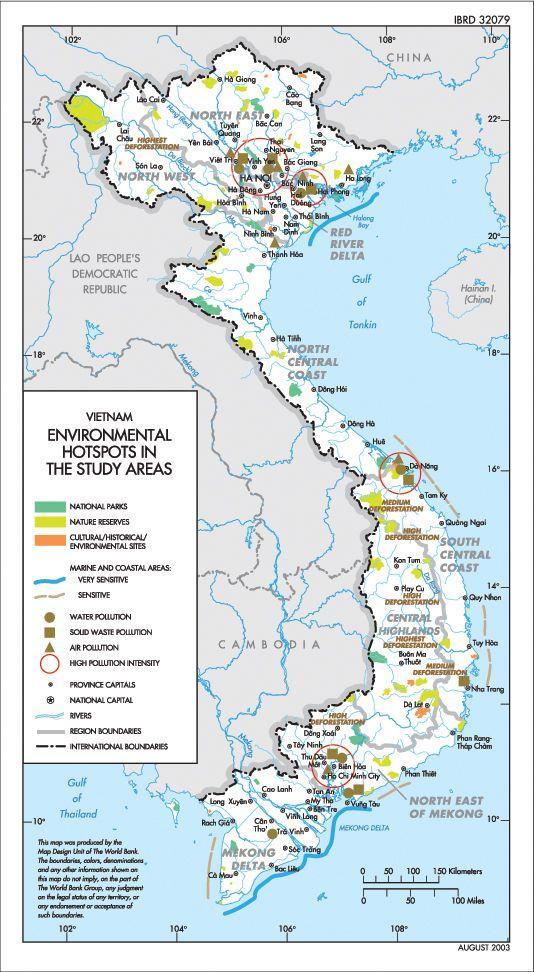
31 1. 환경오염개황 제 3 장환경현황및주요정책 < 그림 3-1> 지역별환경오염분포현황 자료 : Environment Monitor 2003, world bank
32 최근급속하게진행되고있는산업화및도시화는베트남의경제성장과더불어주요도시지역의환경오염을초래하고있다. < 그림 3-1> 은매체별환경오염의정도를나타낸것으로특히 Hanoi, Hai Phong, Da Nang, Hochi Minh 등의대도시에형성되어있는산업단지를중심으로오염이진행이빠르게이루어지고있음을보여준다. 2. 분야별환경관리현황 가. 수질분야오염현황 (1) 수자원현황및특징 ( 가 ) 베트남의수자원량베트남의연간강수량은 1,944mm이며이중 1,003mm는증발등의형태로손실되어지표수중실제사용가능한수자원량은 3,100억m3에불과한것으로집계된다. 인구당연평균가용수자원량은 3,870m3, 일일평균 10.6m3의물을사용할수있다. 이는다른산업화된나라의평균인구당수량이약 7.4m3임을감안할때베트남은수자원이풍부한나라의범주에속한다. 또한강수외에도베트남은많은수의하천이주변국으로부터발원하여베트남으로유입되고있다. 유역 < 표 3-1> 베트남주요도시의수자원지표 총지역 ( km 2 ) 수원지 베트남총총계면적대비 (%) ( m3,bilion) 총유량 베트남에서의총발생량 ( m3,bilion) 베트남대비 (%) KyCung-Bang 11, Red river-thai Binh 155, Ma-Chu 28, Ca 27, ThuBon 10, Ba 13, DongNai 44, Mekong 795, 자료 : Environment Monitor 2003, World bank
33 ( 나 ) 베트남수자원량의문제점 1 높은지표수의존도총지표수의 63% 가중국, 태국, 미얀마, 라오스, 캄보디아등인접국으로부터유입되고있다. 그러나이들인접국역시산업화, 도시화의과정을겪고있을뿐아니라농업생산개발도활발하게이루어지고있어이로인한막대한물수요량을충족시키기위해자국내의수원의이용을극대화해나가고있다. 따라서향후베트남으로직접유입되는유량은자국내수요를충족시키지못할공산이크다. 한예로메콩강의경우상류에위치한캄보디아가건기기준 1,200m3 ~1,500m3의유량을사용할경우메콩강삼각주지역은물부족현상을겪을수밖에없다. 2 불규칙적인수자원의분포수자원량의또다른문제점은강수량의편차가전국적으로매우크다는데에있다. < 표 3-2> 과같이유역별수자원양을살펴보면홍강을비롯한일부북부지역과메콩강유역이매우풍부함을알수있다. 전체연평균강수량은 1,944mm임을고려할때 Bach Ma의경우 8,000mm, Bac Quang는 5,000mm까지강수량을보이고있는반면, Phan Rang는 700mm Phan Ri는 400mm정도에그쳐수자원의양적불균형이심화되고있다. 또한매년 3개월에걸쳐홍수로인한손실량은총유량의 75~85% 에달한다. 이로인해약 5~6개월간의건기동안대다수의강유량은연간총유량의 15%~20% 를밑돌고있다. < 표 3-2> 지역별수자원량현황 2) 유역 지표수 지하수 북서부지역 북동부지역 홍강삼각주 중북부연안 중남부연안 중부고원 메콩강북동부 메콩강삼각주 자료 : Environment monitor 2003, World bank 2) 의개수가많을수록수자원량도풍부
34 한편지역별수자원량을살펴보면북동부유역의경우면적대비유량이약 24 만m3 / km2인반면, 메콩강삼각주의경우 1,280 만m3 / km2으로양적규모에서무려 54 배에달 하는차이를보인다. 3) 3 수질악화현상의심화대부분의하천의상류수질은다른개발도상국과비교했을때매우양호한수준이다. 그러나지하수및하천하류에서는오염이심각하게진행되고있으며이는급속한산업화및도시화그리고도농인구의성장에의한것으로분석된다. 특히하노이나호치민의경우와같이유역내산업단지가위치해있는지역에서오염도가매우높은것으로나타나고있다. 4 급격한물소비에따른수요량증가물수요는베트남이산업화도시화를거치면서사람들의주거환경을개선하기위해서꾸준히증가하고있다. 월드뱅크및 ADB와공동으로연구한수자원계획위원회의연구에따르면, 1990년물소비량은총수자원량의 6% 수준인약 500억m3 /year 이었으나 2030년에는 870억m3 /year까지크게증가할것으로전망하고있다. ( 표 3-3참조 ) < 표 3-3> 베트남물수요량변화에대한추산 년도 1990 년 2000 년 2010 년 2020 년 2030 년 물수요량 ( m3 /year) 500 억 650 억 720 억 800 억 870 억 자료 : Vietnam Environment and Life 2004 (2) 지역별수질현황이미언급한바와같이, 대부분의하천은베트남국경너머에서발원하고있어물의공급이나오염수준을통제하기란거의불가능하다. 베트남을비롯한주변국의최근벌목활동증가로인해청정수원을보장하기란더욱어려워졌다. 또한건기에는염분이녹아있는해수가내륙 70km까지흘러들어온사례가보고될만큼상수도로쓰이는수원으로의해수유입문제가도시및농촌지역에서제기되고있다. 또다른문제점으로지적되는것이 30 년이상된베트남의노후화된도시수도시 설이다. 베트남의처리시설에서나온물은노후화된수도관을지나가면서누수되 3) Water Sectoral Profile 2002 참고
35 는데누수율은 40~50% 에달한다. 14,800 km의도시관망내수도관대부분이중 국이나동유럽에서수입된철, 콘크리트, 강철로제조된것으로시간이지나면서부 식의진행이가속화되고있다. 하노이시와호치민시는지하수대수층이발달되어있어이를식수로활용할수있다. 법적인허가와절차를통해우물을개발하고있기는하지만지면과대수층사이에하수부패조나하수도가지나는지조차감안하지않은채무분별한착공이이루어지고있어건강을위협하고있다. 지표수에크게의존하고있는지방의경우에는문제가더큰데지방인구의 75% 이상이이처럼수질오염가능성에노출된처리되지않은지표수를사용하고있다. 베트남은전국을모두 8 개지역으로수리권역을분류해관리하고있다. 각권역별수질현황은 < 표 3-4> 와같다. < 표 3-4> 지역별수질현황 유역 하천수질상류하류 지하수질 연안수질 북서부지역 4) - 북동부지역 홍강삼각주 중북부연안 중남부연안 중부고원 - 메콩강북동부 메콩강삼각주 자료 : Environment monitor 2003, World bank ( 가 ) 북서부지역 Da river의수질데이터를살펴보면용존산소가약간적게측정되는반면, 유기물함량및대장균농도가매우낮게나타나고있다. 도시화된일부지역근방에서수질악화현상이보고되고있기는하나전반적으로양호한수질을보이고있으며지하수질역시국가환경기준을만족하고있다. 4) 의개수가많을수록수질이양호
36 ( 나 ) 북동부지역북동부지역의수질역시비교적양호하다. Lao Cai 주에있는홍강의상류지역수질은 A급수의수질기준 5) 을만족시키고있으나홍강북부의매우큰지류들은 6) 대개 B급수의수준에머무르고있다. 또한밀집된도심지역과산업지역에서측정된이들지류의수질은기준치를벗어나고있다. 북동부유역의오염빈발지역은 Viet Tri town 인근의홍강이대표적이며동하천의 COD와 BOD 5 는수질기준의 2.3~3.8배에이른다. 특히, Thai Nguyen 산업지역을통과하는 Cau 강은오염도가매우심각하여 NO 2 는기준치의 10배, NH 4 의경우는 2배의농도를보이고있으며 BOD 5 역시기준치의 5배를넘어서고있다. TSS도기준치의 10배를보이고있으며심지어 H 2 S의경우기준치의 100배가까이나타나기도한다. 광산의영향을받는일부지역과연안해수의유입이일어나는일부지역을제외하고는지하수질역시전반적으로양호한수질을보이고있다. ( 다 ) 홍강삼각주홍강유역의경우산업지역의처리수가유입되는배수지역부근은수질오염물질농도가 A급수에관한수질기준에서정한바를초과하고있다. 예를들어하노이의하폐수가유입되는 Nhue강은오염이심각하여 DO농도가 1~2mg /l 이하이며 NH 4 농도는 2.5mg /l 이상이다. Hai Phong을통과하는 Cam 강과 Tam Bac 강역시일정수준오염되어있으며앞으로도 BOD 5 와 COD 수치가꾸준히증가하고있는추세이다. < 표 3-5> 홍강삼각주지역의연안수질오염현황 구분인질소 BOD Oil 대장균 1996 년 년 년 N/A N/A N/A >0.05 > 년 >16.00 >50 N/A 1.12 <1000 국가기준 10 μg /l 50 μg /l 10~20 mg /l 0.05 mg /l 1000(MPN) 자료 : NEA( ) and HIO(1999) 5) 베트남은수질을 A,B,C 의 3 등급으로나누어관리하고있다. A 급수 : 가정용으로사용되기에적합한수원 B 급수 : 산업용및농업용으로사용되기에적합한수원 C 급수 : 기타다른목적으로사용되며어떠한경우에도수질은 C 급수의기준을초과해서는안된다. 6) Lo, Gam, Cau, Thuong, Luc nam 등
37 지하수질은전반적으로기준치이내를만족하고있으나역시연안과인접해있어일부지역에서는해수침식으로인해문제가증가하고있다. 또한연안수질은기름유출로인해위협받고있다. 1997년수차례의기름유출이홍강삼각주지역에서발생하고있다. 기름외에도 < 표 3-5> 와같이 phosphate( 인산염 ), nitrate( 질산염 ) 등의지표가기준치를넘어서고있다. ( 라 ) 북중부연안지역연안부근의도시내산업지역의수질악화현상이두드러지고있다. Hieu강은 BOD 5 와 COD 농도가수질기준 A의 2~3배를넘어서고있고 NH 4, PO 4 는각각 1.5 배 1.8배에달하고있다. Hue시를지나는 Huong강은 BOD 5 와 COD값이수질기준 A의각각 2.5배 1.6배를나타낸다. 이지역의경제개발활동의증가로적절한처리가이루어지지않는다면도심으로부터유출되는산업폐수로인해연안지역에더욱수질문제를일으키고있다. ( 마 ) 남중부연안지역강수질은일반적으로양호한편이나몇몇강유역은 0.1mg /l의오일농도를가지고있다. 오염빈발지역은 Da Nang, Quy Nhon, Nha, trang와같은연안지역을포함하고있으며 Han 강의 DO농도는 A기준은 1~2배 NH 4 는 1.4~2.6배에달하고있다. 광산지역에서, 다양한중금속및기타유독성물질이문제가되고있다. 예를들어 강에서의시안화물은일부광산지역에서기준치의 1.6~2 배에이르고있다. 지하수 질은좋은편이나해수침식이문제가되고있다. ( 바 ) 중부고원지역강수질은대부분이 A급수수질기준을만족시킬정도로좋은편이다. 강의암모니아농도는전반적으로낮지만가끔 NH 4 -N의국가기준인 0.5mg을초과하기도한다. 지하수질역시국가기준범위내에머무르고있다. ( 사 ) 메콩강북동부지역 산업및도시개발의발달이라는지역특성은수질에도적지않은영향을미치고있 다. Dong Nai 강하류가특히상대적으로오염도가높은편이다. 해상선박등으로
38 부터의기름유출은이지역의또다른주요이슈가되고있다. 오염빈발지역은 Thi Vai와 Saigon강유역등이대표적이며 Thi Vai 강은 Bien HOa와 Phu My 산업지역으로부터흘러나오는산업폐수와연결이되어있다. DO농도는 2mg /l이하수준이며 Go Dau 지역의 BOD 5 와 COD는기준치의 10~15배에이른다. 대장균수치역시기준치의 100배이상, Nitrogen, Phosphorus 지표역시기준치를상회하는등주요수질지표전반에걸쳐심각한오염도를보이고있다. 그러나크롬, 납, 수은등의중금속농도는아직까지기준치를벗어나지않는것으로보고되고있다. ( 아 ) 매콩강삼각주지역국가모니터링프로그램및 MRC 7) 에따르면메콩강삼각주지역내의주요강들의수질은 BOD 5 를제외한모든지표에대해서대부분국가기준을만족시키는것으로나타난다. 8) 특히이지역은낮은 ph를갖는것을특징으로한다. 메콩강유역지하수질은다소가변적이다. 해수침식이연안지역의주요문제로손꼽 히고있으며신생대수층의시추공으로부터의고농도질소화합물이문제화되고있다. < 표 3-6> 메콩강삼각주지역의연안수질오염현황 구분 인 질소 BOD Oil 대장균 1996 년 년 년 N/A N/A N/A N/A N/A 2001 년 N/A N/A N/A 국가기준 10 μg /l 50 μg /l 10~20 mg /l 0.05 mg /l 1000(MPN) 자료 : NEA(1997~2002) and HIO(1999) (3) 지표수질 전반적으로대표적인오염지표인 BOD 5 와 NH 4 -N 의농도변화가매우심하며, 수질 기준 A 에미치지못하는수질오염도를보이고있으며이러한문제는유량이크게 7) Mekong River Commission 8) 도심을통과하는일부지류의경우기준치를종종기준치를초과하기도한다
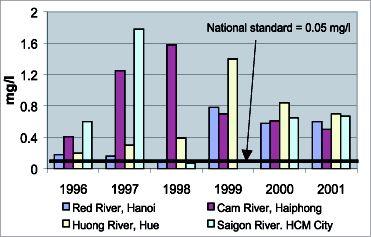
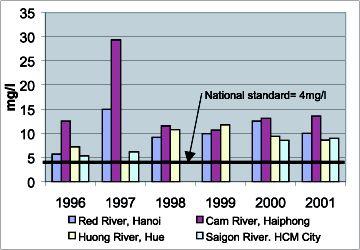
39 감소하는건기에는더욱심해진다. 조성완료및조성중인약131개의산업단지와 1,000개이상의병원등으로부터매일수백만m3의처리되지않은폐수가유입되고있다. 자연자원환경부에따르면폐수를방출하는기업의숫자는약 4,000개에달하며특히새로운청정기술을도입하지않으면폐쇄조치가불가피할정도로심각한오염수준의폐수를배출하는기업도 439개에이르는것으로조사되었다. 이러한하폐수의유입으로베트남주요도심에위치한하천은최근오염이가속화되고있다. 특히, 환경보호열대기술연구원이주요도시를통과하는하천을대상으로 9) 실시한조사에의하면하천의오염물질함유량이허용기준치이상으로나타나고있다. < 그림 3-2> 베트남주요하천의 BOD 5 농도변화 < 그림 3-3> 베트남주요하천의 NH 4 농도변화 자료 : NEA, SOE reports 1997~2002 남부핵심경제구역에위치한산업단지및수출가공단지로부터매일약 137,000m3이상의폐수가 Dong Nai, Thi Vai, Saigon 등으로유입되고있음에도불구하고폐수처리시설을갖추고있는곳은호치민시의산업단지 (IPs) 및수출가공공단 (EPZ) 12곳중 2곳, Bihn Duong의 13곳중 2곳, Dong Nai 17곳중 3곳이며 Ba Ria-Vung Tau의경우엔아예시설조차없는실정이다. 환경전문가의분석에의하면, 남부핵심경제구역의환경오염문제를해결하기위해서는 2005년기준약 3억 6천만달러에해당하는투자가필요하며 2010년까지 8억달러이상이소요될것으로전망되고있다. 하노이에있는대부분의호수들또한높은 BOD 5 농도를보이고있으며하노이시 내 4 개의소규모강과호치민시의 5 개의수로역시 2 mg /l 이하의 DO 농도와 9) Hanoi, Hochi Minh, Hai Phong, Hai Duong, Bac Giang, Hue, Da Nang, Quang Nam, Dong Nai
40 mg /l 의 BOD 수치를보이고있다. < 표 3-7> 주요도시의하천수질 하천및호수 SS ( mg /l) BOD ( mg /l) COD ( mg /l) DO ( mg /l) Kim Nguu(Hanoi) Set(Hanoi) Lu(Hanoi) ToLich(Hanoi) LakesHanoi LakesHaiPhong SluicegatesHaiPhong <1.0 자료 : Environment Monitor 2003, World Bank (4) 지하수질지하수는생활용수및산업용수로사용되는주된수원중하나이나최근들어일부지역에서오염이진행되고있다. 주요인위적원인으로는미흡한정화조관리, 쓰레기무단투기, 지하수의과잉개발등이지적되고있다. 한편, 중부연안지역의홍강삼각주와메콩강삼각주에서진행되고있는해수침식역시중요한문제로거론되고있다. 지하수의과잉개발로인해지하대수층으로의해수침입빈도가증가하여수원으로서의지하수의기능이크게위협받고있다. 홍강삼각주에는 Hai Duong에이르기까지약 60km에달하는 3% 이상의지역이해수로인해오염되어있으며메콩강삼각주유역은해수가삼각주지역의절반이상까지영향을미치고있다. (5) 연안및해양수질일부지역을제외하고는일반적으로연안수질은국가환경기준을크게벗어나지않는수준이다. 그러나최근에는오염된토양으로부터의오염물질유입, 어패류의시안과같은중금속물질중독, 여행객의증가, 항구개발, 석유및가스산업의발달등으로인해연안수질의오염현상이관측되기시작하였다. 특히하천을통한토양으로부터의오염물질유입문제가심각하며그오염수준은 < 표 3-8> 과같다
41 < 표 3-8> 6 개의강어귀의오염물질총용해도 ( 단위 : tons/year) 지역 Cu Pb Zn As Phosphate Nitrate 북부 ( 홍강및 ThaiBinh 강 ) 중부 (Han 강및 ThuBon 강 ) 남부 (Saigon 강및메콩강 ) 6, , ,748 35, ,012 11,000 1,102 15,696 1,600 28, ,570 자료 : Environment Monitor 2003, World Bank 긴해안선을따라발달된크고작은어항 ( 漁港 ) 에서발생되는폐수와기타쓰레기들이연안수질을오염시키는주요유기물오염원으로조사되었다. 어항뿐아니라기타다른항구들역시석탄이나석유의사용으로연안수질환경에영향을미치고있다. 또한근해에서의유정개발활동역시매년확대되고있어 1996년에서 2002년까지원유생산품은연간약 880만톤에서 1,700만톤까지증가했으며유정개발로인한연안으로의기름유출량은연간약 772,000톤에이른다. 한편베트남연안을지나는선박의 30% 이상이유조선으로구성되어있으며 < 표 3-9> 와같이사고로인한기름유출로연안수질이피해를입고있으며 1998년 ~2002년간최소 22회이상의기름유출사고로인해약 21,469 톤의기름이연안으로흘러들었다. < 표 3-9> 베트남연안지역의기름유출통계 년도 1998 년 1999 년 2000 년 2001 년 2002 년 사고횟수 유출량 (tons) 12,900 7, 자료 : Vietnam Environment and life
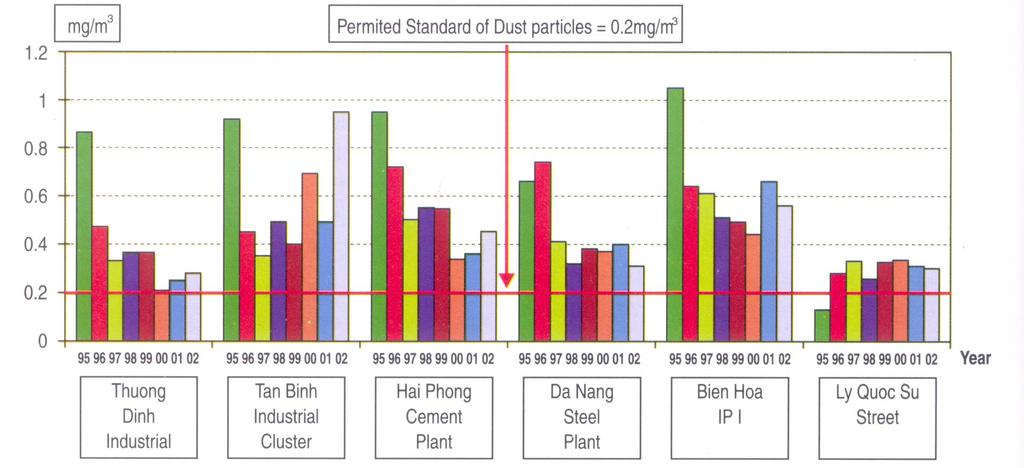
42 나. 대기분야오염현황 (1) 대기오염현황 ( 가 ) 미세먼지베트남국가기준이정하는대기중미세먼지허용농도는 0.2mg / m3인반면큰도시나공업단지의주요도로변에는미세먼지농도가 0,4~ 1mg / m3까지측정되기도한다. 이처럼기준치의 2~5배의수치를나타내는대기환경이주로 5개대도시 10) 를중심으로확산되고있으며기타지방중소도시의경우도기준치의 2~3배의오염정도를보이는지역이늘어나는추세이다. < 그림 3-4> 산업단지 (IPs) 에서의연평균미세먼지농도변화 자료 : NEA, The 2003 report for environmental monitoring and analysis ( 나 ) SO 2 시멘트, 벽돌등을생산하는일부산업단지에서 (Tan Binh, Hai phong, Bien hoa 등 ) 시간에따라 SO 2 함유량이국가기준 (0,3mg/ m3 ) 보다높게나타나고있지만전국적으로는아직 SO 2 오염의농도는 TCVN 11) 이정하는기준치이하이다. ( 다 ) CO, NO 2 10) Hanoi, Hai Phong, Da nang, Hochi Minh, Can 쐐 11) 베트남국가환경규제기준
43 CO와 NO 2 의일평균농도역시주요도시의경우 TCVN의기준치이하이지만 Dinh Tien Hoang - Dien Bien Phu와같은일부교통혼잡지역에서는기준치를초과하기도한다. 다음 < 표 3-10> 은하노이, 호치민, 다낭 3개지역을대상으로실시한대기관측결과이다. < 표 3-10> 주요도시의 CO 및 NO 2 농도비교 도시명 CO( mg / m3 ) 기준치 NO 2( mg / m3 ) 기준치 하노이 호치민 다낭 자료 : Vietnam Environment and life 2004 ( 라 ) Pb 도시의 Pb오염은주로차량에서비롯된다. 아직은베트남의대기관측및환경분석시비중있게다뤄지고있진않지만하노이, 최근들어호치민시를비롯한몇몇주요도시의대기중 Pb오염이새로운연구과제로주목받고있다. 연구결과에따르면보통간이도로에는 Pb오염이거의진행되지않고있지만주요도로주변은 Pb 함유량이국가기준치 (0,005mg/ m3 ) 에근접하고있다 년 7 월이후국무총리령 24/2000/CT-TTg 에따라무연휘발유로의연료사용 전환이이루어지면서 2002 년하노이의차량배출로인한대기중평균납농도는 과년도대비 40~45% 정도까지감소한것으로나타났다. 12) (2) 대기오염원 ( 가 ) 산업활동베트남의산업은 1970년대사용하던구식설비나기술들이아직그대로유지되고있어서대기오염의부담을가중시키고있다. 하노이에는총 300개의사업장중에서 200 여개가도심내에위치하고있으며호치민시에는총 700개의기업중 500개가시내에있다. 특히일부지역은건설활동으로인해미세먼지농도가기준치의 10~20배수준까지급격히증가되는경우도종종나타나고있다. 전국적으로산업의오염원별대기오염현황 < 표 3-11> 과같다. 12) 호치민의경우 50% 수준까지절감효과를거둠
44 < 표 3-11> 베트남산업분야의주요대기오염원 대기오염원 발전소 오염현황 - 화력발전소가베트남발전소의주력 - 연간석탄사용량은 230만톤 - 200만m3의가스를비롯하여 SO 2, Co, CO 2, NO 2 등의주요대기오염물질생성 시멘트및 건설자재 생산업 - 연간생산규모 120 만톤 ( 생산공장 10 여개 ) - 석탄을기본연료로사용하며이로인해 SO 2, NO 2, CO, CO 2 발생 - 직형로기술로인한대기오염문제가특히심각 화학공업 - 연간 NaOH 100 만톤생산 - 연간화학비료 20,000 톤생산 - 연간농약생산량 28,400 톤생산 자료 : Vietnam environment and life 2004 ( 나 ) 차량배출로인한대기오염 1980년이전에는도시인구의약 80~90% 가자전거를이용하였으나지금은인구의 80% 이상이자동차및오토바이를이용하고있다. 하노이교통경찰당국에따르면 1990년 34,222대에불과하던차량이 2000년 130,746대로 10년간무려 4배의증가를이루었다. 오토바이의수역시크게증가하여 1996년하노이에는 600,000대가보급되었던것이 2001년 1,000,000대, 2002에는 1,300,000대로증가하여현재에와서는하노이시민 2명당 1대꼴로오토바이를소유하고있다. 이와같은차량의급속한증가현상이산업활동과더불어주요대기오염원인으로지목된다. ( 다 ) 취사활동으로인한대기오염하노이호치민등의주요도시에서높은생활수준을가진가정에서는취사용연료원이석탄및등유에서천연가스로바뀌어가는추세이다. 가스연료의사용으로인하여석탄및등유의사용시에비해오염기여도가더적어지긴했으나취사활동또한대기오염원의한부분을차지하고있다. (3) 대기오염감소를위한대책 정부는경제사회가함께발전하기위해서는기존의모든사업장을대상으로하는환경
45 영향평가프로젝트가필요함을인식하고특히오염이심한일부사업장을대상으로 사업장이전, 신기술도입, 오염처리시스템의활성화를위한정책추진등다양한해결 책을모색하고있다. 대표적인정책으로다음과같은것들이있다. o 2001년 7월무연휘발유사용의무화 o 2004년기준 LPG 사용자동차의수적증가추세 o 화력발전소에서의석탄의 LPG 나경유로의연료전환. 농촌의경우생화학가스를사용하고청정에너지로의에너지사용전환을단계적으로추진 o 오토바이사용감소, 대중교통수단이용의활성화 o 산과도심의도로변의녹지화 o 깨끗한공기를보장하기위한규제의성문화. o 2001년부터 2005년까지자동화된관측소 10곳, 이동관측소 2곳을설치해환경질분석. 다. 폐기물분야오염현황폐기물관리및처리는수질관리와함께베트남정부에서가장큰우선순위를두고있는환경분야이다. 베트남자연자원환경부에따르면, 연평균 12만톤이상의고형폐기물이베트남에서발생되고있으며하노이와호치민의폐기물발생량은 6천톤으로전국발생량의 30% 를차지하고있다. 세부적인폐기물발생량은 < 표 3-12> 와같다. 베트남의고형폐기물처리방법은현재로서는매립외에별다른대안이없다. 일부의료고형폐기물을제외하고대부분의산업폐기물과가정용폐기물은통합적으로수거되어적절한처리를거치지않은채버려지고있으며산업폐기물관리및통제에관한관리시스템은전혀마련되어있지않다. 현재호치민시에 3개의매립지가운영중에있고새로이한곳이추가건설될계획이긴하나실질적으로폐기물로부터발생되는침출수를처리할수있는시설을갖춘곳은한곳밖에없으며매립지침출수가인근지역의지하수로흘러들어 2차오염을유발하고있다. 현재호치민시와다른일부주요도시를대상으로고형폐기물처리시설을위한투자를적극고려하는외국기업이늘어나고있으며특히미국기업에의해 2개의주요폐기물처리시설프로젝트가베트남정부의승인을받아추진중에있는등종합폐기물관리시스템의수요가급증하고있다
46 < 표 3-12> 2003 년베트남폐기물발생량 구분오염원폐기물형태 폐기물발생량 (tons/yr) 도시농촌전체 도시고형폐기물 주방폐기물거주지플라스틱상업지종이, 유리 6,400,000 6,400,000 12,800,000 유류, 산업성유해폐기물 산업지역 폐슬러지, 유기성화합 1,740, ,000 2,510,000 물 산업성비유해폐기물 산업지역 나무, 금속 126,000 2, ,400 유해의료폐기물 병원 주사기 ,500 총비농업폐기물 8,266,000 7,172,400 15,459,900 농업폐기물 축산및경작 - 64,560,000 64,560,000 자료 : Consultant data group survey 2004 (1) 폐기물의분류 ( 가 ) 도시고형폐기물 (MSW) 베트남에서도시고형폐기물의성분은다양하며각도시의개발수준, 문화등에따라약간의구성차이를보이나일반적으로다음과같은몇가지공통적인특징을갖는다. o 유기물의구성비가매우높다.( 지역에따라 50%~62% 의구성비율을보임 ) o 흙, 모래, 돌조각등의비율이높다. o 높은수분함량과낮은발열량을갖는다 (900kcal/ kg )
47 < 표 3-13> 베트남주요도시의도시고형폐기물성분 ( 단위 : %) No 성분하노이하이퐁하롱다낭호치민 1 유기성화합물 ~ 플라스틱, 고무, 가죽 ~ 종이 ~ 금속 ~ 벽돌, 돌, 시멘트 ~ 흙, 자갈, 기타고형물질 ~ 자료 : Report 'State of Environment in Vietnam' ( 나 ) 의료폐기물베트남에서는유해성폐기물에대한특별한분류규정이없다. 대부분의유해폐기물은처리되지않거나간이처리를거친후도시폐기물과함께매립지로보내진다. 일반적으로의료폐기물의평균밀도는 150kg / m3이고수분함량 42%, 발열량은 2,150kcal/ kg의특징을보이고있다. < 표 3-14> 베트남의료폐기물성분 의료폐기물성분 함량비 (%) 유해여부 유기물 52.9 무해 PP,PE,PVC 병및백 10.1 유해 붕대, 고약 8.8 유해 금속, 캔 2.9 무해 유리, 관장기, 의료용튜브 2.3 유해 주사기및주사바늘 0.9 유해 폐지 0.8 무해 연구용생체조직 0.6 유해 흙, 자갈, 자기, 기타고형물질 20.9 무해 자료 : Report on "Medical waste management" by Ministry of Health(MoH)
48 ( 다 ) 산업폐기물각지역및도시의규모와산업구조에따라다르지만일반적으로산업폐기물은전체도시폐기물의 20~25% 를차지하며산업고형폐기물의 35~41% 가유해폐기물범주에속한다. 산업고형폐기물의성분은매우복잡하며, 원료, 기술공정, 각생산공장의최종산물및관련서비스에따라달라진다. 산업별폐기물발생은 < 표 3-15> 와같은분포를보이고있다. < 표 3-15> 베트남대도시의산업폐기물발생량 (ton/year) 도시전기전자기계화학경공업식품가공기타총계 HaNoi HaiPhong QuangNinh DaNang QuangNam QuangNgai HoChiMinh DongNai BaRia 총계 자료 : Report "Statics and prediction of generated hazardous wastes and Recommendation for Master Plan of HW treatment plants in vietnam by center for research-investment consult for rural development 베트남전역에서발생하는폐기물의절반가까이가호치민시가위치한메콩강삼각주북동지역에서발생하고있다. 또한주요폐기물발생원은경공업이며화학공업, 야금업등과더불어전체유해폐기물발생량의 90% 이상의비율을차지하고있다. 베트남에서폐기물관리는주로 URENCO에의해실행되고있으며도시폐기물의수집및처리에관한책임을맡고있다. 원칙적으로산업및의료폐기물은발생원자체에처리책임이있고정부는개발및규제강화등에책임이있으나베트남에서는아직이러한규정이이루어지지않고있다
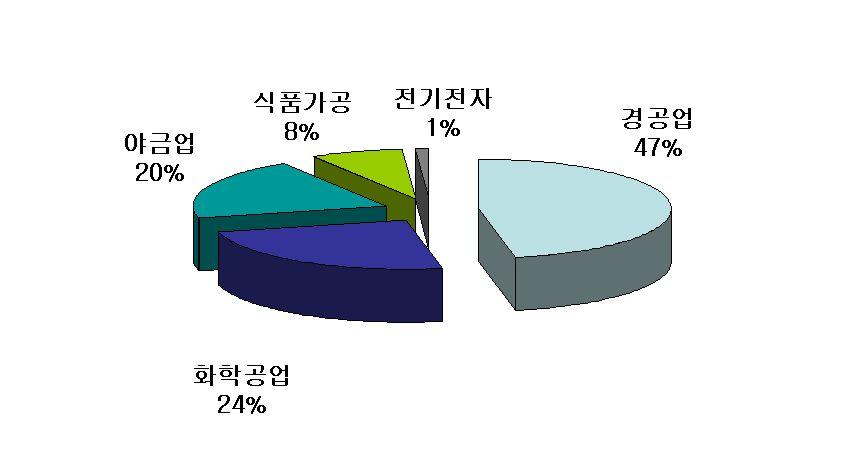
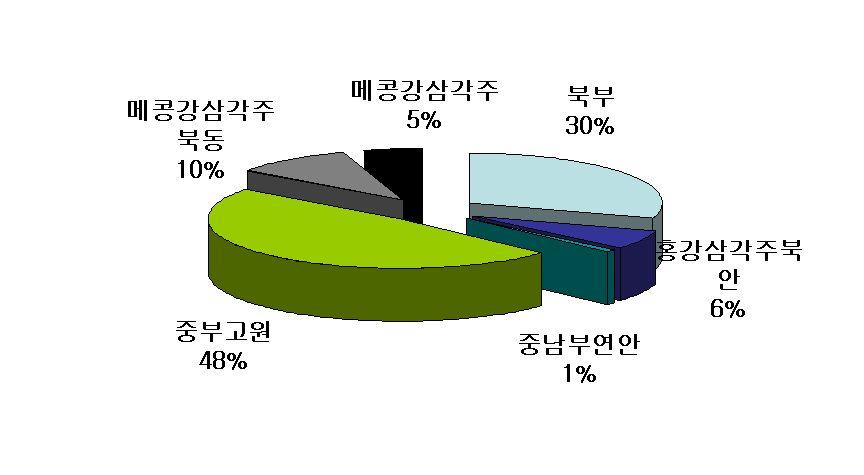
49 < 그림 3-5> 산업별유해성폐기물 발생원 < 그림 3-6> 지역별폐기물발생비율 자료 : VEPA 2004, MOI, Survey 한편, 생활환경과경제수준이향상됨에따라폐기물내플라스틱, 금속, 유리등의유해성물질과난분해성물질의비율이크게증가하고있다. 도시화및산업화에따라가정폐기물및식품가공업등의경공업분야에서큰비중을차지하던유기물의비중이다소감소하는반면, 플라스틱고무, 가죽등의구성비가증가하는양상이두드러진다. < 표 3-16> 하노이폐기물의성분함량및변화 폐기물성분 총발생량대비함량 (%) 1995 년 2003 년 유기물 종이및섬유 플라스틱, 고무, 나무, 가죽 ( 플라스틱 15.6) 금속 유리 불활성물질 기타 자료 : CEETIA monitoring data 2003, Digregrio 1997 East-west Center, Hawaii (2) 폐기물수집 폐기물의국가전체평균수집률은도심의경우 2000 년에서 2003 년까지 65% 에서
50 71% 로증가하였으며평균적으로대도시일수록수집률이더욱높게나타나는경향을보인다. 평균적으로 500,000명이상의인구가거주하는도시의경우 76% 의수집률을보이는반면, 100,000~350,000명인구의도시는 70% 정도를보이고있다. 반면농촌의경우수집률은매우낮은데이는거리가멀고접근이용이하지않아서일부소득이매우높은농촌지역에서조차폐기물수집률이 20% 를겨우상회하고있다. 대부분의유해성의료폐기물과산업폐기물은일반적으로수집시에서부터혼합된다. (3) 폐기물처리및처분 439개의매립지중 MoNRE 13) 에의해오염빈발지역으로분류되는 49개의매립장은운영이매우형편없어주변환경과지역주민에커다란위협으로작용하고있다. 이들매립지및하치장은인근지역사회에처리되지않은침출수로인해지표수및지하수의오염, 비산성오염물질의배출, 소음, 악취, 파리번식등의다양한환경적문제를야기하고있다. < 표 3-17> 몇몇주요도시매립지의침출수수질비교 매립지 Nam Son, Hanoi Hiep Thanh, Binh Duong Go Cat, Ho Chi Minh Binh Duc, Long Xuyen BOD 5 ( mg O2/l) SS ( mg /l) 대장균 (MPN/100ml) 2,000~30, ~1,000 1,500,000 6,200 1, , ~ ~4, ,000 9,330 3, ,000 국가기준 ,000 자료 : CENTEMA 04-08/2003 ; CERECE 2002 예를들어호치민시의 Dong Thanh 매립지는약 400여인근가구의농업소득및보건상의손실을 14) 초래하고있다. 또한우물수질조사결과, 16% 에해당하는우물 13) Ministry of Natural Resource and Environment. 14) 이로인한피부, 소화계, 순환계질병의평균발생률은 58%
51 이생물학적지표기준에부합하지못하는것으로나타났으며 ph 농도는 4 이하로나타나는등물리화학적지표기준을만족하는우물은한곳도없었다. 매립지의몇몇샘플로부터배출된침출수수질을분석한결과 < 표 3-17> 과같은높은오염정도를보이고있다. (4) 재활용과재사용재활용과재사용은이미베트남의대다수가정에서보편적으로사용되고있는폐기물처리방법중하나이다. 하노이에서발생하는도시폐기물의약 20% 이며이는방콕, 마닐라, 베이징과같은동아시아국가도시들에비해비교적높은수준일뿐만아니라향후싱가폴이나홍콩수준으로적어도 2배이상더증가할가능성을가지고있다.( 표 3-18참조 ) < 표 3-18> 아시아국가들의도시폐기물재활용률비교 도시홍콩서울싱가포르마닐라방콕베이징하노이 재활용률 (%) ~22 자료 : Environmental Monitor 2004, Vietnam 라. 기타분야오염현황 (1) 산성비 9곳의산성비관측소 15) 에의해수집된 2002년산성비에관한보고자료역시 ph가 5.5에머물고있는것으로보고되고있다. ph 5.5를나타내는강우빈도가가장높게나타난곳은 Bien Hoa 와 Binh Duong로나타났으며각도시별비율은다음과같다. < 표 3-19> 각강우관측소에서의 ph 5.5 의강우빈도 도시명 Bien Hoa Binh Duong Lao Cai Hanoi Vung Tau Ho chi Minh 기타지역 강우빈도 27~64% 3~15% 4~16% 4~16% 9% 4% 이하 자료 : Vietnam environment and life ) Lao Cai, Hanoi, Quang Ngai, Nha Trang, Bien HOa, HochiMinh, Bhin Duong, Vung Tau, My 쏨
52 ( 나 ) 소음호치민시를가로지르는 Dinh Tien Hoang - Dien Bien Phu의교통혼잡구간에서측정된소음수준은약 82~85데시벨이며이는베트남전역에서가장높은소음지역중하나이다. 80데시벨정도의소음수준을가진지역은 Sai Dong(Hanoi), Nguyen Trai Road(Vinh), Dong Nai(Bien Hoa II) 등이있다. 이외에대부분의나머지지역은평균적으로 65~75데시벨의분포범위를보인다. 3. 환경행정조직체계 모든부처는각자의해당분야내에서환경관리활동을위해베트남자연자원환경부와협조체제를구축하고있다. 자연자원및환경을다루는기타부서들에는과학기술부, 농업및농촌지역개발부, 공업부, 건설부, 보건부, 어업부등이있다. 주단위에서는인민위원회가각주의환경관리에관한기능을담당하고있으며각지 방의자연자원환경청이해당지역인민위원회의관리하에환경관련문제를담당하고 있다. 가. MoNRE (Ministry of Natural Resource and Environment) 자연자원환경부는환경관련각종법규, 전략, 환경보호개발계획, 환경규제기준등에관한입안을실시하는한편, 관련법규및환경기준에따라다른유관환경관련기관및지방환경청이발행한법적조항의문제점을해결하기위한적절한방법을조언한다. 또다른주요업무로는매년발간되는국가환경보고서에서환경부장관이공표하게되는환경측정결과데이터를관리하고이를반영하여규제기준을조정한다. 한편으로민간기업의환경기준준수도를심사하여사업허가를발급또는철회하기도 한다. 이외에도일반국민들이환경보호를위한법규와규제를잘인지하여준수할수 있도록선도하고환경의식을제고할수있도록다양한활동을실시하고있다
53 Minister ( 자연자원환경부장관 ) Deputy Minister Deputy Minister Deputy Minister Deputy Minister Office of Ministry ( 부사무실 ) Dept of Appraisal ( 평가부 ) Dept of Finance- Plans ( 재정계획국 ) Dept of Legislation ( 입법국 ) Dept of Land ( 토지국 ) Dept of resister and land statistic ( 토지통계국 ) Dept of Environment ( 환경국 ) Dept of EIA and Apprasial ( 환경영향평가국 ) Dept of hydrometeorolo gy ( 수문기상국 ) Dept of science and technology ( 과학기술국 ) International cooperation Dept ( 국제협력국 ) Dept of Inspector ( 검사국 ) Dept of survey and map ( 지도측량국 ) Dept of geology and mineral ( 지질광물국 ) Environmental Protection Agency (VEPA) < 그림 3-7> 베트남자연자원환경부조직구성도 자료 : Vietnam Environment Protection Association 베트남환경법에의해농업농촌지역개발부 (MARD) 가일부가지고있던수자원의관리에대한책임이최근자연자원환경부로이전되었으며농촌지역에대한용수공급과관개에대한기능만이 MARD에남아있다. 또한중앙정부의직접적인통제를받는인민위원회는이와관련된사법권이행에대한권한및책임을부여받았다. 수자원관리책임부서의기능과규모는 < 표 3-20>, < 표 3-21> 과같다
54 < 표 3-20> 베트남의수자원관리핵심책임부서의기능 부서자연자원환경부 (MoNRE) 농업농촌지역개발부 (MARD) 공업부 (MoI) 건설부 (MoC) 교통부 (MoT) 어업부 (MoF) 보건부 (MoH) 계획부 (MoP) 재정부 담당분야 - 수자원관리전반을담당 - 홍수및태풍예방시스템관리, 수력구조물, 습지관리, 농촌지역용수공급및위생설비 - 수력발전시설의건설, 운영관리 - 도시지역용수공급및위생설비, 하수시설등의공간계획및건설 - 수로운송시스템의계획, 건설, 관리 - 수산자원의보호및개발 - 음용수관리 - 수자원분야의투자계획 - 수자원세및사용료등에관한정책개발 자료 : Environmental Monitor 2003, world bank < 표 3-21> 베트남의수자원관리책임부서규모 (2003년기준 ) 부서명하위책임부서 - 환경청 (VEPA) - 환경국 (DoE) - 정수공급및위생에관한국가위원회 (NCCWSS) 자연자원환경부 - 수자원관리센터 (MoNRE) - 국립기상학및수문학센터 - 국립수자원위원회 - 지질및광물기구 - 수자원개발국 - 홍수및폭우예방국농업농촌지역개발부 - 농촌용수공급및위생설비센터 (MARD) - 산림보호국 - 산림개발국 - 수산자원보호국어업부 (MoF) - 어업국 중앙정부지방정부 인원 인원 공업부 (MoI) - 베트남전력청 건설부 (MoC) - 건축및인프라관리국 교통부 (MoT) - 베트남내륙수로국 베트남해안개발국 자료 : Ministry of Home Affair and line Ministries
55 나. VEPA (Vietnam Environmental Protection Agency) VEPA 는자연자원환경부가국가환경관리활동을이행하도록감찰하고, 오염예방, 환 경질개선, 자연보전, 환경기술촉진, 대중의환경의식제고등의역할을수행한다. Minister ( 자연자원환경부장관 ) Deputy Minister ( 차관 ) General director ( 국장 ) Deputy director ( 부국장 ) Deputy Director ( 부국장 ) Administrati -ve Office ( 관리부 ) Pollution Control ( 오염통제국 ) Biodiversity and nature consevation ( 생물자연보전국 ) International Cooperation ( 국제협력국 ) River basin and coastal zone ( 하천연안관리국 ) Environmen -tal and Tencnology ( 환경기술국 ) Waste mag't and Hazardous Chemicals ( 폐기물및유해화학물질관리국 ) Planning and Accounting ( 기획예산국 ) Legal Affairs ( 법무국 ) Centre for Env't consultation, training and promotion tech ( 환경컨설팅및교육 Centre Env't Monitoring and information ( 환경감시및정보센터 ) Centre for Public Awareness ( 공공의식개선국 ) Environmental Protection Magazine ( 환경보호신문 ) Da Nang 지역사무소 Ho Chi Minh 지역사무소 Can Tho 지역사무소 < 그림 3-8> VEPA 조직도 16) 자료 : Vietnam Environment Protection Association 16) 베트남에는차관이 4 명존재하며 Deputy Minister 혹은 Vice Minister 로표기한다. 또한이들 4 명중선임차관이 VEPA 의관리를담당한다
56 주요기능으로는다음과같은것들이있다. o 국가계획과정책, 환경보호에관한규제및법규등의준비과정에참여 o 환경보호및생물다양성의보전을위한국가계획을개발하여환경부에제안 o 환경검사이행, 환경관련민원해결, 환경규제위반에대한관리 o 국가환경관측소를기획하고관측데이터의관리를일원화 o 생물다양성, 위협종, 지역별토양및해양의환경질등을평가하기위한생물종조사 o 대중과함께하는켐페인을비롯해각종환경보호에관한공공의식을증가시키기위한노력 o 환경부산하기관및주정부, 지역기관을대상으로환경규제와기술에대한컨설팅서비스 o 베트남환경기금의공동관리기관중하나 o 환경보호에관한국제적협력활동을수행 그밖에입찰관리, 산업단지및수출가공공단의전반적인관리, 기업의등록업무, 투자 계획분야의국제적협력업무를담당하고있다. 다. MPI (Ministry of Planning and Investment) MPI는국가전반에걸쳐계획과투자에관한법적초안을마련하는기관으로베트남국내및외국자본의투자에대한계획과사회총투자자본계획등을정부에제출하여조정을하는역할을한다. 또한장기적계획, 5개년단위계획, 연례계획등을수립하여재정및예산계획의근간이되는건설자본, 투자자본등을마련하는역할을한다. 한편 ODA 를유치및관리하고세부적인전략및계획을세우는등 ODA 에대한 1 차적 인책임이있으며입찰계획을세워승인받은입찰을시행하고, 산업단지 (IPs) 와수출가 공공단 (EPZ) 를관리하는등다양한기능을하고있다
57 Minister Vice Minister Senior Counsellor M P I Departm ent of National Economi c Issue Departm ent of Local and Regional Econom y Financia l and Monetar y Departm en Departm ent of Industria l Econom y Departm ent of Agricultu ral Econom y Departm ent of Trade and Service Departm ent of Infrastru cture and Urban Develop ment Departm ent of Industria l Parks and Export Process ing Zones Departm ent of Investme nt Apprais al and Supervis ion Departm ent of Public Procure ment 하위부서 Foreign Economi c Relation s Departm ent Departm ent of National Defence and Security Departm ent of Legislati on Departm ent of Organiz ation and Personn el Departm ent of Science,Educati on,natur al Resourc es and Envirom ent Departm ent of Labour, Culture and Social Affairs Foreign Investme nt Agency (FIA) Agency of Small and Medium Enterpri se Develop ment (ASMED ) Inspecto rat Administ ration Office M P I Institute of Development Strategy Central Institute of Economic Management National socio-economic Information Centre 산하기구 Informatics Centre Vietnam Investment Review Economy and Forecast Review < 그림 3-9> MPI 조직도 4. 주요규제기준및환경정책 가. 신환경보호법 1993년제정되어베트남의제반환경법의근간을이루었던환경보호법 (Law on environment protection) 이 2006년 7월베트남의환경보호를위해보다실질적이고실현가능성이높은신환경보호법으로개정되었다. 신환경보호법은모두 15장
58 136 조로이루어져있으며주요변화내용은다음과같다. o 기존의국가환경기준 (National Environmental Standard) 의시행시지적되었던 문제점들을보완하여베트남현지실정에보다적절하도록규제기준이수정되었다. o 환경영향평가부분에서기존의환경보호법은매우간소한편이었으나신환경보호법에서는이를환경전략평가와영향평가로구분하고각부분에대해구체적인평가내용, 환경영향평가보고작성, 세부적인내용및심사방법을제시하는등보다강화된모습을보여주고있다. 또한생산, 경영, 서비스분야에서의환경보호책임과그범위에대해서구체적으로설정하고있다. 나. 주요환경규제기준베트남의환경기준은일반적으로세계보건기구 (WHO) 가제시하는국제환경기준이나한국의환경기준에비교해기준치가낮게설정되어있다. 이로인해베트남의대기환경의경우매우오염이진행되었음에도불구하고일부오염지표에대해서아직기준치미만이라는결과가나타나기도한다. 매년관측소운영을통해환경질데이터를수집하고이를근거로국가환경기준의단계적인개정이이루어지고있으나아직국제환경기준과는큰차이가있다. (1) 수질규제기준 < 표 3-22> 지표수질기준 (TCVN 5942) 오염지표 단위 ClassA ClassB ph mg /l COD mg /l <10 <35 BOD 5 mg /l <4 <25 NO 3 mg /l NH 4 -N mg /l DO mg /l >6 >2 SS mg /l 대장균 MPN/100ml 5,000 10,000 자료 : Asia-Pacific center for environmental law
59 < 표 3-23> 연안수질기준 (TCVN 5943) 오염지표 단위 해안가 양식장 기타지역 BOD mg /l <20 <10 <20 Oil mg /l Nil Nil 0.3 대장균 MPN/100ml Phosphate 10 μg /l Nitrate 50 μg /l COD mg /l 자료 : Asia-Pacific center for environmental law < 표 3-24> 지하수질기준 (TCVN 5944) 오염지표 단위 허용농도 Arsenic mg /l 0.05 Chloride mg /l Nitrate mg /l 45 Fe mg /l 1-5 대장균 MPN/100ml 3 자료 : Asia-Pacific center for environmental law (2) 대기규제기준 < 표 3-25> 대기환경질기준 번호 오염지표 1시간평균 8시간평균 24 시간평균 1 CO NO SO 납 O 미세먼지 자료 : Asia-Pacific center for environmental law
60 (3) 폐기물규제기준 < 표 3-26> 의료폐기물허용배출기준 성분 화학식 단위 최대허용농도 1. 먼지 - mg / m AcidFlohidric HF mg / m3 2 3.AcidClohidric HCL mg / m Cacbonmonoxit CO mg / m Nitrooxit NOx mg / m sulfuroxit SOx mg / m Cadmium Cd mg / m3 1 8.Mercury Hg mg / m3 0,5 9. 금속총합 As,Sb,Ni,Co,Cr,Pb,Cu, V,Sn,Mn mg / m Dioxin/Furan 총합 mg / m3 1 17) Dioxin Furan C12H8-nClnO2 C12H8-nClnO 11. 유기질총합 - mg / m3 20 자료 : Asia-Pacific center for environmental law (4) 기타규제기준 < 표 3-27> 공공지역및거주지역의최대소음허용기준 구역 1. 병원, 요양원, 도서관, 학교, 종교시설 시간 6 시 ~18 시 18 시 ~22 시 22 시 ~6 시 주민거주, 호텔, 모텔, 행정기관 생산지역및사업장인근거주지역 자료 : Asia-Pacific center for environmental law 17) 360 mg / m3 Dioxin 대기배출허용기준에비해의료폐기물의경우기준농도가상대적으로엄격한편이나우리나라의기준치와비교시상당히여유로운제한농도를두고있다
61 < 표 3-28> 토양내살충제잔류농도최대허용기준 순서 살충제 화학식 적용대상 허가제한 ( mg / kg땅 ) 1 Atrazin C8H14ClN5 잡초 D C8H6Cl2O3 잡초 Dalapon C3H4Cl2O2 잡초 MPCA C9H9ClO3 잡초 Sofit C17H26ClNO2 잡초 Phenolsaproethyl(WhipS) C16H12ClNO5 잡초 Cymazin C7H12ClN5 잡초 Cypermethrin C22H19Cl2NO3 잡초 Satum(Benthiolcarb) C12H16ClNOS 잡초 Dual(Metolachlor) C15H22ClNO2 잡초 Fuji-one C12H18O4S Phenvalerat C25H22ClNO3 해충 Linden C6H6CL6 해충 Monitor(Methamydophos) C2H8NO2PS 해충 Menocrotophos C7H14NO5P 해충 Dimethoate C5H12NO3PS2 해충 Methylparathiol C8H10NO5PS 해충 Tricloform(Clorofos) C4H8CL3O4P 해충 Pandan C7H16N3O2S2 해충 Diazinon C12H21N2O3PS 해충 Phebobuka(Bassa) C12H17NO2 해충 DDT 해충 0.1 자료 : Asia-Pacific center for environmental law 다. 환경관련주요정책 (1) 환경산업조사프로그램 ( 가 ) 프로그램개요 2005년부터베트남공업부는베트남환경산업에대한기초조사프로그램을진행해오고있다. 이프로그램의목적은다음과같은 7개의환경분야와관련, 주요수요와그수요에부응할능력이있는지에대해평가하고이를토대로베트남환경산업형성수준을평가하여발전계획을수립하는것이다. o 폐기물처리수요와능력 o 폐기물재활용수요와능력 o 오염방지및제어수요와능력
62 o 환경보호서비스수요와능력 o 친환경상품, 기술, 시설수요와생산능력 o 자원회복및환경정화부문의수요와능력 o 환경관련협회등환경조직의활동수요와능력 ( 나 ) 프로그램의성과 1 베트남환경산업은아직소규모이지만발전가능성이매우크다. o 공업의지속적인발전과더불어환경보호에대한의식이날로제고되는한편, 새로운환경법의효력이발생되기시작하면서환경보호사업의수요및환경시장이점차확대되고있다. o 환경보호를위한국가의투자가매년증가추세에있다. o 국제화에따른수출지향산업의발달로베트남환경수준도국제환경수준에비례하여향상되고있다. 2 중급규모의환경산업체가형성단계돌입 o 환경산업분야에서컨설팅활동이활발히증대되고매년수천개의산업체가설립되 고있다. 3 베트남에서유망한환경처리기술로다음과같은것들이주목받고있다. o 식품가공, 방직-봉제공업에서나온폐수처리기술, o 쓰레기를수집전용시설생산기술 o 유조선과수상운반시설의위생설비기술, o 쓰레기를원료로하는위생비료생산기술. 4 외국으로부터수입해야하거나협력이필요한기술분야 o 대도시의대규모폐수처리장 o 유해폐기물소각기술 o 공업폐기물및유해폐기물처리기술, o 에너지절약기술 o 친환경기술 o 전기산업부문발생폐기물처리기술
63 (2) 환경오염물질배출부과금제도 베트남정부는환경보호를위해각분야별로오염물질배출농도에따른부과금을부과 하는것을내용으로하는정책을수립했다. 이제도는모두 5장 44조로구성되어있으 며모든환경보호행정위범을발견하여벌금을부과하고나아가영업정지까지이르게 하고있다. < 표 3-29> 분야별배출부과금적용기준 항목 기준치대비 부과금 ($) 수질 2배이상 18) 6.25~4375 대기 2배이상 6.25~31.25 악취 ~31.25 소음 시 1.5 배이하 12.5~ 배이상 62.5~ 시 1.5 배이하 312.5~ 배이상 500~750 기타 폭발성물질의저장운반, 관리시국가기준에위배되는경우 125~312.5 자료 : No 05/1998/PL-UBTVQ, 베트남국회의세금법령 한편, 민간생활구역과자연보전구역에대해안전규정을지키지않는경우에는 6.3~188달러, 특별한경우에는 313~625달러까지벌금이부과되기도한다. 2006년 8 월 3일베트남자연자원환경부차관과공안부지도자와의회의에서공안분야에서의베트남신환경보호법시행과 2007년환경보호계획토론이이루어졌으며환경경찰제도시행에대한제안도제기되었다. 18) 방사성물질의함량이기준치이상일경우 6,000 만 VND 이상
64 제 4 장환경산업현황및시장동향 1. 분야별환경기술및산업현황 가. 베트남의환경기술개관 (1) 도심지역에서의환경기술적용 2003년기준약 60만대의자동차와 1,040만대의오토바이가베트남에서운행되고있다. 이들차량들이유발하는소음및미세먼지오염은대부분의도시에서시급한문제로지적되고있다. 주요요인은차량의급속한증가로하노이와호치민시에서 2 년만에자동차의경우 35.5%, 오토바이는 61.5% 의증가율을보이고있다. 관리방법외에도도로사정의개선, 대중교통의확대, 무연휘발유로의단계적인전환등이현재차량대기오염배출감소와관련해진행된몇몇연구프로젝트에서나타나고있다. 그밖에과거에는차량배출물질의감소를위한촉매변환장치를취급하는외국기업이있었으나실제현장에서어떠한기술도적용되지못했다. 도시폐수의처리는베트남일부지역에서만국지적으로실행되고있다. 대도시의경 우수로정화, 제방공사, 배수시스템의개선등이부분적으로이루어지고있으나중 앙폐수처리시스템은아직운영되지않고있다. (2) 산업단지에서의환경기술적용최근산업단지및수출가공단지가급속하게증가하고있다. 2004년 11월까지 106 개의산업단지와수출가공단지가설립되었다. 몇몇산업단지및수출가공단지는중앙폐수처리시스템을운영 (25~30%) 하고있으며물리, 화학, 생물학적처리기술을복합적으로적용하고있다. 산업단지에서발생한산업고형폐기물과유해성폐기물은적절한처리없이버려진다. 초기산업폐기물은처리장은 Dong Nai 주에약 100ha의규모로설계, 건설되었다
65 나. 베트남의환경기술개발배경 (1) 환경기술개발을촉진하는법적기틀형성 1990년대이후환경분석, 계획, 규제, 개인및정부부처의능력강화등의분야에서놀랄만한진보가이루어져왔다. 베트남환경법이 월국가의회에서채택되어이후 10년동안영향을미치고있다. 베트남은 2001~2010년환경보호에관한국가전략을마련하였으며자연자원의사용과개발에대한부담가중, 산업화의가속화로인한환경의역효과, 대중의환경의식및지속가능한개발의한계성, 부족한환경관리능력등의문제점해결을주요과제로다루고있다. 지난 15년간베트남정부는산림보호및개발법, 환경보호법광물자원법, 수자원법등각분야에걸쳐다양한법을제정해왔다. 이들중특히주목할만한법은 439개의주요오염기업에대해 2007년까지특별관리를내용으로하는 No. 64/2003/QD-TTg와 2004년효력을발휘하기시작한폐수배출부과금에관한법 No. 67/2003/ND-CP이다. (2) 환경교육과대중의식의제고베트남에서는환경기술개발촉진을위한또다른방법으로환경교육을강화하는한편지역사회, 기업, 정책결정자등사회각분야걸쳐환경의식의제고를도모하고있다. 현재 "Green-Clean Beautiful", "Garden-Fishpond Pen", "Week of Clean Water supply and Environmental Sanitation" 등의다양한캠페인을통해환경보호를위한노력들이사회이슈화되고있다. (3) 환경기술투자의확대및다변화지난 10년간, 정부는연간 GDP 0.3% 에해당하는 1억 2,500만달러이상의비용을환경보호를위해지출하였으며향후환경보호에대한투자금액을 2006년까지국가예산의 1%, 2010년까지는연간 2% 수준까지증강시킬계획이다. 또한환경보호기금이중앙정부의예산책정, ODA와같은외국자본의증여, 국내기업의사회환원등의형태를통해형성되어있다. 이외에도폐수처리비용등의환경부과금을통한환경보호재원의확보는베트남에서실용적인환경기술개발촉진을위하여다각적인재정지원활동이가능하게하고있다
66 다. 베트남의환경산업현황베트남에서는환경산업이라는것자체가새로운개념이다. 대부분의개발도상국의진행단계가그러하듯이베트남역시산업화진행초기에는별다른환경에대한인식이없었다. 최근에이르러서야비로소환경의중요성을체감하면서발표되는정부의환경정책과기준에따라펌프, 밸브, 파이프등부품제조업종을중심으로일부소규모의환경업체가생겨나고있는실정이다. 2005년베트남공업부는전국 20개성에걸쳐 20개분야를대상으로환경산업현황조사에착수하였다. 현재로서는결과자료를종합하는단계로서특별한통계자료가아직발표되지않고있다. 따라서베트남의환경산업현황은부록에서현지의환경관련주요업체의간략한정보만을소개하는정도로그칠것이다. 2. 환경시장규모 베트남경제는 2005년 8.4% 성장했고산업성장률은 10% 이상을기록했다. 매년상향곡선을그리고있는경제성장으로인해베트남은심각한환경문제에직면해있으며이는빈약한인프라구조, 도시인구의증가문제등에의해직ㆍ간접적으로영향을받고있다. 2001년 7월이후로납성분이함유된휘발유의사용이베트남에서금지되었지만차량의숫적증가로인해도시의대기질은여전히악화되는추세이다. 베트남의환경오염제어설비및서비스시장은 2004년기준총 4억 5천만달러에달하였으며향후 5년간연간 10~15% 의성장률을보일것으로전망되고있다. 19) 베트남정부는국가 GDP의 0.3% 에상응하는금액을매년환경보호활동을위해지출하고있으며 NSEP 20) 에따라이예산을 2010년까지 GDP의 1% 수준까지상향조정할계획이다. 환경프로젝트에관한재정지원은계속해서주로 ODA에의해이루어지고있다. 양자간혹은다자간지원방식을통해이들프로젝트는외국의설비기업및엔지니어링, 컨설팅회사등에다양한진출기회를제공하고있으며베트남환경기술시장의중요한요소로자리매김하고있다. 베트남의기술력은저조하여현지기업이생산 19) globe-net report 시장보고서참조 20) National Strategies for Environmental Protection
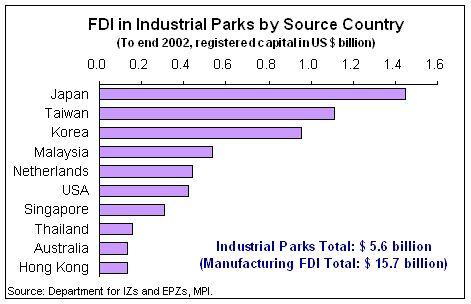
67 하는환경설비는시장의수요를따라가지못하며, 특히 ODA 재정지원프로젝트의 수용조건을반영하기에는다소무리가있기때문에현재로서는핵심환경오염제어 설비들을대부분수입에의존하고있다. 2002년말, 베트남산업단지에투자된자본은제조업분야전체외국인직접투자 (FDI) 의 35% 에달하며이들산업단지를통한제조업종생산은국가전체제조업생산의 21% 를차지했다. 뿐만아니라산업단지는베트남의산업화를가속화하는중요한역할도담당하고있다. 우리나라의對베트남직접투자는 2002년말기준약 9억 5천만달러로일본, 대만에이어높은투자규모를보이고있다.( 그림 4-1 참조 ) < 그림 4-1> 산업단지에대한국가별직접투자규모 자료 : Vietnam's Industrialization Strategy in the Age of Globalization 가. 전체환경시장규모최근몇년간, 베트남정부는연간 1억달러이상을환경문제의해결을위해지출하고있다. 또한베트남정부는 1995년이전에는 GDP의 0.18% 수준에머무르던환경관련예산지출을 2004년 No. 41-NQ/TW을통해 2006년까지전체예산의 1% 가까이끌어올릴것을공표했다. 또한 2005년 2월에는 No. 34/QD/TTg에서환경관련지출비용을최소 1% 이상으로유지할것을내용으로하는결의안을채택하였다. 이결의안에는환경지출비용의비율뿐만아니라이러한환경지출비율이매년경제성
68 장속도에비례하여상향조정되어야하며, 민간부문의활발한참여가이루어질 수있도록다양한지원정책이뒷받침되어야한다는내용또한담고있다 년국가총예산중환경관련국책사업에대한예산은약 2 억 2 천만달러이며 이중자연자원환경부에약 3,250 만달러, 각환경관련부처에 590 만달러를제외 한나머지가각지방환경청에책정되었다. 21) < 표 4-1> 베트남환경설비및서비스시장규모 환경오염제어설비및서비스 2003 (US$mil.) 2004 (US$mil.) 2005 (US$mil.) 향후 5 년간연평 균예상성장률 총시장규모 %-15% 총지역생산 % 총수입 %-10% 환율 (US$/VND) 15,450 15,700 15,900 16,000 자료 : US Commercial Services (1) 매체별환경시장주요이슈베트남은전국적으로 65만이상의개인사업장이존재하며이들중약 80% 가중소기업이다. 이들중소기업의생산활동으로인해환경각분야의오염부담이가중되고있다. 사업장에서발생한오염물질을처리하는시설을갖추기위한재원의부재로인해대부분의중소기업에서배출물질처리시설을갖춘곳은거의전무한실정이다. 산업부문대표적인대기오염원은발전소, 시멘트공장, 비료공장, 제절공장등이있다. 특히화학공업은황산, 암모니아, 염소, 아황산, 휘발성유기물질등막대한양의유독성및유해성폐기물을대기중으로배출한다. 펄프및제지, 플라스틱, 고무, 식품가공직물등의다른산업들도대기오염을유발하는기업군에속한다. 일부사업장에오염처리시설을갖추고있기도하나시설이매우낙후되어있어처리및효율면에서매우낮다. 사업장으로부터나오는산업폐수역시대부분적절한처리를거치지못한채하천으로무단방류되며특히많은양의유독성화학물질이아무런제재없이하수시스템으로유입되고있다. 그럼에도별다른폐수처리기반시설은갖추어져있지않아향후약 10 21) MoNRE 내부자료
69 년간은폐수처리분야에상당한양의자본수요가발생할것으로전망된다. 산업폐기물은약 60% 만이가정용폐기물과더불어수집및처리된다. 대부분의베트남매립지는체계적인폐기물관리시스템을보유한위생매립지보다는단순매립지혹은하치장의형태가주류를이루고있다. 적절한침출수수집체계의미비는우기동안진행된액상폐기물의부피증가와함께지하수환경을파괴하는등또다른심각한환경문제로이어지고있다. (2) 수입시장폐기물발생의증가는수집과처리에더욱큰부담을가중시키고있다. 하노이고형폐기물관리전략에따르면, 베트남정부는 2020년까지수집율 100% 를목표로하고있으며이로인해수집지에서처리장까지의폐기물수송을위한트럭의수요가크게증가하고있다. 고형폐기물설비수입시장에서는우선적으로이러한한국이나중국등가격경쟁력에서유리한이점을가지고있는 threshing truck 22) 에주목할필요가있다. 대기오염제어생산및서비스는전체환경기술시장의약 10% 의규모를차지하고있다. 주로일본, 독일, 프랑스, 영국등선진국으로부터의수입이이루어지고있으며미국의경우특히신뢰성, 내구성그리고대기오염제어시스템에관한진보적인기술등에대해좋은평판을얻고있으나높은가격으로인해많은베트남기업들이이러한장비를구입하는데에어려움을겪고있다. 대기관련프로젝트를시행하기위한예산은환경분야지출에서도매우한정되어있어서국제기구및외국의대기환경오염제어를위한지원이매우시급하다. 나. 분야별환경시장규모 (1) 수처리시장수자원관리분야에관한지출은현재상대적으로적은편이나꾸준한성장과함께향후잠재적인투자수요가매우클것으로예상된다. 비록전체예산에비해수자원분야공공지출은그비율이작지만연간시장성장률은 8.9% 에이르며동분야지출비율또한 < 그림 4-2> 과같이꾸준히증가하고있다. 22) 탈곡기와같은원리로작동하는폐기물선별장치가달린트럭
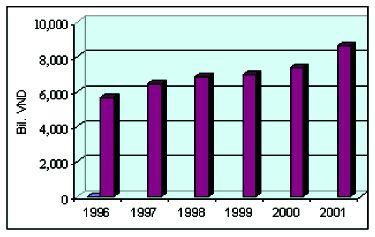
70 자료 : Ministry of Finance, Vietnam < 그림 4-2> 수처리분야총지출현황 ( 가 ) 용수공급시장베트남정부의가장주된환경관련관심사중하나가바로깨끗한음용수를확보하는것이다. 베트남건설부에따르면 689개도시중 200여곳만이 190개의중앙도심처리시설을통해서정수를공급받고있는것으로나타났다. 이들음용수처리시설은하루평균 500m3 ~3,000m3의정수생산능력을보유하고있다. 23) 베트남전체평균도시의용수공급률은 78% 에육박하는반면농촌지역은그비율이 44% 정도로도-농간큰격차를보인다. 심지어접근성이떨어지는일부지역에서는이비율이 4% 까지나타나기도한다. 뿐만아니라베트남은배수 ( 配水 ) 및급수를위한관망이상당수가매우노후화되어있어누수율이도심평균 36%, 일부지역에서는 50% 를상회하기도한다. 이러한상황을개선하기위해서정부는 2010년까지인구의 80% 가정수를공급받는것을목표로하는용수공급개발계획을발표했다. VWSA는 24) 용수공급프로젝트를위한총투자액이향후 10년간약 20억달러이상에이를것으로전망하고있다. 용수공급률의확대와더불어수원의수질개선은용수공급시장의또다른과제다. 호치민시의수도수압은매우낮은편이며주민들은부식된관으로부터물을얻기위해펌프를사용하기도한다. 호치민시에서취수된관급용수샘플에서는수도관내에서침전물들뿐만아니라매우높은농도의박테리아까지검출되고있는것으로나타났다. 호치민시자연자원과에따르면, 일부지역지하수의총유기탄소 (TOC) 함량은 31~86 23) 수원구성비율 : 지표수 3분의 2, 지하수 3분의 1 24) The Vietnam Water Supply and Sewage Association. 베트남상하수협회
71 mg /l 로측정되었으며주요수원인일부큰하천의 BOD 5 는 5mg /l를초과하기도한다. 그러나설비, 관리기술, 재정등을고려할때베트남에서자체적으로이러한수질오염물질을처리하기를기대하기는어려워국제개발전문가들은외국인직접투자를강조하고있다. 인구당일평균 50~180l에이르는물수요량에대해깨끗하고풍부한수량을원활하게공급하기위해서는호치민시에만향후 5년간연평균 1억 3,300만달러의투자가필요할것으로추산된다. < 표 4-2> 과거 10년간베트남 WSS 프로젝트투자규모 (2003년) 지역구분 총프로젝트수 투자규모 ( 달러 ) 총투자액정부투자국제증여 홍강지역 ,536,500 45,975, ,561,000 북동부지역 ,549,000 31,421, ,128,000 북서부지역 3 12,737,000 2,122,000 10,615,000 중북부지역 9 38,650,000 7,177,000 31,473,000 중남부지역 ,209,000 12,872,000 92,377,000 중부고원지역 3 33,175,000 5,899,000 27,276,000 남동부지역 ,128,000 30,599, ,529,000 메콩강삼각주 10 66,336,000 6,031,000 60,305,000 총계 ,320,500 96,096, ,224,000 자료 : Participatory assessment of urban water supply and sanitation in vietnam, world bank 2003 상하수프로젝트를위한자금마련은다양한재원을통해충당된국가예산과 ODA를통해이루어진다. 한국을비롯한일본, 독일, 프랑스, 덴마크, 네덜란드등의양자간증여와더불어 ADB, WB등국제기구의다자간증여를통한 ODA 지원이핵심적인역할을하고있다.( 그림 4-3 참조 ) 현재 170개도시에걸쳐약 10억달러에이르는다수의용수공급프로젝트가원할한용수공급을위해 2020년을최종목표로진행중에있다. 또한베트남농촌지역을중심으로 2010년까지인구의 85%, 2020년까지 100% 의용수공급이이루어질수있도록하기위한대규모의계획이시행중이다. 도시규모에따른정부의용수공급계획은 < 표 4-3> 과같다
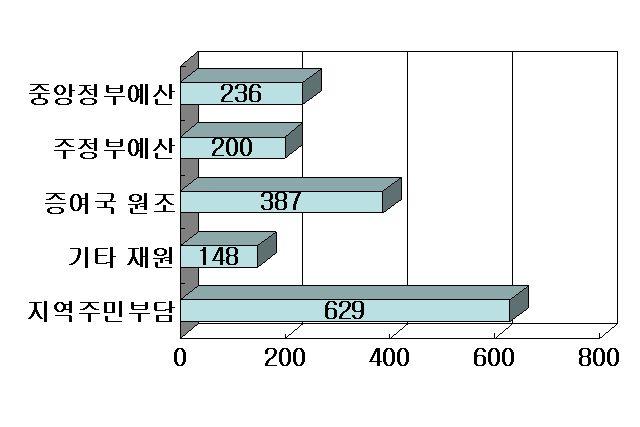
72 < 표 4-3> 베트남정부의 2010 용수공급계획목표 도시구분 규모 유량 공급목표 1도시 300 만이상 180l/cap/d 100% 2도시 100 만 ~300 만 150l/cap/d 95% 3,4,5 도시 100 만이하 120l/cap/d 90% 소규모행정구역 80~100l/cap/d 80% 또한도시하수처리계획에관해장기적으로는다음과같은목표를설정하고있다. o 2020년까지인구의최소 80~90% 가하수시스템을이용하도록개선한다. o 기업은자체적으로유독성액체폐기물처리시설을갖추도록한다. o 고형및액상폐기물을처리하기위한폐기물수집시스템을제공한다. o 국가의광범위한운하시스템을복원한다. < 그림 4-3> 베트남의수처리프로젝트재원조달현황 자료 : WB (2003), Participatory assessment of urban water supply& sanitation projects in Vietnam, and NTP Plan, 2004 ( 나 ) 폐수처리시장현재가정용하수를집수하기위해프로젝트를진행중에있는 Can Tao와 Da Nang을제외하고는중앙하수처리시스템이갖추어져있는도시나성은없다. 산업폐수의처리시설도동일한실정이다. 베트남전역에 4개의수출가공공단, 2개의하이테크공단을포함한 74개의산업단지가운영중에있다. 그러나 2004년베트남정부보고서에따르
73 면불과 15개의산업단지만이중앙폐수처리시설을보유하고있을뿐이다. 호치민시의경우도 15개의산업단지및수출가공공단중 5개소만이폐수처리시설을갖추고있다. 이는곧나머지산업단지에서발생되는폐수가자연으로무단방류되고있음을시사한다. 최근다국적단체및현지시민단체들의활동으로인해이에대한정부및민간기업의관심이높아지면서시당국은산업오염유발자를거주지역에서부터제한지역이나사업단지로이주시킬것을결정하였다. 또한이러한노력을지원하기위한일환으로활발한오염제어설비투자의유도를위한재정원조프로그램인 Environmental Revolving Fund 와 Development Assistance Fund 이실시되고있다. (2) 대기환경시장베트남정부는차량배출가스와이들이도심의대기오염에미치는영향에대해많은관심을가지고있다. 주변환경으로의차량배출의심각성으로인해정부는대중교통을장려함으로써개인의차량숫자를줄이기위한노력을기울이고있다. 약 5% 의환경보호를위한정부지출이대기환경질의연구및감시에쓰이고있다. US-AEP에따르면차량배출과연료기준을강화하고정부기구, 연구단체, 증여국간의협력을도모함으로써이동오염원으로부터오염물질을줄이기위한노력을계속하고있다. (3) 폐기물처리환경시장 고형폐기물관리계획에따르면, 정부는거리청소서비스를개선하고민간부문참여 활성화를통해폐기물수집효율을높일계획을갖고있다. < 표 4-4> 폐기물시장규모및예상성장률 ( 단위 : 백만달러 ) 25) 구분 2005 년 2006 년 2007 년 향후 2 년간평균예상성장률 (%) 수입시장규모 현지생산규모 수출규모 n/a 총시장규모 기준환율 VND14,000 VND15,150 VND15,500 VND16,000 26) 자료 : Newspapers, Hanoi Urenco, National statistic book, 25) 2005 년수입시장규모는주로중국, 한국등에서수입된 threshing 트럭이큰비율을차지한다. 26) 예상환율증가율은 3~5%
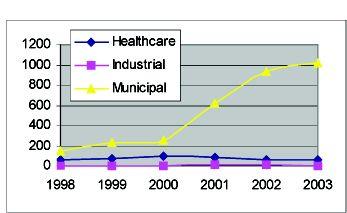
74 2005년다양한발생원으로부터총 1,500만톤의폐기물이베트남에서발생했으며이중 80% 가도시폐기물, 17% 가산업폐기물, 나머지가병원성폐기물인것으로나타났다. 베트남지방정부가지적하고있는고형폐기물관리에서의주요과제는설비, 자본, 공공의식의부족등이다. 특히처리시설이매우부족하여각폐기물발생자가발생단계에서스스로유해성폐기물을처리및처분하도록책임을부여하고있다. < 표 4-5> 폐기물의종류별발생현황예측및투자수요 폐기물분류 (milionton/year) 2005 발생량 투자수요 (VND,bil) 발생량투자수요 (VND,bil) 도시폐기물 산업폐기물 의료폐기물 총계 자료 : Environment monitor 2004, World bank 자료 : Environment monitor 2004 < 그림 4-4> 폐기물관리투자액증가추이 폐기물관리를위한투자는 1998년 1,220만달러에서 2003년 6,900만달러로크게증가했다. 이중약 87% 가도시폐기물관리를개선하기위해투자되었으며의료폐기물 12%, 산업폐기물 1% 등이그뒤를따르고있다. < 그림 4-4> 와같이도시폐기물관리를위한투자는 1990년대이후꾸준하게증가하고있는추세이며의료
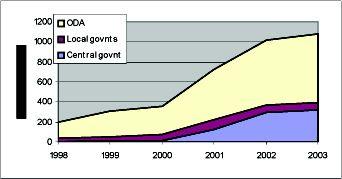
75 및산업폐기물을위한투자는 2000 년, 2001 년들어조금씩감소하는경향을보이 고있다. 투자주체별로보면고형폐기물관리를위한중앙정부및지역정부의투자와 ODA 의규모가 1998년이후모두증가세를보이고있다. < 그림 4-5> 에서알수있듯이양적투자규모는 ODA에의한것이가장큰비중을차지하고있지만증가율에서는중앙정부투자가 1998년에대비 2003년투자가 100배이상증가하였으며 ODA와지방정부에의한투자순으로나타나고있다. 이들고형폐기물관리를위한투자규모는투자개발을위한국가예산지출의 1.2~2.4%(GNP의 0.18% 수준 ) 에해당한다. 또한중앙정부는주로인프라구축에비용을투자하고있는반면, 지방정부는폐기물을관리하고유지하기위한비용에투자하는성향을보이고있다. < 그림 4-5> 폐기물관리분야의투자재원구성비 자료 : Calculated from UNDP compendium, MPI database on public investment project 한편, 고형폐기물관리에투자하는비용은다른나라와비교시상대적으로매우낮다. 28개의주요도시를대상으로실시한연구에따르면, 각도시의 URENCO는고형폐기물처리비용으로연간톤당 10달러를지출하는것으로나타났다. 이들비용중 90% 에해당하는대부분의비용이고형폐기물의수집및운반에소모되고있다. 이처럼최종처리비용이매우낮게나타나는이유는처리자체가현재단순매립의형태로대부분이루어지기때문인것으로보인다. < 그림 4-6> 은도시규모에따른고형폐기물관리시스템의비용지출규모를나타낸것이다
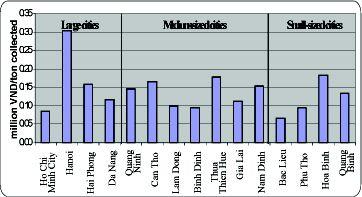
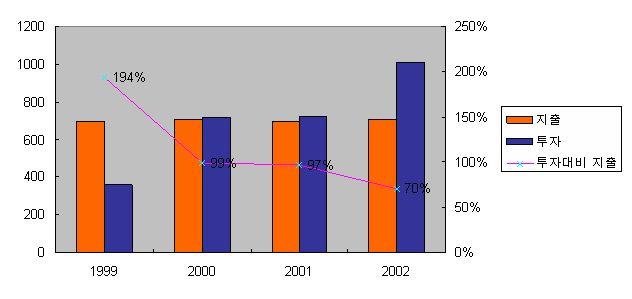
76 < 그림 4-6> 고형폐기물관리시스템의운영및유지비지출현황 27) 자료 : Survey of URENCO, 년 URENCO는현재운영중인폐기물처리시설을위해총 2,500만달러의국가보조금을베트남정부로부터지원받았다. 그러나고형폐기물관리시스템을원활이운영하기위한이러한보조금지원에도불구하고 URENCO는여전히재정난에허덕이고있으며위생매립시설로설계된처리장마저도단순매립방식의하치장방식으로운영되고있기에문제가크다. "2010 년 ~2020 년고형폐기물관리주요계획 " 에서발표된투자계획은 O&M 28) 지원 에관련된재원지출에대한정부의끊임없는정책적강조사항을보여준다. < 그림 4-7> 고형폐기물관리를위한투자대비지출현황 자료 : UNDP Compendium, MPI Database on public investment projects 27) 대도시 : 인구 50 만이상, 중도시 : 인구 25 만이상, 소도시 : 인구 25 만이하 28) Operation & Management
77 < 표 4-6> 과같이 1999년고형폐기물에관한국가전략은 2020년까지 18억 8천만달러에가까운투자를계획하고있다. 고형폐기물에관한현재의상황과지출을감안했을때 NSEP의목표에부합하기위해서는 2004년 ~2020년동안필요한투자누적금액은계획투자금액외에도약 6억 3천만달러가추가적으로필요할것으로전망된다. < 표 4-6> 과거및향후폐기물관리예산 투자액 ( 억달러 ) 1999 년 ~2003 년 2004 년 ~2010 년 2011 년 ~2020 년 과거및향후투자계획 과거및향후투자계획누적치 NSEP 목표에부합하기위한누적투자액 자료 : National Strategy of SWM in urban cities up to 2020, MOC, 1999 고형폐기물관리분야에서특히폐기물수집및유해성병원폐기물소각분야의기술투자가최우선시되어왔다. 그러나산업활동으로인해발생한유해성폐기물의수집과분리는여전히제대로이루어지지않고있으며베트남의급속한산업화와도시화에따라, 베트남의유해성고형폐기물의양은날로증가하는추세이다. 고형폐기물의수집율은도심의경우 71% 농촌의경우 20% 이하이며국가전체적으로도 53% 에불과한수치이다. 또한재활용및재사용비율은 13~20% 정도이며발생원에서처리시설까지고형폐기물의재회수율은이보다약간높은수준이다. 게다가고형폐기물처리, 관리기술은여전히일반적인요구에순응하지못하고있다. 베트남은연간 9억 5천만달러를지출하여 5천ha의토지에고형폐기물을처리하고있다. 고형폐기물의양적증가와함께체계적인시스템을갖추지못한매립지에서의침출수문제로인해고형폐기물관리는베트남정부의최고의관심사중하나로자리잡고있다
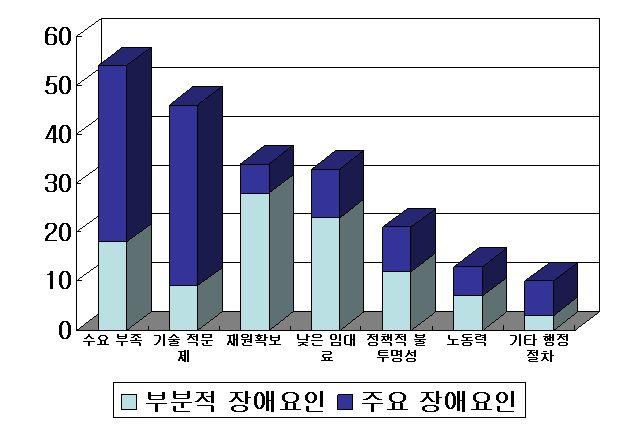
78 3. 분야별환경시장동향 가. 수질환경시장동향시장규모에서도언급한바와같이수자원관리분야는아직까지그수요가상대적으로부족하여시장진출에어려움을겪고있다. 또한고도정수처리와같은일부분야를제외하고환경선진국에비해기술적으로불리한위치에있다는것도장애요인으로작용하고있다. < 그림 4-8> 은베트남수처리시장에진입하는데있어걸림돌로작용하고있는몇가지주요요인을도식화한것이다. < 그림 4-8> 베트남수처리시장진입의장애요인 자료 : WB (2003), Participatory assessment of urban water supply& sanitation projects in Vietnam, and NTP Plan, 2004 (1) 용수설비시장수처리시장의경우하노이와호치민시의정수공급시스템은 20세기초프랑스에의해건설되었다. 그러나건설당시에비해몇배증가한인구규모와관리및보수의미비로인해공급수량의약 36% 이상이누수로손실되고있으며관의부식으로인한오염이심각한문제로제기되고있어보수및재건이필요하다. 29) 또한인구 5,000명이하의농촌에서는지표수를콘크리트수조에저장하여간이화학적처리 29) 호치민시의경우가구당음용수구입을위한지출이매월 10~15$ 로, 베트남의국민소득을감안한다면각가정의부담은상당히큰편
79 를거친후사용하거나빗물우물등을이용하고있다. 2002년기준상수도보급률은 50~60% 수준에불과하며, 정부는 2010년까지상수보급률을 80% 까지향상시키고하노이, 하이바트룽, 호안키엠등전지역에걸쳐수자원처리시스템을설치하겠다는목표하에 40개지역에 200여개상 하수처리시설신설사업을진행중에있다. 정부는상 하수도사용료를인상하여관련재원을마련한다는계획을추진중에있으며한편이러한대규모프로젝트를실행하기위해월드뱅크를비롯한세계의對베트남 ODA를통해서시행해나가려하고있다. 이같은정부의수질관련정책과낮은현지기업기술수준으로인해환경관련기술설비수입은지속적으로증가할전망이다. 베트남건설부에따르면, 2020년까지매년 1억달러이상을투자, 6천4백만명이상이수혜를입는국영지방물공급및위생계획을실천할예정이라고한다. 현재 BOT투자를목표로하는몇가지상수관련계획에는다음과같은것들이있다. o 하루에 420,000 m³ 를수용할수있는붕타우의상수시설 o 20,000 m³ 를제공하는다낭의상수설비 o 하노이교외지역에상수공급 o 주거지역과공업지대를위한현재상수시스템향상사업 한편파이프, 펌프, 밸브, 필터, 유량계등의계측설비시장규모도지난 4년간꾸준히증가하고있으며주로국제기구의 ODA프로젝트를통해국제경쟁입찰에필요한설비들이조달되고있다. 다자간 ODA를통해실시되는용수공급및위생설비분야의펌프, 파이프기타설비들은주로베트남시장에서환경 G7 30) 으로통칭되는선진국으로부터의수입에의존하고있다. 산업및가정용펌프가가장큰시장규모를보이고있으며외국기업들이시장점유율면에서대부분을차지하고있다. 31) 특히펌프, 모터엔진은수처리시스템의핵심요소로서베트남으로수입되는인지도있는브랜드로는미국의 Franklin, 일본의 Toshiba, 독일의 Siemens 그리고스웨덴의 ABB 등이있다. 30) Denmark, Sweden, Australia, Japan, Germany, France, and the United Kingdom. 31) 베트남펌프시장의 5% 가현지생산이며덕타일철관시장의경우점유율이 10% 이다. 다만압축콘크리트관분야에서는현지기업생산이상당한시장점유율을보이고있다
80 (2) 폐수설비시장베트남의산업부문수자원소비주체를살펴보면음료제조업, 경공업제조업, 해산물가공업, 호텔, 병원등그수요가다양하다. 특히음료제조업의경우에는전국적으로유제품회사를제외한 448개의기업이성업하고있어정수및폐수설비에있어서는주요잠재고객으로주목받고있다. 그러나산업화및인구성장의속도에맞게폐수처리기반시설이성장하지는못하고있으며향후수요는클것으로기대되나아직개발이느리게이루어지고있는분야이다. 병원폐수처리시설의경우도대부분의국가에서는좋은시장으로인식되고있으나베트남은병원의 98% 가국영병원임에도불구하고폐수처리시설및고형폐기물처리시설을갖춘곳이거의없다. 베트남은거의모든폐수처리시스템의핵심부품들역시수입에의존하고있다. 지역기업들은처리시설의설계및설치를위해외국기업과의협력을진행하고있으나아직걸음마단계에머무르고있다. 결국대부분해외로부터수입을하고있으며단지수입설비들을베트남현지에서조립하는것에그친다. 팬, 블로어, 펌프, 밸브, 모터는베트남환경설비공급자의주도적인역할을하고있는이탈리아, 프랑스, 스위스, 일본, 한국등다양한곳에서수입하고있다. 도시당국이홍수범람예방을향후 5년간주요우선해결과제중하나로여기고있지만하수시스템을개발하기위한투자는거의이루어지지않고있다. 현재몇몇도시에서하수시스템업그레이드프로젝트가 WB, JBIC, ADB 그리고벨기에와의기술협력에의해이루어지고있다. < 표 4-7> 주요도시의국제협력을통한하수시스템구축프로젝트 시행기관및국가 WB JBIC ADB 벨기에 해당도시 HaiPhong,QuangNinh,Nam Dinh,DaNang Hanoi,VungTau,HoChiMinh HoChiMinh, 기타중남부몇몇도시들 HoChiMinh 나. 대기환경시장동향 베트남의주요대기오염의원인중하나로지적되는것이급속한산업화에따른산
81 업분야의대기오염물질배출이다. 특히주요도시곳곳에들어서있는산업단지와이에필요한막대한양의전력을충당하기위해서 2010년까지발전소설립에관한주요계획안이베트남수상의승인을받은상태이다. 전력수요가연간 10~12% 이상씩증가하고있으며 2010년총예상전력수요량은 70,000~80,000GWh가될것으로전망된다. < 표 4-8> 베트남전력량의향후수요전망 년도 Pmax(MW) Energy(GWh) ,900 26, ,800~8,300 46,500~50, ,000~14,000 70,000~80,000 자료 : Stat-USA market research report, Vietnam 약 6~8 백만톤의석탄이발전소에서사용될것이다. 32) 현재 Uong Bi(300MW), Hai Phong(600MW) Quang Ninh(600MW) 등이건설진행단계에있으며 2010 년까 지총 3000MW 의화력발전소의건설이완료될것으로전망된다. 베트남의환경오염물질처리서비스는초기형성단계수준이어서규모가작은편이다. 현재까지는매우적은숫자의현지기업들만이이시장에참여하고있으며이들기업과환경단체및대학부설연구센터등을중심으로시장활동이이루어지고있다. 이들센터는과학조사나특별한환경이슈에관한보고서와같은정부과제를수행하는한편다음과같은일들을수행한다. o 특별한투자프로젝트에대한환경영향평가 o 폐기물처리시스템의설계및설치 o 처리시스템의운영및유지서비스제공 하노이와호치민같은일부대도시의경우모니터링, 테스트, 샘플링, 분석장비등과관련하여일부외국기업이진출해있으며대부분은외국업체의에이전트나대리점이다. 대표적인기업으로 Schmidt Vietnam, Europe Continents Vietnam, Diethelm Vietnam 과같은연구소장비제조를담당하는몇몇대표사무소가있다. 32) 베트남의석탄총매장량의 0.5% 인약 2 천만톤이 2010~2020 년사이채굴될계획
82 베트남오염제어설비시장에서의선두주자는독일과일본이다. 최근미국상품이어느정도의시장점유를늘려가고있으며덴마크개발기구가호치민시에 4곳의대기관측소를 UNDP 프로젝트를통해서설치하였고, 노르웨이개발기구역시 ADB의프로젝트를통해서 5곳의대기관측소건설사업에참여하는등덴마크, 프랑스, 스위스노르웨이등이베트남의대기오염관련프로젝트를실시하고있다. 다. 폐기물환경시장동향 2020년까지환경보호전반에관한계획을나타내고있는국가환경보호전략의주요초점은환경관리능력강화에있다. 구체적으로환경보호를위한경제적인접근, 법적정책적개혁, 대중및시민사회의참여촉구, 지역및국가기구의능력강화, 쟁책개발, 오염제어등을주요사안으로제시하고있다. < 표 4-9> 국가환경보호전략 (NSEP) 의고형폐기물관리목표 목표항목현재 고형폐기물수집룰 65% 90% - 오염원에서의폐기물분리 폐기물처리 참여수준은확실치않음 산업폐기물 : 미상비축된농업용폐기물 :42% 유해성의료폐기물 : 50% 이하 가정 30%, 기업 70% - 유해폐기물 60% 의료폐기물 100% 폐기물재이용 20% - 기업의폐기물처리시설보유 환경기준및 ISO14000 의인증기업 ISO14021 에따른에코라벨링 10~20% 신생기업의경우 100% 도시및산업지역폐기물총량의 80~95% 수집된폐기물의 30% 1% 이하 50% 80% 0% - - 수출상품 :100% 국내소비 :50% 자료 : National Strategy for Environmental Protection until 2010 and vision toward 2020 전략의폐기물분야의목표는 < 표 4-9> 과같이 90% 이상의도시폐기물수집률달성 과유해폐기물처리율 60%, 그리고유해성의료폐기물의경우전량처리하는것을
83 목표로하고있다. 베트남에서는일반적으로매립지의운영은 URENCO 33) 와 CITENCO 34) 가담당하고 있다. 이들에의해설비구입이주로이루어지며가격면에서일본이나미국산설비 의절반정도에해당하는한국, 중국등의제품이주로구매되고있다. 외국기업이대부분을이루는베트남의환경시장에서고형폐기물의수집및분리시스템분야의경우는일부베트남현지기업들이상당한시장점유율을보이고있다. 그러나지방생산기업들은가정이나공공용으로사용되는플라스틱이나합성물질의생산만이가능한수준이다. 도심에서대부분의고형폐기물은핸드카트에의해서수집되어적하지로모여진다. 선별장치를갖춘트럭은현재베트남대도시에서가장인기있는제품이다. URENCO들이매립지에분쇄압축기를구비하고있지않아매립지는금방포화상태에이르게된다. 더욱이대부분의개발도상국들이그러하듯이베트남의노면상태역시좋지않다. 특히도시의도로는매우협소하기때문에좀더작은크기의폐기물수거차량을필요로하고있다. 과거오랜세월동안베트남정부는고형폐기물관리를위해서는예산도별로할당되지 못한채거의주의를기울이지않아왔다. 그러나현재는대도시는물론베트남대부분 의주에서이러한고형폐기물관리에관한수요가크게증대되고있다. 도시화와경제성장결과, 고형폐기물발생은양적으로크게증가하였는데하노이의경우지난 5년만에 50% 에이르는급격한폐기물발생량증가율을보이고있다. 또한생활수준의변화및소비되는상품의양과형태에있어서변화로인해발생되는폐기물의특징도달라지게되었으며폐지, 플라스틱, 알루미늄, 폐건설자재등의양이특히눈에띄게증가했다. 이러한폐기물발생률증가및변화는수집및처리시스템에더욱커다란부담을가중 시키고있다. 호치민시는하루약 5,500 톤에달하는고형폐기물을발생시키고있으며 이는베트남전역에서가장발생률을보이고있다. 수집및처리된폐기물양은약 33) Urban Environmental Company 34) City Environmental Company
84 60~70% 로예상되며이를위해호치민시는 3 백만달러의비용을매년지출하고있다. 35) < 표 4-10> 는 1995 년부터 2020 년까지의폐기물의종류별발생량을추정한것이다. < 표 4-10> 폐기물유형별연간발생량변화 분류 1995 ( m3 /y) 2000 ( m3 /y) 2005 ( m3 /y) 2010 ( m3 /y) 2015 ( m3 /y) 2020 ( m3 /y) 가정폐기물 899,346 1,273,984 1,746,883 2,619,483 3,559,455 5,018,750 거리수집폐기물 89, , , , , ,667 산업폐기물 100, , , , , ,436 의료폐기물 14,600 16,427 19,040 22,093 25,627 29,727 건설폐기물 54,000 72,264 96, , ,000 자료 : Hanoi Solid waste management strategy, 주요국책환경사업및재원조달현황 가. 주요국책환경사업현황 (1) 국가환경보호전략 (NSEP) 2003년베트남정부는정부조직법 2001과환경보호법 1993에의거하여 2010년국가환경보호전략을수립하였다. 2010년국가환경보호전략은경제발전및사회발전은환경보호와밀접한연관이있음을인식하고지속가능한발전을기본적인정책방향으로설정하였다. 또한 2020년까지오염증가추세를경감시키고환경질을개선하여국가의지속발전을꾀하고국민들이정부가정한환경수준에맞는건강한대기, 토양, 수질환경에서살수있도록보장하는것을목표로하고있다. ( 가 ) 세부목표 1 오염증가추세제한 o 제조업의 50% 이상이 ISO14001을비롯한환경인가증보유, 신생제조업의경우 100% 오염방지설비시설설치의무화 o 아파트단지의 40%, 공업단지및생산지역의 70% 이상이환경기준에맞는폐수처리시스템을구비하며위험폐기물의경우 60%, 병원성폐기물은 100% 모두처리할 35) 하노이의경우하루평균고형폐기물발생량은약 1700톤이다
85 수있도록필요시설을설치 o 환경오염의주범인농약의생산과사용을제한 < 표 4-11> 베트남 NSEP 의주요장단기목표 2020 년까지의장기적목표 2010 년까지의중단기적목표 -제조업의 80% 이상이 ISO14001 을비롯한환 -공업단지, 도시및농촌의주거지역의환경경인가증보유오염문제를집중적으로해결 -아파트단지, 공업단지, 생산지역은환경기 -하수, 호수, 강의오염물질을처리하고환경준에맞는폐수처리시스템 100% 구비질을개선 -폐기물의 30% 이상이재활용될수있도록재 -기상이변을예방하기위한능력을강화생공업을육성, 발전. -생태균형과자연보존및생물다양성을확보 -상수도보급률의증대 ( 도심지역 100%, 농촌하며이를위해자연자원의합리적개발과지역의 95% 이상 ) 사용을유도 -전국자연토지의 48% 이상의녹지화 -국제적인수준의환경요구에부응하기위한 -수출품은 100%, 내수소비재의경우 50% 이대책마련상을 ISO14021 수준의환경마크획득목표 자료 : National Strategy for Environmental Protection until 2010 and vision toward 환경질개선 o 아파트단지와공업단지에빗물및하수처리시스템건설. o Dioxin 오염문제해결 o 도로변의 90% 이상녹화조성, 도심공원면적을 2000년기준 2배이상으로확대 o 상수도보급률의증대 ( 도심지역 95%, 농촌지역의 85% 이상 ) 3 생태계균형발전 o 50% 이상의광산개발구역, 40% 이상에달하는심각한손상을입은생태구역을대상으로생태계회복을위한방안마련 o 삼림으로덮인토지비율을총자연토지면적의 43% 이상까지상향조정. 훼손된하천의수질을회복하고삼림의질을향상시키기위해식목장려정책실시 o 청정에너지 (clean energy) 를사용하는비율이매년사용되는총에너지의 5% 수준
86 까지확보 o 자연보존구역, 특히해양보전지역은현재의면적대비 1,5 배이상확대 4 국제사회에서요구하는환경여건을마련 o 수출품목제조시 100% 모두 ISO 환경관리시스템을적용 o 베트남으로유입된 100% 생물변이종의관리 o 유해성폐기물수입전면폐지 ( 나 ) 주요사업과해결방안 1 주요사업가오염방지및제어 o 국가혹은지방정부단위로환경파괴를감시및관리하기위해환경오염예방계획들을실시하는국가급, 지방급오염감찰단의발족 o 친환경기술및청정기술적용 o 분야별국가환경기준의세부기준마련및구체적실시 o 폐기물관리능력및효율증대 나심각한오염현황극복 o 64/2003/QD-TTg의결정에따라환경오염유발이심한기업들의문제해결을촉구 o 심하게파괴되고오염된지역에대하여이를회복하기위한개선프로젝트를실시 o 과거전쟁때사용된화학독성물질로인한환경오염문제를해결 다자연자원을안정적으로개발및보호 o 토지와광산자원을합리적으로개발하는한편효율적인사용을통해자원절약도모 o 수자원을합리적으로개발하고발전하며보호 o 대기자원의보호 라중점지역의환경보호및개선 o 도시와공업단지 o 바다, 연안, 섬 o 습지, 강가 o 농촌, 산간지역 o 자연유산과문화유산
87 마자연및생물다양성을보존 o 국가자연보존구역의발전및보존 o 삼림지역의확장 o 생물다양성보호 2 해결방안 o 교육및홍보를통해서환경보호에관한책임의식을향상 o 환경보호에관한국가관리, 체계, 법률을강화 o 환경보호에경제적수단을적용하는것을강화 o 환경보호와경제발전, 형평성과효율성을조화롭게추구 o 환경보호투자를다양화하고투자비중을향상 o 환경보호분야에과학연구능력과기술발전강화 o 환경보호를위한국제협력활동을강화 ( 다 ) 전략실시체계 1 자원환경부는국가관리기관으로서타기관과의공동전략을수립. 매년수상에게보고서를제출하여관련부처및기관들이각자의해당분야에관한환경보호전략을세우도록유도한다. 2 전략을효율적으로실시하기위해투자계획부, 재정부는국가예산외의별도의투자자본을모색하여확보하기위한노력을추진한다. 3 각기관은각자의역할, 임무에따라서관련내용을실시하고자체적으로환경보호전략을세운다. (2) 베트남지방정부의오염유발기업대상환경사업베트남정부는각지방및부처에서관리하는기업들의환경보호사업에도관심을기울이고있다. 2003년 4월베트남정부는 환경오염을심각하게유발하는기업에대한철저한관리계획 을 No. 64/2003/QD-TTG(3) "DECISION No. 64/2003/QD- TTg 에의거하여발표하였다. 계획에따르면 1차적으로 2007년까지우선적으로 439개의심각한오염유발기업을선정하여환경처리사업을실시하고 2010년까지는나머지기업을대상으로확대실시하기로하였다. 이정책의기본내용은다음과같다
88 ( 가 ) 2007년까지의단기목표총 4,295개의환경오염유발기업중그오염정도가심각한 439개의핵심오염유발기업을선정하여철저하게관리한다. 36) 특히인구밀도가높은지역과오염도가심한지역에대해사전오염방지활동을강화하고심각한환경오염을유발하는기업들의증가율을단계적으로제한해나간다. ( 나 ) 2012년까지의장기목표 1 남은 3,856개의기업및신생기업들을철저하게지속적으로관리한다. 2 오염예방및방지활동을강화한다. 3 오염유발기업의숫적인측면에서증가비율을제한하고통제한다. 4 산업화및현대화의과정에서지속가능한개발을보장한다. 나. 외국정부및국제기구와의프로젝트추진동향 (1) World Bank와의환경프로젝트협력현황베트남에서월드뱅크의주요활동목표는 통합적인베트남빈곤감소및성장전략 (CPRGS) 를통한베트남정부및국민들이삶의질을향상시키는데것을지원하는데에있다. 월드뱅크의 국가원조전략 (CAS) 은직접적으로정보를제공받아 CPRGS와의연계하에다양한활동계획을추진하고있다. < 표 4-12> 월드뱅크와협력중인프로젝트리스트현황 37) 분야 프로젝트수 지원금액 ($) 비율 (%) 농업, 어업, 산림업 19 1,057,280, 용수공급및위생설비 13 1,509,510, 에너지 10 1,187,030, 총계 42 3,753,820, 자료 : World Bank project list, Vietnam 재구성 2005 년 6 월 Can Tho 에서의베트남컨설팅그룹과의미팅에서월드뱅크를포함한증 여자들은베트남 2006 년 ~2010 년 5 개년사회경제개발계획과관련 CPRGS 로의접근 을통해베트남정부와의협력을추진하기협의했다 년이후현재까지진행중인 36) 284 개의일반제조업을비롯하여 52 개의폐기물관리기업, 84 개의병원등으로구성된다. 37) 월드뱅크와협력중인세부적인리스트내역은부록참조
89 월드뱅크와의협력프로젝트의숫자는 < 표 4-12> 와같다. < 베트남홍강삼각주농촌용수공급및위생설비프로젝트 > o 사업기간 : ~ o 사업규모 : 약 5,000 만달러 프로젝트주요내용이프로젝트는베트남홍강삼각주지역에속한 4개의주를대상으로수질을정화하여질높은용수를공급하고가정위생설비서비스를개선하여효과적인사용이이루어질수있도록하는것을주요목표로하고있다. 현재 Hai Duong, Nam Dinh, Ninh Binh 그리고 Thai Binh의 4개의주에서프로젝트가시범실시되고있으며크게 4개의프로젝트로구성된다. 주요내용으로는용수공급및위생설비서비스분야에서증가하고있는도-농간격차를해소하기위해수자원개발및인프라구축활동을몇몇특별선정된농촌지역을대상으로우선적으로실시할것을강조하고있으며특히, 각종연수프로그램과기술원조를통해지방정부및지방의환경관리주체들의환경관리능력을강화하고분산투자를유도하여지방정부의재정부족문제를해결하는것을골자로하고있다. (2) JBIC 38) 와의환경프로젝트협력현황 JBIC의경우지난 2005년기준사회전반인프라시설을확충하기위해對베트남 ODA자금으로총 883억엔을투자했다. 특히이중환경개선을위한제 2차하노이하수관거정비프로젝트에 30억엔을, 제 2차호치민수질환경개선프로젝트에 15 억엔을투자하는등베트남의환경시장에서활발한움직임을보이고있다. o 시행기관 : 하노이인민위원회 o 사업규모 : 30 억엔 < 제 2 차하노이하수관거정비프로젝트 > 프로젝트주요내용베트남의열대몬순기후로인해연간 2500mm 이상의강우량을나타내며그중 70~80% 가우기인 7월 ~9월에집중된다. 이프로젝트는지형적으로낮으며특히 5 38) Japan Bank For International Cooperation
90 월에서 9 월사이태풍이오는시기에잦은홍수에의해손상받기쉬운하노이지역 의관거를대상으로한다. 특히하노이의산업화, 도시화에따라산업폐수및생활 하수의지속적인증가로인해그필요성이더욱커지고있다. 배수및하수시스템을개발함으로써하노이도시지역의홍수로인한피해를최소화하는데에있다. 프로젝트를통해 13,300m3용량의하ㆍ폐수처리시설이설계될예정이며이로인해홍수로인한피해가최소화되고하천수질을개선되는등도시위생및생활환경이크게개선되는효과가기대된다. 한편, 프로젝트해당지역내의빈곤층에대한환경교육을실시함으로써환경의식 을고조시켜주거환경을개선하기위한노력도병행될예정이며이를위해차관중 일부가도시공학, 재료및설비조달, 컨설팅서비스등을위해사용될것이다. (3) ADB와의환경프로젝트협력현황 (2000년이후 ) ADB는베트남의에너지분야의인프라개발에큰비중을두고있다. < 표 4-13> 에서와같이對베트남환경협력프로젝트에서에너지가차지하는금액비율이절반을넘어서고있다. 에너지분야가대부분차관형태로제공되고있는반면자연자원관리분야는금액면에서는다소적지만기술원조혹은증여의형태로협력이진행되면서실제프로젝트숫자에있어서는가장활발한활동을보이고있다. < 표 4-13> ADB 와협력중인프로젝트리스트현황 분야프로젝트수지원금액 ($) 비율 (%) 자연자원관리 ,950, 에너지 ,800, 용수공급및위생설비 5 136,952, 총계 44 1,163,702, 자료 : ADB project list, Vietnam 재구성
91 <Phuoc Hoa Water Resources Project> 총계 ADB 베트남정부 Agence Fracaise de Development 수혜자 164.6(100%) 90(54.7%) 35.6(21.6%) 24(20.7%) 5(3.0%) 시행기관 완료시기 농업및농촌지역개발부 (MARD) 2010 년 프로젝트주요내용 2004 년 4 월베트남남부지역의수자원인프라를개발하기위해 9 천만달러의차관 계약에 ADB 와베트남정부가동의하면서실시된프로젝트중하나이다. Phuoc Hoa Water Resources Project는수자원인프라개발에중점을두고있으며 Phuoc Hoa 댐과수송용운하가프로젝트수행범위에포함된다. Be River로부터 Saigon강의 Dau Tieng 저수지까지물을운반하는데에프로젝트의목적이있다. 운반된물은저수지에서 Dau Tieng 다목적관개시스템으로전용되어관개용수, 인근도농지역의용수공급, Saigon과 Vam Co Dong강유역에서수자원내의염분조절등을위해사용될것이며이로인해총면적 48,130ha의새로운 3개의관개지역이개발될것이다. 유역의전환없이는급격한수요증가로인해깨끗한물의부족현상이 4~5년내에눈에띄게증가할것으로예상된다. 과거 Saigon과 Vam Co Dong의물부족은건기동안해수침입의원인이되는등그동안끊임없는문제를발생시켜왔다. 그러나 Phuoc Hoa Water Resource Project는 Saigon과 Vam co Dong 강유역에염도를관리할물을여유있게제공하게될것이며가정용수, 도시용수및산업용수의공급량을증가시키는한편인근주에서의관개농업의개발활동역시지원하게될것이다. 약 30,200가구가 3개의하위관개프로젝트로인해직접적인혜택을누리게될것이다. 다. 주요국책환경사업재원조달현황 (1) ODA
92 ODA는지난 5년간총투자자본의 11% 에달하는베트남의사회경제개발의핵심적인재정원이었다. 2001년 ~2004년 110억달러이상이베트남을지원하기위해조성되었으며이중 78억달러가실제베트남시장으로유입되었다. ODA는베트남의경제성장을도움으로써사회경제개발을이룩하는데커다란기여를했으며특히도로, 교량, 항구, 발전소, 관개시스템등분야에많은사회인프라프로젝트가실시되어가시적인효과를거두었다. ODA를통해사회경제개발, 빈곤퇴치등의해결을위한국제사회의공감을이끌어냈으며자국의정책을지원하는실리적인결과를얻어냈다. 또한이를통해지난 9월뉴욕에서의 UN 정상회의에서국제사회로부터베트남이많은주목할만한성과를거두었음을인정받아향후베트남의밀레니엄개발목표 (MDGs) 를이행하는데에도커다란도움이되었다. 베트남은 OECD-DAC의효율적인원조에관한워킹그룹에참여하고있는 14개국중하나이며또한하노이에서의회의를통해파리공동협정을구체화한첫번째국가이기도하다. 베트남정부는 2006년 ~2010년까지연평균 21억달러의자본을지불하기위한노력을가속화할것을목표로하고있다. (2) 기타환경부과금베트남에서는다양한세금기준을마련하여이로인한세입을환경보호를위한여러가지정책의재원으로사용하고있다. 다음은환경보호재원을조달하기위한제도들이다. ( 가 ) 자원세베트남에서는 No05. /1998/PL-UBTVQH의시행으로각자원에대한세금을징수하고있다. 이는환경보호를위한재원확보방안이될뿐아니라자원을합리적으로개발하고효과적으로사용하도록하는촉매의역할도담당하고있다. ( 나 ) 환경비 No. 67/2003/ND-CP에따라베트남의환경비는크게폐수비 ( 생활하수, 공업폐수 ) 와도시폐기물의두부분으로분류된다. 이는환경오염을처리하기위한재원확보와더불어물사용자의절수를유도하는목적을내포하고있다. o 생활하수비 : 사용한수량총사용비의 10% 이하
93 o 공업폐수비 : 폐수의오염정도에따라다음과같이분류된다. o 도시폐기물비 < 표 4-14> 베트남의자원세징수현황 순번 항목 세금비율 (%) 금속광산 ( 금, 희금속제외 ) 1~5 1 금 2~6 희귀금속 3~8 비금속광산 ( 보석, 석탄제외 ) 1~5 2 보석 3~8 석탄 1~3 3 석유 6~25 4 가스 0~10 자연산림 a) 나무 ( 각종류 ) 10~40 5 -나뭇가지 1~5 b) 약초 ( 심향, 바격, 기남제외 ) 5~15 -심향, 바격, 기남 20~25 c) 기타자연산림품 5~20 6 자연수산물 ( 해삼, 보어, 진주제외 ) 1~2 -해삼, 보어, 진주 6~10 7 자연수 ( 자연광질수, 병, 칸, 자연정수제외 ) 0~5 -수력발전소에사용한자연수 1~2 -자연광질수, 병, 칸, 자연정수 2~10 8 기타자연자원 ( 새둥지제외 ) 0~10 새둥지 10~20 자료 : No. 05/1998/PL-UBTVQ, 베트남국회의세금법령 도시폐기물비용은일반적으로각지자체별로징수하여지역내에서지출이이루어지며도시규모에따라서징수되는수준이달라진다. 39) 그러나도시폐기물비의금액규모가매우적은편이어서환경보호를위한예산에서차지하는비율은미미한편이다. 39) 하노이의경우하노이시내가정은 2000VND/ 인 / 월, 인근교외지역은 1000VND/ 인 / 월, 학교행정기관등은 120,000~290,000VND/ton 수준
94 그밖에매연배출과관련 2002 년법령 No. 57/2002/ND-CP 에서석유, 석탄, 공항 소음등에대한비용규제가이루어졌으나아직시행되고있지는않다. < 표 4-15> 공업폐수비의분류 40) 번호 오염지표 최소환경비최대환경비 (VND/ kg aspolutant) (VND/ kg aspolutant) 1 생물학적산소요구량 (BOD) 화학적산소요구량 (COD) 총고형물질 (TSS) 수은 (Hg) 10,000 20,000 5 납 (Pb) 300, ,000 6 비소 (As) 600,000 1,000,000 7 카드뮴 (Cd) 600,000 1,000,000 자료 : N0. 67/2003/ND-C, 2003 ( 다 ) 환경기금 No. 82/2002/QD-TTg를통해제정된국가환경기금은국내및국외각개인및단체가투자자금을모아전국적으로환경보호사업및프로그램을지원하고있다. 2004년부터운영되기시작하여총 2000억 VND의환경예산추가확보효과를거두면서폐기물, 폐수처리, 환경사고방지, 친환경기술연구-전개사업, 생물다양성보존, 지속가능한발전과환경에관한홍보및교육에힘쓰고있다. 또한 No. 64/2003/QD-TTg에서규정하고있는환경개선처리프로젝트의해결에간접적인도움을주고있다. 한편지방환경기금의경우호치민시와하노이시에서만시범적으로운영되고있으며, 필요에따라서지방기업의환경처리비용을위해저금리로대출해주기도한다. 5. 경쟁국의베트남환경시장진출동향 가. 일본 JBIC 와 JICA 41) 를통해총 11 개의프로젝트를베트남에서수행중에있으며총투 40) 2004 년 1 월시행해서 2005 년말기준총 6,000 억 VND 의폐수비를확보하였다
95 자액은약 4 억 1,750 만달러에달한다. 주요활동분야는현장근로자들의환경의식 을제고하기위해교육프로그램을실시하는한편녹지화및하천범람으로인한피 해를최소화하기위한인프라구축에중점을두고있다. Ebara Group 그룹은일본의민간기업진출의대표적인사례로볼수있다. < 표 4-16> Ebara Group 의베트남환경시장에서의최근실적 프로젝트명용량 ( m3 / 일 ) 사업내용완료시기 HCMC 하수처리장 141,000 steel 구조공급검사, 운영 test 진행중 HaHoa 급수플랜트 2,000 Cam Khe 급수플랜트 2,000 시설공급, 운영조립, 검사, 운영 test 시설공급, 운영조립, 검사, 운영 test BacThangLong 폐수처리장 QuyNhon 급수플랜트 38,000 운영 test, 교육, 유지관리 ,000 펌프공급, 조립, 검사, 운영 test 2005 (1) 주요사업분야 - 생활용수및공업용수급수 - 생활하수및산업폐수처리 - 생활폐기물및산업폐기물처리기술 - 에너지재생및재활용 (2) 주요서비스 - 상기활동분야의프로젝트전개계획자문 - 필요한환경처리시설의설계조립시공운영 - 유지관리서비스 나. 미국 USAID 42) 는약 650 만 $ 달러규모의비교적적은투자액을보이고있으나총 23 개 의다양한분야의프로젝트를통해서베트남진출을모색하고있다. 이미베트남 41) Japan International Cooperation Agency 42) United States Agency for International Development
96 정부와비정부기구, 학술단체, 지역사회등과의공조하에동-아시아산호초지대복원프로젝트를 2002년실시한바있으며산호초생태계의회복과더불어중앙정부및지방정부의환경관리능력강화를위한프로그램다수를시행완료및시행중에있다. 다. 덴마크 DANIDA 43) 는 1억 3,600만달러의투자를통해총 23개의프로젝트를진행하고있다. 주로환경정보를효율적으로관리하기위한개선방안을추진중에있으며, 베트남각환경기관의관리능력강화와, 주요수계의수자원및폐기물관리에도역점을두고있다. < 표 4-17> 주요경쟁국과베트남과의환경협력프로젝트진행현황 국가 프로젝트숫자 투자규모 (million $) 주요집행기관 일본 US-AEP, EAPEI 미국 23 6,58 MARD, MoC, PPC 덴마크 MPI, MoNRE, MoC, MoET, PPC 스웨덴 MoNRE, MoI 호주 WVI-VN, UNOPS, MoNRE, MARD, 자료 : Vietnam Environmental Protection Agency 43) Danish International Development Agency
97 제 5 장베트남환경시장진출전략 1. 환경프로젝트발굴및입찰제도 가. 환경프로젝트형성단계에서의발굴 (1) 환경프로젝트형성및접근방법 ( 가 ) 사업형성단계베트남의국책사업을포함하여일반적으로프로젝트에관한사업안은환경유관기관및각지방환경청을통해베트남자연자원환경부나관련부처에제출된다. 제출된사업제안서에대해각관리부처는자세한평가를내리고우선순위프로그램을선별하여국책사업규모의경우사업제안서를정부에제출하며해당부처사업의경우자체배정된예산을책정하여사업을선정한다. 국책사업일경우에는정부에서별도로심사위원회를소집하여평가를내리게되는데, 사업의내용에따라위원회에참여하게되는관련부처가달라지지만자연환경부, 재정부, 계획투자부의경우는언제나심사위원회의구성원이된다. 이위원회의심사결과에따라사업규모와세부분야가정해지게된다. ( 나 ) 사업내용작성단계지방의각부처사업이나국책사업프로그램을기준으로하여사업해당분야와관련된적당한기업이나국가환경기관에서프로젝트를작성한다. 프로젝트작성기본내용은다음과같다 * 사업의필요성및타당성설명, 지점, 토지요구와사업시행에필요한조건 * 사업의규모, 각건설항목, 처리항목 * 해당기술에대한내용 ( 환경처리사업이면처리능력, 공법등 ) 을합리적으로설명 * 경제측면분석 : 사업진행시사회-경제에대한구체적인분석이이루어져야한다. - 총투자금액계산. - 투자형식제기 : 재원, 국내 100% 투자나국제투자, 차관의필요성제기 - 인력고용방식과수요인력정도. - 사회-경제이익분석, 투자금액회수가능성예상 * 시공방법제기 : 여기는표면해방과배상방법, 기초건축,
98 * 환경영향평가작성과허가발급.( 환경에관련한사업에도필요한경우에환경영향평가를해야하고책임기관에제출하여허가를받아야한다.) * 건설이많이필요한사업에는기본적인설계가필요 * 사업진행일정 ( 시간계획 ). ( 다 ) 사업내용심사와진행기관선정사업설명서심사시에사업관리기관은심사위원회를형성하여심사하되필요한경우에는자원환경부, 재정부, 투자계획부의관계자를심사위원으로초청해서심사를진행한다. 사업진행기관선정은원칙적으로입찰법에의거하여입찰을통해서선정한다. (2) 사업접근방법베트남기업의경우는기업이해당분야사업을조사하여담당관련기관에사업서를제출하는것이일반적이나, 반대로관련기관에서해당기업에예정사업에대해서미리알려주는경우도적지않다. 반면, 외국기업의경우국책사업은정부-정부, 혹은기업-기업간적절한채널을통해서상담및계약이이루어지며일반사업은사업관련담당기관에사업의타당성을작성, 제출하여입찰을하게된다. (3) 프로젝트진행과정 ( 가 ) 사업설명에기초한사업설계진행 ( 나 ) 시공관리 * 공사관리 * 시공진도 ( 일정 ) 관리. * 시설 ( 기계, 설비 ) 공급방법과회사선정 * 노동및환경관리 * 재정관리 : 정부의규정에따라금액을 ( 단계, 항목 ) 관리한다. 사업진행및관리과정은투자한회사스스로진행할수도있고다른자격요건을갖춘 회사에의뢰할수도있다. 또한경우에따라서는자문회사의협조를구해야하기도한 다. 다른회사에의뢰한경우에는건설법및관련법에따라적합한절차를거쳐야한다. ( 다 ) 사업완성및테스트 국책사업을완성한후에국가프로젝트평가위원회에의해테스트가이루어진다. 기타다른환경사업의경우는해당관련부처나지방의자원환경청위원회에의해서
99 진행된다. (4) 진행시유의할점입찰금액과시공금액의비율을잘조절하여진행하여야한다. 특히시장특성상저가를무기로한가격경쟁이치열한경우가많은데, 과도하게가격을낮추어진행하다가수주사업의부정적인결과를초래하거나중도하차하는경우가비일비재하다. 뿐만아니라환경관련대규모사업의경우재정해결방법도고려해야한다. 나. ODA 자금활용한환경프로젝트접근 (1) 프로젝트발굴 (Identification) 프로젝트발굴은모든사업추진에있어첫단계로여기에서는순수한상업적목적인경우와 ODA가개입되는경우에따라프로젝트성격이상이해짐을우선고려해볼필요가있는데, 순수상업적목적인경우에는프로젝트발굴의주요배경은시장수요 (market demand) 가된다. 그러나 ODA가개입되는경우에는프로젝트의공익성이우선한다. 따라서우리건설업체가 ODA를염두에두고사업발굴에나서는경우에는단순히프로젝트의수익성뿐만아니라공익성까지도염두에두어야한다. 현재우리나라의 ODA자금인 EDCF나 KOICA는공식적으로는모두수원국정부와우리정부간의외교경로를통해프로젝트발굴을진행하고있다. 그러나이면에는우리민간업체가일부프로젝트에사업발굴부터프로젝트에개입하게된다. 공적자금활용을통한해외공사수주연계가실현되려면이단계부터민간업체 ( 특히건설업체나엔지니어링업체 ) 의참여가적극고려되어야한다. (2) 준비 평가및협상이단계에서는선정된프로젝트에대한타당성검토, 사업실시계획등이작성되고사업의평가결과에따라차관조건협상이이루어져차관서류작성으로이어진다. 우리나라공적자금에서 KOICA의경우개발조사사업은사업자체가본단계를위한것이며 EDCF의경우에는수원국에서이를수행하도록돼있다. 이를차례로살펴보면아래와같다
100 1 KOICA 개발조사사업 KOICA 개발조사사업은타이드조건으로시행되므로우리나라엔지니어링업체들이참여하게된다. 물론수원국해당정부기관에서특정업체를지명요청해오는경우수의계약으로의추진검토가능성이있으나그렇지않은대부분의경우에는우리나라업체를대상으로한일반공개경쟁입찰로진행된다. 입찰과낙찰과정은통상우리가말하는 Two Envelope System으로진행된다. 즉, 관련업종별단체에서추천받은복수의업체로하여금사업제안서와입찰가격을각각두개의별도봉투로제출하고먼저사업제안서에따른기술평가로상위 2개사를선정한다음선정된업체의참여하에입찰가격을개봉하여최저가업체에게낙찰시킨다. 이경우업종별단체에서적격으로추천하는우리나라엔지니어링업체들의기술수준이별로차별화되어있지않은현상황에서는낙찰을좌우하는결정적요소는결국입찰가격이되며우리민간업체들은바로이점이 KOICA 개발조사사업참여관련주요애로사항이라고밝히고있다저가수주에의한사업의품질저하는결국참여업체의재무상태약화와프로젝트후속단계로의연결에장애를초래할수있다. 2 후속단계와의연계현재 KOICA 개발조사사업은대부분그자체가독립적인사업으로진행되고있다. 따라서후속단계와의연계를강화하려면대상사업선정에서부터후속단계를위한와의연계를고려할필요가있다. 또한 KOICA 지원사업수주를통한해외실적을바탕으로 ADB, World Bank 등다른공적금융기관의사업에도진출을모색할필요가있겠다. 3 EDCF와의연계우선제일손쉽게생각할수있는것이우리공적자금인 EDCF와의연계이다. EDCF의경우준비단계사항인사업타당성검토보고서와사업실시계획서작성은수원국이책임지도록되어있는데대부분의수원국이저개발국가로서자체적으로이러한일을할여력이부족한점을감안하면어떠한형태로든지외부지원이필요하며이를 KOICA 개발조사사업이보완해줄수있다면많은도움이될것으로판단된다. 4 EDCF 준비단계 EDCF 준비단계에서는사업타당성검토보고서와사업실시계획서작성이필요하고 이를수원국에서수행해야한다
101 (3) 차관협정및프로젝트입찰과계약 1 차관협정프로젝트준비가완료되고심사를통과하면차관협상이이루어지며이협상이원만히타결되면차관협정서명에이르게된다. 이과정에서우리공적자금인 EDCF와관련우리민간업체가최대애로사항으로느끼고있는것은물론지원한도의부족이다. 그러나총체적인지원한도문제는국가예산및정책등과관련된문제로정부차원의검토가필요하다고본다. 2프로젝트입찰 계약앞서수차례언급된바와같이 ODA관련프로젝트의입찰과계약에서문제가되는것은사업발굴에먼저개입하여일정노력을쏟은민간업체에대한우대조치이다. 실제로우리건설업체를대상으로한설문조사에따르면사업제안및개발업체에게연고권을인정해야한다는응답이대부분이다. 일반적으로 ODA 관련프로젝트의입찰과낙찰자선정은 ICB로진행되는것이원칙인것으로알려지고있다. 우리나라 ODA의경우에는대부분지원조건이타이드로되어있으므로우리나라업체만참여하는제한경쟁입찰 (LIB) 형태로진행된다. 그러나이과정에서공식적으로특정업체에게우선권부여를표명하는것은수원국정부와의관계등여러사항을고려하면어려운점이있는것이사실이다. 그렇다고해서선개입된민간업체의연고권을전혀고려치않는다면민간업체들은 ODA 관련프로젝트에참여하려는흥미를완전히상실하게될것이다. (4) 프로젝트실행 감독및평가 ODA Project Cycle중마지막단계인실행, 감독, 평가단계는해외공사수주이후의상황이므로 ODA와해외공사수주연계를다루는본연구에서는다룰사항이아니므로포함시키지않기로한다. (5) 후속공사연계해외공사수주활성화를위해서는 ODA와관련해서한프로젝트의 cycle이끝나면그실적을이용하여다음프로젝트의 cycle로넘어갈수있어야한다. ODA와관련해서한프로젝트를수행한후다음프로젝트수주를위해서는해당국가내시행기
102 관과의유대강화, 우리업체의대수원국발주기관홍보강화와같은조치가프로젝 트수행과병행하여이루어져야한다. 다. 베트남의입찰제도 (1) 건설업면허및허가관련제도 ( 가 ) 건설업면허일반적으로지사가설립되어있지않고면허도소유하지않은채로입찰자체에참여하는것은가능하다. 그러나공사수행을위해서는일정요건을갖추어야하므로 3년단위로면허갱신이이루어져야하는점을놓쳐서는안된다. 면허를취득하기위해서는약 20일가량이소요되는데베트남에서는정부기관내에서도일정수준의커미션이오가는것이이미오래전부터관행화되어있기때문에필요에따라서면허취득시기를앞당길수도있다. ( 나 ) 프로젝트허가투자프로젝트심사시에구획계획증명서및허가받고자하는건물의설계도를요구하기때문에투자허가신청시에함께제출할필요가있다. 일반적으로투자허가신청후 20일이내에심사위원회로부터허가여부가고지되기때문에 20일경과후에도별다른통보가없을시에는착공 10일전에관할성급인민위원회에알리고착공하는것이가능하다. < 표 5-1> 프로젝트건설투자관련시행령의주요내용비교 DecreeNo.42/CP 건설허가증발급권한 -성, 시, 인민위원회위원장 -성, 시건설사무소장 -수출가공구, 공업단지관리위원회건설부가건설허가서발급수속을안내 Cirlular01/BXD-CSXD 외국프로젝트의건설및외국건설회사의공사관리에관한규정건설허자자격취득요건 -법정자본금 500 만불이상 -최근2년기준연간매출실적 2,000 만불이상 -베트남, 컨설턴트및건설조직과의협력체계구축 자료 : 베트남건설사업제도조사연구, 대한주택공사도시연구원,
103 (2) 입찰및발주, 계약제도 ( 가 ) 입찰허가서발급절차 (No : 03BXD-QLXD, ) 베트남국내의건설공사, 외국인직접투자에의한공사그리고외국공관, 국제기구및외국기관발주공사및국내투자에의한건설공사에입찰또는낙찰을받고자하는모든외국건설회사는입찰허가서 (Tender Permit) 를발급받아야한다. 단, 외국건설회사가동시에프로젝트투자자인경우에는프로젝트시공을위한입찰허가서발급에있어우선적으로혜택이부여된다. 또한외국인투자법에의거설립된합작건설회사는활동개시전건설당국으로부터건설면허를득하여야하고외국건설회사는턴키공사, 원하청공사에공히응찰할수있으며입찰허가신청서상에이를구체적으로명기하여야한다. 이를통해외국건설회사에게발급되는입찰허가서는 1개프로젝트에한해유효, 또다른프로젝트에응찰하고자하는경우에는별도의입찰허가서를받아야한다. 한편외국업체의자격요건으로는외국건설회사는법적으로정식등록되어있고, 자국에서건설공사를수행토록법적을허가를득한업체로써발주처로부터입찰초청을받거나, 베트남정부로부터투자승인을득한프로젝트의투자자로부터, 전체또는일부를낙찰받은업체에한한다. 외국건설회사는베트남소재은행에구좌를개설하거나또는구좌개설을위한필요한조치를취해야하며은행계좌상에소속회사의자본금이명시되어있어야한다. ( 나 ) 입찰심사입찰심사는 7~8명의대학교수등전문가로구성된국가품질평가위원회와정부부처국장급으로구성된실무평가위원회를구성, 운영하고있으며낙찰회사는동위원회심의를통과한후실무평가위원회에의한 2차평가를통해선정된다. 또한선정된이후에는관계부처장관의재가를받은후, 최종적으로수상의재가를얻어야시공이가능하다. 한편평가위원회는만장일치제로심의에많은시일이걸릴뿐만아니라, 심의과정에서금품수수등부조리가만연해있다는것이지적되고있다. (3) 시공관리및관련제도 ( 가 ) 투자를위한사전준비
104 외국자본으로시공되는모든건설프로젝트에는경제적, 기술적조사보고서가수반되어야하나수상의승인을요하는주요공사또는사전에승인받은마스터플랜없이시공하는공사의경우에는사업장의위치는건설성과토지관리국으로부터동의가있으면가능하다. 이를위해프로젝트사업주는직접사업타당성조사서를작성하거나, 베트남컨설턴트에게용역을줄수있으며사업타당성조사및적정사업장위치를선정하는작업을담당하는컨설턴트사는베트남의경제, 사회적여건, 천연자원및기타기술자료수집에대한허가를득하기전에법적으로결함이없는베트남측당사자와상호협력계약을체결해야한다. ( 나 ) 설계프로젝트사업주는독자적으로설계작업을입찰에부치거나또는수의로설계회사를선정하거나, 그렇지않을경우베트남국내설계회사또는외국설계회사와설계부문협력계약을체결, 설계작업을수행할수있다. 또한응찰을희망하거나낙찰받기를원하는베트남설계회사는법적으로정식등록이된업체로서자국관련당국에서사업자면허를발급받은업체이어야하며외국설계회사는베트남설계회사들을대상으로재입찰에부치거나일부를베트남국내설계업체에게하청주는방식으로협력을해야한다. 이와관련하여건설당국은설계입찰에있어외국설계회사와베트남국내설계회사간의협력을적극권장하고있다. 프로젝트설계 (TOPOGRAPHIC, GEOLOGIAL, HYDROGEOLOGIC SURVEYS, ENVIRONMENT STUDY를포함 ) 조사업무는설계회사의요청에따라그리고조사업무용역계약 (SERVICE CONTRACT) 에명시된바와같이정식등록된베트남조사회사가실시하여야하고설계는베트남설계기준 (Technical Standards) 에의거수행해야하며, 외국의설계기준적용시에는건설당국으로부터이에대한승인을득하여야한다. ( 다 ) 설계심사건설부는단순한소규모프로젝트를제외한 A그룹프로젝트에대한설계도를심사하며나머지는성급인민위원회에서심사하고있다. 주요심사내용으로는설계자의법적신분, 설계가해당프로젝트의종합계획과심의완료한건축물및기승인된세부계획과의일치여부, 베트남건축및설계표준또는건설부가승인한외국표준준
105 수여부등을대상으로한다. ( 라 ) 시공건설공사시공은특정프로젝트를제외하고는모두입찰절차를통해이루어져야하며, 베트남국내건설업체, 국산자재장비및베트남기술및기능인력에우선적으로혜택이주어져야한다. 입찰은베트남입찰규정에따라실시되어야하고입찰에참여하거나낙찰받고자하는베트남건설업체는필히법적으로정식등록이된업체이어야하며, 건설당국에서발급한면허를소지해야한다. 아울러베트남에서건설공사에응찰을희망하는외국업체는반드시건설당국에서발급하는입찰허가서를취득해야한다. (4) 프로젝트의보증및보험건설프로젝트와관련된구체적보증제도는아직없으며공사수주전반에관련된각종 bond 요율은 FIDIC을기준으로시행하고있다. 프로젝트에대한정부보증에있어서인프라건설등특별한경우는정부보증을받을수있으나실제보증제공에인색하므로 BOT 등투자사업은투자회수보장이미약한상태이다. 한편외국투자기업에대해베트남중앙은행 (State Bank of Vietnam) 이보증하는외환보증제도가존재하기도한다. < 표 5-2> 베트남의주요입찰사이트비교 번호입찰사이트비고 베트남에서가장활용도가높은입찰사이트 3 dauthau.mpi.gov.vn 4 tm/quichedauthau.htm MPI 의프로젝트에대한입찰정보습득 입찰규제에관한설명 5 입찰관련법률에관한내용 6 입찰관리제반사항에관한설명
106 2. 국내업체진출현황및진출장애요인 가. 환경시장진출현황및국내건설업체진출동향 (1) 베트남환경시장진출현황국내환경업체의베트남환경시장진출현황은 < 표 5-3> 과같이대부분국내대형건설사의환경사업부또는플랜트사업부에서프로젝트를진행한것을볼수있으며근래에들어환경전문기업의진출시도가있는것을알수있다. 기존진출업체의진출분야를보면폐기물처리분야가많은것으로볼수있는데요인은 2001년이후 EDCF자금지원이베트남폐기물분야에집중적으로이뤄진점을들수있으며, 대부분의프로젝트가하노이를중심으로한북부지방에집중된것을볼수있다. 아울러현대모비스의호치민시투덕상수도프로젝트수주는국내기술력과시공 공정관리능력을인정받아수주하게된사례여서국내환경기업의베트남대규모환 경프로젝트수행에큰도움이될것으로기대되어진다. < 표 5-3> 국내환경업체의베트남환경시장진출현황 ( 단위 : 천달러 ) 수주년도업체명공사명금액발주처종류 2006 그레넥스 꽝쯍하수처리장기본설계및 기자재공급 173 T&SNewtech 투덕상수도시설및관로공사 60,000 투덕 BOO 현대모비스빈푹고체폐기물처리사업 20,000 - EDCF 2004 닌빈고체폐기물처리사업 21,000 - EDCF 2002 한솔이엠이 VietTriIndustrialWrapping Paper 폐수처리시설공사 2002 삼환기업베트남하이퐁시하수도공사 4, 대우인터네셔널대우건설 지에스건설코오롱건설한국해외기술공사 - Vietnam Viet - Haiphong Sewerage anddrainage Company 하이퐁고체폐기물처리사업 20,000 - EDCF 베트남티엔탄상수도건설사업 31,000 동나이성건설국건설성 - EDCF
107 (2) 국내건설업체의진출현황국내건설업체의진출현황은베트남토목건설시장에서 2000년이후한때수주율이부진하였는데부진의원인으로는우리업체의경쟁력상실과엔차관공사확대발주에따른입찰기회상실등을꼽을수있다. 아울러저가공세로세계각지에서해외건설수주고를높여가고있는중국업체의등장으로그간우리업체의합작파트너로공사에참여하였던현지업체들이기술력과장비를갖춤에따라우리가우위를보여왔던토목부문의경쟁력이잠식당하고있기때문이다. 또한, 일본정부도베트남에저리의엔차관을타이드 (tied) 조건으로지원하여우리업체의참여를봉쇄하고있다. 물론일본업체와합작으로공사에참여할수있겠으나일본업체들이우리업체와합작을꺼리는상황에서는합작을통한수주는극히힘든실정이며, 엔차관이도로, 발전, 항만개발등에많이지원되다보니베트남정부는자연히 ADB, World Bank 등에교육, 관개및빈곤타파등에차관신청을집중하고있어우리아국업체가참여할수있는국제금융기관의차관공사도크게줄어들게되었다. 그러나 < 표 5-4> 와같이 2006년들어따라서중장기계획에맞춰인프라를정비하고있는베트남시장에서부동산개발형사업에적극진출하여큰성과를나타내고있으며주요진출현황을보면 9억달러프로젝트인하노이신도시 Tay Ho Tay개발사업대표적으로현재에도베트남여러신도시의개발사업에국내건설업체가적극참여하고있어앞으로수주전망은좋을것으로기대되어진다. 아울러후발주자인국내환경산업체의진출에있어서도설계토목건축분야의건설사 들이많이진출한점은향후환경프로젝트개발에도좋은영향을줄것으로기대되 어진다. < 표 5-4> 2006년도국내건설업체베트남진출현황 업체 공사명 공사기간 경남기업 하노이신도시 TayHoTay 개발사업 2007/01/ /12/31 그레넥스 꽝쯍하수처리장기본설계및기자재공급 2006/04/ /11/20 기린전설 베트남위너조명시스템전기공사 2004/10/ /11/
108 기린전설 kotiti 연구소전기공사 2004/12/ /02/28 기정건설 아시아스테인레스공장신축공사 2004/10/ /03/31 남원건설ENG 하노이홍강개발기본계획용역 2006/07/ /11/03 대우ENG 대우ENG OFV Panat 프로젝트설계및공사감리용역 2005/11/ /07/31 베트남생산기지건설공사기본및실시설계 2006/06/ /11/30 대우건설 하노이신도시 TayHoTay 개발사업 2007/01/ /12/31 안푸아파트공사 2005/01/ /11/30 대원 주택개발합작회사고층아파트건설공사 2006/02/ /04/22 하노이신도시 TayHoTay 개발사업 2007/01/ /12/31 도화종합기술하노이홍강개발기본계획용역 2006/07/ /11/03 동부ENG1 하노이홍강개발기본계획용역 2006/07/ /07/11 동일건축 lancaster 아파트및오피스빌딩설계감리 2004/12/ /12/19 TanPhu 아파트설계및감리용역 2005/12/ /01/22 동일하이빌 하노이신도시 TayHoTay 개발사업 2007/01/ /12/31 교류도시내 CT2 프로젝트 2005/09/ /05/05 스카이라인빌딩 2005/10/ /10/31 베트남하떠이성안칸지구개발구상용역 2006/02/ /03/23 베트남고층주상복합 2006/02/ /02/27 선진엔지니어 하띠이성모라우신도시고층아파트설계용역 2006/03/ /12/09 하동시버스터미널인접부지마스터플랜설계 2006/03/ /05/13 황제주상복합빌딩 2006/04/ /04/09 하동시구버스터미널부지기본계획설계 2006/07/ /08/27 비타코빌딩건축설계 2006/08/ /08/15 하떠이성버스터미널신축설계용역 2006/08/ /09/30 엄앤드이종합한베친선병원 3 차사업일괄건축관리 (CM) 용역 2005/04/ /08/05 영화종합 오람베트남송매이공장설계 / 공사감리 2006/05/ /07/08 오마칼슘카보네이트플랜트설계 / 공사감리 2006/06/ /08/30 아르마라조베트남공장설계 / 공사감리 2006/06/ /09/30 나인펙토리공장건설공사설계 / 공사감리 2006/06/ /10/31 호치민대학병원신축공사설계 / 용역 2005/06/ /09/25 유일엔지니어강민병원설계용역 2006/06/ /09/30 창조종건사 자이리버사이드펠리스 Ⅱ설계용역 2006/04/ /12/31 청석ENG 나짱-호치민간철도복선화타당성조사 2005/11/ /03/07 호치민시고가도로예비타당성조사 2006/08/ /12/31 코오롱건설 하노이신도시 TayHoTay 개발사업 2007/01/ /12/31 한-베친선IT 대학공사 2005/07/ /11/01 포스코건설 쭝꿕정유공장 2006/05/ /09/01 콤바인드사이클화력발전소 2006/06/ /11/30 오미아탄산칼슘제조공장신축공사 2006/06/ /01/15 한국해외기술호치민시 OUTER BELTROAD PROJECT 2004/12/ /12/31 한미파슨스 한-베친선 IT 대학건립사업 CM 용역 2005/01/ /01/10 현대모비스 투덕상수도시설및관로공사 2005/09/ /11/20 현대중공업 베트남롱도이공사 2004/09/ /09/30 사이동뉴타운설계 2005/07/ /01/15 희림종합건축베트남전력청운영통신센타설계자문계약용역 2005/11/ /08/09 자료 : 해외건설협회
109 나. 프로젝트진행에따른진출장애요인과사업수행상의애로점 (1) 프로젝트의개발및관련정보습득의어려움베트남환경시장진출에있어프로젝트의개발과관련환경정보를입수하기란참으로힘들다. 현재 2005년도에하노이에한-베환경산업협력센터가개소되어있어기초적인정보수집활동은가능하나고급정보의경우사회주의국가특성상입수가어렵고또입수하기위해서는일정의리베이트를주어야하는관습이남아있다. 독자프로젝트개발시는중앙집권적계획경제체제의특성상정부기관의역할이 크기때문에주요산업및정부관계자와의연계가필수적이므로상호교류와유대 증진에비중을두어야할것이다. 아울러직접적인프로젝트개발이통한진행이힘들경우세계은행 ADB 유엔개발계획 (UNDP) 등국제기구가추진하는프로젝트에참여하거나하위계약을통해진출하는것이유리한방법인데이에대한국내환경전문업체의경험이아직은미숙하여국내대형건설업체와의컨소시엄을통한참여를고려해야할것이다. (2) 일본등의선진국타이드化 ODA 자금으로인한입찰참여제한 현재일본은풍부한외화를바탕으로 JICA 자금을무기로베트남의사회기반시설에 집중지원하고있으며관련일본업체의베트남진출이빠르게진행중이다. 아울러이와관련프로젝트진행에있어서도표면상은언타이드化한프로젝트도있지만내면을타당성보고서작성시타이드化된자금으로실시하기때문에실제적인설계에는대부분일본의설비및제품이들어가게끔설계가되어있는게현실이다. 이는단지일본만이그런것이아니라덴마크네덜란드등유럽각선진국들이같은방식으로 ODA자금의타이드化를적극표방하고있다. (3) 국내 ODA자금이용에따른애로사항 ( 가 ) 공적자금지원절차복잡함과지원절차의지연우리나라의대표적인공적자금인 KOICA 지원사업과 EDCF 차관사업은사업발굴이라는단계가있고정부간협정을체결이이루어져야하는점에서소요기간장기화
110 는어느정도불가피한상황이나 EDCF의경우수원국의차관지원요청 승인 정부간협정체결까지평균 22개월소요되고있으며 1987년이후전체사업을대상으로하는경우차관신청에서구매계약체결까지 46개월소요되는등장기간이소요되어수원국이나사업참여업체들의최대불만사항이되고있다. 이렇게사업시행에있어장기간소요됨에따라프로젝트를추진하는업체입장에서는공적자금이양국간정책적인성격이강해소규모인데다소요절차가오래걸림에따라지속적으로 follow-up 하는데애로점이있는데여기에대부분의수원국이정치적 경제적으로안정되지못한경우수원국정부의정책변경, 행정절차, 재정부족등이소요기간장기화의주요원인으로작용하고있다. 따라서당초의사업목적을달성하고사업기간장기화에따른사업비부족문제해소 를위해서지원절차를간소화하고예산부족시추가자금지원에있어서도탄력적으 로절차를단순, 간소화할필요가있다. ( 나 ) 공적자금지원조건에대한제약현재해외프로젝트는대규모화추세인데반해 EDCF 지원공사는건당 3,000만불내외로지원규모가한정되어소규모이며타당성조사, 실시설계등용역사업이주를이루고있는 KOICA의개발조사사업이나직업훈련원, 병원등건설, IT 관련사업등의프로젝트사업은규모가큰경우 100~300만불대로사업범위가협소하고지원규모도한정되어있는상황인데, 이러한상황에비추어우리나라공적자금의수혜국대부분이시장개척효과가큰저개발국가라는점을감안하면국가이미지를제고하고후속공사수주효과가큰건설부문에대한예산율대폭늘려지원을확대하고규모있는사업수행을위해건당운용한도도증액할필요가있겠다. 아울러, EDCF의활용제고를위해서는금리인하, 상환기간연장등지원조건의조정이필요할것으로보인다. ( 다 ) 공적자금간지원절차상이에따른이용불편 KOICA의개발조사사업및프로젝트사업과 EDCF 사업은지원절차나원조성격상차이가있어업체입장에서는공적자금간상호연계하여사업을추진하는데애로점이있다. KOICA의개발조사사업은재외공관및국내외유관기관을대상으로수요조사를통해유망사업을발굴하는데반해 EDCF는원조기관이나기업이직접사업을발굴하거나수원국정부의개발계획에따라우선추진사업을발굴하고있어
111 ODA 사업추진첫단계인사업선정에있어성격상다소차이가있다고하겠다. 이는개발조사사업은주로사업타당성조사, 실시설계등용역사업에한정되어있고 EDCF는교통, 통신, 에너지등부문의개발사업에중점을두고있어사업선정대상도차이가있는상황이다. 또한이러한사업선정에있어서차이점과더불어우리나라의원조체계가무상원조성격의 KOICA 지원사업과유상성격의 EDCF로구분되어따로운영됨에따라효율성과일관성이부족함에따라원조수단간상호연계가적극필요한현실이다. ( 라 ) 우리업체간과당경쟁현재어느정도의수익성을추구할수있는타이드론형태의 KOICA 공적자금지원사업과 EDCF에대한우리업체의관심은더욱높아지고있는게현실이다. 이런상황하에우리나라의공적자금지원공사가발주되면업체간경쟁은피할수없게된다. 이는우리업체들만을대상으로하는 EDCF의제한경쟁입찰은비슷한기술력을바탕으로가격경쟁의비중이높기때문이다. 이러한경우본사업계약체결단계에서국내업체간과당경쟁으로불이익을보는 경우대내적으로문제점을야기시킬수있다. 민간사업자중심의사업발굴로인해 국내업체간불공정경쟁이야기되고외교적마찰까지있을수있어문제시될수있다. 따라서, 사업발굴연고권인정자체가불공정경쟁을인정하는것이므로이에대한대책을명문화하는것은어려운실정임을감안하면과당경쟁을막기위해서는동종업계협회에서의사업발굴자를우선사업자로추천하는자율조정을활용하는방안이가장바람직하다고볼수있다. ( 마 ) 사업수행에서의애로점등 1 EDCF 자국구매비율에따른문제 EDCF 지원공사의경우수출유발효과와외화가득률제고를위해공사에투입되는기자재의일정부분을국산으로활용하도록권고하고있다실제공정에있어서의현실성을고려하였을때공정별특성을감안하여완화하여줄필요가있겠으며차관협정체결시한국자재 (KS) 와현지규격자재모두사용할수있도록하고현지에서요구하는자재수준에부합하는대체자재사용을명시할필요가있겠다. 2재원부족에따른문제
112 높은개발의지에도불구하고재정부족으로대부분을외자에의존국제차관공사를제외하면투자동반없이는진출곤란함. 3 인프라시설낙후에따른문제 4 패쇄적국민성 5 잦은도난사고 6 현지파트너계약의 RISK존재 7 자국업체우대조치 8 자금공여국가의건설업체에유리한조건제시 9 입찰준비에많은시간소요 10 인프라건설허가신청복잡 (16단계, 소요시간보통3-4년 ) 11 현지금융활용불가 ( 부동산담보불가, 건설장비담보조건까다로움 ) 12 프로젝트투자중심의투자허가제도 ( 기진출업체라도다른프로젝트수주시새로운허가필요 ) 13 자재및장비수입에서내국업체와의차별적수입권한 (4) 베트남진출기업들이말하는주요애로사항 ( 가 ) 행정처리소요시간과다 1 투자허가기간이제도적으로는 3개월이내로되어있으나통상 6개월 ~1년이소요되며, 행정절차도복잡하여아예현지대행기관에수수료를지급하고허가를취득하는경우가대부분 2 투자허가와그이후의토지사용, 공장건축허가등의업무가이원화되어있어실제공장가동에어려움이많으며인허가관련비용이크게늘어나는경우가많음 3 또한투자허가는 MPI( 투자계획부 ) 에서주관하지만토지사용및공장건축허가등은市 省인민위원회가전담하고있어행정절차가까다롭고장기간이소요 4 이밖에도투자기업설립시상하수도, 전기시설, 통신시설설치등에 3개월이상의기간이소요되고비용도상당히비싼편 ( 나 ) 법제도의미비와당조직과행정조직의이원적구조 1 당조직과행정조직이이원적으로운영되고있으며실제로보수적인당조직의입김이행정에강하게작용하고있어상부행정부서의지침사항들이지방인민위원회의반대에부딪혀제대로시행되지않는경우가많음. 2 이러한이중적구조는공무원들의부정부패와맞물려진출회사들의커미션부담을가중시키며행정처리의일관성부족과각종인허가취득의지연원인으로작용함
113 ( 다 ) 투자용토지취득관련안전장치미흡 1 공장부지를확보하기가어렵고공단내토지임대가격이계속상승하고있는추세인데다특히농업용토지의사용목적을변경하는경우에는수속절차가매우복잡 2 또한국영기업및개인소유의토지를임대했더라도최근베트남정부가도시내공장의시외이전을추진하고있어공장부지가이전대상에포함되면보상을받지못하고이전해야하는경우도상당 3 이밖에도투자진출을위해해당지방정부로부터토지사용권을취득할경우현지거주민에대한보상문제를명확하게하지않은경우, 분쟁요인으로작용 ( 다 ) 투자관련인프라가열악 1 도로운송여건이좋지않은곳이많고컨테이너의운송및통관등에상당한비용이소요. 도로여건은호치민市등남부의경우비교적좋은편이나, 하이퐁 하노이구간등북부지역은도로및교량이너무낡았거나좁아대형구조물의경우도로운송자체가불가능한경우도많음 2 한편베트남은法체제가아직정비단계에있어행정기관의자의적해석이많고편법이성행 3 또한제도및시책이급변하는경우도많으므로최신정보및동향을반드시체크 4 그밖에도외국인투자가집중된호치민市등일부지역에서는노동력부족이심화되고있으며, 인건비 토지 건물임차료등이급상승하고있으므로이를감안한진출전략수립필요 ( 라 ) 현지인력관리의어려움과외국인차별 1 대체로베트남사람들은아시아어느나라에못지않게손재주가좋고근면하며명석한데다교육열도높아최상급의노동력으로평가되고있으나자존심이강하고배타적인경향이많으므로현지인력활용시관리및통제에각별한주의요망 2 주택, 사무실임대료, 차량, 항공료등에서외국인에대해두배에가까운요금차별을두고있으며분쟁발생시무조건외국인탓으로돌리는경향이있으며, 세수확대대상을외국기업으로보는경향도있음
114 3. 베트남환경시장특성및분야별진출유망분야 가. 베트남환경시장의특성베트남경제는 년간연평균 9% 의성장률을기록했고, 아시아외환위기여파로일시적인침체 (98년 3.5%) 를보이다가, 지난해에는다시 7.1% 로성장세를회복하고있으며, 이와같은급속한경제성장및도시화와함께 20년동안전쟁으로인한국토황폐화등으로수질 대기 토양오염등환경문제가심각하게부각되고있다. 그러나현재베트남정부는국가기반시설 (SOC) 투자를위해해외투자자본유치, 해외선진국으로부터 ODA지원자금도입, BOT 사업추진을통한교량, 도로, 항만, 발전시설, 산업기반확충에집중하고있으며, 환경분야에대해서는앞서 4장에서언급한것과같이대부분이선진국의유상지원자금인 ODA자금으로충당되는데그중에서도 ADB, WB, JBIC 자금이환경분야에집중투입되고있는게현실이다. 이와같이베트남정부는선진국들의 ODA 지원을토대로환경관련투자 (2002년 3.2억불 ) 를확대하는한편, " 년국가환경행동계획 44) "(00.6) 에의거, 21 개우선사업에관련투자를집중할계획이다. 여기에정부가 2010년까지환경분야에최소한 GDP의 1-2% 를투자할방침인데다국제사회지원도연평균 4,000만불규모에이르고있어향후환경시장은지속성장할것으로전망된다. 또한, 환경산업및기술에대한투자는아직베트남정부차원의지원정책이마련되 어있지않아그기반이매우열악한상태이며, 기술인력또한매우부족하여환경 분야에대한베트남정부의지속적인투자와관심이요구되고있는상황이다. 이러한현실을감안할때베트남의환경설비및서비스시장의최고의기회는 ODA지원프로젝트에서찾을수있을것이며, ODA 프로젝트를주의깊게살펴보면서이행기관, 정부부처, 지방의프로젝트관리기관등과좋은유대관계를맺어나가야할것이다. ODA 프로젝트에성공적으로입찰하기위해서는전적으로입찰문서에기술된세부적인입찰자격을얼마나만족시키고있는가가중요하며또한지방 44) 국가환경행동계획우선사업 : 산업부문의환경영향최소화, 도시지역과산업단지의유해폐기물처리확대, 비료및살충제의효과적관리, 도시지역의하수시스템개선, 배기가스배출기준도입및분진관리등
115 의핵심결정권자와얼마나좋은관계를유지하고있는가에따라달려진다. 아울러, WB 와 ADB 에의해실시되는 ODA 프로젝트는일반적으로기술촉진및이 전을위해외국계약자에게현지지방기업을파트너로삼을것을권고하고있다는 점도잊지말아야할것이다. 한편, 베트남환경서비스시장은주로 ODA지원프로젝트를위한컨설팅계약으로집중되고있으며, 최대수요처는 ODA지원을받아정부가주요도시및지방을대상으로실시하는사업들이며중앙정부의지원하에실시되는프로젝트를수행하는주및도시의기업도또다른수요자이다. 나. 분야별진출유망분야 (1) 수질오염관리진출유망분야베트남정부는 2002년현재 50-60% 에머물고있는상수도보급률을 2010년까지 80% 로향상시키기위해 40개지역에서 200여개의상 하수처리시설건설사업을진행중에있으며, 총 10억불의 ODA가상 하수관리개선부문에투입되었고, 계획중인 ODA 프로젝트 14건중 5건이상 하수도개선분야에책정되어있다. 베트남의환경설비및서비스의최종수요자는외국기업, 합작회사, 국영기업및민 간기업이다. 현재까지 ODA 지원을받는베트남국영기업이가장큰용수설비분야 수요자로볼수있다. 베트남의주요도시의상수도시설은 19 세기말과 20 세기초에세워진낡은시설들 이대부분이며관거또한노후화되어있어현재 ODA 자금의집중투자로시설을 개선하고있는상태다. < 표 5-5> 의하노이시의상수도서비스만족도를보면알수있듯이하노이시의상수도보급률은평균 62% 이며만족도는 42% 로서상수도보급에있어향후많은투자가있을것으로예상되며아울러농촌지역의상수도보급을위해간이정수시설설치등중앙정부차원의지속적인상수도보급대책을세울것으로예상되어진다
116 도시서비스 상수도 < 표 5-5> 하노이시상수도보급률및서비스만족도 Hanoi ( 평균 ) BaDinh ( 도심 ) TayHo ( 도심주변 ) TuLien ( 외곽지 ) SocSon ( 농촌 ) 보급률 만족도 자료 : 하노이시도시개발계획연구팀 (2005.3) 대표적인프로젝트로는 2005년 9월월드뱅크가약 4,600만달러의차관을제공한홍강삼각주농촌용수공급프로젝트가있다. 이는 Hai Duong, Nam Dinh, Ninh Binh 그리고 Thai, Binh 등과같은북쪽지역농촌개발계획의첫단계를지원하게될것이다. 또한 2005년 7월베트남남북부의 100개이상의마을의빈민을대상으로용수공급및위생설비서비스를제공하기위해베트남정부는세계은행으로부터 1억 1,200만불의차관을도입하는프로젝트계약을체결했다. 이프로젝트는 베트남국가농촌용수및위생설비전략 을뒷받침하기위해고안된투자시리즈중첫프로젝트가될것이다. 이를통해농촌지역에대해용수공급률 85% 이상위생설비보급률 70% 이상이라는국가적인목표를달성하는데직접적으로기여하게될것이다. 프로젝트는크게다음의 3가지요소로구성된다. - 용수및위생설비인프라개발 - 지역사회및지방단체의능력강화 - 보건활동및서비스개선 아울러, 현재베트남농촌거주민의 62% 가 정수처리된 음용수를사용하고있으나, 이중 30% 만이보건부가설정한 수준의깨끗한 물을마시고있는실정이기에베트남정부는 2020년까지모든농촌거주민이매일최소 1인당 60l의깨끗한물을마실수있도록한다는목표를세운바있다. 이에베트남의 Phan Van Khai 수상은 06 년.5 월에 06 년 ~ 10 년기간중우선적으로 추진할아래 18 개분야의수자원관련사업을승인하고자원환경부, 농업농촌개발부, 재정부등관련부처와기관에게이의실행을위해협조할것을지시하였다
117 1 국내수자원량을조사평가하고정보체계를구축하는사업 2 수자원을공평하게분배하고갈수기에도수력발전을계속수행하기위한사업 3 정기적으로수자원부족문제를겪고있는지방에수자원을충분히공급하는사업 4 수자원을경제적이고효과적으로사용하도록경작패턴을바꾸는사업 5 주요강유역에서저수지로물길을잡아주는사업 6 대도시에서지하수자원을보호하는사업 7 사회공화제를지향하면서시장경제를채택하고있는상황과부합하여수자원을사회화하고수자원경제분야를개발하는사업 8 멸종위기에처한수중생물을보호하는사업 9 수자원의자연적인흐름을찾아보전하고저수지, 수력댐및관개시설의수환경체제를유지하는사업 10 대규모저수지를둘러싸고있는산림을보호하고복원하는사업 11 경제와관광산업을발전시키기위해수력발전소나관개용저수지관리체계를구축하고저수지인근거주민의생활수준을향상시키는사업 12 수자원에관한조사, 정보공유, 수자원의보호및개발을위한인근국가와의양자협력에관한사업 13 해상및강하구제방을개량하고현대화하는사업 14 수자원법을개정하는사업 15 수자원관리수단을개발하는사업 16 수자원에관한지식을공유하기위한사업 17 수자원교육ㆍ훈련사업 18 수자원보호활동을장려하는사업 그러나현재수자원분야에서의낮은투자수준을감안할때 2010 년까지농촌거주민 의 85% 에게깨끗한물을공급한다는목표를달성하기위해서는대규모투자선행이요 구되고있다. 베트남계획투자부 (MPI) 에따르면 1990년대에는 UNICEF만이깨끗한물과농촌환경위생사업에참여하여소외된농촌지역에서깨끗한물을공급하는데주력했으나, 최근에는 UNICEF외에네델란드국제개발기구 (DANIDA), 세계은행, 아시아개발은행, 일본국제협력기구 (JICA), 등도참여하고있어수자원분야개발의주요재원으로활용될수있을것으로전망된다
118 하수도처리시설은여타개발도상국가들의환경기초시설투자행태와같이상수도시설망을구축한후하수도처리시설구축에들어가는데현재베트남은하수도처리시설구축초기단계라볼수있어국내관련환경산업체가진출유망한분야라할수있겠다. 특히베트남의하수관거는하수와우수분리가되어있지않아홍수발생시하수와우수가인근수로인상수원으로그대로유입되는것이큰문제로지적되고있어향후하수처리와관거사업을연계로한대규모프로젝트발주가기대되어진다. 폐수처리분야의경우산업단지 (IPs), 수출가공공단 (EPZ) 에설치된폐수처리시설이숫적으로매우부족하여폐수처리시설건설수요가증가할예상된다. 현재일부분의외국투자로이루어진제조업은폐수처리시설을갖춘상태이지만그밖의업체는폐수처리를제대로못하고있으며, 산업단지내종합적인폐수처리시스템또한부족한실정이다. 폐수처리시설에사용되는핵심부품은거의전량수입되고있으며특히펌프, 모터, 폭기기, 필터등이활발히거래되고있다. 아울러, 이들설비의고정적인구입자는거의대부분베트남환경업체들로서이기업들은해당폐수처리설비를수입후조립하여폐수처리시설에직접설치하는방식을취하는데주요유망설비인펌프와파이프분야현황은아래와같다. ( 가 ) 펌프현지의펌프생산기업은총시장의 5% 수준이며 95% 의펌프가외국으로부터수입되고있다. 펌프처리용량은시간당 3~5m3이며가정용펌프는주로중국, 대만, 인도, 한국등에서수입되는제품을사용하고있다. 가정용펌프는용수공급시스템이나우물등의수원으로부터공급받는물의수압을높이기위해서도시나농촌에서사용되는펌프이다. 한편산업용펌프의주요시장은 ODA 지원을받는용수공급시스템과하수및배수프로젝트, 관개프로젝트등의사업이며수요량의 95% 이상이외국기업에의해공급이이루어진다. ( 나 ) 파이프다양한직경의콘크리트관이현지에서하수관에쓰이기위해생산된다. 커다란직경의압축콘크리트관 (1200mm 이상 ) 은주로수입되며원수를펌프장에서처리장까지이송하는데에사용된다. 덕타일관은물분야주요시스템을개발하는데사용되는데베트남은직경 600mm 이하의덕타일관을생산할수있다하이퐁시와빈호아시에있는두개의기업들만이유일한덕타일관생산업체이다. 그러나이들두
119 기업은노후화된기술을가진기업이라그들이생산한제품은시장의제품기준을만족시키지못한다. 현재현지생산된덕타일관의시장점유율은약 14% 수준이며이수치는만약관의품질개선이이루어지지않는다면계속해서감소하게될것이다. 나머지는주로중국호주일본프랑스등으로부터수입된다. 인지도있는브랜드로는 Shin Shin( 중국 ), Kubota( 일본 ), Tyco( 호주 ) Pont A. Mousson( 프랑스 ) 가있다. 한편무쇠관을생산하는몇몇현지기업으로는 Tan Long Enterprise, Mai Lam Foundry, Haiphong Mechnical Enterprise 등이대표적이며강관또한 Saigon Steel Pipes Corp. 와같은현지기업에의해생산된다. (2) 대기오염관리진출유망분야 < 표 5-6> 의오염배출원및오염현황에서알수있듯이베트남의주요대기오염원은발전설비와, 시멘트산업, 건설자재생산시설, 화학산업및야금산업, 소각시설들이며이들은대기오염제어설비의 1차수요자인동시에최종수요자가된다. 아울러, 대기오염은대부분유연휘발유사용과노후화된산업시설에서배출되는오염물질등에따른것이나, 정부규제의미흡에도일부책임이있는것으로보인다. 대기오염시장은아직초기단계이나, 국가차원의대기오염실태조사가진행중이어 서, 감시 계측장비의수요가증가할것으로예상된다. < 표 5-6> 호치민시의오염배출원및오염물질배출현황 (tons/year) 구분오염배출원용량 TSP NO2 SO2 CO Hydro Carbon 1 PowerPlants 1,751MW 646 8,773 54,633 1, Boilers &Furnaces 210,000 tonfo/year 578 2, SteelMils 259,000tonsteel/year 1, ,907-4 Construction Material (cement,tile,) 자료 : 호치민시과학기술환경국 ,793 1, 또한 < 표 5-7> 과같이베트남의대기오염물질최대배출요인으로오토바이와자동
120 차등차량을들을수있다. 자동차등록국의틴부국장에의하면, 현재전국에는 63만대의자동차가등록되어있으며, 소유자의대부분이도시지역에집중되어있다. 아울러전국의오토바이의소유대수는 1,700만대이상으로, 세계제일의오토바이보유국이다. 이러한이동오염원으로인한대도시대기오염을경감시키기위해최근들어베트남은단기적으로는호치민시에서 LPG/CNG버스도입을추진하는한편장기적으로는무연휘발유및청정에너지등으로의에너지전환정책을통해대기오염수준을개선시킬전망이다. < 표 5-7> 호치민시자동차수증가와오염물질배출현황 (tons/year) 년도 오토바이 차량수 자동차 TSP NO x SO 2 CO Hydro Carbon ,289, ,000 2,014 16,368 4, ,255 13, ,600, ,000 3,182 25,846 6, ,843 21,006 자료 : 호치민시과학기술환경국 2004 대기오염설비부분에있어전기집진기설비, 탈황설비등과관련하여최대수요처인 베트남전력공사 (EVN: Electricity of Vietnam, 베트남공업부산하기관 ) 는현재 베트남의전기사용수요대비생산량부족으로인해대규모발전설비증설계획에나 서고있으며 < 표 5-8> 와 < 표 5-9> 에서보는것과같이 2006~2013 년까지 159 억 불을투자해총 16,805 MW전력생산이가능한 68 개발전소건설 (EVN) 대규모투 자계획을발표한바있다. 아울러기타외국인투자등을유치해 5,329 MW전력생산 이가능한 36 개발전소추가건설도계획중이다. < 표 5-8> BOT 및외국인투자발전소건설계획 연번 프로젝트명 O Mon2thermalpowerproject CanThoCity O Mon4thermalpowerproject CanThoCity NhonTrach3thermalpowerproject DongNaiProvince NhonTrach3thermalpowerproject DongNaiProvince 생산용량 ( MW ) VungAngthermalpowerproject 600 자료 : 베트남공업부, 주 : IPP(Independent Power Project) 투자형태생산개시연도 ( 잠정 ) BOT/ IPP 2011 BOT/ IPP 2013 BOT/ IPP 2012 BOT/ IPP 2013 Jointventureor100% FDI US$640Mil.2stages 이렇듯대규모베트남발전시설공사의대기오염설비진출을위해서는베트남전력
121 시장진입이필수적이다. 하지만대부분발전소건설은공적개발원조 (ODA: Official Development Assistance) 를통해자금이조달되며, 자금조달국의발전설비가우선적으로도입 45) 되는것이관행임에따라국내업체의참여방안으로우리나라도발전소등기간산업에대한 ODA 지원을강화하여, 관련업계를측면지원할수있는지원방안을적극검토해야겠다. < 표 5-9> 년주요발전소건설지역및프로젝트리스트투자액생산용량발전소건설지역및프로젝트 (VND) ( MW ) GianhRiver2Hydro-powerplant KhanhHoaProv.(Southcentralcoast) 455Bil KrongNangHydro-powerplant DaklakProv.(Centralhighlnds) 1,238Bil HuoiQuangHydro-powerplant LaiChauProv.(North) 8,800Bil HuaNaHydro-powerplant NgheAnProv.(NorthCentralCoast) 3,500Bil DakSin1Hydro-powerplant BakNongProv.(Centralhighlands) 208Bil SuPan1Hydro-powerplant LaoCaiProv.(North) 200Bil SuPan2Hydro-powerplant LaoCaiProv.(North) 650Bil BanCum Hydro-powerplant LaoCaiProv.(North) 450Bil SonDongHydro-powerplant BacGiang(North) US$209Mil KrongKmarHydro-powerplant DakLakProv.(Centralhighlands) 235Bil H MunHydro-powerplant GiaLaiProv.(Centralhighlands) 260Bil ZaHungHydro-powerplant QuangNam Prov.(Southcentralcoast) 507Bil HoHoHydro-powerplant QuangBinh&HaTinhProv.(Northcentralcoast) 257Bil NinhBinh2Thermalpowerplant NinhBinhProv.(North) US$402Mil. - HaiPhongThermalpowerplant HaiPhongCity US$ DakR tihhydro-powerplant DakNongProv.(Centralhighlands) 3,000Bil DakMiHydro-powerplant 3,845Bil Nam NganHydro-powerplant HaGiangProv.(North) 250Bil SongChungHydro-powerplant HaGiangProv.(North) 170Bil VungAngthermalpowerplant HaTinhProv.(Northcentralcoast) US$630Mil A SapHydro-powerplant ThuaThien-HueProv.(Northcentralcoast) 2,200Bil SongTranh2Hydro-powerplant QuangNam (Southcentralcoast) 4,150Bil 자료 : 베트남전력공사 (EVN: Electricity of Vietnam 45) 베트남계획투자부 (MPI) 에따르면, 현재까지 ODA 자금으로건설된발전소는 14 개가있으며, 이중 13 개가일본 ODA 자금으로나타나, 베트남전기설비시장에서일본이강한이유가설명됨
122 (3) 폐기물오염관리진출유망분야현재베트남이직면한가장큰문제중하나인폐기물매립장은대부분위생매립시설과침출수처리시설이되어있지않아토양 지하수오염등 2차환경오염을일으키는요인으로지적되고있다. 이러한실정을고려하여 ODA 프로젝트분야에서가장규모가큰증여자인 WB와 ADB에서는호치민시와얼마전 ADB-HCMC간환경및위생설비개선프로젝트에관한협력안을체결했으며이를위해총프로젝트금액 7천만불중 6,300만불을고형폐기물분야에책정하였다. 현재주요수요처를살펴보면주로각도시의 URENCO와같은국영기업이다른환경기업들의견인차역할을하고있는데이들이중앙정부예산의 60~70% 정도를운영및투자비용으로받아사업을수행하며 30~40% 는가정및산업기타다양한오염발생원으로부터징수하는사용료에서재원을확보하고있다. 베트남에서 BOT 형태로고형폐기물프로젝트를시행하는것은매우어려운데그이유로는첫째정부가일반적으로 BOT방식제안자들에게허가서를내주기를꺼려하기때문이며둘째로 BOT로운영되는시설은사용료를회수하기가어렵다는문제점이있기때문이다. 고형폐기물관리에대한수요는매우크지만재원이한정적이기때문에전국적으로향후 5년간매립지는여전히주요한폐기물해결책으로사용될것으로생각되며퇴비화기술의수요가증가할것으로전망된다. 또한대중의환경의식제고로인해폐기물처리기업은 threshing 트럭과분쇄기, 악취제거기등과같은것을사용하여적절하게처리를해야한다는부담이가중될것이다. 머지않아베트남정부는퇴비화나에너지로의변환소각등과같은매립이외의대안을찾을것으로보이며이러한기술들이활발하게적용될수록스크린, 쉬레딩과같은설비의수요는증가하게될것이다. 대표적인사례로현재하노이에미생물을이용하여폐기물을화학비료로가공하는프로젝트가있다. 초기 UNDP의재정지원을받아시행된이시설은연간 3만톤의고형폐기물을변환할수있도록설계되었으며 1999년스페인정부의원조로플랜트가연간 5만톤을처리할수있도록
123 처리능력이강화되었다. 그밖에도 하노이폐기물전략 에따라또다른퇴비화 공장설립이 Soc Son 지역에계획중에있다. 아울러베트남은모든도시와주에서매립지로부터의침출수문제에직면해있다. 일부지방기업은침출수를처리하기위해다양한노력을시도하고있으나아직이렇다할성공을거두지못하고있다. 특히호치민시에서의상황은더욱더악화되어가고있으며하노이의경우만최근침출수의처리를위해폐수 1m3당 30센트의가격으로지방기업과계약을체결했다. 한편고형폐기물분야에서가장경쟁이치열한폐기물운송차량부분이유망하며특히지난 3년간 threshing 트럭수요는크게급증하고있다. 양적으로는중국이가장많은트럭수출량을보이고있으며한국의대우나현대같은브랜드의트럭이그뒤를잇고있다. 이는중국의경우제품가격이미국이나일본의것의절반수준이며한국제품은독일의 3분의 2수준이어서일정수준의인지도와적절한가격으로경쟁력을갖추었기때문인것으로분석된다. 일반적으로 15~20년된오래된트럭들이다수사용되고있으나곧다른것들로대체될예정이다. 베트남의도시특성상좁은도로형편을고려하여차량크기를현지사정에최적화하는것도경쟁력을높일수있는요소중의하나이다. 이러한운송차량분야의수요에따라최근하노이시는일본의원조 (1,000만불) 하에구형트럭들을모두트레싱트럭으로교체를하는 MOU를체결했다. 이증여금액의절반이상이 105대의트레싱트럭으로교체하는데에사용되었으며, 하노이시에서현지기업인 Urban &Lighting와일본기업인 Hino 사이에서트레싱트럭을생산하기위한합작기업이설립되어하노이시의트럭수요의 20% 이상을충족시킬수있을것으로예상된다. 고형폐기물처리의마지막분야는거의현지기업들이시장을지배하고있는수집 및분리시스템이다. 호치민시의 Vietien Plastic CO, 와하노이의 Mechanism and Engineering Enterprise 가대표적이다. 이들은가정용, 공공용으로사용되는소형제품과플라스틱을생산하는업체로제품 가격은다른외국기업에비해매우경쟁력을갖추고있는데, 현재자원재활용분야 에관심을두고집중투자를준비중인것으로나타나현지업체와의조인트를통한
124 폐기물의자원재활용산업분야진출을모색해볼만하다. 이외에도바이오매스발전소나폐기물변환시설등과관련된몇몇다른 BOT 사업제안이시관계당국에제출되어있는상황이다. 대표적인사례로 1억 600만불의 BOT 프로젝트가영국의 AS-C Materials Handling Ltd에의해마련되었는데톤당 2~2.5$ 의처리비용으로전기를생산하여베트남국영전기회사에 KWh 당 0.6$ 에판매할예정이다. (4) 기타틈새시장진출유망분야 ( 가 ) 감시및계측장비현재베트남정부는환경관리체계정비를위해많은노력을하고있다. 이에따라베트남의환경영향평가 환경감시등을담당하고있는현지환경서비스기업 및연구기관을대상으로감시 계측장비의수요가늘어날것으로예상되일부주요대도시와주요공단의대기오염및수지오염감시및계측시스템장비진출이기대된다. ( 나 ) 정수기기및관련제품현재베트남의가정용정수기는, 특히도시지역에서인기가높다. 대도시에서정수공급시스템의부족으로인하여정수기는도심가정, 사무실및식당에서가장많이소비되는제품군중하나가되었다. 이로인해정수기교체용및조립용카트리지필터의수요가급격히증가하게되어현재현지제조업체들이플라스틱과세라믹의두가지원료를이용하여세라믹카트리지필터의간이정수기를생산하고있다. 정수기의수입세는 20% 로높은편이므로베트남수입업체는부품을수입하여베트남에서조립을하는데동방식으로관세는정수기수입시보다 5% 또는 10% 가낮으며주로한국, 대만, 미국, EU( 영국, 이태리 ), 인도및기타국가 ( 말레이시아, 태국, 인도네시아, 중국 ) 로부터수입된다. 베트남은연간약 10만대의정수기및디스펜서를수입하는것으로추정되는데, 제품군은시장수요를맞추기위해서다양한편이다. 카트리지필터용세라믹볼은아직베트남에서생산되지않아현지생산업체는수입에의존하고있다. 필터용세라믹볼은주로교체용으로베트남으로수입되며세라믹카트리지필터는 4-6개월사용후교체되어외국으로부터의수입량이많은편이다
125 (3) 광촉매도료현재베트남에서는일부특수기능-박테리아방지, 탈취, 친수성효과등-을가진환경친화광촉매도료는사용되고있지않지만현재의주택시장의추세와소비자욕구를보았을때향후진출유망분야로볼수있다. 2003년 9월건설부의건설액은 2002년동기대비 31% 증가한 7억 9570만달러를기록하여연간목표의 79.8% 를달성하였으며이러한안정적인경제성장및높은생활수준은건축뿐만아니라건축자재에서큰수요를촉발시키고있다. 산업전문가에따르면베트남건축자재시장은 20-25% 의지속적인성장증가율을보일것으로전망된다. (4) 골재생산용파쇄기플랜트및건설폐기물재활용플랜트베트남정부는계속해서자국내미비한산업인프라건설에중점을두고있으며, 골재파쇄기수요와직접적으로연관이있는건설분야가매년 8~9% 에이르는성장률을보이고있다. 현재까지베트남시장에서가장보편적으로사용하는파쇄기플랜트는 50톤 / 시간, 75톤 / 시간, 150톤 / 시간용량의소형설비들이지만, 시간이지날수록엄청난양의석재를필요로하는고속도로, 발전소, 댐건설이날로늘어남에따라짧은시간에보다많은석재들을생산할수있는 300톤 / 시간 ~ 500톤 / 시간규모이상의대형플랜트의수요가늘어날것으로전망된다. 현재골재생산용파쇄기플랜트와건설폐기물재활용플랜트에대한수입관세율 은 0% 이며, 부가가치세는 5% 이다. (5) 기타그밖에 2005년한국과베트남양국간의환경산업에관한제반협력을도모하고기술및정보교류를촉진하기위한한-베환경산업협력센터가하노이국립광산및야금연구원내에위치하고있다. 현재한-베환경산업기술설명회를비롯하여베트남현지에서개최되는환경전시회등을위한공식적인협력채널로서활동하고있으며현지수요조사및다양한환경정보와정책동향등에관한교류를통해한국측의환경기술이전및베트남현지공사입찰에관한컨설팅업무도단계적으로실
126 시하여향후환경산업체들의베트남시장진출을지원하는등민-관에걸쳐중추적인역할을담당할예정이다. 대표적인예로지난 2006년 4월 16일한-베환경산업협력센터를통해베트남에서개최된베트남국제환경기술전시회에참가한결과자원재활용분야에상당한호응을얻어폐합성수지를활용한재활용제품생산업체동방리테크와베트남 SERAPHIN JSC는 60%(SERAPHIN JSC자본투자 ) 40%( 동방리테크기술투자 ), 투자비율에따른지분배분의베트남현지합작회사설립에대한 MOU를체결한바있다. 아울러, 폐기물처리및재활용설비와산업용청소기계, 위생소각및매립시설과더불어폐수처리공법, 밸브및펌프등의수처리설비에많은관심을나타내어상담이활발히진행되었으며, 향후관련산업및기술의베트남진출이유망할것으로기대된다. 4. 베트남환경시장진출전략 가. 산업기반시설의시장수요에근거한매체별진출전략현재베트남은산업기반시설에막대한투자를하고있으며이에따른환경오염방지시설의수요도증가할것으로기대되어진다. 이에주요산업기반시설중환경수요가큰석유정제산업, 제지산업, 시멘트산업및주요산업단지를중심으로진출전략을수립할필요가있다. (1) 석유정제산업현재베트남은산유국이지만수출한석유를다시정제해서들여오는수입국이기도하다. 이에베트남정부는 < 표 5-10> 과같이최근 3개의석유정제공장건설프로젝트를계획하였는데이와같은프로젝트에는막대한투자비용과함께대규모의환경오염설비가도입될것으로예상되어진다. 따라서우리는본석유정제공장건설프로젝트사업을예의주시하는한편사업주체 와의협의를통해국내환경산업체가진출할수있는여건을마련하는것이중요하다
127 < 표 5-10> 베트남석유정제시설설립계획 순번석유정제공장명설치지역 1 DUNGQUAT QUNGNGAI 성 2 NGHISON THANHHOA 성 3 LONGSON BARIA VUNGTAU 성 자료 : 베트남공업부내부자료 (2) 제지산업베트남은향후 10년이내에바이방 (Bai Bang), 황반투 (Hoang Van Tu), 비엣찌 (Viet Tri), 탄마이 (Tan Mai), 반디엠 (Van Diem) 등기존공장의업그레이드뿐아니라 < 표 5-11> 과같이 Kon Tum성, Thanh Hoa성, Lam Dong성에현대적설비를갖춘제지공장을설립할계획을가지고있다. 제지산업은특성상소각시설, 대기오염방지시설, 폐수처리시설이들어가는공정이많아앞으로대규모수요가예상되어진다. < 표 5-11> 제지산업분야연간생산규모 회사명생산용량 ( 톤 / 연 ) 자본 ( 백만불 ) BaiBang 250, KonTum ThanhHoa 60, BacKan 50, (3) 시멘트산업 베트남의시멘트공장은현재낙후된설비로인해많은공해를야기하고있으며베 트남정부는고품질의시멘트확보와오염산업에서의탈피를위해현재새로운시
128 설확충을통해많은투자를하고있다. 2005년도 Phuc Son, Song Gianh, Ha Long, Thang Long, Cam Pha, Hoang Thach, Thai Nguyen, Binh Phuc 등약 8 개의시멘트공장이 2007년완공예정으로건설중에있으며이중 4개공장은 2005년도에완공되었다. 이들업종의유망환경오염시설로는대기분진시설과폐수처리시설을들을수있다. (4) 주요산업단지베트남에는현재 < 그림 5-1> 과같이수많은산업단지들이분포되어있으며대부분베트남의주요제조업체들이입주하여있다. 주요환경오염방지시설로는폐수처리시설을들수있는데아직까지관련시설을갖추고있지않는제조업체들이많아베트남에서도큰환경오염을야기하고있는것으로나타났다. 따라서베트남에진출한국내제조업을중심으로한환경오염방지시설설치지원사업전개와더불어베트남주요산업단지별중앙폐수처리시스템및대기오염저감설비수주를위한파일롯테스트설치사업추진을통해베트남주요산업단지의환경오염방지시설을적극공략할필요가있다. 이러한사업을추진하기위한한방안으로하노이호치민을중심으로주요공단지역 을순회하며환경오염방지관련컨설팅과상담회를개최하여수요조사를실시한다 면긍정적인성과를거둘수있을것으로전망된다
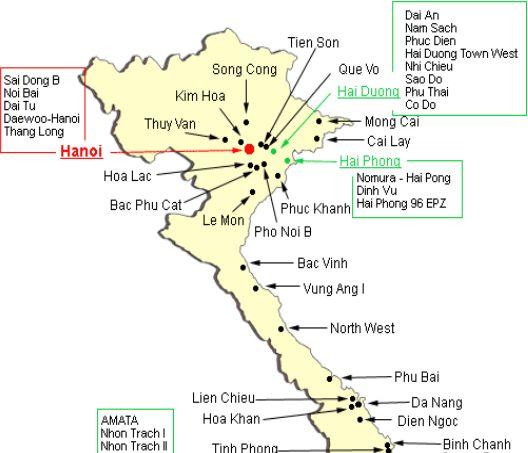
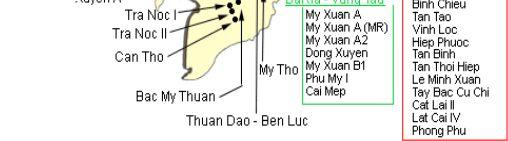
129 < 그림 5-1> 베트남산업단지 (IPs) 분포현황 자료 : Vietnam's Industrialization Strategy in the Age of Globalization
130 나. 대규모프로젝트성사업의진출전략국내환경산업체의해외환경프로젝트진출시대기업과의컨소시엄이자주대두되고있는상황이며, 이는전문환경산업체의해외프로젝트발굴을위한마케팅능력부족과사업수행능력부족으로인해그필요성이요구되는것이현실이다. 이러한점에비춰보았을때환경산업및기술의해외보급확대와수주능력배양, 해외 환경전문기업육성을위해서는환경전문기업과대기업컨소시엄을적극검토할필요 가있다. 최근주요발주패턴인 EPC (Engineering, Procurement, Construction) 턴키방식의공사에서의국내기업간의공동진출과관련하여예로써소개될해외건설협회의 46) 보고자료에나와있는것과같이국내플랜트수출기업이가장필요로하는부분임과동시에가장취약한부분은기초엔지니어링부문으로특히기초설계와시운전부분에서국내환경관련대기업과전문환경기업간의공동진출방안을생각해볼수있다. (1) 국내환경관련대기업과환경전문기업간공동진출방안해외건설협회의보고서에서는플랜트부문은대규모프로젝트수주나입찰참여시주력공종이나기술수준이비슷한관련기업간과당경쟁부문을공동진출로전환하여수직적리스크분산을위한역무분담을통한공동진출을모색해야하며, 대기업과전문기업의원하청공동진출시원청을비롯한하청사의진출지역발주처업종등록이필요한데, 이를위해우선중소기업중심의업종등록지원및대행관련협회와연계필요성도고려할필요가있다. 결과적으로과당경쟁부문을중심으로서로협력하여광의의공동진출방향으로전환할필요가있다고보았다. 특히, 플랜트설비의경우대규모프로젝트진행시일반적으로부족한기초엔지니어링 (Basic Engineering) 을보충해주는선진기업과공동으로 EPC공사를수주및수행해오고있으며상세엔지니어링 (Detail Engineering), 구매 + 조달 (Procurement), 시공부문 (Construction) 을맡아공사를수행하는것으로나타났다. 물론공사수행시국내외하청기업을선정하기도하며현지화정책에따라직영형식으로하청기업을선정하기도한다. 일반적인하청의경우와달리, 한국기업간원청합작 (J/V, Consortium) 의경우특정구역혹은특정시설을나누어시종일관맡은섹션만을수행하는체계를선호하 46) 해외플랜트건설분야의공동수주활성화방안 ( 해외건설협회, )
131 였으며이는하자보수시에도맡은기업이책임을지게되며다른기업은그섹션에대 해서는무관심해도되는경우를선호하는것을나타낸다. 예컨대규모가큰프로젝트에 A엔지니어링 (EP) + B건설 (EP) + C건설 (C) + D물산 (Financing) 컨소시엄으로참여하는방식을들수있는데 EP부문에있어 2개사는특정구역혹은특정시설을나눌필요가있다. 반면나머지 2개사는시공과금융부문이라교집합이없으므로특별하게나눌필요가없으나교집합적인부문이많을수록업무분장을확실히해야공동진출을원활히할수있다고판단하였다. 어떤공사를추진하는데있어서, 가장효율적인 Consortium Structure를제안한다면, Project Management능력을가지고있고, 재정상태, 발주처, Developer와의관계등이좋은기업이 EPC Leader를맡고, Consultant와관계가좋고입찰설계능력이뛰어난기업이 E를, 주기기제작사이며현지구매경험이많은기업이 P를, 그리고현지발주처등에시공능력을인정받은기업이 C를맡는다면, 치열한해외플랜트건설시장에서의수주경쟁에서경쟁력을확보할수있을것으로판단하였다. 아울러, 업무분장을확실히하기위해서는 A엔지니어링 ( 기초엔지니어링 )+B건설( 상세엔지니어링, 구매 + 조달 )+C건설( 시공 )+D상사( 금융 ) 의형식으로진출을해야최적이되며단기적시각에서보면, A와 D부분은선진기업이강세를띄고있는실정이므로 B, C부문의한국기업간업무협조가무엇보다도필요하고장기적으로는 A와 D부문활성화를위한전문인력양성, R&D투자, 프로젝트파이낸싱능력배양및정부지원이필요하다고보았다. 한편, 보고서의 SWOT분석에의한전략도출과정에서회사내부강점과회사외부기회가많을수록국내기업간공동진출이원활할것으로예상되었으며, 주로과당경쟁부문에서의공동진출로의전환이특히필요하다고판단되었다. 회사내부강점은있는데회사외부위협요소가다소있을경우에는 S외부위협요소를최소화하는방법으로는현지기업 ( 하청 ) 혹은선진기업 ( 기초엔지니어링 ) 과국내기업들의공동진출을고려해야할것으로나타났다. 그리고회사내부약점과외부기회가있을시에는국내기업의하청으로참여하는것이바람직하고회사내부약점과외부위협이동시에존재하는경우에는현지및선진기업의하청참여가필요하다고보았다. 또한디벨로퍼 ( 석유공사, 가스공사, 한국전력, 그룹계열사등 ) 와연계공동진출을고려 하였는데특히자원 ( 오일 & 가스 ) 및민자발전프로젝트에의적극적인진출을고려해
132 야하며최근고유가지속으로자원부문은국가에너지안보적차원에서꾸준한지원이필요한시점이라보고하고있다. 이는자원개발사업은관련플랜트건설뿐만아니라에너지의안정적인수급에도긍정적인영향을끼칠뿐아니라시너지효과도기대할것으로판단되는유망분야이며사업추진에있어관건은금융조달능력으로지분투자자유치및프로젝트파이낸싱능력배양이절실히필요하다고보고서에나타나있다. (2) 공동진출시장점및장애요인, 선행요소국내기업간해외환경프로젝트공동진출시기대되는장점으로는시너지효과, 기술및인력교류, 가격경쟁지양, 리스크분산등의순으로나타났으며국내기업간해외플랜트건설공동진출시장애요소는프로젝트수주전후의견차이, 책임소재등의이해관계가가장큰부분을차지하고있으며높은견적단가, 선입견, 기업비밀의유실순으로나타났다. 아울러, 국내기업간해외플랜트건설공동진출시선행되어져야할요소로는상호신뢰구 축, 역무분장시특정 ( 특화 ) 분야에서의우선지위보장, 선입견배제, 중재기관필요순으 로나타났다. (3) 공동진출시정부차원의지원방안대규모프로젝트진행시과당경쟁을공동수주로유도하고국내원하청공동참여활성화를위한정부차원의지원이요구되는데그지원방안으로공동입찰참여시입찰전후비용지원 ( 신시장개척비와유사 ) 특히과당경쟁프로젝트를대상으로공동입찰참여로방향전환필요 ( 과당경쟁을자율적인공동진출로유도 ) 한것으로나타났으며 컨소시엄이나 J/V로공동진출시주력공종및각사별강점 DB화하여컨설팅가능토록지원하는것과원하청시공사입찰자격기업 ( 벤더 ) 등록지원이필요한것으로나타났다. 특히, 하청사나중소기업의경우내부자금사정이나관련정보부족으로벤더등록의필요성조차인지하지못하고있는실정이다. 아울러, 주요발주처및관련정부기관과의지속적인유대관계형성을위한정부차원의 지원도요구되고있다
133 다. 틈새시장진출전략베트남프로젝트발굴을위한노력의일환으로현재진행중인사업의프로젝트연계화를위해동남아 ( 베트남 ) 환경인력초청사업발주처위주의초청사업으로점차전환하여실질적이수주연계방안을마련하여야겠으며, 현지프로젝트발굴을위해베트남환경시장개척단을프로젝트발굴유망지역을중심으로파견하여심도있는현지시장파악과함께유력인사와의상호유대관계강화를통해프로젝트발굴에노력해야한다. 아울러향후프로젝트성사가큰지역의관계자를중심으로교차방문단을구성토록하여한국에초청하는방안도적극고려해야겠으며, 현재국내건설업체들의베트남건설시장진출이활발한상태인점을볼때앞으로더욱진출시장이넓어질것으로판단됨에따라이에하노이신도시개발사업추진등에있어반드시설치해야하는환경오염방지시설에대해서는관련업계와연계하여베트남환경시장진출을적극모색해야할것이다. 아울러, 사업발굴을위한타당성조사사업 F/S 의경우 KOICA 및환경부지원을적극 검토하여야겠으며관련조사사업시컨소시엄을통한공동진출활성화를위해관련 업체의공동참여를적극유도해야겠다. 베트남소규모프로젝트의경우 EDCF지원자금중 300만불이하지원사업을추진도적극고려해정부차원의소규모프로젝트의발굴과지원유망사업으로베트남정부주도의주요산업단지오염방지시설투자사업, 중소도시위생처리시설투자사업, 농촌지역간이상수도보급투자사업등에대한정보를사전에입수하여국내기업이진출할수있도록적극적인지원책마련이요구된다. 끝으로베트남을인접국인라오스, 캄보디아, 미얀마등의환경시장진출교두보로 삼기위한방안으로국내환경산업체의베트남현지화지원방안도적극고려하여실 질적인인도차이나반도및동남아시아환경시장의진출거점으로삼아야할것이다
134 베트남시장진출가이드 1. 사전준비 가. 진출전고려사항효과적인베트남시장진출을위해서는베트남의일반개황을비롯하여법률적, 정책적인사항의사전습득을통해현지이해도를높이는한편사업방향설정, 주된영업지역, 사업분야및영업방식등을결정하기위한자료수집및조사가이뤄져야한다. [ 체크포인트 ] 베트남진출시일반적고려사항 1 남북이분리되고도농간구매력차이큰시장 - 호치민중심의남부지역과하노이중심의북부지역은거리가멀고물류여건이좋지않을뿐아니라구매력에도차이가커분리된시장이라는관점에서접근하는것이필요 - 내수시장을목표로할경우아직하노이, 호치민등주요도시를제외한나머지시골지역의구매력이아직은미미한상태로이에대한고려가필요 2 거래상대방에대한사전정보및신용조사필수 - 베트남은아직신용거래가정착되지못했고믿을만한신용조사기관도없으므로 직접만나관계를쌓고신용도를파악하는것이필요 3 내수시장진출시시장특성및유통망조사반드시실시 - 특히북부지방의경우중국과의접경지역으로국경무역을통한저가밀수품이많아내수시장규모만보고진출할경우실패가능성높음 - 또한각품목마다복잡한유통구조를가지고있으므로유통망에대한사전지식을쌓아야하며, 베트남은어음제도가없으나외상거래가일반화되어있어현금흐름에문제가있을수있음을고려하여야함 4 상표권등지적재산권보호조치강구 - 베트남은불법복제율이아시아지역최고수준인 94% 에이르고있으며각종상표의불법도용은물론최근에는외국상표를선등록하여외국기업진출을방해하는사례도발생하는만큼반드시사전에지적재산권에대한보호조치를해두어야함
135 (1) 장기적인안목에서투자진출전략필요우수한노동력과풍부한천연자원국가경제성장추세등을고려할때베트남은짧은시간에큰수익을노리는것보다는양측의강점을살려상호협력을통한윈-윈효과를거두기위한장기적인관점으로전략을마련하는데에주목할필요가있다. 특히과잉경쟁을피하기위해서섬유, 봉제등의경공업분야위주로진행되는시장진출경향을탈피하고베트남의급속한산업화에맞춰변화하는다양한시장수요에맞도록업종다변화를추구하는노력이요구되고있다. (2) 치밀한사전시장조사및사업타당성분석베트남은사회주의국가의특성상법규와규제등이매우복잡하기때문에치밀한현장조사를소홀히하고무리하게투자를추진하여곤란한상황을맞이하게되는사례가종종보고되고있다. 특히신용거래문화가아직미숙한베트남의특성을감안하여협력파트너의신용도조사는간과해서는안될중요한부분의하나이다. 베트남진출경험이있는국내기업의조언을참고하거나관련진출사례를활용하여간접적인시장조사를병행하는것도현지이해도를높이는방안이될것이다. (3) 상대기업의특성에따라접근전략차별화베트남은계약시여러가지요소중가격을가장우선시하는경향이있기때문에이에주목할필요가있다. 또한정부기관의의사반영이결정적인공기업의경우는절차상오랜시간이소요될수있으므로이러한점을감안하여야한다. 영세한규모의기업들이주를이루는사기업의경우재정및신용을평가할적절한지표가없기때문에지속적인교류를통해파트너쉽을형성해나가야할필요가있다. (4) 기타참고사항합작기업의경우출자비율에관계없이사장및제1부사장중 1 人은반드시베트남인이어야하며, 중요한의사결정은반드시만장일치로의결해야한다는점에유의하여야하며특히, 합작경영시향후경영권마찰가능성에대비, 현지인명의로신탁하는것은절대금물이다. 업종에맞게현지기업과의협력관계 배후시장및지역별투자인센티브를비교하 여입지를선정하되, 외국인투자가집중된지역의경우기술자구인난및인건비
136 상승이예상되므로이에대한고려하는한편, 입주예정지의토지사용권취득시거주민에대한보상문제를명확히하는것도중요하다. 또한모든계약은문서화하고중요한계약은공증하여구속력을갖추는한편노무관리시베트남의노동법을철저히숙지하고현지인의근로문화를충분히이해하여노사문제에대한대응능력을배양하는것이바람직하다. [ 체크포인트 ] 베트남진출을위한 10가지체크포인트 1 임금조건명목상최저임금은 45달러지만, 외국기업들은평균 60달러의임금을제공하는것으로알려져있다. 이밖에복리후생비등의무비용은얼마나되는지를꼼꼼하게따져봐야한다. 2 사무직인력확보베트남은인적자원이풍요롭다고알려져있으나, 사무직인력을확보하는데에는어려움이크다. 중간관리자층을현지에서채용하기어렵다는점을고려해, 영업관리직인력은사전에준비해야한다. 3 공장위치확보도로, 항만, 통신등국가기간망이제대로확보되지않아원부자재를조달하기가어려운게베트남의현실이다. 또최근에야비로소토지사용권이인정되는등공장위치를확보하기가보통까다로운것이아니다. 4 관세혜택확보외국자본을유치해국가의기간산업을확충하기위해외국기업에세금혜택등갖가지인센티브를적용하고있다. 가능하면더많은혜택을받을수있도록꼼꼼히따져봐야한다. 5 문서베트남공무원들은문서작업에대해지나칠정도로까다롭다. 문서의내용도중요하지만, 형식이나외관을더중요하게따지기도한다. 글자하나틀린것때문에수속이늦어질수도있으니주의해야한다. 6 환경인프라
137 환경보호법의개정과더불어지속적으로추진되고있는규제기준개정등을통해베트남은환경규제수준을세계적수준에근접시키기위한부단한노력을기울이고있다. 그러나환경인프라가제대로갖춰지지않았기때문에초기투자때, 환경설비비를추가로부담해야할지확인해야한다. 7 원부자재원유등베트남의자원은무궁무진한것으로알려져있지만, 이를원활하게조달할수있는지반드시확인해야한다. 또물에석회질이많아물이생명인산업에서는정수한용수나지하수를이용해야한다. 8 자금조달토지소유권이인정되지않아자금조달에어려움을겪을수있다. 최근토지사용권의매입은가능하게됐지만, 토지를담보로한자금조달이불가능하다. 현지에서원활하게자금을조달할수있는창구를마련해야한다. 9 내수판매갖가지생필품이비교적풍부하여판매가활성화하고있지만, 내수판매만보고베트남에진출했다가는낭패보기십상이다. 동남아일대의물류기지로서의가능성도반드시고려해야한다. 10 문화적접근중국한자권으로한국과문화적으로동질감도크지만, 오랜식민지경험과강력한사회주의정책을고수해자본주의문화에대한이질감이크다. 기업활동의전면에놓을수있는문화적접근방법도모색해야한다. 나. 사업타당성조사해외투자시가장중요한절차이면서도가장간과하기쉬운내용으로먼저자사의해외투자진출전략및목적에맞게투자형태, 투자지역, 투자규모, 자본조달방법, 목표시장등에대한상세한내용을사전에꼼꼼히점검하여사업계획서를수립하여야한다. 이를위해사전에한 - 베환경산업협력센터, KOTRA, 현지컨설팅회사등을통한투
138 자환경조사를선행할필요가있으며반드시사전답사를통해실사를해야한다. 또한실사방문시에는공장부지뿐아니라해당市省인민위원회투자계획국 (DPI) 면담을통해투자허가가능성, 인센티브등에대해확인하는것이바람직하다. 뿐만아니라실제공장가동을가정하여원자재조달, 물류인프라, 건설비용, 현지 판매시장규모등을조사하는것이좋으며, 한번의방문보다는가급적여러번방문 하여조사의신뢰도를높이는것이유리하다. 다. 베트남외국인투자관련정책및현황 (1) 외국인투자정책및여건 ( 가 ) 베트남투자여건베트남은자국기업과외국기업모두에게 28% 의동일한법인세를부과하고있다. 또한투자인센티브정책을도입하여투자성격, 지역, 규모등에따라 10~20% 의면세혜택을주는한편투자활성화를위해투자관련생산설비나부품의수입시면세통관의룰을적용하고있다. 뿐만아니라, 투자장려분야나투자장려지역에대한투자시토지사용료에대해서도부분적으로세금을감면해주는등실시하는등다양한세제정책을마련하여활용중에있다. < 표 6-1> 남부와북부투자지역비교 지역장점단점 -인건비상승추세 ( 호치민인근 ) -인프라기반 ( 호치민, 동나이 ) -노사분규의빈번한발생남부 ( 호치민중심 ) -자본주의적비즈니스관행 -높은토지임차료수준 -연관산업발달 ( 섬유, 신발등 ) ( 호치민, 동나이등 ) -인력확보애로 ( 호치민인근 ) 북부 ( 하노이중심 ) - 저렴한토지임차료 - 노사분규발생률미미 - 근로자세양호 ( 인내심, 조직적응력 ) - 인프라정비미흡 - 내수시장의규모제한 - 인력확보용이 - 연관산업발달미비 자료 : 베트남투자전략, KOTRA
139 한편투자환경은 < 표 6-1> 과같이남부지역과북부지역이서로상이한특징을보이는데내수판매가목적인경우는시장규모가큰남부지역이유리하며수출지향적산업은인건비가낮고토지임대료또한저렴한북부지역이고려할만하다. 이러한이유로인해일반적으로제조업의경우높은토지임차료부담때문에하노이, 호치민등대도시보다는외곽지역쪽으로투자지역이확산되고있는추세이며이에대한환경수요가더불어증가할것으로예상된다. 또한, 공업단지의경우인프라가잘되어있고인허가수속이간편하여물류여건이양호하여건물건축시간단축등장점이많으나토지임차료및관리비가비싸특히노동집약적산업의경우메리트가하락하는추세이다. 따라서많은기업들은초기투자진출시토지보상, 공장건설, 전기선인입등기초작업에시간과비용이많이소모되는것을감안하여이런상관관계를잘비교하여지역을선택할필요가있다. < 표 6-2> 투자허가기관비교 투자허가기관투자계획부지방성인민위원회공단관리위원회 허가대상 -국가경제사회계획수립, 거시경제정책수립, 국내및외국인투자등을관장 -시, 성인민위원회산업공단위임한도초과투자건에대한직접허가 -5,000 만불이상 1억불이하규모의프로젝트 -하노이, 호치민, 하이퐁, 다낭등의대도시를비롯한지방성의경우도대규모프로젝트가아닌이상독자적으로투자허가가능 -수출가공공단 (EPZ), 산업단지 (IZ) 의관리당국도입주하는투자기업에대해투자허가가능 ( 단,4,000 만불이하의프로젝트에한함 ) -하노이, 호치민의경우 1,000 만불이하, -기타지역 500 만불이하의프로젝트에대해투자허가 자료 : 투자핵심가이드요약, KOTRA 국책프로젝트의경우제출된사업안이유관기관및환경부를통해투자계획부에전달되면투자계획부에서세부심사를통해프로젝트우선순위를결정하여국가예산을책정하여정부에제출하게된다. 정부에서 2차심사를거쳐최종확정된사업안에대한예산지원및사업시행이이루어진다. 지방소규모프로젝트의경우는연구기관및기업이제출한사업안을각부처에서심사하여적절한사업을선정하고예산을지원하는비교적간략한과정을거쳐사업시행이이루어진다
140 투자허가는서류제출후 30 일이내에완료하여야하며진행절차는 < 표 6-3> 과같이 진행된다. < 표 6-3> 베트남의투자진행절차 구분 1. 사업타당성조사 2. 투자수속 3. 공장부지선정 4. 투자허가취득 5. 건축하거취득 6. 법인설립 세부내용현지진출기관, 베트남정부기관, 현지컨설팅회사등 - 합작투자기업의향서체결, 사업계획서작성, 합작계약체결, 정관작성 - 단독투자기업사업계획서작성, 정관작성 - 공장부지관련의견조회 ( 시, 성인민위원회 ) ( 가계약전각종제한, 규제확인필요 ) - 토지임차가계약 - 시, 성인민위원회 - 공단관리위원회 - 투자계획부 (MPI) - 토지임차가계약 ( 시, 성인민위원회토지국 ) - 시, 성인민위원회관련허가취득 -> 환경허가 ( 과학기술환경국 ), 설계심사 ( 건설국 ), 소방허가 ( 소방국 ) - 회사인감신청 ( 경찰서 ) - 사장, 부사장, 회계책임자등록 ( 시, 성인민위원회 ) - 회사설립공고 ( 신문 ) - 법인계좌개설 ( 은행 ) 자료 : 베트남투자전략, KOTRA 한편, 현재아시아최대의시장인중국과베트남시장의투자여건을비교한자료에따르면노동력을비롯한각종투자비용및시장성에있어서베트남시장의강점이잘나타나고있으며특히 2006년말 WTO가입이이루어지면현재경제성장률의고공행진은더욱가속화될것으로전망되어외국대형기업들의적극적인투자가예상되고있다
141 < 표 6-4> 중국 - 베트남투자여건비교 구분 베트남 중국 노동비용중국 $0.45/ 시간 $1.70 이상 / 시간 노동의질 우수 수용가능 인프라비용 ( 건축 ) $100/ m2 $150/ m2 통화장기적으로유리 물류주요도시와항만에인접 불리 ( 중단기이후회복될것으로전망 ) 주요도시또는항만에서거리가있음 - 요소공급주로노동집약적상품 주로전자집약적상품 현지시장제한적 빠른속도로성장 경쟁자최저 자료 : 베트남투자여건 2005, 대명컨설팅 중국경쟁사의기술복제심각 < 표 6-5> 투자허가를위한준비서류 순서 서류내용 관련기관 비고 1 투자허가서신청서 ( 영문, 베트남어 ) 베트남공단관리위원회 / 투자계베트남정부공문양식획부 2 회사정관 ( 한국측, 베트남법인 ) 투자자준비 영문, 베트남어작성 3 생산공정시스템 ( 영문, 베트남어 ) 투자자준비 영문, 베트남어작성 4 위임장 법률사무소 ( 한국 ) 영문, 한글작성공증 5 사업자등록증 법률사무소 ( 한국 ) 영문, 한글작성공증 6 은행잔고확인증명서 법률사무소 ( 한국 ) 영문, 한글작성공증 7 대차대조표 ( 최근 2년간 ) 법률사무소 ( 한국 ) 영문, 한글작성공증 8 투자계획부지지도 베트남공단관리위원회 9 한국대표이사및베트남법인장여권사본 투자자준비 / 법률사무소 ( 한국 ) 공증 10 토지임대가계약서 베트남공단관리위원회 영문, 베트남어작성 11 기계설비리스트 투자자준비 영문, 베트남어작성 12 원부자재리스트 투자자준비 영문, 베트남어작성 자료 : 베트남투자여건 2005, 대명컨설팅
142 (2) 외국인투자현황외국인투자유치가시작된 1988년이후 2004년 12월말까지총 6,116건 468억 4천7 백만불의외국인직접투자프로젝트가이루어졌으며한국의경우 < 표 6-6> 과같이투자금액및투자건수에있어서각각 4위와 2위를기록하고있다. < 표 6-6> 對베트남주요국별투자현황 ( 년누계기준 ) ( 단위 : 백만불 ) 순위 국가 신청액 실행액 건수 1 싱가포르 7, , 대만 7, , ,262 3 일본 5, , 한국 4, , 홍콩 3, , 프랑스 2, , 영국령버진군도 2, , 네덜란드 1, , 태국 1, 말레이시아 1, 영국 1, 미국 1, 스위스 투자총계 45, , ,130 자료 : 베트남투자계획부 베트남정부는외국인투자의필요성을인식하여 1987년제정된외국인투자법을지속적으로개정하는등더욱활발한투자환경여건을조성하기위해진력하고있다. 특히노동집약적산업의육성을통해산업화의기반을다지는한편, 점진적으로수출집약산업및기술집약산업으로의전환을꾀하기위해이들분야에대한투자를장려하고있다. 이미일본이나싱가포르의경우기술및자본집약적산업을중심으로투자가이루어지고있으며우리나라의경우도동분야의시장을눈여겨볼필요가있다. 또한, 최근일본은중국내반일시위와급격한인건비상승 미국의위안화평가절
143 상압력등을계기로중국투자집중에따른 " 차이나리스크 " 를해소하기위해베트남에대한투자를강화하고있으며, 2005년도일본기업들의對베트남신규투자건수는 97건으로사상최고치를기록했고, 신규투자금액도전년대비 1.8배증가한 4 억 800만불로 47) 97년 1차투자호황기와비슷한수준으로회복추세에있다. 이들투자의대부분은거대소비시장인중국에생산거점을유지하면서추가적인해외생산거점으로베트남을선택하는 " 차이나플러스원 (China+1)" 방식으로진행하고있으며, 베트남북부와중국화남지역간물류환경이크게개선되면서, 인건비가높은심천 광저우등中화남지역의생산거점을대체하기위한베트남북부지역진출도크게증가하고있다. 기투자진출기업이본베트남투자환경으로는 2002년 JETRO(The Japanese External Trade Organization) 가베트남에투자한 129개일본기업을대상으로한설문에서 69% 가 2001년에흑자를기록했고, ASEAN 10개국중베트남이 2번째로유망한투자처로선정되었다. 아울러, 2004년주베트남한국대사관과 KOTRA가베트남에투자한한국기업을대상으로한조사에따르면, 92% 가베트남에투자한것에만족한다고답했으며 61% 가추가투자를계획하고있다고밝혔다. [ 참고 3] 對베트남투자유망요인 1 8천만인구와저임의우수노동력 - 베트남은세계에서 13번째로인구가많으며, 43백만노동인구중 45% 가 35세미만인미래발전형인력구조를보유 - 평균인구증가율이 1.4% 인데반해노동인구의증가율은 3.5~4% 에달하며, 문맹률이 10% 미만이고근면성과손재주가뛰어남 - KOTRA가 2004년도베트남투자진출기업을대상으로실시한 경영실태설문조사 분석보고서에따르면총응답업체 194개사중절대다수인 165개사 (85.1%) 가저임의우수노동력을최대투자메리트로꼽았으며, 섬유, 신발, 가방등노동집약적분야의집중적인베트남진출이이를반영하고있음 - 또한, 베트남은사회주의국가로모든회사는노조를설립해야하나, 강경투쟁의노조가아니라사측에매우협력적인노조로베트남노동법을준수하고근로자인격을무시하지않는한파업등의사태로어려움을겪을일이거의없음 2 꾸준한경제성장과내수시장진출가능성 47) * 旣진출업체들의추가투자금액을포함할경우총투자액은 9 억불에육박
144 - 베트남은최근 10년간중국다음으로꾸준하고높은경제성장을이룩하였으며, 연간 GDP성장률이 2003년 7.26%, 2004년 7.7% 를기록한데이어 2005년목표를 8.5% 로설정하고있음 - KOTRA의 2004 경영실태설문조사 에서도 11.3% 가내수시장진출가능성을염두에두고베트남투자진출을결정했다고응답하여 2000년대이후고속경제성장을거듭하고있는베트남의내수시장잠재력을반영 3 對선진국우회수출및 ASEAN국가진출전진기지 년미-베트남무역협정체결이후대미우회수출기지로많은투자가이루어지고있음 - 또한, 베트남이 ASEAN 자유무역협정 (AFTA) 에가입하면서역내경제블록화가가속화되고아세안시장진입장벽이높아지고있는데따른대응전략으로베트남을거점으로활용하려는기업수요가늘어나고있음 - ASEAN 국가들은 1996년부터 2006년까지대부분품목의역내수입관세를 0% 에서최대 5% 이하로낮추는역내관세인하계획 (CEPT) 를진행중으로역내교역시관세절감효과가큰상황임 4 차이나리스크의대안으로급부상 - 세계의공장 중국에전세계의수요가집중되는현상에따라중국의국가적, 경제적위험발생시충격을받을수있다는차이나리스크 (China Risk) 를회피할수있는대안으로서베트남이유력한투자지역으로급부상 - 대기업의글로벌아웃소싱작업시위험을줄이기위해통상 3개처이상으로분할하여아웃소싱을실행하는데, 현재는아웃소싱대상처모두가가격경쟁력이우수한중국으로집중되는경우가많음 - 따라서, 중국의국가적, 경제적위험이발생할경우당초위험을회피하겠다는분할아웃소싱의의미가사라지기때문에중국외다른경쟁력있는국가에대한수요가증가하고있으며, 가장유력한대상처로베트남이주목받고있음 5 풍부한천연자원과농수산물 - 원유, 석탄등풍부한천연자원을보유하고있고, 농업에적합한기후로인해세계 3위의쌀수출국, 2위의커피수출국이며, 3,260km의해안과 170만헥타르에달하는양식이가능한바다등풍부한수산자원을보유 6 한국문화와의유사성및한류확산
145 - 베트남은어른을공경하는유교문화를가지고있고몽골인종이며, 쌀을주식으로하는등한국문화와유사점이많음 - 또한, 한류로통칭되는한국드라마와영화의선풍적인인기로말미암아한국에대한이미지가매우좋으며, 실제한국기업의성공적인마케팅으로이어지고있음 2. 법인설립단계 가. 법인설립 (1) 100% 단독투자회사소유권이완전히외국법인에소속되는유한책임회사로베트남법에따라베트남법인으로간주되는형태이며, 73.1% 가 100% 단독투자 ( 건수기준 ) 로현재가장선호되는외국인투자이다. 특히토지와크게관련없는제조업등에서이루어지는투자형태로베트남측의간섭없이외국인투자자의의지대로사업을추진할수있다는것이장점으로손꼽힌다. 국내또는외국투자가는 100% 지분소유투자가가능하며, 투자수행을위해다음형태로경제주체를설립하는것이가능하다. * 유한책임회사 (Limited Liability Company) * 주식회사 (Share Holding Company) * 합작회사 (Partnership Company) * 개인회사 (Private Enterprise) * 기타투자법이정하는다른형태의투자형태 베트남에기설립된 100% 외국인투자기업은동일외국기업또는외국투자가와 100% 외국인투자기업을설립할권리가있으며, 동투자기업은베트남법에의해 법적주체성을갖고투자승인확인서발급즉시활동이가능하다 (2) 합작투자회사베트남에서사업을영위하기위해베트남측과외국측과의합작기업계약에의해설립하는형태로서합작기업은유한책임회사의형태이고베트남법에따라베트남법인으로간주되고있다. 토지와연관된건설투자에서주로이루어지는투자형태로적절한토지를보유한베트남파트너 ( 주로국영기업 ) 가토지를출자하고, 외국파트
146 너는자본과기술을제공하는형식이며다음과같은장점이있다. * 베트남측파트너의협조로초기진출시유리 * 외국인투자법에따르면주요의사결정이만장일치제로베트남측지분이단 10% 만있더라도주요의사결정시베트남측이반대하면진행이불가 * 따라서믿을만한합작파트너발굴이관건 외국투자가는베트남국내투자가와합작으로기업법에의거하여다음회사를설립할수있다. * 2인이상의유한책임회사 (Limited Liability Company) * 주식회사 (Share Holding Company) * 합작회사 (Partnership Company) * 개인회사 (Private Enterprise) 합작투자회사는합작투자계약서에의거하여설립되며투자승인확인서발급직후부터법적정체성을확보하여설립, 운영될수있으며베트남의경우주요의사결정에있어만장일치제의방식을적용하고있어경영권의아주작은부분만을가지고있어도거부권행사가가능하기때문에독소조항이될수있음에주의할필요가있다. (3) 경영협력 (BCC) 에의한회사별도의법인체를설립하지않고양측이책임및경영결과를분배하는조건으로당사자간에체결된경영협력계약형태로외국측파트너는대표사무소를운영할수있으나외국인투자형태중가장구속력이약한형태이다. 경영협력계약은투자자간투자및사업을수행하기위해날인된문서에의한투자형태로, 별도의회사설립없이각투자자에게책임과사업결과의배분조건등을명시하고있다. BCC 사업의경우조정위원회를설치해야하고외국투자가는베트남내에운영사무소를설치해야하며투자승인기관에등록돼야한다
147 < 표 6-7> 각각의투자형태에따른장단점비교 구분장점단점 합작투자단독투자경영협력계약 - 베트남의인재, 생산, 판매루트를이용할수있어초기투자부담의경감가능 - 베트남측파트너의힘을빌려내수시장진입용이 - 각종행정수속, 인허가취득유리 - 외국측의경영방식구사가능 - 투자이익독점가능 - 기술, 정보의유출방지 - 과도한초기투자불필요 - 계약으로모든사항을결정하기때문에사업추진상유연성존재 ( 이익분배, 경영방식등 ) - 베트남측의토지건물등현물의정확한평가불필요 - 사업기한의설정가능 - 베트남측과의의견조정이어렵고경영방침, 노무관리, 이익처분등의문제로갈등발생소지존재 ( 중요사항결정시는장일치제적용 ) - 베트남측의잉여인력, 노후설비등을넘겨받게되는경우기술유출가능성이존재 - 토지등베트남측이통상적으로출자하는현물의평가애로 - 투자이익의독점불가 - 일부투자제한분야에서내수시장진출에제약상존 - 초기투자부담증대 - 정부기관, 베트남기업의인맥구축애로 - 독립된법인격이없기때문에분쟁으로이어질가능성생존 - 독자적으로베트남인고용불가능 (4) 자본출자, 지분매입, M&A형태투자기업법에의거하여경영참여를위해자본금부담, 지분인수, 기업인수및합병의권리를보유한투자가는자본참여, 지분인수, 기업인수및합병활동에있어차별을받지않는다. 그러나베트남이회원으로참여하고있는국제조약에서정한기준을초과해서는베트남기업에대해자본참여, 지분인수, 기업인수및합병을할수가없으며베트남의기업또는기업의지사를합병, 인수하고자할경우에는다음사항에저촉되지말아야한다. * 기업법상지분매입, 인수및합병규정에반하지않을것 * 베트남내시장점유율이 30% 이상인기업을인수, 합병하려거나 1 년에 10 개이 상의기업을인수, 합병하려는외국투자가는투자승인기관에투자승인서발급
148 전충분한계획을설명해야하며, 기업을인수및합병하는기업은별도로정하지 않는한대상기업의권리와의무를승계해야한다. 투자허가소요기간은서류제출이후 30 일이하가소요되며 30 일이지나도허가여 부에대한답변이없을경우 7 일이내에관련기관에문서로문의하여야한다. 또한 프로젝트신청시지적사항에대해서는 15 일이내에수정하여야한다. 나. 대표사무소설립베트남에설립된경제주체는본사이외의지역에지점및연락사무소를설립할권리가있다. 해외지점또는해외연락사무소설치가필요할경우해외투자규정에따르며베트남에투자활동목적으로지사를설립하는외국투자가의경우베트남회원으로참여한국제조약의조건및추진일정에따른다. 현재대표사무소와지사중대부분이대표사무소형태로개설되며지사는법에의해허용된재화와교역만이허용되어실제개설이쉽지않은상황이다. 그러나 < 표 6-8> 과같이 2006년 7월 25일발표된상법시행령 72조에따라외국기업에대한무역, 유통업허용을검토하고있어빠르면 2006년부터지사설립이확대될수있을것으로전망된다. < 표 6-8> 베트남내외국기업연락사무소및지사설립조건변화 구분 적용분야 무역거래취급상품규제 대표연락사무소설립조건지사설립조건 대표사무소설립제출서류 지사설립제출서류 신규시행령 (Decree72) 외국기업의대표연락사무소및지사설립운영 ( 관광분야는다른법규적용 ) - 해외기업지사는모든상품취급가능하나베트남의국제조약이행일정에따름 - 취급가능상품리스트는베트남무역부에의해추후명시 - 모기업최소 1 년이상활동증빙서필요 - 해외모기업영업기간 5 년이상 - 설립신청서 - 사업자등록증 ( 모기업 ) - 최소 1 년이상재무증명서및감사보고서 - 기업이아닌경제단체의경우정관사본 - 설립신청서 - 사업자등록증 ( 모기업 )
149 - 최소 1 년이상재무증명서및감사보고서 - 지사의정관사본 설립거부대상조건 설립허가수정이필요한조건 재등록조건 - 설립허가조건미충족시 - 베트남법령에금지된상품취급 - 최근 2 년내라이센스가취소된경우 - 대표사무소및지사설립시베트남문화, 풍습, 환경에위배된다는증거가확실한경우 - 제출신청서류가적절하지못한경우 - 기존대표사무소및지사설립허가서수정이필요한사례는사안별로다양한바해당사안별로해당관청접촉필요 - 사무소및지사위치변경시 - 사모소명칭및등록국가변경시 - 모국모기업영업분야변경시 - 허가서분실및파손시 재등록필요서류사안별로제출서류상이 ( 관련기관접촉필요 ) 재등록시소요기간 영업활동기간 영업기간연장신청서류 대표연락사무소및지사권리및의무 기존대표연락사무소및지사의재등록 5 일 -10 일이내 - 최대영업기간은 5 년이며연장시재등록필요 - 영업기간만료최소 30 일이전재등록신청서류제출 - 연장신청서류 - 최근년도재무증명서및감사보고서 - 대표연락사무소및지사활동보고서 - 라이센스원본 - 은행계좌개설, 사무소장및지사장권리및의무, 영업활동정지조건등상세히명시 시행령이전설립허가받은대표연락사무소및지사는시행령발효후 6 개월이내재등록필요 < 표 6-9> 상법시행령 72 조의시행에따른대표사무소설립여건의변화 구분긍정적변화부정적변화 대표사무소 지사 -시, 성별로 1개의대표사무소만허가가되었던수적규제철폐 -인허가기관에종업원수보고의무폐지 -라이센스취소조건의완화 -직접무역및무역관련업무수행범위의확대 -설립을위한필수조건의강화 -활동기간을 5년으로제한 -Sub-ofice 설립금지 -모기업의법적등록및 5년간실적이필요
150 이에변화된상법시행령 72조의시행과관련해기존의활동하던대표연락사무소나지사를운영하고있는기업도시행령공표후 6개월이내에는재등록절차를거쳐야한다. 또한모기업의 1년이상영업활동실적과지사의 5년이상영업활동실적증빙등신규설립을위한기준이강화되었음에유의하여야하며설립허가기간도 5년을제한하고있기때문에 5년마다재등록이필요하다. < 표6-8> 은이러한상법시행령 72조에따른변화에관한내용을정리한것이다. 다. 베트남기업의유형별분류 베트남회사는국영회사, 성인민위원회소속회사, 시인민위원회소속회사, 사기업 및외국기업과의합작회사등의형태로구분되며각형태별특징은다음과같다. (1) 국영회사경영에있어정부의해당부서의영향을받으며국가전체기업매출액의 80% 에해당하는매출액을차지할만큼국가경제에서의비중이매우높다. 사회주의체제에익숙해사고가매우경직되어있는경우가대부분이며사장이정부의지명이나조합원선거에의해임명되므로비교적경영진이자주교체되는편이다. 무역정보에밝으며특히계약성사가능성은가격경쟁력에의해많이좌우되는편이다. (2) 성인민위원회소속회사지역에따라다양한특징을갖는거래품목을취급하지만국영회사에비해서는상대적으로덜특화되어있는편이다. 사장과인민위원회와의유대관계가좋은편이며거래시매우탄력적인융통성을보여주고있긴하지만주요결정사항은해당성의재가를받아야하므로처리가지연되는경향이있다. (3) 시인민위원회소속회사 하노이, 호치민, 하이퐁등의주요도시의시인민위원회에속해있는회사들로서 시의수출입을담당하고있다, (4) 사기업 일부노동집약적산업분야를중심으로사기업들이형성되어있으나주로소규모기
151 업이대부분이며재정및신용상태가가장불확실한형태로거래에신중함을보일 필요가있다. 한편베트남에서는아직까지수출입쿼터제 (Quota) 를운영하고있다. 따라서계약시수출입쿼터를보유하고있는기업인지아닌지를확인할필요가있으며, 아닐시에는중앙부서에서새로발급받거나일정수수료를지불하고쿼터가있는회사를통해수출입하는방법등을생각해볼수있다. 라. 법인설립시유의사항 (1) 합작투자시고려사항외국인투자가금지되는업종또는투자허가가제한적으로허용되는업종등의경우현지인을명목상의사업주로내세우는경우가가끔있으나이경우사업체를베트남인에게빼앗기는경우가많으며법적으로이를되찾을수있는방법도없으므로절대적으로피해야한다. 또한베트남은사회주의국가로복잡한법규정을갖고있으므로현지법규를철저히이해하고준수해야만향후어떤문제발생시에도법의보호를받을수있다. 경영권마찰가능성에도대비해야한다. 외국투자합작기업의경우출자비율에관계없이사장과제1부사장중 1인은반드시베트남측인사로선출해야할뿐아니라외국투자기업이사회는사장, 제1부사장임면, 정관수정과같은중요사항은만장일치제를채택하고있으므로실질적으로베트남측은중요사항에대한거부권을행사할수있고외국인투자자는경영권의심각한제약을받을수있음에유념할필요가있다. 한편파트너의신용, 재정상태, 경력에관한사전조사는반드시수행하여합작파트너를선정하는것도신중을기해야한다. 특히재정상태의경우증자시에베트남측이자금조달능력부족과이사회만장일치제에따른거부권때문에외국기업측이일방적으로자금을투입하고도출자비율이그대로유지되는사례도있다. (2) 입지선정시고려사항 인건비상승, 기술자구직난등의어려움이예상되므로외국인투자가집중된지역
152 은가능한한피해야한다. 그러나업종에따라원부자재구입, 판매처확보등의 목적으로투자집중지역을선호하는경우도있으므로역시사전투자환경조사실시 가뒷받침되어야한다. 또한베트남은사회주의국가이면서도지역별자치권이폭넓게인정되며, 투자인센 티브도각성, 시, 공단마다다르므로가능한한다양한지역을대상으로인센티브 를비교해야함. 한편베트남은토지소유권은국가에있지만사용권은개인이보유하고있고이를강제수용하는것은현실적으로어려운실정이다. 따라서지방정부와부지보상비를책정하고시당국에이를위임하는것이좋으며반드시문서화하는등토지사용권취득관련거주민에대한보상문제를명확히처리해야한다. 3. 교역단계 가. 통관통관시의주의사항으로는투자설비계약서작성시정확한기계명, 모델명, 부품명을명시하여야하며선적서류작성시반드시투자계약서와반드시화물이일치해야한다. 또한단일기계의분리선적시에는반드시선적서류에명기하고설비기계의수입시관련 CATALOGUE등관련자료준비하여야한다. 한편, 설비기계수입중중고기계의경우 80% 효율의성능이입증되어야하며이의증명을위해서는베트남검사기관인 VINA CONTROL 과및통관시관할세관의승인이있어야가능하며투자계약서에명시된물품이외의타물품은통관불가 ( 밀수처리 ) 처리되기때문에주의가필요하다. 통관에필요한서류로는다음과같은것들이있다. COMPANY LICENCE(BUSINESS), QUATA,IMPORT LICENCE, TAX CODE, IMPORT-EXPORT CODE, 투자설비계약서, COMMERCIAL INVOICE,PACKINGLIST, B/L, 원산지증명
153 나. 수입관세특별한경우를제외하고, 모든수입재화에대하여수입관세가부과되며, 특히사치품에대하여는높은관세율이적용된다. 한편, 기계장치및생산을위하여수입되는원재료등에대해서는낮은관세율이적용되며, 특히베트남에서생산되지않을경우에는면제되는경우도있다. 한편, 아세안지역에서수입되는특정재화에는타지역수입품과비교하여상대적으로낮은세율이적용된다. 수입관세율은일반세율, 우대세율및특별우대세율세가지로구분되어질수있다. - 우대세율은 Most Favoured Nation ( MFN ) treatment with Vietnam국가에적용 - 특별우대세율은베트남과특별우선협정을체결한국가로부터의수입시적용 - 일반세율은우대세율에추가적으로 50% 가부과 관세를면제받는경우는크게두가지로나누어진다. (1) 원조차관투자원조및차관으로이루어지는투자의경우사전에관련정부기관의차관원조증명을취득하거나및세관으로부터수입면세확인서를발급받는경우해당품목에대해전액관세면제처리할수있다 (2) 외국업체의 100% 단독및합작투자 정부산하기관인투자계획국의사전투자허가 (QUOTA) 를받은외국계투자업체의경 우투자계획허가서에명시된공장설비용기계및장비에대해면세처리된다. 따라서베트남에신규진출하고자하는업체는초기기자재및설비자재수입시통관전문업체에게조언을구함으로써수출입서류작성에따른오류를미연에방지하여불이익을없도록하며 Set-up 후에도수입원자재및수출생산품을위하여현지직원들을동원자체적으로통관업무를수행할수있을때까지부단한자문을구하거나전문업체와의협력관계를유지하는것이좋다. 그밖에다음의경우에있어서는관세가부과되지않는다. * 연구또는과학실험목적으로수입되는재화 * 수출을위하여일시적으로수입되는재화및박람회또는전시회를위하여일시적으로반출되는재화
154 * 의료기구로분류되는재화 * 베트남을경유하는재화 * 수출하기위한제품의생산에필요한원재료 (273Days) * MPI 및상공부장관의승인을받은기업의설립에필요한기계장치 한편일정품목에대하여는특별소비세가부과되기도한다. 특별소비세는한번만 부과되며수출하는재화는면세이다. 특별소비세는특별소비세가포함되지않는생 산장소에서의판매가격및수량에따라계산된다. 역시특별소비세에도면세가적용되는경우가있는데수출품, EPE 공급물품, 상환의무없는지원품, 박람회나전시회전시목적으로일시수입하는재화, 재수출을위하여단기수입되는재화, EPZ/ EPE에수입되는재화, 운송중의재화, 수출제품의원재료로사용되기위하여수입되는재화등이이에해당된다. (3) 관세의조정현재베트남은외국인투자기업의수출입상품및외국인의상호사업협력계약하의상품수출입기타투자장려가필요한경우관세를환급하며, 1995년아세안에가입한베트남은 2006년아세안자유무역지대 AFTA에참여할예정이다. 이를위해공동유효특혜관세제도에따라 1,600개품목에대해 0-5% 까지관세를인하하며, 2001년베트남정부는 2006년까지관세를철폐하거나감축할 6,130개의품목을발표하였다. 현재몇몇소비재와과일류, 기계류는현행 25-50% 의관세율에서 20% 이하로조정되었으며, 향후 5% 이내로재조정될예정이다. 부가가치세의경우수입품에대해 10% 의부가가치세를적용하고있으며판매되었을 경우이를환급받을수있다. 4. 현지경영 최근주변국가와의임금격차가감소하는한편, 외국기업의투자급증으로인한사무실공간의부족으로하노이의경우북경, 싱가폴등과함께가장사무실임차료가비싼지역으로분류되고있으며물류비용역시 ASEAN, 중국, 인도를통틀어가장비싼수준에이르고있다. 세율에있어서도베트남의법인세율은 28% 로역내평
155 균이하이지만개인소득세율은 40$ 에달하고있어중국을제외하면역내최고수준 에달한다. 가. 노무관리 (1) 현지직원및공원의채용및훈련베트남노동법에따르면 1년이상근무한노동자에대해서 12개월근무시 1개월치의급여 ( 기본급 ) 를상여금으로규정하고있으며 12개월이상정기적으로근무해온근로자와의근로계약을해지할때는사용자는퇴직금지급책임이있는데매근무 1년에대해월급여의 1/2을지급하여야한다. 특히법률을위반하여근로계약을해지할경우각측에대해책임을묻고있다. * 사용자가법률을위반하여일방적으로근로계약을해지한경우당초의근로계약에따라근로자를복직시켜야하고, 근로자가근로를제공할수없었던그기간에상응하는임금을보상하되, 이경우 2개월분의임금을추가로가산되어지급해야한다. * 근로자가복직을원하지않을경우사용자는위의보상금액외에근무 1년에대해월급여 1/2을추가로가산되어지급하여야한다. * 근로자가법률을위반하여일방적으로근로계약을해지한경우에는퇴직금을줄필요가없고사용자에게통상월급의 1/2 상당액을배상해야한다. < 표 6-9> 베트남직종별임금수준 구분회계직무역직사무직총무직노무관리직생산직한국어가능현지인 임금 300$/ 월 ( 대졸, 회계학과출신,3 년이상경험자 ) 200$/ 월 ( 대졸, 무역학과출신,3 년이상경험자 ) 130~150$/ 월 ( 대졸, 회계학과출신,2 년이상경험자 ) 130~150$/ 월 ( 대졸,2 년이상경험자 ) 70~80$ ( 숙련공 ) 300~350$/ 월 ( 한국어학과졸업 )
156 (2) 근로및휴식근로시간을일일 8시간주당 48시간이내로규정하고있으며초과근무를수행하더라도 1일 4시간, 1년200시간을초과할수없도록하고있다. 근로자는 1주에최소 1일 (24시간계속 ) 의휴일을가지도록하며교대근로로인하여주휴일을정하기어려운특별한경우에는근로자가월평균총 4회의휴일을가질수있도록보장하고있다. (3) 각종사회보험 3개월이상의근로계약이나기간의정함이없는근로계약에따라근로자를사용하고있는기관, 조직에서는사용자와근로자는의무적으로사회보험료를납부해야하며 3개월미만의근로계약하에종사하는근로자의경우에사용자는각사회보험료 ( 질병, 출산, 노동재해, 직업병등등 ) 를임금에포함하여야한다. 또한, 사회보험료납부는근로자의경우임금의 5% 상당액을사용자는임금총액의 15% 상당액을납부해야한다. 나. 금융및외환관리외국인투자관리법에따라법정자본금계좌 (CAPITAL ACCOUNT), DEMAND DEPOSIT VND 계좌및 USD 구좌를반드시개설해야한다. 또한외국인투자기업에대한외환관리제도에의거하여외환은반드시자본금계좌 (SPECIAL CAPTICAL) 를통하여입금되며지출시에는 DEMAND DEPOSIT 통장으로이월하여사용하며달러를베트남동화로환전하여사용해야한다. 국외송금을하기위해서는일단외국기업과의매매계약서 / 임가공수출계약서등근거로송금할수있으며송금세는 COMMISION 0.15%, TELES CHARGE 10 USD정도이다. 합작경영이나외국인투자기업에종사하는근로자는임금, 급여및기타소득에대해소득세를납부한후외화로국외송금이가능하며모든송금은베트남중앙은행에등록된은행의구좌를통해야하되, 사업이종료되거나청산된경우외국인투자자는해당되는세금을납부한후투자자금을국외로송금할수있다. 일반적으로합법적인국외반출이가능한분야는다음과같다. * 경영활동을통한이윤
157 * 기술, 서비스, 지적재산권사용에대한지불 * 외국으로부터차입한원금및관련이자 * 투자자본및투자종결후각종자산 * 투자자가합법적으로소유한각종자산및현금 * 투자자의합법적인개인소득 ( 개인소득세를충실히납부하였다는조건하에서 ) 한편정부는또한지역경제의 ' 달러화 ' 현상을예방하기위해, dong을달러로교환하는개인이나기관은반드시그자금의출처를밝히도록하고있다. 또한외국인투자회사는자금조달을위한외화매입이허용되나, 외환수익의절반을 dong으로환원해야한다는규정을두고있다. 모든외국인투자기업은대외무역은행이나중앙은행이인가한국내은행과외국합작은행및외국은행지점에현지통화나외화로구좌를개설하여기업의모든수입과지출을동구좌를통해이루어지도록하여야한다. 아울러외국인투자기업은외화예치금을현지통화로교환할수는있으나현지통화예치금을외화로교환할수없도록하고있다. 베트남의 WTO 가입이현실화되어감에따라금융시장개방을위한준비가이루어지고있다. WTO 협상결과에따르면외국계은행의베트남민간은행에대한주식보유비율이 30% 에서 49% 로상향조정되었으며 5년후에는 100% 까지도지분획득이가능해졌다. 또한 2007년 4월부터는 100% 외국계단독투자가가능해질것으로보여금융서비스시장의발전및경쟁은더욱가속화될것으로전망된다, 실제로 2005년 8 개의은행대표사무소가설치되었으며 2006년에는 2개의대표사무소및금융그룹이추가개설되어현재모두 50여개의대표사무소가베트남에서활동중에있다. 이러한금융권의제도적변화로인해베트남자국은행들의서비스가일대개선될것으로예상되며아울러리스서비스, 대출서비스, 신용카드서비스를전문으로하는 100% 외국자본단독투자회사설립에도많은외국기업들이관심을보이고있어금융권에서누릴수있는서비스의폭은한층넓어질것으로기대되고있다. 다. 지적재산권관리베트남의지적재산권보호는베트남에서기술이전에대한투자자의합법적이익을보장하고있다. 아울러, 무역관련투자및시장개방에있어서투자자는다음사항을이행하지않아도된다
158 * 국내상품및국내생산자제품우선구매 * 국내생산, 공급, 수출되는상품의수량, 가치, 종류및서비스에대한일정비율유지의무 * 수출로얻어진외환으로수입외환수요의균형유지의무 * 상품생산시국산화에대한일정한비율유지의무 * 국내연구, 개발활동비율유지의무 * 국내또는국외의특정한지점으로의상품및서비스공급의무 * 특정한지점에본사설치의무 라. 경영시유의사항 (1) 경영관리시고려사항베트남에서상거래시모든계약및약속은필히문서화해야하며중요한계약서는가급적공증을세우는것이바람직하다. 이는베트남은구두계약은물론심지어문서화된계약도파기하는경우가발생하고있기때문에모든계약에관련된내용은문서화하고이를확보해추후분쟁발생에대비할필요가있다. 베트남근로자는사회주의체제의영향으로애사심, 투철한직업의식등이부족하므로관리자의솔선수범이필요하며초기부터작업장인력관리를철저히할필요가있다. 특히베트남근로자들은별다른죄의식없이원부자재를훔쳐가거나자재의종류, 소요량등을속이는경우가흔하므로이를방지하기위해경리, 수금, 원부자재관리를위한철저한내부통제시스템을구축하는한편, 공사시공시철저한감리는한국전문가에게맡기는것이바람직하다. 또한한국관리자들도근검절약하고투명한경영을통하여베트남근로자들을통제해야한다. (2) 노무관리시고려사항개정베트남노동법 ( 월시행 ) 은노동조합설립에대한사용자조력의무를규정하고있으며베트남에서노조와회사는대립, 투쟁의관계가아닌협력적관계이므로노조설립을부정적으로보기보다는법규에따라설립을지원하고실질적관계개선에주력하는것이효과적이다. 또한베트남노동법은기본적으로는노동자의입장에서만들어진법이므로사용자
159 입장에서는사전에충분한대비가필요하다. 특히노동조합과협력관계를유지하는것이아주중요한데, 때로는일반근로자들의불만을노조가사용자의편에서해결해줄정도로협조적이지만노조와의관계설정이잘못될경우잦은분규의원인이되기도한다. 아울러베트남근로자의근로행태및문화에대한이해는매우중요한요소이다. 베트남인은자존심이강하고명예를소중히하므로이를손상하지않도록하여야하며생산성향상과노무관리자료로활용하기위해세세한부분까지문서화하여성과에대해서는인센티브를주고잘못된부분은징계와함께기록을유지해야한다. 5. 상사분쟁처리 < 표 6-10> 투자프로젝트의분쟁해결 구분 - 베트남국내투자가간또는베트남국내투자가와베트남정부기관간발생한분쟁 - 분쟁당사자중하나가외국투자가또는외국투자기업간발생한분쟁 - 베트남영토내투자프로젝트관련외국투자가가베트남정부기관간발생한분쟁 해결방법 - 베트남중재위원회또는베트남법원결정에따르다. - 다음의방법중하나를택하여결정한다. * 베트남법원 * 베트남중재위원회 * 특저외국의중재원 * 국제중재원 * 양측이정한중재원 - 양당사자간별도로합의하거나베트남이참여하는국제조약에명시되어있지않는한베트남중재위원회및베트남법원의결정에따른다. 자료 : 투자법시행령제 96 조 투자활동에서발생하는모든분쟁은기본적으로베트남법원이관리및조정을담당하고있다. 그러나외국투자가가분쟁에휘말릴경우에는각각의상황에따라베트남법원, 베트남중재위원회, 외국중재위원회, 국제중재위원회, 각측의합의로이루어진중재위원회등에서심의한다
160 6. 비즈니스관행및기타 가. 사전준비단계 (1) 통역현지기업인들중상당수는영어가능숙하지못하므로유능한통역원을채용하여상담이원활히진행될수있도록준비할필요가있다. 그러나현지유학생이나아르바이트통역원의경우민감한사항에대해서는의사전달이미흡하게되는경우가많으므로사안에따라적절한수준의통역원을검증된기관의소개를통해채용하는것이중요하다. 또한전문적인분야에대해서는원할한의사교환이이루어질수있도록사전에통역원에대한준비교육을할필요가있다. (2) 사전상담약속재확인거래에있어인간적인관계형성이차지하는비중이매우높으며첫상담에대한세심한준비가필요하다. 기본적으로명함, 카달록, 영문상담자료및선물등을준비하며특히베트남사람들은구두로소개하는것보다명함교환을하는것을선호함을기억해둘필요가있다. 또한적절한선물은미팅의윤활유역할을할수있으므로이러한부분까지배려할필요가있다. (3) 업체방문또는상담시간약속공식적인상담은일과중에갖는것이바람직하며되도록사장과직접면담약속을하는것이신속한의사결정에도움이된다. 더운날씨로인해오후업무에소홀한경우가많으므로가능한한업체방문일정은오전시간으로정하는것이좋으며부득이오후에방문해야할경우에는점심과낮잠시간을고려하여오후 2시이후방문하는것이무난하다. (4) 복장상담이나업체방문시긴팔와이셔츠에넥타이차림이나노타이차림의 세미 정장이일반적이며상대방의경우사장일지라도허름한옷차림에슬리퍼를신고나오는경우가많은데, 이는현지의통상적인옷차림이므로상대를얕잡아보거나실수하지않도록주의하여야한다
161 (5) 전화통화는간결하게전화통화는간단명료하게하는것이좋은데, 대다수베트남기업인들은영어를할수는있으나능숙하지못하기때문에전화로오랫동안얘기하는것은큰도움이안된다. 따라서계약조건이나민감한내용은전화로이야기하는것보다서류를통해전달하는것이효과적이며중요사항은반드시문서화하는것이필요하다. 나. 상담단계 (1) 인사베트남의경우비즈니스상담시통상여러부서담당자가같이참석하고사안에따라담당자가달라지므로참석한모든사람에게명함을전달하고인사를나누는것이바람직하다. (2) 웃음베트남기업인과거래할때유의해야할사항중하나가상대방의웃음이다. 아직체면을차리는문화가많이남아있어잘이해하지못했을지라도모르겠다거나다시설명해달라고요청하기보다그냥웃으며지나치는경우가많기때문에의사전달이명확히되었는지확실하게체크할필요가있다. 당황스러운상황에부딪혔을때도웃음으로대신하는경우가있는데, 예를들어도로에서접촉사고가났을때, 가해자인베트남사람이웃는경우를목격할수있는데대다수외국인들은이때상대방이재미있어서웃는다고생각하지만실제로는미안하다는의미에서비롯된경우가대부분이므로오해에따른감정적대응을하지않도록주의해야한다. (3) 매사를분명하게베트남기업인들과계약을하면그계약내용이완전히이행되기전까지는안심할수없는데이는이미합의가이뤄진내용에대해서도갑자기일방적으로취소를요구하는경우가종종발생하기때문이다. 따라서공식적이고중요한계약일경우증인을두고서류상서명을반드시받도록하는한편, 합의사항에대해일방적으로
162 취소를요구할경우에는당황하거나흥분하지말고차근차근상대방에게그내용은 취소되거나변경될수없다는점을설명하는여유가필요하다. 한편예상보다시간이많이걸려서미처얘기를끝내지못하고다음기회로미루게 되는경우가많은데이때에도대충끝내지말고그자리에서합의된사항과다음 회의날짜 안건등을다시한번명확하게점검하는것이필요하다. 다. 상담이후 (1) 상대기업관계자와식사를함께할경우현지기업관계자들과의식사는통상상담이여러차례진행되어서로의관계가좀더확실해졌을때같이하게되며흔히장소는현지의상대기업측에서정하게된다. 식사를시작하기전에는상호덕담을주고받으며축배를들어화기애애한분위기를조성하는것도필요하며, 시종일관정중한태도를잃지않도록신경써야한다. 특히베트남인들은식사시서로에게음식을권하며대화하는것을좋아하므로공통화제를가지고정감있게이야기를나누며좋은분위기를이끌어나가는것이바람직하다. 저녁식사를함께할경우에는업무이외에도가족이나다른흥미로운분야에대해서도대화를나누는등우호관계를높일수있으나베트남인들은주로아침일찍일어나하루를시작하므로한국에서처럼식사후자리를옮겨 2차를가지않는것이대부분이다. (2) 상대기업관계자와술자리를함께할경우새로운계약체결등특별한계기가있을경우이를축하하는의미에서술자리를갖게되는데베트남의술문화는상당히떠들썩한편이며보통오찬시부터저녁까지이어지는경우가많으므로술이약한사람은처음부터주량을적당히조절하여실수하지않도록주의하여야한다. 술이다소취하더라도끝까지남아상대방과자리가유익했음을각인시킬경우더욱가까워지는계기가될수있다. (3) 상대방의집에초대받아방문하게된경우
163 베트남인들은함부로손님을초대하지않지만, 일단자신의집으로초대한손님에대해서는극진히대접하는것이관례이다. 예상치못한방문시에상대방이당황하는경우가있으므로베트남의거래상대방이나현지인으로부터방문초청을받았더라도아무때나불쑥찾아가는것은자제하고반드시사전에정확한약속시간을잡는것이바람직하다. 라. 기타주의사항 (1) 민감한주제는지양이념및정치와관련한이야기는삼가는것이좋다. 베트남사람들은자존심이강하고특히오랜세월동안끊임없는외침을극복해온자신들의역사에대한민족적자부심이대단하기때문에그들의역사와전통은칭찬하되, 수입이나생활비문제등자존심을건드리는질문이나이념 정치등에관한이야기는삼가도록하고, 특히베트남전쟁등가급적베트남사회의어두운면, 부정적인면에대해서는언급을자제하는것이바람직하다. (2) 외국인으로서언행에유의베트남정부차원에서전화나팩스에대한모니터링이빈번하게이뤄지고있으므로, 호텔과택시, 공공회의실등을이용할경우언행및보안에유의하며특히, 현지호텔메이드나운전사 통역원들이외국인의수상한언행등과관련하여공안기관에정보를제공하는경우가많다는점을고려, 신중하게처신해야한다. (3) 여성및젊은층에대한존중과배려베트남은사회주의국가의특성과남방국가로서베트남특유의적극성등이결합되어있어여성들의사회활동이활발하며, 여성사장도많은편이며이들여성경제인들은남성보다꼼꼼하고확실한것을좋아한다. 상담시여성에대한예절을정중히지키는등신뢰감을줄수있는상담자세견지해야한다. 또한전체인구의 60% 가 30대미만이며, 기업및관료사회의간부들중에도젊은층이상당수포진해있으므로, 젊다고쉽게생각하여소홀히대하지않도록주의할필요가있다
164 7. 베트남진출성공실패사례 베트남의환경산업은아직기반이거의전무하여환경기업진출사례를찾아보기에는힘든관계로일반적인투자진출사례를토대로하여공통분모가될만한사항을도출하는한편, 주의사항등에대해다루어보았다. 베트남진출기업들이주저없이손꼽는주의사항들은다음과같은것들이있다. 첫째, 사전조사가철저히이루어져야한다. 특히투자지역선정시에는전기나, 배수등의기본적인인프라요소와물류비용등을고려하여입지를신중하게고려하는것이중요하다. 단순하게저렴한인건비와낮은토지임차료만을기준으로섣부른투자를감행했다가발생하는부가적인비용의규모때문에낭패를보는사례가종종보고되고있다. 둘째, 필요서류, 관련법규, 투자관련특혜나제약등에대한면밀한조사를통해준비를하여야한다. 대표적인것이세제혜택을들수있는데베트남정부에서중점적으로육성하고자하는업종및분야에대해서는상당한특혜를부여하고있어수입시비교적높은부담을지우는관세와부지임대료의면제및감세의효과를거둘수있다. 현지합작의경우파트너를십분활용한다면보다많은관련정보를습득하는데유리할것이다. 셋째, 사람관리를잘해야한다. 회사내적으로는자존심이강한민족의특성상노 동력을단순히생산을구성하는하나의요소가아닌인격그자체를존중하는한편 베트남의문화를이해하려는노력이병행되어야할것이다. 외적으로는베트남의국가특성상상위부서에서결정된일일지라도하위부서의담당자가반대를하면사업이중도에중단되는경우도비일비재는등각부서담당자한사람한사람의영향력을무시할수없기때문에담당자와의원만한인간관계형성이업무에있어결정적인역할을하게될경우가많다. 또한권력분산이비교적잘이루어져있어한사람에매달리는것보다는폭넓은인간관계를형성하는것이유리하다. [ 체크포인트 ] 베트남현지기업활동시유의할점 (1) 중국과인접하고있어시장에출시하자마자수일내로모조품이유통, 당국에서도적극적으로조사를벌이지않으므로이에대한대비책을모색해야함
165 (2) 외상매출이보편화되어있으니각별한유의필요 (3) 화폐가치가낮기때문에임금인상을비롯한각종비용지불에있어서별생각없이수용하다보면걷잡을수없이비용지출이늘어날수있음 (4) 저급시장과고급시장의두분야로만양분화되어있으므로이를잘고려하여가격정책을사용하여야함. (5) 은행에어음이나당좌제도등이없으며미수금의경우거의받기힘들다고봐도무방할정도이므로거래시상대방의경쟁력이나신용상태등을잘고려해서판단해야함. (6) 숙련, 비숙련의차이가그리크지않으며전문인력을확보하는것도중요하나사람을키워나간다는마음으로인력을채용하는태도가바람직함 (7) 환경기준이엄격한편이어서검사가비교적자주이루어지며커미션이활성화되어있음. 따라서처음부터너무많은금액을주어나중에커다란부담이되지않도록유의해야함
166 [ 성공사례 ] 임가공으로시작하여제품인지도를높인후단독투자로전환 국내인건비상승으로인한경쟁력약화로 A사는평소눈여겨둔베트남으로생산기지전환을시도하였다. 과잉경쟁을피하기위해이미경쟁이심한호치민시보다는하노이를선택하였으며초기투자리스크를줄이기위해임가공형태로사업을시작하였다. 베트남측에서토지, 공장, 근로자를제공하고한국은생산설비, 원부자재, 제품오더, 기술지도를제공하고제 3 국바이어의주문을받아베트남측에위탁생산을한후완 제품을한국에서제 3 국에수출하였다. 임가공생산을통해일본, 유럽등지로수출한이후바이어로부터베트남산가방에대한평판이좋아지면서매출액이급신장하기시작하였고이회사는장기적으로생산량을늘려안정적인공급선을확보할필요성을느끼게되어 100% 단독투자를결심하게되었다. 이에따라물류상이점이있는하이퐁시에공장을설립키로하고 1997 년 2월에투자규모 270 만불, 투자기간 20 년으로투자허가를받았다. A 사가베트남에서성공한원인을분석하면, 첫째, 베트남의낮은인건비를활용한임가공진출이성공의첫단추였다. 특히미국, 일본의고정바이어를확보하고있는상태에서원부자재를안정적인가격으로공급할수있을경우임가공진출은초기투자비용이적고노무관리부담이없어베트남진출에가장유리한형태였다. 둘째, 임가공진출로일정수준의품질과제품인지도를확보한후 100% 단독투자로전 환한것이자금확보와판로개척에서주효하였다. 셋째, 입지선택에서물류에유리한하이퐁시를선택함으로써물류비비중을줄여수익 률을높게유지할수있었다는점을들수있다. 넷째, 근로자를우선적으로대우해주고관리자와근로자를평등하게대우함으로써베 트남근로자로부터신뢰를얻어낸것도무엇보다중요한성공요인의하나로평가된다
167 [ 성공사례 ] 현지합작파트너의적극적인활용 95 년 55% 의지분을갖고합작형태로시작하여 02 년단독투자로전환한 B사의경우, 하노이를초기투자지역으로선정하였는데이는하노이가수도로서향후가전제품과관련된정책추진에유리하다판단하였고 B사의파트너역시하노이에근거를두고있었기때문이다. 또한사회주의국가의특성상행정수도에소재하는것이문제발생시해결이쉬울뿐아니라잦은제도변경시이에대한정보수집이용이하여경영에유리할것이라는판단도주요요인으로작용하였다. B사는초기투자시애로사항이었던전기의경우자가발전을위해발전기를설치하였고용수를위해파이프라인을설치하였다. 가장큰문제는제품이부피가큰관계로물류비가높아원가부담이크다는점인데, 한국본사물류담당팀에서일괄네고하여협상력을높이는방법을택하여극복하였다. 특히 B사는현지파트너를활용하기위해합작투자를결심한것이주효하였는데이는유능한현지파트너의효과적인활용은사회국가에서비즈니스를하는데유리하다는것을다른사회주의국가에서경험적으로체득하였기때문이다. 실제로도 B사의주력분야인전자산업이베트남에서고용창출및기술이전효과가있는것으로판단되어부품수입시관세감면등부가적인혜택을누리게되었는데이에대한베트남파트너의기여도가매우컸다고말하고있다. 또한베트남경제성장단계에따른판매전략차별화와기업의적극적인홍보및직원 들의친한분위기조성을유도한것도성공의요인으로꼽고있다. B사는베트남에투자를희망하는한국기업들이원칙을지키면큰문제가없을것이라고조언하고있다. 대표적인것이세금문제인데최근베트남에서한국인파견근로자에대한개인소득세납부에대해협조요청을하여왔다고밝히고있다. 외국인근로자의세금문제는비단한국기업뿐아니라외국기업에게도민감한사안으로제대로신고하지않는경우가많다고베트남정부는지적하고있다. 베트남에투자를희망하는우리기업의경우특히세법규정을면밀히검토하여사전에충분히대비할필요가있다
168 [ 성공사례 ]( 주 ) 대우건설의진출사례 ( 주 ) 대우건설은이미많은기업들이상당수진출해있어투자메리트가떨어지는호지민보다정치중심지인하노이가향후성장잠재력에서우위에있다고판단하고하노이를베트남진출의교두보로삼기로하였다. 대우의이러한베트남진출전략에따른첫프로젝트가바로 D호텔, 아파트, 오피스빌딩이라고할수있다.( 주 ) 대우건설은베트남현지파트너인하넬과현지법인대하 (DaehaCompanyLtd.) 를설립하였다. 투자형태는베트남국영전자회사인하넬사와 7:3 합작으로결정하였는데이는당시외국인투자법이완화되지않은시기였기때문에단독투자가어려웠기때문이기도하였지만현지파트너의능력을최대한활용하기위한합작투자의장점을이용하기위한목적도있었다. 대하비즈니스센터부지인뚤레호수는하노이시내의중심가에서약간벗어난지점에있는데합작당시베트남정부는현재의호수부지와몇몇다른부지를제시했으나부지매입의어려움을고려대우는호수부지를선택하였다. 이는베트남은개인이사용하고있는토지에대한권리를존중해주기때문에개인-기업간의토지보상문제가원만히해결되지않는다면계속해서발목을잡을우려가있기때문이다. 동사의경우베트남투자후비즈니스센터를운영하면서애로사항을다음과같이말 하고있다. 첫째, 현지인들의서비스업종에대한마인드결여를들수있다. 호텔, 오피스텔, 아파트관리등서비스가주업종이지만자존심이강한현지인들의경우이를교육시키기가쉽지않았다. 직원을채용하여서울힐튼호텔에서 3~6 개월단기연수를시키는등교육훈련을통한서비스마인드를지속적으로주입시켰다. 둘째, 일자리창출을위해여러사람을고용하는관행에익숙한관계로생산성이낮 다. 즉, 한사람이여러가지일을처리하지못하고한과정의업무를여러단계로나누 어처리하여왔기때문에생산성이낮다는단점을가지고있다. 셋째, 특히현금을다루는부서의경우에는횡령등사고가날가능성이많기때문에 통제시스템을확실히적용해야한다. 넷째, 인센티브적용을확실히할필요가있다. 동사의경우각매장마다매월목표를부여하고이를초과달성한부서에는직위에상관없이특별보너스를지급하여경영성과개선과연계시켰다. 또한서비스업의특성에맞게잘웃는직원을뽑아매월스마일상을수여함으로써직원들의딱딱하고경직한근무태도를개선시키려고노력했다
169 [ 실패사례 ] 중고트럭의품질상하자를이유로한미회수사례 S사는 P사를상대로 23,200$ 에달하는수출계약을체결했으나 Invoice 와 Shipping Advice 상에서일련번호의오타가발생하여문제가되었다. 그러나실질적인문제는수입물품인중고트럭 2대의성능이각각신품의성능의 50%,60% 에지나지않아 80% 를만족시켜야한다는계약조건에위배되었다. 수출자는수입자가대금을할인받을목적으로제품상하자를제기한다고주장하였고수입자는명백한제품상하자이므로신용장상의사소한오타를이유로대금지급거절하였으며할인해준다고해도화물을인수할의사가없음을밝혔다. 또한신용장을개설한은행은수출입자간에해결할문제라며선적서류를한국의네고은행앞으로반송처리하였다. 결과적으로현재까지대금입금이이루어지지않고있으며수출자는화물의전매를시도하였다. [ 실패사례 ] 공정지연을이유로한미회수사례 H사는 E사를상대로 95,000$ 의엘리베이터수출계약을맺었으나대금을지급받지못하였다. 엘리베이터가설치될신축건물의완공이지연되어곤란에처하게되자수입자는 B/L 상의오타,Packing list 상의중량상이, 보험증권상의물품명부정확, 품질증명서상제조사에서발행한증빙불비등의이유를들며신용장증빙서류상의하자를주장하여대금지급을거부하였다. 신용장개설은행은서류상의하자로인한것이므로은행에책임이없음을주장하며수입자의결정에따르기로하였으며결국수입자를대상으로지속적인설득을통해대금을겨우받아내었다. [ 실패사례 ] 수입자의청산으로인한미회수사례 L사는 H사를상대로사출성형기 10 대의매매계약을체결하였으나수입자의회사경영악화로인해대금지급불가를통보받았다. 이후수입자가회사정리와채권자와의협의후계속회사를운영하는두가지방안을투자허가기관에제출하고회신을기다렸으나회사의재기는이미불가능한상태였다. 결국수입자의파산신청후수출기계들의반환을실시하였다
170 A. 신환경보호법전문 THE PRESIDENT OF THE STATE No. 29/2005/L/CTNSOCIALIST REPUBLIC OF VIET NAM Independence - Freedom - Happiness Hanoi, December 12, 2005 THE ORDER OF THE PRESIDENT OF THE STATE On the Proclamation of Law THE PRESIDENT OF THE SOCIALIST REPUBLIC OF VIET NAM Pursuant to Article 50 of the Law on Promulgation of Legal Documents, HEREBY PROCLAIMS: THE LAW ON ENVIRONMENTAL PROTECTION Passed by the National Assembly, Legislature XI of the Socialist Republic of Viet Nam at its 8th Session The President of the Socialist Republic of Viet Nam Tran Duc Luong Pursuant to Articles 103 and 106 of the 1992 Constitution of the Socialist Republic of Viet Nam, which was revised under the Resolution No. 51/2001/QH10 dated December 25, 2001, of the National Assembly, Legislature X, the 10th Session Pursuant to Article 91 of the Law on Organization of the National Assembly; NATIONAL ASSEMBLY LAW No. 52/2005/QH11SOCIALIST REPUBLIC OF VIET NAM Independence - Freedom - Happiness NATIONAL ASSEMBLY OF THE SOCIALIST REPUBLIC OF VIET NAM Legislature XI, the 10th Session
171 From the 18th of October to the 29th of November 2005 LAW ON ENVIRONMENTAL PROTECTION Pursuant to the Constitution of the Socialist Republic of Viet Nam in 1992, which was revised under the Resolution 51/2001/QH10 dated 25 December 2001 by the National Assembly, Legislature X, at the 10th Session; This Law regulates the protection of the environment. CHAPTER I GENERAL PROVISIONS Article 1: Scope of Law This Law provides for environmental protection; for policies, measures and resources for environmental protection; and for the rights and obligations of organizations, households and individuals for environmental protection. Article 2: Objects of Application This Law shall apply to the State agencies, organizations, households, individuals, Vietnamese citizens living in foreign countries, and foreign organizations and individuals that operate within the territory of the Socialist Republic of Viet Nam. In case the provisions of international treaties to which the Socialist Republic of Viet Nam is a Contracting Party, contradict the provisions of this Law, the former shall prevail. Article 3: Definition of Terms For the purposes of this Law the below-cited terms shall have the following meanings: 1. The Environment comprises natural and man-made physical factors that surround human beings and affect life, production, the existence and development of man and living organisms. 2. Environmental Components mean physical factors that constitute the environment, including soil, water, air, sound, light, living organisms, ecological systems and other physical forms. 3. Environmental Protection refers to all activities to preserve the environment for its health, cleanness and beauty; prevention and restriction of adversely environmental impacts and response to environmental incidents; remedy of environmental pollution and degradation, rehabilitation and improvement of environmental quality rational and economical exploitation and use of natural resources; and protection of biodiversity resources. 4. Sustainable Development means development that meets the needs of the present generation without compromising the ability of future generations to meet their own needs on the basis of a close and harmonized combination between economic growths, assurance of social advancements and environmental protection. 5. Environmental Standards mean permissible limits of ambient
172 environmental quality parameters and of pollutant contents in wastes set forth by the competent State agencies to serve as basis for environmental management and protection. 6. Environmental Pollution means changes in environmental components, which are not appropriate to the established environmental standards and cause adverse impacts on human beings and living organisms. 7. Environmental Degradation means degradation in the quality and quantity of environmental components that cause adverse impacts on human beings and living organisms. 8. Environmental Incidents mean incidents or risks occurring in the process of human activities, or abnormal changes of nature causing seriously environmental pollution, degradation and changes. 9. Pollutants mean substances or physical factors that are present in, and cause pollution to, the environment. 10. Wastes mean materials that take a solid, liquid, gaseous, or other forms, are discharged from production, service, daily life or other activities. 11. Hazardous Waste means a waste that contains any of toxic, radioactive, flammable, explosive, corrosive, infectious, poisonous, and other hazardous characteristics. 12. Waste Management refers to all activities engaged with waste segregation, collection, transport, reduction, reuse, recycling, treatment and disposal. 13. Scrap Materials refer to all products and materials that are discarded from a specific process of production or consumption but are collected as input materials for other productions. 14. Carrying Capacity of the Environment means permissible limits of the environment that allow receiving and absorbing pollutants. 15. Ecological System (Ecosystem) means a system of living organism populations existing and evolving together, and interacting with one another in a given naturally geographic area. 16. Biological Diversity (Biodiversity) means the abundance in genetic resources, species of living organisms and ecosystems. 17. Environmental Monitoring is a process of systematically monitoring the environment and factors that may impose impacts on the environment with the goal of providing relevant information for assessing the current state of the environment, changes in environmental quality, and adversely environmental impacts. 18. Environmental Information comprises statistics and data on environmental components; on reservesand ecological and economic values of natural resources; on environmental impacts; on wastes; on the severity of environmental pollution and degradation; and on other environmental issues. 19. Strategic Environment Assessment means the analysis and prediction of potential environmental impacts of strategic projects and
173 development planning and plans prior to approval in order to ensure the achievement of sustainable development. 20. Environmental Impact Assessment means the analysis and prediction of potential impacts of specific investment projects on the environment in order to propose measures to protect the environment when the implementation of projects takes place. 21. Greenhouse Gases (GHGs) refer all gases that affect the exchange of heat between the earth's surface and the lower layers of atmosphere to increase the temperature of the earth's atmosphere. 22. GHG Emission Quota refers an assigned amount of GHG emissions that each nation allows to release into the atmosphere according to the provisions of the relevant international treaties. Article 4: Principles of Environmental Protection 1. Environmental protection must be harmonized with economic development and the security of social advancements to ensure the achievement of sustainable development of the country, and actions undertaken to protect the environment at national level must be combined with those at regional and global levels. 2. Environmental protection is the cause that the whole society fights for, and is the rights and obligations of the State, all organizations, households and individuals. 3. Environmental protection must be regularly implemented, and undertake the prevention of environmental pollution as principal measures in combination with the remedy of environmental pollution and degradation and the improvement of environmental quality. 4. Environmental protection must be consistent with natural laws, cultural and historical characteristics, and socio-economic development levels of the country during each specific period. 5. In case of causing environmental pollution and degradation, organizations, households and individuals shall have the responsibility to take remedial measures and shall compensate for, and take other responsibility therefor according to the provisions of the law. Article 5: State Policies on Environmental Protection 1. Encouraging and facilitating the involvement of all organizations, residential communities, households and individuals in environmental protection activities. 2. Promoting environmental education and awareness among, and mobilization of, the people in combination with the introduction of administrative, economic and other measures to build up the voluntary consciousness and the order and discipline of environmental protection. 3. Utilizing natural resources rationally and economically, developing clean and renewable energies; and promoting waste reduction, reuse and recycling. 4. Prioritizing the resolution of urgent environmental problems; concentrating on resolving establishments that seriously pollute the
174 environment; remedying polluted and degraded areas; and attaching importance to environmental protection of urban centers and residential areas. 5. Investing in environmental protection means the investment in development; diversifying investment capitals for environmental protection and designating expenditures for environmental protection from the State budget annually. 6. Giving preferential treatment in terms of land use, taxation and financial support, to environmental protection activities and environmentally friendly product production and consumption; and harmonizing environmental protection with effective use of environmental components for development. 7. Enhancing the training of human resources and encouraging the research, application and transfer of scientific and technological achievements for environmental protection; and establishing and developing an environmental industry. 8. Improving the effectiveness of, and extending international cooperation in the field of environmental protection and fulfilling international environmental commitments; and encouraging organizations and individuals to participate in, and implement international cooperation in the field of environmental protection. 9. Developing environmental protection infrastructures; and strengthening the national capacity of environmental protection in the direction of its standardization and modernization. Article 6: Environmental Protection Actions to Be Encouraged 1. Propagandizing, educating and mobilizing all people to participate in environmental protection, environmental sanitation, natural landscape protection and biodiversity conservation. 2. Protecting and utilizing natural resources in a rational and economical manner; 3. Reducing, collecting, recycling and reuse of wastes; 4. Developing and utilizing clean and renewable energies; reducing the emission of gases that cause greenhouse effects and deplete ozone layer 5. Adopting the registration of environmental standard certification and environmentally friendly product certification. 6. Carrying out the scientific research, transfer and deployment of waste treatment, recycling and environmentally friendly technologies; 7. Investing in the construction of facilities for manufacturing environmental protection equipment and instruments; engaging in the production and business of environmentally friendly products; and providing services for environmental protection; 8. Conserving and developing indigenous genetic resources; and breeding and importing genetic resources of economic values and environmental benefits; 9. Building up environmentally friendly hamlets, villages, communes, offices, enterprises and production and business units;
175 10. Developing forms of self-governing organizations in, and organizing, the provisions of sanitary services in residential communities; 11. Buildingup the lifestyle and habits of environmental sanitation, and eliminating degenerate customs that harm the environment; 12. Contributing knowledge, energies and financial resources to environmental protection; Article 7: Acts to Be Strictly Prohibited 1. Destroying and illegally exploiting forests and other natural resources; 2. Exploiting, fishing and harvesting biological resources with destructive means, tools and methods, in the off season and at yields that are exceeding the permissible levels as stipulated by the law; 3. Exploiting, trading in, consuming, and use of rare and precious species of flora and fauna included in lists of protected species established by the State competent authorities; 4. Burying and dumping any of toxic, radioactive and other hazardous substances and wastes at places that are not designated and with technically improper environmental protection procedures; 5. Discharging wastes without treatment to meet the environmental standards; and toxic, radioactive, and other hazardous substances into soil and water resources; 6. Emitting smokes, dusts and gases containing toxic substances and noxious odors into the atmosphere; and releasing radiation, radioactivity and ionized substances at levels exceeding the permissible environmental standards; 7. Generating noise and vibration at levels exceeding the permissible standards; 8. Importing machinery, equipment and means that are not meeting environmental standards; 9. Importing, exporting, and transiting wastes under any form; 10. Importing and transiting animals and plants without being quarantined; and microorganisms that are not included into the established list. 11. Producing and trading products that harm human beings, living organisms and ecosystems; and producing and using building raw materials containing toxic substances at levels exceeding the permissible environmental standards. 12. Intruding into natural heritage and natural reserves; 13. Intruding into environmental protection works and facilities; 14. Illegally operating and living within areas identified by the competent State agencies as restricted areas that may cause especially environmental dangers to human health and life; 15. Concealing acts of causing damages to the environment, obstructing environmental protection activities and distorting information causing bad consequences to the environment; 16. Other acts that are strictly prohibited in environmental protection according to the provisions of the law
176 CHAPTER II ENVIRONMENTAL STANDARDS Article 8: Principles for Establishment and Application of Environmental Standards 1. The establishment and application of environmental standards must observe the following principles: a) To ensure the achievement of objectives set forth to protect the environment and prevent environmental pollution, degradation and incidents; b) To ensure the established environmental standards to be timely issued, feasible and consistent with levels of socio-economic development and technology development of the country, and satisfy the requirements for international economic integration; c) To be appropriate to specific characteristics of geographical regions, economic sectors, and specific types of production, business and service and technologies. 2. Organizations and individuals must observe the obligatory environmental standards proclaimed by the State. Article 9: Contents of National Environmental Standards 1. Categories of standard; 2. Environmental parameters and limit values; 3. Objects of the application of the standards; 4. Procedures and methods for guiding the application of the standards; 5. Terms and conditions for the application of the standards; 6. Measurement, sampling and analytical methods. Article 10: National System of Environmental Standards 1. The national system of environmental standards includes sets of ambient environment quality and waste standards. 2. The ambient environmental quality standards include: a) Set of soil quality standards established for the purposes of agricultural, forestry and fishery production and other purposes; b) Set of surface and ground water quality standards established for the purposes of water supplies for drinking, domestic, industrial, aquacultural and agricultural irrigation consumptions and other purposes; c) Set of marine and coastal water quality standards established for the purposes of aquaculture, recreation and amusement and other purposes; d) Set of air quality standards in urban and rural residential areas; e) Set of standards for sound, light and radiation in residential areas and public places. 3. The waste standards include: a) Set of standards for wastewater effluents discharged from industries, service, animal raising, aquaculture, households and other activities; b) Set of standards for industrial air emissions and other air emissions released from domestic, industrial and medical solid waste treatment and disposal facilities and other waste treatment forms;
177 c) Set of standards for vehicle emissions and other emissions released from specialized machinery and equipment; d) Set of hazardous waste standards; e) Set of standards for noise and vibration established for means of transport, production and service establishments and construction activities. Article 11: Requirements for Ambient Environmental Quality Standards 1. The ambient environmental quality standards specify limit values of environmental parameters that are appropriate to the purposes of use of environmental components, including: b) Minimum permissible values of the environmental parameters that ensure the normal life and development of human beings and other living organisms; c) Maximum permissible values of the environmental parameters at which there is no harm or damage caused to the normal life and development of human beings and other living organisms. 3. A specific guidance of standardized methods for measuring, sampling and analysis must be provided with the environmental parameters set forth in the environmental quality standards in order to define these parameters. Article 12: Requirements for Waste Standards 1. The waste standards must specify maximum values of pollution parameters present in wastes to ensure that there is no harm to human beings and other living organisms. 2. Pollution parameters of wastes shall be defined on the basis of the toxicity and volumes of wastes and the carrying capacity of environments that receive wastes. 3. A specific guidance of standardized methods for measuring, sampling and analysis must be provided with the pollution parameters set forth in the waste standards. Article 13: Issuance and Proclamation of National Environmental Standard Application 1. The Government shall specify the competence, order and procedures for establishing, promulgating and certifying the national environmental standards according to the provisions of the law on the standardization. 2. The Ministry of Natural Resources and the Environment shall proclaim the national environmental standards and stipulate a roadmap and coefficients for the application of the environmental standards by sectors and regions, according to the carrying capacity of specific environments. 3. The revision of the national environmental standards shall be taken every five years; and in necessary case the revision of some environmental standards that are inappropriate any more and the amendment of new standards to the environmental standards may be taken earlier than the above said period
178 4. The national environmental standards must be widely proclaimed to organizations and individuals for their knowledge and application. CHAPTER III STRATEGIC ENVIRONMENT ASSESSMENT, ENVIRONMENTAL IMPACT ASSESSMENT AND ENVIRONMENTAL PROTECTION COMMITMENTS Section 1 STRATEGIC ENVIRONMENT ASSESSMENT Article 14: Objects that are Subject to Strategic Environment Assessment Reporting 1. National socio-economic development strategies, planning and plans. 2. Sectoral development strategies, planning and plans of national scale. 3. Socio-economic development strategies, planning and plans of provinces and cities directly under the Central Government (hereinafter called "Provincial Level") and regions. 4. Land-use planning; forest protection and development; other natural resource exploitation and use at least at inter-provincial and inter-regional levels. 5. Focal economic zone development planning. 6. Integrated river basin planning at inter-provincial level. Article 15: Preparation of Strategic Environment Assessment Reports 1. Agencies that are assigned to formulate projects falling into the categories of projects stipulated in Article 14 of this Law shall have the responsibility to prepare strategic environment assessment reports. 2. The strategic environment assessment report constitutes an integral content of the project and must be prepared concurrently with the formulation of the project. Article 16: Contents of Strategic Environment Assessment Reports 1. General description of project objectives, scales and characteristics relating to the environment; 2. General description of natural, socio-economic and environmental conditions relating to projects. 3. Prediction of adverse impacts which are likely to occur during the implementation of projects. 4. Provision of references on sources of statistics and data, and assessment methods. 5. Proposing overall directions and solutions to address environmental issues during the implementation of projects. Article 17: Review of Strategic Environment Assessment Reports 1. The strategic environment assessment reports shall be reviewed by a review council established according to the provisions of Paragraph 7 of this Article. 2. Members of the review council of projects of national and inter-provincial scales shall comprise representatives from agencies that areresponsible for project approval; representatives from relevant
179 ministries, ministerial level agencies, Government bodies and provincial level People's Committees; qualified experts whose specific professions are appropriate to the contents and characteristics of specific projects; and representatives from other organizations and individuals decided by the competent agencies that are responsible for establishing the review council. 3. Members of the review council of provincial level projects shall comprise representatives from provincial level People's Committees; specialized agencies of environmental protection and other relevant provincial departments; qualified experts whose specific professions are appropriate to the contents and characteristics of specific projects; and representatives from other organizations and individuals decided by the competent agencies that are responsible for establishing the review council. 4. A membership of the review council as stipulated in Paragraphs 2 and 3 of this Article must comprise at least, fifty percent of its members who are qualified in terms of their professional knowledge of environmental protection and of other relevant fields relating to the contents of projects. Those who directly participate in the preparation of strategic environment assessment reports shall not be eligible to the membership of the review council. 5. Organizations and individuals shall have the rights to submit their requests and recommendations on environmental protection to agencies that are responsible for establishing the review council, and agencies that are responsible for project approval; and the council and agencies responsible for project approval shall be responsible for considering these requests and recommendations before making their conclusions and decisions. 6. Results of the strategic environment assessment report review shall serve as basis for the approval of the projects. 7. Responsibilities for establishing the review council of strategic environment assessment reports shall be defined as follows: a) The Ministry of Natural Resources and the Environment shall establish the review council of strategic environment assessment reports of projects that are subject to the approval of the National Assembly, the Government and the Prime Minister; b) Line ministries, ministerial level agencies and Government bodies shall organize the review council of strategic environment assessment reports of projects that are subject to the approval within their competence; c) Provincial level People's Committees shallorganize the review council of strategic environment assessment reports of the projects that are subject to the competence of their decision and that of the same level People's Councils. Section 2 ENVIRONMENTAL IMPACT ASSESSMENT
180 Article 18: Objects that are Subject to Preparation of Environmental Impact Assessment Reports 1. Proponents of following projects shall have the responsibility to prepare environmental impact assessment reports: a) Projects of national importance; b) Projects that use part of land of, or are likely to cause adverse impact to, natural reserves, national parks, historical-cultural relics, natural heritage and famed beauty spots that are designated; c) Projects that are likely to impose risks of adverse impacts on water resources of river basins, coastal areas and protected ecosystem areas; d) Projects on infrastructure development in economic areas, industrial parks, hi-tech parks, export- processing zones and craft village clusters; e) Projects on new urban center and centered residential area development; f) Projects on large-scale groundwater and other natural resources exploitation and use; g) Other projects that may impose potential risks of adversely environmental impacts. 2. The Government shall specify a list of projects that are subject to the preparation of environmental impact assessment reports. Article 19: Preparation of Environmental Impact Assessment Reports 1. Proponents of projects that fall under Article 18 of this Law shall have the responsibility to prepare and submit environmental impact assessment reports for approval by the competent State agencies. 2. The preparation of environmental impact assessment reports must be performed concurrently with the formulation of project feasibility study reports. 3. Project proponents may conduct themselves, or contract out the preparation of environmental impact assessment reports to consultancy service organizations, and shall be liable for statistics, data and results described in the environmental impact assessment reports 4. In cases of changes in project scales, contents, and implementation and completion schedules, project proponents shall have the responsibility to justify the changes to agencies responsible for project approval; in necessary case additional reports on environmental impact assessment must be required. 5. Consultancy service organizations shall be eligible to the preparation of environmental impact assessment reports if they satisfy necessary terms and conditions of professionals, technical and physical resources. Article 20: Contents of Environmental Impact Assessment Reports 1. Listing and detailed description of works and items of projects with information on spatial and temporal scales and construction workloads; and technologies that would be applied to operate each of works, items and projects as a whole. 2. General assessment of the current state of the environment at project
181 sites and in the vicinity of sites; of the sensitivity and carrying capacity of local environments. 3. Comprehensive assessment of potential environmental impacts that are likely to be caused during the implementation of projects, and of environmental components and socio-economic factors that are likely to be directly affected by projects; and prediction of risks of environmental incidents that may be imposed by projects; 4. Specific measures for adversely environmental impact minimization; and environmental incident prevention and response. 5. Commitments to take environmental protection measures during the construction and operation of projects. 6. Lists of works and programmes on the management and monitoring of environmental issues during the implementation of projects. 7. Estimation of costs incurred in the construction of environmental protection works and/or facilities within the total estimated budget of projects. 8. Comments from the People's Committees at communal, quarter and/or township level (hereinafter called "Communal Level") and representatives from residential communities where the implementation of projects takes place; objections to the location of projectsat localities or to proposed environmental protection solutions, must be included into the environmental impact assessment reports. 9. Provision of references on sources of statistics and data, and assessment methods. Article 21: Review of Environmental Impact Assessment Reports 1. The review of environmental impact assessment reports shall be performed by a review council or a review service organization. The Ministry of Natural Resources and the Environment shall specify terms of, and provide guidance for implementing the review of environmental impact assessment reports by the review service organization. 2. Members of the review council for projects that fall under Items (a) and (b), Paragraph 7 of this Article, shall comprise representatives from agencies that are responsible for project approval and their environmental protection agencies; environmental protection agencies at provincial level where projects are implemented; qualified experts whose specific professions are appropriate to the contents and characteristics of specific projects; and representatives from other organizations and individuals decided by the competent agencies that are responsible for establishing the review council. 3. Members of the review council for projects that fall under Item (c), Paragraph 7 of this Article shall comprise representatives from the provincial level People's Committees; provincial environmental protection agencies and relevant provincial line departments; qualified experts whose specific professions are appropriate to the contents and characteristics of specific projects; and representatives from other
182 organizations and individuals decided by the competent agencies that are responsible for establishing the review council. In necessary case, the provincial level People's Committees may invite representatives from the Ministry of Natural Resources and the Environment, other relevant ministries, ministerial level agencies and Government bodies to represent as members at the review council. 4. A membership of the review council as stipulated in Paragraphs 2 and 3 of this Article must comprise at least fifty percents of their members who are qualified in terms of professional knowledge of environmental protection and of other relevant fields relating to the contents of projects. Those who directly participate in the preparation of environment assessment reports shall not be eligible to the membership of the review councils. 5. Review service organizations shall be eligible to take part in the review according to decisions made by agencies that are responsible for the project approval, and must be liable for their comments and conclusions made on the review. 6. Organizations, residential communities and individuals shall have the rights to submit their requests and recommendations on environmental protection to agencies responsible for establishing the review council as stipulated in Paragraph 7 of this Article; and agencies that are responsible for the review shall have the responsibility to consider these requests and recommendations before making their conclusions and decisions. 7. Responsibilities for establishing the review council of environmental impact assessment reports shall be defined as follows: a) The Ministry of Natural Resources and the Environment shall have the responsibility to establish the council or organize the selection of review service organizations to review environmental assessment reports of the projects that are subject to the approval of the National Assembly, the Government and the Prime Minister; and other inter-sector and inter-provincial projects ; b) Ministries, ministerial level agencies and Government bodies shall have the responsibility to establish the council or organize the selection of review service organizations to review environmental impact assessment reports of the projects within their competence of decisions and approvals, except inter-sector and inter-provincial projects; c) Provincial level People's Committees shall have the responsibility to establish the council or organize the selection of review service organizations to review environmental impact assessment reports of the projects that take place within their territories and subject to their competence of decision and approval and that of the People's Councils of the same level. Article 22: Approval ofenvironmental Impact Assessment Reports 1. The agencies that are responsible for establishing the review council of environmental impact assessment reports shall have the responsibility to approve the environmental impact assessment reports upon the review
183 2. The agencies that are responsible for the approval of the environmental impact assessment reports shall have the responsibility to examine any of relevant complaints and recommendations submitted by project proponents and concerned residential communities, organizations and individuals before making the approval. 3. Within a maximum period of 15 working days from the date of receipt of environmental impact assessment reports revised to comply with requirements set forth in conclusions made by the review council and review service organizations, Heads of the agencies stipulated in Paragraph 1 of this Article, must consider and make decisions on the approval of environmental impact assessment reports; and if rejected, must reply, in writing, to project proponents in which reasons of the rejection are clearly stated. 4. Projects that fall under Article 18 of this Law, of which their investments, constructions and operations shall be only approved and licensed when their environmental impact assessment reports are approved. Article 23: Responsibilities for Implementing Environmental Impact Assessment Report Contents, and Inspecting their Performance 1. Project proponents shall have the responsibility to: a) Report to the People's Committee at local level where the implementation of projects takes place, contents of the approval of environmental impact assessment reports; b) Post up at project sites the categories of wastes, their treatment technologies, waste parameters and standards and, measures to protect the environment so that the local residential communities can know, check and monitor. c) Properly and adequately perform contents of environmental protection described in the approved environmental impact assessment reports and comply with requirements set forth in the decision on the approval of the environmental impact assessment reports. d) Notify agencies that are responsible for the approval of environmental impact assessment reports of the fulfillment of the contents and the requirements set forth in the decision on approving the environmental impact assessment reports for inspection and certification. e) Put projects into operation only when the fulfillment of the requirements stipulated in Items (a), (b) and (c) of this Paragraph, are checked and certified by the competent agencies. 2. Agencies that are responsible for the approval of environmental impact assessment reports shall have the responsibility to: a) Notify the People's Committees at provincial level where the implementation of projects takes place, of the contents of the decision on approving environmental impact assessment reports; the provincial level People's Committees shall notify the People's Committees at urban and rural district, township and provincial city levels (hereinafter called "
184 District Level) and communal levels, of the contents of the decision on environmental impact assessment reports approved by agencies, ministries, ministerial level agencies, or Government bodies. b) Direct and organize the monitoring of the compliance with contents described in the approved environmental impact assessment reports. Section 3 Commitments to environmental protection Article 24: Objects that are Subject to Environmental Protection Commitments Household scaled production, business and service units and objects that are not falling into the categories as stipulated in Articles 14 and 18 of this Law, shall be subject to the commitment to environmental protection made in written form. Article 25: Contents of Environmental Protection Commitments 1. Project sites. 2. Production, business and service categories and scales, and raw material and fuel consumptions. 3.Categories of wastes to be generated. 4. Commitments to undertake relevant waste reduction and treatment measures, and to the compliance with the provisions of the law on environmental protection. Article 26: Registration of Environmental Protection Commitments 1. District level People's Committees shall have the responsibility to organize the registration of the commitment to environmental protection, and may authorize the communal level People's Committees to organize the registration, if necessary. 2. The deadline of the certification of environmental protection commitments shall not be exceeding five (5) working days from the date of receipt of eligible commitments to environmental protection. 3. Objects that fall under Article 24 of this Law shall only be allowed to operate their production, business and service units when the commitment to environmental protection has been registered. Article 27: Responsibilities for Implementing Environmental Protection Commitments and Inspecting their Performance 1. Organizations and individuals made commitments to environmental protection shall have the responsibility to implement properly and adequately contents described in the commitments to environmental protection. 2. District and communal level People's Committees shall direct and organize the monitoring and inspection of the compliance with contents described in the commitments to environmental protection. CHAPTER IV CONSERVATION AND RATIONAL USE OF NATURAL RESOURCES Article 28: Natural Resources Investigation, Assessment and Use Planning
185 8. Natural resources must be investigated and assessed in terms of their reserves, regenerativeness, and economic values to serveas basis for planning their use, defining permissible levels of their exploitation and determining rates of environmental tax and environmental protection fees and fund deposits for environmental rehabilitation, environmental damage compensation and other environmental protection measures. 9. Natural resource use planning must be integrated with natural resource conservation planning. 10. Responsibilities for natural resources investigation, assessment and use planning shall be performed according to the provisions of the law on natural resources. Article 29: Nature Conservation 1. Regions and ecosystems being endowed with biodiversity values of national and international importance must be investigated, assessed and protected by taking forms of marine protected areas, national parks, nature reserves, biosphere reserves and species and habitat conservation areas (hereinafter called "Nature Reserves") according to their plans developed. 2. Rationales on which the planning of nature reserves shall be made include: a) Values of global, national and local natural heritages; b) Values of the primitiveness, special use and protection; c) Regionally ecological regulation and equilibrium; d) Naturally geographical representativeness or uniqueness; e) Permanent or seasonal habitats, breeding areas and development of multiple endemic, rare and precious and endangered species of fauna and flora; f) National and local values of biosphere, habitats, natural landscapes and human ecology; g) Other conservation values as stipulated by the provisions of the law. 3. The establishment of nature reserves must observe the planning approved by the competent State agencies. 4. Nature reserves shall be managed by their own management boards and regulations. 5. Responsibilities for planning, establishing and managing nature reserves shall be defined according to the provisions of the law. Article 30: Biodiversity Protection 1. The protection of biodiversity must be implemented based on the assurance of the rights and legitimate benefits of local residential communities and other categories concerned. 2. The State shall have the responsibility to establish genetic banks in order to protect and develop indigenous, rare and precious genetic resources; and encourage the importation of genetic resources of high values. 3. Endangered, rareand precious species of fauna and flora shall be protected in accordance with the following provisions:
186 a) Listing and categorizing species for the management according to the endangered, rare and precious levels; b) Developing plans for their protection and taking measures to prevent hunting, exploitation, trade and use; c) Implementing programmes on their rearing, nurturing, and protection according to special regimes appropriate to each specific species; and developing wild animal rescue centers. 4. The Ministry ofnatural Resources and the Environment shall, in collaboration with relevant ministries, ministerial level agencies, Government bodies and provincial level People's Committees, have the primary responsibility to protect biodiversity resources according to the provisions of the law on biodiversity. Article 31: Natural Landscape Protection and Development 1. The State shall encourage the development of ecological models in hamlets, villages, residential areas, industrial parks, resorts, tourist centers, and of other types of natural landscapes to create the harmony between man and nature. 2. Organizations and individuals engaged in planning, construction, production, business, service and living activities, must comply with the requirements for natural landscape preservation and conservation. 3. Ministries, ministerial level agencies, Government bodies and People's Committees at all levels shall, within the extent of their duties and powers, have the responsibility for planning and organizing the management, protection and development of environmental landscapes in accordance with this Law and the other provisions of the relevant law. Article 32: Environmental Protection in Natural Resources Investigation, Prospecting, Exploitation and Use 1. Natural resources investigation, prospecting, exploitation and use must observe the planning approved by the competent State agencies. 2. Permits of natural resources exploitation and use must specify fully terms and conditions of environmental protection. The exploitation of natural resources must observe contents of environmental protection prescribed in the exploitation and use permits granted by the competent State agencies. 3. Organizations and individuals shall have the responsibility to comply with the requirements for environmental protection during the investigation, prospecting, exploitation and use of natural resources that take place; and to take actions of environmental rehabilitation upon the completion of prospecting and exploitation activities in accordance with the provisions of this Law and the other provisions of the relevant law. Article 33: Development of Clean and Renewable Energies and Environmentally Friendly Products 1. Clean and renewable energies are energies that are extracted from wind, solar, geothermal, water, biomass and other renewable resources. 2. Organizations and individuals engaged in the investment in clean and renewable energy development and use, and in the production of
187 environmentally friendly products shall be entitled to the preferential treatmentof tax, funds and land-use given by the State for constructing their production facilities. 3. The Government shall develop and implement a strategy of clean and renewable energies in order to achieve the following objectives: a) Strengthening of national capacity in the research and application of clean and renewable energy exploitation and use technologies; b) Extension of international cooperation, and mobilization of resources to participate, in the field of clean and renewable energy exploitation and use; c) Gradual increase in the ratio of clean and renewable energy yields to the total national energy production; and implementation of objectives on national energy security, natural resources saving and GHG emission reduction; d) Integration of a clean and renewable energy development programme with poverty reduction and rural, mountainous, coastal and island development programmes. 4. The State shall encourage less polluting and naturally degradable product and good production and consumption; clean energy production from wastes; and the production, importation and operation of clean and renewable energy fired machinery, equipment and means of transport. Article 34: Building up of Environmentally Friendly Consumption Practices 1. The State shall encourage organizationsand individuals to consume products made of recyclable materials from wastes, organic products, naturally degradable packaging materials, ecological- labeled and other environmentally friendly products. 2. The Ministry of Culture and Information and press and information agencies shall, in collaboration with the Ministry of Natural Resources and the Environment, have the responsibility to propagandize, introduce, and expand the outreach of, environmentally friendly products and goods to promote their consumption among the people. CHAPTER V ENVIRONMENTAL PROTECTION IN PRODUCTION, BUSINESS AND SERVICE ACTIVITIES Article 35: Environmental Protection Responsibilities of Organizations and Individuals in Production, Business and Service Activities 1. To observe the provisions of the law on environmental protection. 2. To undertake measures for environmental protection prescribed in the approved environmental impact assessment reports and the registered environmental protection commitments, and to comply with the established environmental standards. 3. To prevent and restrict adverse impacts caused by their operations on the environment. 4. To remedy environmental pollution caused by their operations
188 5. To propagandize, educate, and raise consciousness of, environmental protection among laborers working in their production, business and service units. 6. To comply with regimes of environmental performance reporting in accordance with the provisions of the law on environmental protection. 7. To comply with regimes of examination and inspection of environmental protection. 8. To pay environmental taxes and environmental protection fees. Article 36: Environmental Protection in Centered Production, Business and Service Areas 1. Economic zones, industrial parks and clusters, export-processing zones, hi-tech parks, tourist centers and resorts (hereinafter called "Centered Production, Business and Service Areas") must comply with the requirements for environmental protection, including: a) Observing the approved development master planning; b) Integrating the planning and arrangements of functional zones and types of operations with environmental protection; c) Properly and adequately perform contents of the approved environmental impact assessment reports; d) Providing with adequate facilities to collect and store general solid and hazardous wastes, and satisfying the requirements for receiving wastes that are segregated at source from the centered production, business and service areas; e) Installing and routinely operating systems of centered wastewater collection and treatment, and of air emission treatment that meet the environmental standards; f) Complying with the requirements for the protection of environmental landscapes and the health of communities and laborers; g) Establishing environmental monitoring systems h) Establishing professional sections that are qualified to perform tasks of environmental protection. 2. Industrial parks and clusters, export-processing zones and hi-tech parks that are likely to cause adverse damages to the environment, must be located at an environmentally safe distance from local residential areas and nature reserves. 3. The implementation of production, business and service projects within the centered production, business and service areas shall be only allowed when the requirements stipulated in Paragraph 1 of this Article are complied with, examined and certified by the competent State agencies. 4. Specialized units of environmental protection within the centered production, business and service areas shall have the responsibility to perform the following tasks: a) To examine and monitor the performance of environmental protection requirements by units and projects invested within the centered production, business and service areas;
189 b) To manage general solid and hazardous waste collection and storage systems; centered wastewater collection and treatment systems; and air emission treatment systems; c) To organize environmental monitoring, assessment of the current state of the environment, synthesize and prepare environmental performance reports and regularly report to specialized agencies of environmental protection at provincial level; d) To provide the management boards with consultations in the settlement of disputes relating to environmental issues between projects implemented within the centered production, business and service areas. 5. Provincial level People's Committees shall, in collaboration with relevant ministries, ministerial level agencies and Government bodies, have the responsibility to direct and organize the performance of environmental protection in the centered production, business and service areas within the territory under their management. Article 37: Environmental Protection by Production, Business and Service Units 1. Production, business and service units must comply with the following requirements for environmental protection: a) To construct wastewater collection and treatment infrastructures in compliance with the environmental standards. In case the transfer of wastewater effluents to centered wastewater treatment systems is required, regulations stipulated by the management organizations of the centered wastewater treatment systems must be observed; b) To provide adequate facilities and equipment for collecting and storing solid wastes and put in place solid waste segregation at source; c) To develop and take measures for reducing and treating dusts and air emissions to meet the environmental standards before releasing into the environment; ensure the avoidance of any leakage and/or dispersion of toxic gases and emissions into the environment; restrict the generation of noise, lighting and heat causing adverse effects on ambient environments and laborers; d) To provide adequate resources and equipment for ensuring environmental incident prevention and response, especially in those production units that consume chemicals and radioactive, flammable and explosive substances; 2. Production units and/or storehouses that fall into the following categories must not be located within residential areas, or must be located at an environmentally safe distance from residential areas: e) Use of flammable and explosive substances; f) Use of substances that generate high levels of radioactivity and radiation; g) Use of toxic substances that may harm the health of human beings, animals and poultries; e) Release of odors that cause adverse effects on human health;
190 f) Potentially serious pollution that may be caused to water resources; g) Generation of noise, dusts and air emissions at levels exceeding the permissible standards. Article 38: Environmental Protection in Craft Villages 1. The planning, construction, improvement and development of craft villages must be integrated with environmental protection; The State shall encourage the development of craft village industrial areas and clusters that share environmental protection infrastructure systems; 2. Provincial level People's Committees shall have the responsibility to direct and organize the inventory and assessment of pollution levels at craft villages within the territory, and develop plans to address environmental pollution at craft villages by taking measures as follows: a) To improve, upgrade or newly construct centered wastewater collection and treatment systems; b) To construct general solid and hazardous waste storages, and provide equipment for satisfying the requirements for waste collection, and which are appropriate to the segregation of wastes at source to facilitate the centered waste treatment; c) To make planning of craft village industrial areas and clusters in order to relocate those production units that seriously pollute the environment from residential areas; d) To propagandize and disseminate information about new and less polluting technologies among the people for their knowledge and adoption. 3. Production units that operate within craft village industrial areas and clusters, must comply with the following requirements for environmental protection: a) Wastewater effluents must be collected and transferred to centered wastewater treatment systems; in case that the centered wastewater treatment system is not available,measures of wastewater treatment to meet the environmental standards must be undertaken before discharging; b) Solid wastes must be segregated at source and transported to storages of solid wastes according to the regulations on waste management; in case that solid wastes contain hazardous substances, the solid wastes must be segregated, collected, stored and treated in accordance with the regulations on hazardous waste management; c) Financial contributions must be made to constructing environmental protection infrastructures and, environmental protection fees must be fully paid according to the provisions of the law. Article 39: Environmental Protection in Hospitals and Other Medical Units 1. Hospitals and other medical units must comply with the following requirements for environmental protection: a) Having medical wastewater effluent collection and treatment systems
191 installed or measures taken, and routinely operated to meet the environmental standards; b) Providing specialized equipment to segregate pathological and medical wastes at source; c) Undertaking measures to treat and dispose of pathological and medical wastes and expired medicines to ensure sanitation and the compliance with the environmental standards; d) Having plans drawn up, and facilities and equipment provided to prevent and respond to any of environmental incidents caused by medical wastes; e) Solid wastes and domestic wastewater discharged from patients must be pre-treated to eliminate germs that are potentially contagious prior to the transfer to centered treatment and disposal facilities; 2. Hospitals and other medical units engaged in the treatment of communicable diseases must undertake measures to isolate their treatment activities from residential areas and water resources. New hospitals and other medical units engaged in the treatment of communicable diseases must not be constructed within residential areas; 3. X-ray establishments and radioactive substance based medical tool kits and equipment must comply with the requirements for nuclear safety and radiation safety as stipulated in Article 89 of this Law and the law on nuclear safety and radiation safety. 4. Workers in hospitals and other medical units engaged in activities related to medical wastes must be provided with protective clothes and safety equipment to protect them from the infection of epidemic diseases from medical wastes. 5. The Ministry of Health shall, in collaboration with relevant ministries, ministerial level agencies, Government bodies and provincial level People's Committees, be primarily responsible for directing and organizing the inventory of waste discharge sources and the assessment of pollution levels in hospitals and other medical units; and working out measures to tackle pollution, and guiding and inspecting the performance of the law on environmental protection by hospitals and other medical units. Article 40: Environmental Protection in Construction Activities 1. The planning of construction must comply with the standards and requirements for environmental protection. 2. The construction of works must comply with the following requirements for environmental protection: (a) Works constructed within residential areas must take measures to ensure the avoidance of generating dusts, noise, vibration and light at levels exceeding the permissible standards; (b) The transport of building materials must be performed by technically proper means to avoid spillage, leakage and environmental pollution; (c) Liquid and solid wastes and other wastes under all categories must be collected and treated to meet the environmental standards
192 3. People's Committees at all levels and public order management units may undertake measures to deal with owners of works and means of transport that infringe the regulations on environmental protection. Article 41: Environmental Protection in Transport Activities 1. The planning of transport must comply with the standards and requirements for environmental protection. 2. Motor vehicles, motorbikes and other motor means of transport that are domestically manufactured, assembled or imported, must comply with the standards on vehicle emissions and noise levels, and must be inspected and certified by the registry offices to meet the environmental standards before operation. The Ministry of Transport shall, in collaboration with the Ministry of NaturalResources and the Environment, be primarily responsible for guiding the inspection and certification of the compliance with the environmental standards for motor vehicles, motorbikes and other motor means of transport. 3. Those motor vehicles that are granted environmental standard certificates by the Ministry of Transport shall be allowed to operate. 4. Means of transport that transport raw materials, materials and wastes must be provided with coverings and containers in order to ensure the avoidance of spillage and leakage causing environmental pollution during the transport. 5. The transport of goods and materials that are likely to impose risks of environmental incidents, must comply with the following requirements: (a) Use of specialized equipment and means of transport to ensure the avoidance of spillage, leakage and release into the environment; (b) Having the transport license granted by the competent State management agencies; (c) Complying with the assigned routes and schedules specified in the permits. 6. The State shallencourage owners of means of transport engaged in the transport of goods that may impose risks of environmental incidents, to insure against the liability of compensation for environmental damages. Article 42: Environmental Protection in Importation and Transit of Goods 1. Machinery, equipment, means, raw materials, fuels, chemicals and goods that are imported must comply with the environmental standards. 2. The following machinery, equipment, means, raw materials, fuels, chemicals and goods must be prohibited from the import: (a) Machinery, equipment and means that fail to comply with the environmental standards; (b) Used machinery, equipment and means of transport for the purpose of disassembly; (c) Raw materials, fuels, materials, chemicals and goods that fall under the list of items banned from the import; (d) Machinery, equipment and means contaminated with radioactive
193 substances, pathological microbes and other toxins that are not yet cleansed or unable to be cleaned up; (e) Foods, medicines, pesticides and veterinary medicines that expire or fail to comply with the standards on food quality, hygiene and safety. 3. Machinery, equipment, means, raw materials, fuels, chemicals and goods falling under the categories specified in Paragraph 2 of this Article that are once imported, must be re-exported, disposed of, or destroyed by their owners in accordance with the provisions of the law on waste management; in case of causing serious consequences to the environment, the owners shall be dealt with administratively or be criminally prosecuted, depending on the nature and extent of the infringement; in case of causing damages to the environment, the owners must compensate for the damages in accordance with regulations by the law. 4. Goods, equipment and means that are likely to cause environmental pollution, degradation and incidents in transit through the territory of Viet Nam, shall be subject to environmental permission and examination by the State management agencies of environmental protection. 5. The Ministry of Trade shall, in collaboration with the Ministry of Natural Resources and the Environment, the Ministry of Finance, relevant ministries, ministerial level agencies and Government bodies, shall be primarily responsible for guiding the compliance with the environmental protection requirements in the importation and transit of goods. Article 43: Environmental Protection in Importation of Scrap Materials 1. Scrap materials to be imported must comply with the following requirements for environmental protection: (a) Having been segregated, cleansed and unmixed with materials, products and goods that are banned from the import in accordance with the provisions of the law of Viet Nam or international treaties to which the Socialist Republic of Viet Nam is a Contracting Party; (b) Without containing hazardous wastes and impurities, except non-hazardous impurities mixed during loading, unloading and transport operations; (c) Falling under the list of scrap material categories that are permitted for import established by the Ministry of Natural Resources and the Environment. 2. Organizations and individuals directly engaged in the use of scrap materials as input materials to their production and recycling processes, shall be eligible to import scrap materials if the following terms and conditions are satisfied: (a) Having storehouses and yards separate for the storage of scrap materials to ensure conditions for environmental protection; (b) Having adequate capacity of treating impurities mixed with scrap materials;
194 (c) Having technologies adopted and equipment provided for recycling and reusing scrap materials to meet the environmental standards. 3. Organizations and individuals engaged in the import of scrap materials shall have the responsibility to: (a) Comply with the regulations by the law on environmental protection and other provisions of the relevant law; (b) Notify, in writing, the State management agencies of environmental protection at provincial level where their production units, storehouses or yards of imported scrap materials are located, within at least five (5) days before the date of loading or unloading scrap materials, of categories, quantities and weights of imported scrap materials, border gates, transport routes, storehouses and yards for storing scrap materials and places where scrap materials are fed to production (c) Implement the treatment of impurities mixed with scrap materials; and handing over or sale of impurities are prohibited. 4. Provincial level People's Committees shall have the responsibility to: (a) Inspect, detect, prevent and deal with acts of violation against the law relating to imported scrap materials; (b) Annually report to the Ministry of Natural Resources and the Environment on the situation of the import and use of scrap materials and imported scrap materials related environmental issues in their localities. 5. The import of scrap materials is a conditional form of business. The Ministry of Trade shall, in collaboration with the Ministry of Natural Resources and the Environment, be primarily responsible for imposing criteria and conditions on the business of organizations and individuals engaged in the import of scrap materials. Article 44: Environmental Protection in Mineral Activities 1. Organizations and individuals engaged in mineral resources prospecting and exploitation and mineral processing, must take measures to prevent and respond to environmental incidents, and comply with the following requirements for environmental protection and rehabilitation: (a) Collecting and treating wastewater to meet the environmental standards; (b) Collecting and treating solid wastes in accordance with the regulations on general solid waste management; In case solid wastes contain hazardous factors, the management of solid wastes must be performed in accordance with the regulations on hazardous waste management; (c) Taking measures to prevent and mitigate the release of dusts and toxic gases into the environment; (d) Rehabilitating the environment upon the completion of mineral resource prospecting and exploitation and mineral processing activities. 2. Minerals must be stored and transported with specialized equipment and adequately covered to avoid their leakages and spillage into the environment
195 3. The operation of machinery and equipment and the use of toxic chemicals in mineral prospecting, exploration, exploitation and processing shall be subject to the technical certification, inspection and monitoring by the State management agencies of environmental protection. 4. The exploration, prospecting, exploitation, transport and processing of oil, gas and other minerals containing radioactive elements and toxic substances, must comply with the regulations on chemical safety, nuclear safety and radiation safety, and the other regulations on environmental protection. 5. The Ministry of Industry shall, in collaboration with relevant ministries, ministerial level agencies, Government bodies and provincial level People's Committees, be primarily responsible for directing the inventory of waste discharge sources and the assessment of environmental pollution levels caused by mineral exploitation and processing units; and organizing the inspection of the compliance with the law on environmental protection by these units. Article 45: Environmental Protection in Tourism Activities 1. Organizations and individuals engaged in the management and operation of tourist centers and destinations must take measures to protect the environment as follows: (a) Posting up rules of environmental protection at tourist centers and destinations and guiding the enforcement of the rules; (b) Installing and arranging soundly and adequately sanitary facilities and waste collection bins; (c) Providing human resources for keeping sanitary conditions. 2. Tourists shall have the responsibility to: (a) Comply with the rules and instructions on environmental protection set forth by tourist centers and destinations; (b) Discard wastes into the established waste collection bins; (c) Keep sanitary conditions in tourist sites; (d) Not to intrude into landscapes, nature reserves, natural heritage and species of organisms at tourist centers and destinations. 3. The State management agencies of tourism at central level shall, in collaboration with relevant ministries, ministerial level agencies, Government bodies and provincial level People's Committees, be primarily responsible for directing, guiding and monitoring the performance of environmental protection in tourism activities in accordance with the provisions of this Law and the other regulations of the relevant law. Article 46: Environmental Protection in Agricultural Production 1. Organizations and individuals engaged in the production, import and trade of fertilizers, pesticides, and veterinary medicines, must comply with the provisions of the law on environmental protection and other regulations of the relevant law. 2. The trade in, and use of, varieties of pesticides and veterinary
196 medicines that expire and are not included in the established lists must be prohibited. 3. Expired veterinary medicines and chemicals used in aquaculture; empty packages and containers of fertilizers, pesticides and veterinary medicines must be treated upon use in accordance with the regulations on waste management. 4. Centered animal rearing areas must comply with the following requirements for environmental protection: (a) Ensuring environmental sanitation for residential areas; (b) Having wastewater collection and treatment systems installed to meet the environmental standards; (c) Livestock solid wastes must be managed in accordance with the regulations of waste management to avoid the release of wastes into the environment; (d) Stables and farms must be periodically sanitized; and ensuring the prevention of, and preparedness to epidemic diseases; (e) Carcasses of animals killed by epidemics must be managed in accordance with the regulations on hazardous waste management and hygiene and disease prevention; 5. The Ministry of Agricultureand Rural Development shall, in collaboration with the Ministry of Natural Resources and the Environment and provincial level People's Committees, be primarily responsible for directing and organizing the guidance and inspection of the compliance with the law on environmental protection in agricultural production activities. Article 47: Environmental Protection in Aquaculture 1. Organizations and individuals engaged in the production and import and trade of, veterinary medicines and chemicals in aquaculture must comply with the provisions of the law on environmental protection and the other regulations of the relevant law. 2. The use of veterinary medicines and chemicals that expire and are not included in the established lists in aquaculture must be prohibited. 3. Veterinary medicines and chemicals that expire for use in aquaculture; empty packages and containers of veterinary medicines and chemicals for aquaculture; sludge and feed residues must be collected during cleaning up aquacultural ponds, and treated in accordance with the regulations on waste management. 4. Centered aquacultural areas must be consistent with the local planning and comply with the following requirements for environmental protection: (a) Wastes must be collected and treated to meet the waste standards; (b) Environmental rehabilitation must be performed upon the termination of aquacultural activities; (c) Sanitary conditions and epidemic disease prevention in aquaculture must be ensured; and the use of chemicals that are toxic or toxically accumulative must be prohibited
197 5. Centered aquacultural farms must not be constructed on alluvial plains that are being developed into coastal estuaries; and the destruction of mangrove forests for agriculture must be prohibited. 6. The Ministry of Fisheries shall, in collaboration with the Ministry of Natural Resources and the Environment and provincial level People's Committees, be primarily responsible for directing and organizing the guidance and inspection of the compliance with the law on environmental protection in aquacultural activities. Article 48: Environmental Protection in Burial Services 1. Burial grounds must comply with the following requirements: (a) Being located in places and at a distance to satisfy the terms and conditions of environmental sanitation and landscapes in residential areas; (b) Without causing pollution to water resources for domestic and production consumptions; 2. The resting, embalming, movement and burial of the deceased and remains must comply with the requirements for environmental sanitation. 3. The burial of the deceased due to dangerous diseases must comply with the regulations of the Ministry of Health. 4. The State shall encourage residential communities and the people to exercise the burial of the deceased within cemeteries and burial grounds in accordance with the local planning; the sanitary cremation of the deceased and the elimination of backward customs and habits in burial practice that pollute the environment; 5. Organizations and individuals engaged in the provision of burial services must comply with the provisions of the law on environmental protection and the law on hygiene and epidemic prevention. 6. The Ministry of Health shall, in collaboration with relevant ministries, ministerial level agencies, Government bodies and provincial level People's Committees, be primarily responsible for directing and guiding the performance of environmental protection in burial activities as stipulated in this Article. Article 49: Dealing with Production, Business and Service Units that Pollute the Environment 1. Sanctions imposed against organizations and individuals engaged in production, business and service activities that pollute the environment shall be specified as follows: (a) Fines and enforced application of measures of waste reduction and treatment to meet the environmental standards; (b) Temporary suspension of operation until necessary measures are taken for environmental protection; (c) Other sanctions shall be imposed in accordance with the provisions of the law on dealing with administrative infringements; (d) In case ofcausing damages to human life and health, properties and legitimate interests of organizations and individuals as the result of environmental pollution, compensation must be paid to the damages in
198 accordance with the provisions of Section 2, Chapter XIX of this Law or criminal prosecution must be imposed; 2. Organizations and individuals engaged in production, business and service activities that seriously pollute the environment, shall, in addition to sanctions stipulated in Paragraph 1 of this Article, be dealt with one of the following sanctions: (a) To be enforced to take measures to remedy environmental pollution and rehabilitate the environment in accordance with the provisions of Article 93 of this Law; c) To be enforced to relocate their establishments to areas that are distant from residential areas and appropriate to the carrying capacity of local environments; (b) To be prohibited from operation 3. Responsibilities for, and the competence to decide on, dealing with establishments that pollute and seriously pollute the environment, shall be specified as follows: (a) Specialized agencies of environmental protection at provincial level shall have the responsibility to detect and annually make a list of establishments that pollute and seriously pollute the environment in their localities, and report to the People's Committees of the same level, the Ministry of Natural Resources and the Environment, relevant ministries, ministerial level agencies and Government bodies; (b) Provincial level People's Committees shall decide on dealing with establishments that pollute the environment in their localities according to their competence and decentralization stipulated by the Prime Minister of the Government; (c) Ministers and Heads of ministerial level agencies and Government bodies shall, in collaboration with relevant provincial level People's Committees, have the responsibility to decide the list, direct and organize the enforcement of establishments that pollute the environment according the competence of their management; (d) The Ministry of Natural Resources and the Environment shall, in collaboration with relevant ministries, ministerial level agencies, Government bodies and provincial level People's Committees, be primarily responsible for submitting to the Prime Minister of the Government lists of establishments that seriously pollute the environment, and the dealing with those establishments that seriously pollute the environment at levels of severity beyond the competence or capacity to deal with by ministries, ministerial level agencies, Government bodies and provincial level People's Committees, for decision. 4. Ministers and Heads of ministerial level agencies and Government bodies shall, within the extent of their tasks and powers, have the responsibility to deal with establishments that pollute the environment in accordance with the provisions of Paragraphs 1 and 2 of this Article. 5. Decisions on dealing with establishments that pollute and seriously
199 pollute the environment must be notified to the People's Committees at district and communal levels where the establishments are located, and publicized for surveillance and inspection by the local people. 6. The Ministry of Natural Resources and the Environment shall provide specific guidance for examining and inspecting the enforcement of establishments that pollute the environment. 7. The State shall encourage all organizations and individuals to develop technologies of environmental pollution treatment; provide supports from the state budget, land funds, preferential credits and other resources for enforcing establishments that pollute the environment. CHAPTER VI ENVIRONMENTAL PROTECTION IN URBAN AND RESIDENTIAL AREAS Article 50: Planning of Environmental Protection in Urban and Residential Areas 1. The planning of environmental protection in urban centers and residential areas must constitute an integral content of urban and residential area planning. 2. Contents of environmental protection planning of urban centers and residential areas include the planning of land use for constructing the following infrastructures and systems of environmental protection: (a) Systems of centered wastewater collection and treatment facilities; systems of storm water drainage; and systems of solid waste collection, storage, treatment and recycling facilities; (b) Systems of water supply for domestic and production consumptions; (c) Systems of parks, resorts, recreation and entertainment places and public sanitary facilities; (d) Systems of trees and water bodies; (e) Burial grounds. 3. The construction of new production and business units that potentially impose significant risks of environmental pollution and incidents within urban centers and residential areas must be prohibited. 4. Provincial and district level People's Committees shall have the responsibility to develop and approve environmental protection planning in accordance with the provisions of the law on the construction for urban center and residential planning. Article 51: Environmental Protection Requirements for Urban Centers and Centered Residential Areas 1. Urban centers must comply with the following requirements for environmental protection: (a) Having environmental protection infrastructures developed to be consistent with the planning of urban centers and centered residential areas approved by the competent State agencies; (b) Havingfacilities and equipment provided for domestic solid waste collection and storage to be appropriate to waste volumes and categories, and with adequate capacity to receive at source-segregated wastes from
200 households within residential areas; (c) Ensuring the compliance with the requirements for urban landscapes and environmental sanitation. 2. Centered residential areas must comply with the following requirements for environmental protection: (a) Having storm water and wastewater drainage systems constructed to be consistent with the planning of environmental protection in residential areas; (b) Having sites established for storing domestic solid wastes to ensure environmental sanitation; 3. The transfer and use of newly constructed residential areas and apartments shall be only permitted if their investors comply with the requirements for environmental protection stipulated in Paragraph 1 of this Article. Article 52: Environmental Protection in Public Places 1. Organizations, residential communities, households and individuals shall have the responsibility to comply with the regulations on environmental protection and sanitation in public places; discard garbage into public bins and at the established sites; and keep animals from causing unsanitary conditions in public places. 2. Organizations, individuals and residential communities engaged in the management of parks, resorts, recreation and entertainment places, tourist centers, markets, railway stations, bus stations, seaports, ferry harbors and other places, shall be responsible for : (a) Posting up regulations on sanitation at public places; (b) Providing adequately public sanitary works; waste collection facilities and equipment to comply with the requirements for environmental sanitation; (c) Providing human resources adequately for waste collection and environmental sanitation at places under their management; 3. Acts of violation against the law on environmental protection and rules on environmental sanitation at public places, shall be dealt with the following sanctions: (a) Fines; (b) Enforced labor of environmental sanitation at public places for a definite period; (c) Temporary seizure of facilities associated with acts of causing environmental pollution. 4. People's Committees at all levels, police force and public order management units shall, within the extent of their duties and powers, have the responsibility to deal with acts of violation against environmental protection at public places in accordance with the provisions of the law on environmental protection and the other provisions of the relevant law. Article 53: Environmental Protection Requirements for Households
201 1. Households shall have the responsibility to comply with environmental protection regulations as follows: (a) Collecting and transporting domestic wastes to storage sites established by the local environmental sanitation organizations; discharging wastewater into local wastewater collection networks; (b) Avoiding the release of air emissions and generation of noise and other agents at levels exceeding the environmental standards and affecting the health and life of local residential communities; (c) Paying environmental protection fees of all types fully and timely in accordance with the regulations of the law; (d) Participating in environmental sanitation of quarters, village roads, alleys and local public places, and in self-governing environmental protection activities implemented by local residential communities; (e) Having sanitary facilities, animal and poultry rearing stables and farms installed to ensure human hygiene and safety in their living areas; (f) Complying with environmental protection regulations set forth in the village rules and environmental protection commitments. 2. The best practice of obeying the requirements for environmental protection shall become one of the cultured family criteria; Article 54: Self- Governing Organizations of Environmental Protection 1. The State shall encourage residential communities to establish self-governing organizations of environmental protection at local level where they live with the goal of performing the following tasks: (a) Examining and urging households and individuals in the compliance with environmental sanitation and protection regulations; (b) Organizing garbage and waste collection, storage and treatment; (c) Keeping village roads, alleys, quarters and public places sanitary; (d) Formulating and organizing the implementation of village rules on environmental protection; and propagandizing and motivating the local people to eliminate backward customs and habits and unhygienic practices that harm the environment; (g) Participating in the surveillance of the compliance with the law on environmental protection by production, business and service units operating in localities. 2. Self-governing organizations of environmental protection shall be established and operate in voluntary and joint-responsibility principles and in accordance with the provisions of the law; 3. Communal-level People's Committees shall have the responsibility to stipulate operational conditions, and facilitate the effective operation, of the self-governing organizations of environmental protection. CHAPTER VII PROTECTION OF MARINE ENVIRONMENT, RIVER WATER AND OTHER WATER RESOURCES Section 1 Protection of Marine Environment
202 Article 55: Principles of Marine Environment Protection 1. The protection of the environment must become one of contents of the marine economic development master plan with the goal of mitigating adverse impacts on marine environment and increasing the efficiency of marine economics. 2. Prevention and reduction of wastes dischargedfrom land based and maritime activities; and taking proactive and coordinated preparedness and responses to marine environmental incidents; 3. The protection of marine environment must be integrated with the functional zoning of marine natural resources conservation and use; 4. The protection of marine environment must be integrated with the integrated natural resources and environmental management to serve sustainable development. Article 56: Conservation and Rational Use of Marine Natural Resources 1. Marine natural resources must be investigated and assessed in terms of their reserves, regenerativeness and economic values to serve marine environmental management and protection. 2. Aqua cultural activities, exploitation of marine natural and other resources and other activities related to marine natural resources exploitation and use must be implemented in accordance with the approved natural resources use planning. 3. Activities taken place within marine nature reserves, mangrove forests and natural heritage must observe rules set forth by their management boards, the regulations of the law on environmental protection, and the other provisions of the relevant law. 4. Use of destructive measures, means and tools in the exploitation of marine natural and other resources must be strictly prohibited. Article 57: Marine Environmental Pollution Control and Treatment 1. Sources of wastes discharged from mainland, production, business and service units, urban centers and residential areas in coastal zones, on the sea and islands, mustbe investigated, inventoried and assessed, and measures must be taken to prevent and restrict their adverse impacts on marine environment. 2. Wastes and other polluting factors generated from production, business and service, construction, transport and exploitation activities on the sea must be controlled and treated in compliance with the environmental standards. 3. Waste oils, greases, drilling solutions, chemicals and other toxic substances used in marine natural resources prospecting and exploitation activities must be collected and stored with specialized equipment, and must be treated in accordance with the regulations on hazardous waste management. 4. Dumping wastes under all forms in the waters of the Socialist Republic of Viet Nam must be strictly prohibited. Article 58: Organization of Marine Environmental Incident
203 Prevention and Response 1. Organizations and individuals engaged in mineral exploitation activities, and owners of vessels to transport gasoline, oils, chemicals, radioactive substances and other toxic substances on the sea must develop plans of, and provide human resources, equipment and facilities for, marine environmental incident prevention and response. 2. National rescue and marine police forces must be provided with training, equipment and facilities to ensure the response to marine environmental incidents; 3. Owners of vessels and storehouses of goods on the sea that are likely to cause environmental incidents must by any means, notify the forces as stipulated in Paragraph 2 of this Article, and other organizations and individuals of the risks, and must work out solutions to prevent environmental incidents. 4. Ministries, ministerial level agencies, Government bodies, People's Committees of coastal provinces shall, within the extent of their functions, duties and powers, have the responsibility to detect, warn, and notify timely of, natural disasters and marine environmental incidents, and organize the response to, and remedy of the consequences. Section 2 Protection of River Water Article 59: Principles of River Water Protection 1. The protection of river water is one of fundamental contents of water resources extraction, use and management planning within river basins. 2. Localities within river basins shall be jointly responsible for protecting water environments within river basins; proactively coordinating the exploitation of resources yielded by water in river basins, and ensuring benefits for local residential communities. Article 60: Water Environmental Pollution Control and Treatment in River Basins 1. Sources of wastewater within river basins must be investigated, inventoried and assessed, and solutions must be worked out to control and treat waste before discharging into rivers. 2. Wastes discharged from production, business, service, construction, transport and riverbed mineral exploitation activities and domestic wastes discharged from households living along rivers, must be controlled and ensured to comply with the requirements for environmental protection before discharging into the rivers. 3. The development of new production, business and service units, urban centers, centered residential areas within river basins must be reviewed in alignment with the integrity of river basins, taking into account flows, hydrological regimes, carrying capacity and self- purification factors of rivers, and the current state of production, business and service and urban development basin-wide. 4. The review of environmental impact assessment reports of projects on the development of new production, business and service areas, urban
204 centers, centered residential areas, new large-scale production, business and service establishments within river basins, must gather comments from the People's Committees of provinces where the rivers run through. Article 61: Water Environmental Protection Responsibilities of Provincial Level People's Committees in River Basins 1. People's Committees of provinces within river basins shall have the responsibility to: (a) Publicize information on sources of wastes discharged into rivers; (b) Control sources of waste discharged into rivers and deal with cases of violation against the environmental standards; (c) Collaborate with concerned agencies in identifying objects that cause damages to the environment, and settling the compensation for environmental damages in case that affected objects belong to other localities within river basins; 2. People's Committees of provinces upstream of rivers shall, in collaboration with People's Committees of provinces downstream of rivers, have the responsibility to investigate, detect and identify sources of polluting river water, and take measures to deal with. In case of causing environmental damages, People's Committees of provinces where such damages occur, shall be responsible for collaborating with concerned agencies in organizing the investigation, assessing the extent of damages, and requesting objects that cause such damages to pay compensation therefor. 3. People's Committees of provinces where waste sources are identified, shall be responsible for taking measures to enforce objects that cause local environmental pollution to fulfill their obligations to remedy and compensate for damages in accordance with the provisions of the law. Article 62: Organization of Water Environment Protection in River Basins 1. The coordination of water environmental protection activities in river basins covering multiple provinces and cities directly under the Central Government shall be implemented in accordance with the regulations of the Prime Minister of the Government. 2. People's Committees of provinces within river basins shall have the responsibility to take measures to protect water environments in river basins. 3. The Ministry of Natural Resources and the Environment shall direct and guide the compliance with the regulations of the Government Prime Minister. Section 3 ENVIRONMENTAL PROTECTION OF OTHER WATER RESOURCES Article 63: Environmental Protection of Water Resources in Lakes, Ponds, Canals and Ditches 1. Water resources in lakes, ponds, canals and ditches must be investigated and assessed in terms of their reserves and quality, and must
205 be protected to regulate water resources. 2. Lakes, ponds, canals and ditches in urban and residential areas must be planned, improved and protected; organizations and individuals must not intrude into, and construct new structures and houses on, water surface or along banks adjacent to water surface of the planned lakes, ponds, canals and ditches; and the filling up and leveling of lakes and ponds in urban and residential areas shall be restricted to the maximum. Project proponents engaged in blocking flows in canals and ditches; and in filling up and leveling lakes, ponds, canals and ditches, must prepare environmental impact assessment reports in accordance with the provisions of the law. 3. Discharges of soil, rock, sand, gravel, solid waste and wastewater without treatment to meet the environmental standards, and of other wastes into surface water resources of lakes, ponds, canals and ditches must be prohibited. 4. Provincial level People's Committees shall have the responsibility to organize the investigation and assessment of reserves and quality of lakes, ponds, canals and ditches, and develop plans to protect and regulate their water regimes; develop and implement plans of improving or relocating quarters and clusters of housing and structures constructed over lakes, ponds, canals and ditches that cause environmental pollution, blocked flows, wetland ecosystem degradation and loss of urban aesthetic values. Article 64: Environmental Protection of Reservoirs for Irrigation and Hydropower Purposes 1. The construction, management and operation of reservoirs for irrigation and hydropower purposes must be integrated with environmental protection. 2. Intrusion into areas of reservoirs; and discharges of solid waste, soil, rock and wastewater without treatment into reservoirs must be prohibited. 3. Water environments in reservoirs for irrigation and hydropower purposes must be routinely monitored in order to predict changes in water quality and hydrological regimes to regulate water resources, and to protect the environment. 4. Agencies in charge of the management of reservoirs for irrigation and hydropower purposes shall have the responsibility to comply with the provisions of this Law and the other provisions of the relevant law. Article 65: Environmental Protection of Ground Water Resources 1. The protection of the environment in groundwater resources exploration and extraction activities shall be stipulated as follows: (a) Groundwater extraction projects with a capacity of cubic meters or more per day shall be subject to the preparation of environmental impact assessment reports; (b) Only chemicals included in the list established by the competent State agencies shall be used in groundwater exploration and extraction
206 activities; (c) The introduction of chemicals of all categories, toxic substances, wastes, microorganisms without testing, and other toxic agents that harm human beings and living organisms must be strictly prohibited. (d) Measures must be taken to prevent groundwater pollution through drilled wells for ground water exploration and extraction; units engaged in the extraction of groundwater shall have the responsibility to rehabilitate the environment in areas where groundwater exploration and exploitation activities taken place; and groundwater exploration and exploitation boreholes that are no longer used must be properly filled up in accordance with technical procedures to avoid groundwater pollution. 2. Mineral exploitation and other projects that use toxic chemicals and radioactive substances must take measures to ensure the avoidance of leakage and spillage of toxic chemicals, wastes, radioactive wastes and infectious organisms into groundwater resources. 3. Chemical storehouses, hazardous waste treatment facilities and landfills must be constructed to ensure technical safety, and measures must be taken to prevent the seepage of toxic chemicals into groundwater resources. 4. The Ministry of Natural Resources and the Environment shall have the responsibility to direct the organization of investigation, assessment and periodical monitoring of groundwater reserves and quality. CHAPTER VIII WASTE MANAGEMENT Section 1 General Provisions of Waste Management Article 66: Waste Management Responsibilities 1. Organizations and individuals engaged in activities that generate wastes, shall have the responsibility to reduce, recycle and reuse wastes so as to minimize the volumes of wastes required to be discharged and disposed of. 2. Wastes must be identified in terms of their sources, volumes and characteristics in order that appropriate treatment methods and procedures shall be applied in accordance with specific categories of waste. 3. Organizations and individuals engaged in production, business and service activities shall be granted the environmental standard compliance certificate if waste management is well performed. 4. Waste management shall be performed in accordance with the provisions of this Law and the other provisions of the relevant law. Article 67: Take-Back and Treatment of Expired or Discarded Products 1. Owners of production, business and service establishments shall have the responsibility to take back the following expired or discarded products: (a) Radioactive sources used in production, business and service
207 activities; (b) Batteries and accumulators; (c) Home and industrial electronic and electric equipment; (d) Greases, lubricants and packaging materials that are naturally persistent degradable; (e) Medicine products and chemicals used in industry, agriculture, fisheries, and medicines for disease treatment in humans; (f) Means of transport; (g) Tubes and tires; (h) Other products in accordance with the regulations of the Prime Minister of the Government. 2. The Prime Minister of the Government shall regulate the take-back and treatment of products as stipulated in Paragraph 1 of this Article. Article 68: Waste Recycling 1. Wastes must be segregated at source into categories according to the purposes of recycling, treatment, disposal of, and land- filling. 2. Organizations and individuals engaged in the recycling of wastes and products as stipulated in Article 67, shall be entitled to preferential policies in accordance with the provisions of this Law and the other provisions of the relevant law. 3. Organizations and individuals that invest in the construction of waste recycling facilities shall be entitled to preferential treatment of tax, financial support and land use given by the State for constructing waste recycling facilities. Article 69: Waste Management Responsibilities of People's Committees at all Levels 1. Planning and providing spaces for the storage of domestic solid wastes, and constructing centered domestic wastewater treatment systems and landfills. 2. Making investments in, constructing and operating public works to serve waste management within the extent of their management. 3. Inspecting and evaluating projects on waste management implemented by organizations and individuals prior to operation. 4. Promulgating and implementing preferential and support policies for waste management activities in accordance with the provisions of the law. Section 2 Hazardous Waste Management Article 70: Hazardous Waste Management Dossiers Compilation, Registration, Licensing and Code Numbers 1. Organizations and individuals engaged in activities that generate hazardous wastes, or parties engaged in hazardous waste management, must compile dossiers of hazardous waste management and register with specialized agencies of environmental protection at provincial level. 2. Organizations and individuals that are eligible to hazardous waste management shall be granted operational licenses and code numbers for
208 operating hazardous waste management. 3. The Ministry of Natural Resources and the Environment shall stipulate terms and conditions of the qualification, and provide the guidance for compiling dossiers, registering, and licensing and granting code numbers for operating hazardous waste management. Article 71: Hazardous Waste Segregation, Collection and Temporary Storage 1. Organizations and individuals engaged in activities that generate hazardous wastes must organize the segregation and collection of hazardous wastes or make contracts for the transfer of hazardous waste management with parties that receive hazardous waste management to collect hazardous wastes. 2. Hazardous wastes must be temporarily stored with specialized equipment to ensure the avoidance of their leakage, spillage and release into the environment. 3. Organizations and individuals must develop plans of, and provide facilities for, the prevention and control of incidents caused by hazardous wastes; and must avoid the mixture of hazardous and general wastes. Article 72: Transport of Hazardous Wastes 1. Hazardous wastes must be transported with appropriately specialized equipment and by specialized means of transport, along assigned routes and on schedules stipulated by competent traffic management authorities. 2. Only organizations and individuals that hold the license of hazardous waste transport may participate in the transport. 3. Means of transport of hazardous wastes must be provided with facilities to prevent and control the leakage and spillage of, and incidents caused by, hazardous wastes. 4. Organizations and individuals engaged in the transport of hazardous wastes shall be responsible for the occurrence of hazardous waste leakages, spillages and environmental incidents during transport, loading and/or unloading processes. Article 73: Treatment of Hazardous Wastes 1. Hazardous wastes must be treated by methods, technologies and equipment that are in accordance with chemical, physical and biological characteristics of specific hazardous waste categories in order to ensure the compliance with the environmental standards; in case there is no such treatment technologies and equipment available in the country, hazardous wastes must be stored in accordance with the regulations of the law and the guidance of the State management agencies of environmental protection until the treatment of hazardous wastes is taken place. 2. Only organizations and individuals that are granted licenses and code numbers for operating hazardous waste management may participate in the treatment of hazardous wastes. 3. Organizations and individuals that make investments in the construction of hazardous waste facilities must prepare environmental impact assessment reports and comply with the requirements for
209 environmental protection. 4. The transfer of hazardous waste treatment responsibilities between owners of activities that generate hazardous wastes and parties that receive hazardous waste treatment shall be performed under contracts that are certified by specialized agencies of environmental protection at provincial level. 5. A contract for the transfer of hazardous waste treatment responsibilities must clearly specify the origins, compositions, categories, technologies of treatment and measures of land-filling waste residues upon the treatment. Article 74: Hazardous Waste Treatment Facilities 1. Hazardous waste treatment facilities must comply with the following requirements for environmental protection: (a) Being consistent with the approved planning of hazardous waste collection, treatment and land-filling; (b) Having lists of hazardous wastes for treatment registered; (c) Having hazardous waste treatment technologies registered and reviewed; (d) Being located at an environmentally safe distance from residential areas, nature reserves, surface and ground water resources; (e) Having plans developed, and facilities provided for environmental incident prevention and response; (f) Having been designed and constructed in compliance with technical specifications and technology processes to ensure that hazardous waste treatment meet the environmental standards; (g) Having been inspected and certified by the competent State management agencies of environmental protection prior to operation; (h) Hazardous wastes that must be stored with specialized equipment appropriate to specific hazardous waste categories before and after the treatment taken place; (i) Ensuring the safety for the health and life of workers working in hazardous waste treatment facilities in accordance with the law on labor. 2. The Ministry of Construction shall, in collaboration with the Ministry of Natural Resources and the Environment, have the primary responsibility to stipulate technical criteria, provide guidance of, inspect and certify hazardous waste treatment facilities. Article 75: Hazardous Waste Landfill Sites 1. Hazardous waste landfill sites must comply with the following requirements for environmental protection: (a) Being located in accordance with the planning of, and designed according to technical requirements for, hazardous waste landfill sites; and at an environmentally safe distance from residential areas, nature reserves, surface and groundwater resources for the purpose of domestic consumption; and having fences and warning signs installed. (b) Having plans developed, and facilities provided for environmental incident prevention and response;
210 (c) Ensuring environmentally sanitary conditions and avoiding the release of toxic gases into the ambient environment; (d) Having been inspected and certified to comply with technical requirements for the receipt and land-filling of hazardous wastes by the competent State management agencies. 2. The Ministry of Construction shall, in collaboration with the Ministry of Natural Resources and the Environment, have the primary responsibility to stipulate technical criteria, provide guidance of, inspect and certify the hazardous waste landfill sites. Article 76: Planning of Hazardous Waste Collection, Treatment and Land-filling 1. The Ministry of Construction shall, in collaboration with the Ministry of Natural Resources and the Environment and provincial level People's Committees have the primary responsibility to develop and submit to the Prime Minister of the Government a national master planning of hazardous waste collection, treatment and land-filling for approval. 2. Contents of the national master planning of hazardous waste collection, treatment and land-filling include: (a) Inventory, assessment and prediction of hazardous waste sources, categories and quantities; (b) Location of hazardous waste treatment facilities and landfill sites; (c) Establishment of procedures for hazardous waste collection, transport routes, locations, scales, categories and storages; and identification of technologies for hazardous waste treatment, recycling, disposal and land-filling; (d) Identification of plans and resources required to ensure that hazardous wastes of all categories are fully inventoried and thoroughly treated. 3. Provincial level People's Committees shall have the responsibility to provide spaces for the construction of hazardous waste landfill sites in accordance with the approved planning. Section 3 Management of General Solid Wastes Article 77: Classification of General Solid Wastes 1. General solid wastes are classified into two major categories as follows: (a) Solid wastes that can be reusable and recyclable; (b) Solid wastes that are subject to the disposal and land-filling. 2. Organizations and individuals that generate general solid wastes shall have the responsibility to exercise the segregation of solid wastes at source in order to improve the efficiency of waste management. Article 78: General Solid Waste Collection and Transport 1. Organizations and individuals engaged in the management of centered production, business and service areas, centered residential areas and public places must adequately provide proper collection facilities to receive solid wastes in accordance with procedures for waste segregation
211 at source. 2. General solid wastes must be transported according to categories of wastes segregated at source and with appropriately specialized equipment to ensure the avoidance of their leakage and spillage and odor dispersion during the transport. The transport of wastes within urban centers and residential areas must be only performed along routes designated by the competent traffic authorities. 3. General solid wastes shall be made use to the maximum for the purposes of recycling and reuse; and disposal of general solid wastes that are of values for the purposes of recycling and other uses shall be restricted. Article 79: General Solid Waste Recycling and Disposal Facilities and Landfill Sites 1. General solid waste recycling and disposal facilities and landfill sites must comply with the following requirements: (a) Being in accordance with the approved planningof general solid waste collection, recycling, disposal and land-filling; (b) Not being located adjacent to residential areas, surface water bodies and locations where groundwater aquifers are likely to be contaminated; (c) Having been designed, constructed and operated properly to ensure that the treatment be performed thoroughly, economically and efficiently without causing environmental pollution; (d) Having sub-zones constructed for the treatment of leachate leaching from general solid wastes; (e) Having been inspectedand certified by the State management agencies of environmental protection upon the construction, the receipt of wastes and the operation of waste recycling, treatment or disposal facilities shall be allowed. 2. Provincial level People's Committees shall have the responsibility to direct the construction and management of general solid waste recycling and disposal facilities and landfill sites in localities. 3. The Ministry of Construction shall, in collaboration with the Ministry of Natural Resources and the Environment, have the primary responsibility to stipulate technical criteria, provide guidance of, inspect and certify the general solid waste recycling, disposal and landfill sites. Article 80: Planning of General Solid Waste Collection, Recycling, Disposal and Land-filling 1. The planning of general solid waste collection, recycling, disposal and land-filling shall consist of the following contents: (a) Inventory, assessment and prediction of sources of wastes and total quantities of wastes generated; (b) Assessment of capacities for segregating wastes at source and recycling; (c) Identification of sites and scales of collection points and waste recycling, disposal and landfill facilities;
212 (d) Selection of appropriate technologies; (e) Identification of schedules and resources for performance. 2. Provincial level People's Committees shall have the responsibility to provide spaces, organize the construction and management of general solid waste recycling and disposal facilities and landfill sites in localities in accordance with the approved planning. 3. The Ministry of Construction shall, in collaboration with the Ministry of Natural Resources and the Environment, have the primary responsibility to develop and submit to the Prime Minister of the Government a national master plan of general solid waste collection, recycling, disposal and land-filling for approval. Section 4 Wastewater Management Article 81: Wastewater Collection and Treatment 1. Urban centers and residential areas must be provided with separate storm water and wastewater collection systems; domestic wastewater effluents must be treated to comply with the environmental standards before discharging into the environment. 2. Wastewater effluents discharged from production, business and service units and their centered areas must be collected and treated to comply with the environmental standards. 3. Sludge from wastewater treatment systems must be managed in accordance with the regulations on solid waste management. 4. Wastewater and their sludge containing hazardous factors must bemanaged in accordance with the regulations on hazardous waste management. Article 82: Wastewater Treatment Systems 1. The following objects must be subject to the installation of wastewater treatment systems: (a) Centered production, business and service areas; (b) Craft village industrial areas and clusters; (c) Production, business and service units that are not connected to centered wastewater treatment systems; 2. Wastewater treatment systems must comply with the following requirements: (a) Having technology processes applied to be appropriate to specific categories of wastewater for treatment; (b) Having sufficient capacity built to provide efficient treatment services for specific volumes of wastewater discharged; (c) Having wastewater treatment performed to comply with the environmental standards; (d) Having treated wastewater outlets connecting to drainage systems constructed in places that are accessible to inspection and monitoring activities. (e) Operating on a routine basis. 3. Owners in charge of the management of wastewater treatment systems
213 must periodically perform the monitoring of wastewater quality before and after the treatment. Monitoring data shall be recorded to serve as basis for inspecting and monitoring the performance of wastewater treatment systems. Section 5 Management and Control of Dusts, Air Emissions, Noise, Vibration, Light and Radiation Article 83: Dust and Air Emission Management and Control 1. Organizations and individuals engaged in production, business and service activities that emit dusts and gaseous wastes shall have the responsibility to control and treat dusts and air emissions to comply with the environmental standards. 2. The consumption of fuels and raw materials and the operation of equipment and facilities that release toxic gases into the environment must be restricted. 3. Means of transport, machinery, equipment and construction works that release dusts and gaseous wastes must be provided with filters and devices that reduce gaseous wastes, and with coverings or other measures to minimize dusts to comply with the environmental standards. 4. Dusts and gaseous wastes containing toxic factors must be managed according to the regulations on hazardous waste management. Article 84: Management of Gases that Cause Greenhouse Effects and Deplete the Ozone Layer 1. The Ministry of Natural Resources and the Environment shall have the responsibility to inventorize greenhouse gas emissions nationwide in order to comply with the international treaties to which the Socialist Republic of Viet Nam is a Contracting Party. 2. The transfer of, and trade in, greenhouse gas emissions quotas between Viet Nam and other foreign countries shall be stipulated by the Prime Minister of the Government. 3. The State shall encourage production, business and service establishments to reduce greenhouse gas emissions. 4. The production, import and use of compounds that deplete the ozone layer must be prohibited in accordance with the international treaties to which the Socialist Republic of Viet Nam is a Contracting Party. Article 85: Reduction in Noise, Vibration, Light and Radiation Levels 1. Organizations and individuals that generate noise, vibration, light and radiation at levels higher than the environmental standards shall have the responsibility to control and treat to comply with the environmental standards. 2. Production, business and service units located within residential areas that generate noise, vibration, light and radiation at levels higher than the permissible standards must take mitigation and improvement measures to avoid causing effects on the life and health of local residential communities
214 3. Roads of highly dense traffics, and construction works that generate noise, vibration, light and radiation at levels higher than the permissible standards must take mitigation and improvement measures to comply with the environmental standards. 4. The production, import, transport, trade in, and use of firecrackers must be prohibited. The production, import, transport, trade in, and use of fireworks shall be implemented in accordance with the regulations of the Prime Minister of the Government. CHAPTER IX ENVIRONMENTAL INCIDENT PREVENTION AND RESPONSE, POLLUTION REMEDY AND ENVIRONMENTAL REHABILITATION Section 1 ENVIRONMENTAL INCIDENT PREVENTION AND RESPONSE Article 86: Environmental Incident Prevention 1. Owners of production, business and service units, and of means of transport that are likely to cause environmental incidents must implement preventive measures as follows: (a) Developing plans of environmental incident prevention and response; (b) Installing and providing equipment, tools and facilities for environmental incident response; (c) Training and arranging local forces for environmental incident preparedness and response; (d) Complying with the rules on labor safety, and exercising regular inspection regimes; (e) Being responsible for, or proposing the competent agencies to, taking measures timely to eliminate causes of environmental incidents when detecting their signs. 2. Contents of preventing environmental incidents caused by natural disasters include: (a) Capacity building forforecasting and warning risks of, and trends in, natural disasters of all types that may cause environmental incidents; (b) Investigation, inventory and assessment of risks of natural disasters of all types that may occur nationally and regionally; (c) Planning of the construction of structures for the purposes of preventing and reducing damages in areas where environmental incidents are likely to occur. 3. Ministries, ministerial level agencies, Government bodies and provincial level People's Committees shall, within the extent of their duties and powers, implement the contents as stipulated in Paragraph 2 of this Article. Article 87: Biological Safety 1. Organizations and individuals engaged in production, business and service activities relating to genetic modified organisms and their products, must comply with the law on biological diversity, food hygiene and safety and varieties of crops and animals and the other provisions of
215 the relevant law. 2. Organizations and individuals shall be only permitted to perform research, experiment, production, trade in, use, importation, exportation, storage and transportation of genetic modified organisms and their products that are included in the list established by the law, and must fully comply with all conditions and procedures required according to the provisions of the law. 3. Animals, plants and microorganisms that are imported and/or in transit must be subject to the permission by the competent State management agencies, and must be quarantined in accordance with the provisions of the law on the quarantine of animals, plants and microorganisms. Article 88: Chemical Safety 1. Organizations and individuals engaged in the production, trade in, transport, storage, use and other activities relating to chemicals shall be only permitted to operate if they fully comply with chemical safety conditions, procedures and measures in accordance with the provisions of the law on the management and use of chemicals and the other provisions of the relevant law. 2. Use of chemical fertilizer, chemicals, feeds, pesticides and veterinary medicines that are likely to cause environmental pollution, deterioration and biodiversity degradation, must be restricted. Article 89: Nuclear Safety and Radiation Safety 1. Organizations and individuals engaged in nuclear andradiation related activities including: (a) Prospecting, exploitation and refining of radioactive substances of natural origin; (b) Storage, preservation and transport of radioactive substances; (c) Production, trade in, and services of raw materials containing radioactive substances, and radioactive products; (d) Production of products, and construction of structures, which induce electromagnetic radiation; (e) Use of nuclear and atomic based technologies and equipment that contain radioactive substances and induce electromagnetic radiation; (f) Export and import of raw materials containing radioactive substances, radioactive substance containers and radioactive substance based technologies. 2. Organizations and individuals engaged in the activities as stipulated in Paragraph 1 of this Article must comply with the provisions of the law on nuclear safety and electromagnetic radiation safety. 3. Nuclear safety and radiation safety must aim at the following purposes: (a) Not inducing adverse effects on human beings and organisms; (b) Not causing environmental pollution and adverse impacts to environmental components; (c) Not causing environmental incidents and disasters. 4. Nuclear safety and electromagnetic safety standards are compulsorily
216 national standards and shall be promulgated by the competent State agencies. Article 90: Environmental Incident Response 1. Responsibilities for environmental incident response shall be defined as follows: (a) Organizations and individuals that commit acts of environmental incidents shall have the responsibility to take emergency measures to ensure the safety of human beings and their properties; to organize the rescue of humans and their properties, and timely notify the local authorities or specialized agencies of environmental protection at places where the incidents occur; (b) When environmental incidents occur at an establishment, a locality or wherever, head of such establishment or locality shall have the responsibility to mobilize urgently manpower, materials, and emergency equipment to respond to the incidents timely; (c) When environmental incidents occur in the extent of multiple establishments and localities, heads of such establishments and localities shall have the responsibility for the coordination of responses to the incidents. (d) In case the severity of environmentalincidents is beyond the response of establishments and localities, which must be urgently reported to their directly superior agencies for mobilizing timely other establishments and localities in response to environmental incidents; mobilized establishments and localities must, within the extent of their abilities, take emergency measures to respond to environmental incidents. 2. Costs of the mobilized manpower, materials and emergency equipment incurred in the response to environmental incidents shall be indemnified in accordance with the provisions of the law. 3. The response to extremely serious environmental incidents shall be performed in the compliance with the law on the state of emergency. 4. Obligations to the compensation for damages caused by the environmental incidents shall be fulfilled in accordance with the provisions set forth in Section 2, Chapter XIV of this Law, the Civil Code and the other provisions of the relevant law. Article 91: Building of Forces for Environmental Incident Response 1. The Stateshall have the responsibility to build forces, and provide facilities and equipment for the forecast and warning of natural disasters, weather and environmental incidents. 2. Production, business and services units shall have the responsibility to build capacity to prevent and respond to natural disaster and environmental incidents. Section 2 POLLUTION REMEDY AND ENVIRONMENTAL REHABILITATION Article 92: Rationales to Identify Polluted Environment Areas 1. The environment shall be identified to be polluted in case that the
217 content of one or more pollutants present in the environment exceeds the environmental quality standards; 2. The environment shall be identified to be seriously polluted in case that the content of one or more chemicals and/or heavy metals exceeds threefold or more the environmental quality standards, or the content of one or more other pollutants exceeds fivefold or more the environmental quality standards. 3. The environment shall be identified to be extremely seriously polluted in case that the content of one or more chemicals and/or heavy metals exceeds threefold or more the environmental quality standards, or the content of one or more other pollutants exceeds tenfold or more the environmental quality standards. Article 93: Pollution Remedy and Environmental Rehabilitation 1. The investigation and identification of polluted environment areas shall include the following contents: (a) The extent and boundaries of polluted environment areas; (b) Levels of pollution; (c) Causes and responsibilities of concerned parties; (d) Works required to remedy pollution and rehabilitate the environment; (e) Environmental damages to serve as basis for making request for compensation by parties that cause environmental pollution and degradation; 2. Responsibilities for the investigation andidentification of polluted environment areas shall be defined as follows: (a) Provincial level People's Committees shall organize the investigation and identification of polluted environment areas in their localities; (b) The Ministry of Natural Resources and theenvironment shall direct the coordination of provincial level People's Committees in organizing the investigation and identification of polluted environment areas covering two or more provinces and cities directly under the Central Government. Investigation results including the identified causes, levels and extent of environmental pollution and damages must be publicized. 3. Organizations and individuals committed environmental pollution shall have the following responsibilities to: (a) Comply with the requirements of the State management agencies of environmental protection as stipulated in Paragraph 2 of this Article during the investigation and identification of the extent, boundaries, levels and causes of environmental pollution taken place, and measures of environmental pollution remedy and rehabilitation; (b) Immediately take measures to confine environmental pollution to, and prevent it from spreading beyond the sources, affecting the health and life of local people; (c) Take measures to remedy pollution and rehabilitate the environment at the request of the State management agencies of environmental protection as stipulated in Paragraph 2 of this Article
218 (d) Compensate for damages in accordance with the provisions of this Law and the other provisions of the relevant law. In case environmental pollution is caused by multiple organizations and individuals, the State management agencies of environmental protection as stipulated in Paragraph 2 of this Article, shall, in collaboration with concerned parties, have the responsibility to determine responsibilities of each party for pollution remedy and environmental rehabilitation. 4. In case environmental pollution is caused by natural disasters or unknown causes, ministries, ministerial level agencies, Government bodies and People's Committees at all levels shall, within the extent of their duties and powers, have the responsibility to mobilize all necessary resources for organizing pollution remedy and environmental rehabilitation. 5. In case a polluted area covers two or more provinces and/or cities directly under the Central Government, the performance of pollution remedy and environmental rehabilitation shall be directed by the Prime Minister of the Government. CHAPTER X ENVIRONMENTAL MONITORING AND INFORMATION Article 94: Environmental Monitoring 1. The current state of the environment and environmental impacts are monitored through the following environmental monitoring programmes: (a) Monitoring of the current state of the environment at national level; (b) Monitoring of environmental impacts caused by activities of sectors and areas; (c) Monitoring of current state of the environment at provincial level; (d) Monitoring of environmental impacts caused by activities of production, business and service units and their centered areas; 2. Responsibilities of environmental monitoring shall be defined as follows: (a) The Ministry of Natural Resources and the Environment shall organize the monitoring of the current state of the environment at national level; (b) Ministries, ministerial level agencies and other Government bodies shall organize the monitoring of environmental impacts caused by activities of sectors and areas under their management; (c) Provincial level People's Committees shall organize the monitoring of the current state of the environment at provincial level; (d) Managers and operators of production, business and service units and their centered areas shall have the responsibility to perform the monitoring of environmental impacts caused by their activities. Article 95: Environmental Monitoring Systems 1. The systems of environmental monitoring shall include: (a) Sampling and measuring stations for performing environmental monitoring;
219 (b)laboratories and centers for sample analysis and environmental monitoring data processing and management; 2. Systems of environmental monitoring must be planned and established in a well matched manner to comply with the monitoring requirements in order to generate and provide information for environmental management and protection. 3. Organizations and individuals that are qualified in terms of their professional capacity and technical facilities shall be eligible to participate in environmental monitoring activities. Article 96: Planning of Environmental Monitoring Systems 1. The planning of environmental monitoring systems shall include the following contents: (a) Investigation and research to identify monitoring objects and data required to be collected for the purpose of environmental protection; (b) Identification of the density, size and performance of sampling stations of environmental monitoring systems. (c) Arrangement of equipment systems employed during environmental monitoring; (d) Identification of monitoring schedules and resources; (e) Training of human resources to be adequately capable of performing environmental monitoring tasks. 2. Responsibilities for the development and approval of environmental monitoring system planning shall be defined as follows: (a) The Ministry of Natural Resources and the Environment shall develop and submit to the Prime Minister of the Government a national master planning of environmental monitoring system for approval; and direct the establishment and management of environmental monitoring data in a standardized manner; (b) Specialized agencies of environmental protection at provincial level shall develop and submit to the People's Committees of the same level the local planning of environmental monitoring systems for approval; (c) Organizations and individuals that manage centered production, business and service areas shall, within the extent of their management, organize the establishment and management of environmental monitoring networks. Article 97: Environmental Monitoring Programmes 1. Environmental monitoring programmes include a programme on monitoring the current state of the environment and a programme on monitoring environmental impacts caused by socio-economic activities. Environmental monitoring programmes must be performed in a standardized and well matched manner. 2. The programme on monitoring the current state of the environment shall consist of the following activities: (a) Periodical collection of analytical samples and prediction of changes in the quality of soil, water and air; (b) Surveillance of changes in the quantity, composition and the state of
220 natural resources; (d) Surveillance of changes in the quality, quantity, composition and the state of ecosystems, species of organisms and genetic resources. 3. The programme on monitoring environmental impacts shall consist of the following activities: (a) Surveillance of the quantity and the current state of, and changes in sources that cause adverse impacts on the environment; (b) Surveillance of changes in the quantity, composition and hazardous levels of solid, gaseous and liquid wastes; (e) Identification and assessment of transboundary impacts on the environment of the country. 4. The Ministry of Natural Resources and the Environment shall provide guidance for planning, and organize the implementation, of environmental monitoring programmes. Article 98: Environmental Indicators 1. Environmental indicators are basic parameters that reflect characteristics of the environment, and are used to serve the assessment and surveillance of changes in the quality of the environment, and the preparation of reports on the state of the environment. 2. The Ministry of Natural Resources and the Environment shall promulgate a set of national environmental standards for application nationwide. Article 99: The State of the Environment Report at Provincial Level 1. The State of the Environment Report at provincial level shall consist of the following contents: (a) The state and changes in the quality of soil environments; (b) The state and changes in the quality of water environments; (c) The state and changes in the quality of air environments; (d) The state and changes in the quantity and quality, of natural resources; (e) The state and changes in the quality of ecosystems; and the quantity and composition of organism species and genetic resources; (f) The state of the environment in urban centers, centered residential areas, centered production, business and service areas and craft villages; (g) Polluted and degraded environment areas and lists of establishments that seriously pollute the environment; (h) Urgent environmental issues and their major causes; (i) Measures for environmental pollution and degradation remedy and environmental improvement; (j) Evaluation of local environmental protection performance; (k) Plans, programmes and measures required to comply with environmental protection requirements. 2. Provincial level People's Committees shall have the responsibility to publish, every five years, reports on the state of the environment in accordance with the term of provincial socio-economic development
221 planning to submit to the People's Councils of the same level and report to the Ministry of Natural Resources and the Environment. Article 100: Reports on Environmental Impacts by Sectors and Areas 1. The reports on environmental impacts by sectors and areas shall consist of the following contents: (a) The state and quantity of, and changes in sources that cause adverse impacts on the environment; (b) The current stateof, changes in, composition, and hazardous levels of wastes by sectors and areas; (c) Lists of establishments that seriously pollute the environment and their dealing with; (d) Evaluation of environmental protection performance by sectors and areas; (e) Prediction of environmental challenges; (f) Plans, programmes, and measures required to comply with environmental protection requirements; 2. Ministries, ministerial level agencies and Government bodies shall, every five years, prepare and submit to the Ministry of Natural Resources and the Environment reports on environmental impacts of sectors and areas under their management in accordance with the five year planning term. Article 101: National Environmental Reports 1. The national environmental reports shall include the following contents: (a) Environmental impacts by sectors and areas; (b) Changes in the quality of the environment nationwide and other urgent environmental issues; (c) Evaluation of the performance of environmental protection policies, laws, management arrangements and measures; (d) Prediction of environmental challenges; (g) Plans, programmes and measures required to comply with environmental protection requirements. 2. The Ministry of Natural Resources and the Environment shall, every five years, prepare and submit to the Government national environmental reports in accordance with the term of national socio-economic development planning for submittal to the National Assembly; and prepare annually thematic environmental reports. Article 102: Environmental Statistics, Data and Information Collection and Archive 1. Environmental data obtained from environmental monitoring programmes shall be archived to serve environmental management and protection; 2. The collection and archive of environmental data shall be specified as follows: (a) The Ministry of Natural Resources and the Environment shall, in
222 collaboration with the State management agencies of statistics at central level, establish national environmental databases; (b) Ministries, ministerial level agencies and Government bodies shall, within the competence of their management, collect and archive environmental data by sectors and areas; (c) People's Committees at all levels shall collect and archive environmental data in their localities; (d) Managers and operators of the production, business and service units or their centered areas shall have the responsibility to collect and archive data on environmental impacts, discharge sources and wastes from their activities. 3. Ministries, ministerial level agencies, Government bodies and People's Committees at all levels shall have the responsibility to collect, process, synthesize, and archive environmental data, and to apply information technology to the collection and archive of environmental statistics. Article 103: Publication and Provision of Environmental Information 1. Organizations and individuals engaged in the management of centered production, business and service areas and owners of production, business and service units that are subject to the preparation of environmental impact assessment reports, shall, within the extent of their management, have the responsibility to report environmental information to specialized agencies of environmental protection at provincial level. 2. Production, business and service units that are not falling under Paragraph 1 of this Article shall have the responsibility to provide environmental information relating to their activities for specialized agencies of environmental protection at district level or officials in charge of environmental protection at communal level where their establishments operate, and publicize environmental information. 3. Specialized agencies of environmental protection at all levels shall have the responsibility to report local environmental information to their directly superior agencies, and publish major information on the environment periodically or on request. 4. Ministries, ministerial level agencies, Government bodies and People's Committees at all levels shall, on periodical basis, have the responsibility to provide the Ministry of Natural Resources and the Environment and the State management agencies of statistics at central level with environmental information relating to sectors and areas within the extent of their management. Article 104: Disclosure of Environmental Information and Data 1. The following environmental information and data must, except those that are included to the list of national secretes, be disclosed: (a) Environmental impact assessment reports and decisions on their approval and plans to comply with requirements of which; (b) Registered commitments to environmental protection; (c) Lists of, and information on, waste discharge sources and categories
223 that are likely to harm human and environmental health; (d) Seriously and extremely seriously polluted and degraded environment areasand areas where environmental incidents potentially occur. (e) Planning of waste collection, recycling and treatment. (f) Reports on national environment, provincial level current state of the environment and sectoral environmental impacts; 2. Formalities of the disclosure must ensure the accessibility to environmental information for users. 3. Organizations that disclose environmental information shall be responsible for the accuracy, truthfulness and objectivity of disclosed information. Article 105: Performance of Grassroots Democracy in Environmental Protection 1. Organizations and individuals engaged in the management of centered production, business and service areas, owners of production, business and service units, specialized agencies of environmental protection and officials in charge of environmental protection shall have the responsibility for the disclosure among local people and laborers of their production, business and service units, of information on local environmental situations and measures for adverse impact prevention and restriction and environmental pollution and degradation remedy by taking one of the following forms: (a) Convening meetings to disseminate information among local people and laborers; (b) Providing local people and laborers with notices and written announcements; 2. Environmental dialogues must be convened in the following cases: (a) At the request of parties; (b) At the request of the State management agencies of environmental protection at all levels; (c) On the request of the complaints, denunciations and lawsuits of concerned organizations and individuals 3. Responsibilities for environmental justifications and dialogues shall be specified as follows: (a) The party of request shall notify, in writing, the requested party of dialogue issues that need to be justified and communicated. (b) The requested party shall, within five days from the date of receipt of the request, prepare answers, justifications and dialogues; (c) In case the State management agencies of environmental protection make a request to convene a dialogue, the concerned parties must comply with the provisions set forth by the agencies of request. 4. Environmental dialogues shall be performed in accordance with the provisions of the law and under the chairmanship of the People's Committees or specialized agencies of environmental protection. 5.Results from the dialogues must be recorded in minutes acknowledging comments and agreements that serve as basis for the compliance with by
224 the responsible parties concerned, for the examination and dealing with infringements of the law on environmental protection or for the compensation for environmental damages. CHAPTER XI RESOURCES FOR ENVIRONMENTAL PROTECTION Article 106: Propagandizing Environmental Protection 1. The law on environmental protection, examples of good persons and deeds, and symbolic persons in the performance of environmental protection must be regularly and widely propagandized. 2. The State shall grant prizes and rewards to organizations and individuals having outstanding records in environmental protection activities; and organize environmental awareness contests to promote environmental awareness and consciousness among the people. 3. Good performance of environmental protection shall serve as basis for the review, acknowledgement and conferment of emulation titles 4. The Ministry of Natural Resources and the Environment shall, in collaboration with agencies in charge of information, propaganda and press of sectors and at all levels, be primarily responsible for propagandizing environmental protection. Article 107: Education and Training of Human Resources for Environmental Protection 1. Vietnamese citizens shall be comprehensively educated about the environment with a view to raising the knowledge and consciousness of environmental protection. 2. Environmental education shall become one of contents included into the formal curricula at all levels of general education. 3. The State shall give priority to the training of human resources for environmental protection, and encourage all organizations and individuals to participate in the training of human resources for environmental protection. 4. The Ministry of Education and Training shall, in collaboration with the Ministry of Natural Resources and the Environment, be primarily responsible for directing and guiding the formulation and implementation of programmes on environmental education and training of human resources for environmental protection. Article 108: Development of Science and Technology for Environmental Protection 1. The State shall invest in scientific research; development, application and transfer of environmental technologies; and encourage organizations and individuals to promote the innovation and application of technological solutions to environmental protection. 2. The State shall adopt preferential policies on technology transfer for addressing urgent environmental problems and dealing with the establishments that seriously pollute the environment. 3. Organizations and individuals that possess environmental technologies shall be entitled to transfer their technologies and make contracts to
225 provide waste reduction and treatment services. 4. The Ministry of Science and Technology shall, in collaboration with relevant ministries, ministerial level agencies and Government bodies, be primarily responsible for directing and guiding science and technology development for environmental protection. Article 109: Development of Environmental Industry and Capacity Building for Environmental Prediction and Warning 1. The State shall make investment, and adopt incentive policies to encourage organizations and individuals to participate, in the development of an environmental industry. 2. The State shall have the responsibility to build capacity and provide machinery and equipment for natural disaster and weather forecasts and warming; encourage all organizations and individuals to participate in the forecast and warning of environmental disasters in order to prevent and restrict adverse impacts of natural disasters and incidents on the environment. Article 110: Financial Resources for Environmental Protection 1. Financial resources for environmental protection shall include: (a) State budget; (b) Funds from organizations and individuals for the prevention and restriction of adversely environmental impacts of their production, business and service activities; (c) Funds from organizations and individuals for scientific research and development of environmental technologies, industry and services; (d) Revenues from the compensation for environmental damages, environmental taxes, environmental protection fees, environmental fines, and from other sources in accordance with the provisions of the law; (e) Financial contributions and supports from domestic and foreign organizations and individuals; (f) Funds from soft loans and financial assistances provided by theenvironmental protection funds; (g) Funds from loans provided by banks, credit organizations and other financial institutions in accordance with the provisions of the law. 2. A routine expenditure shall be designated in the State budget for environmental governance in accordance with environmental protection requirements in each specific period; and an annual increase in the expenditure for environmental governance must be ensured at rate that is higher than that of increase in the overall state budget expenditure. Article 111: State Budget for Environmental Protection 1. Environmental protection expenditures from the state budget shall be used for the following purposes: (a) Investment in the development of public environmental protection infrastructures; (b) Routine expenditure for environmental governance; 2. Environmental governance shall include the following activities: (a) Management of environmental monitoring and analytical systems;
226 capacity building for natural disaster forecast and warning, and for environmental incident prevention and response; (b) Baseline environment surveys; and performance of the state of the environment and environmental impact monitoring programmes; (c) Waste surveys and inventories, environmental pollution, degradation and incident assessments; capacity building for waste recycling, hazardous waste treatment, and supports given to waste recycling, treatment and landfill activities; (d) Assistances in dealing with of establishments that seriously pollute the environment. (e) Management of public sanitary facilities; and provision of equipment and facilities for domestic waste collection and environmental sanitation in residential areas and public places; (f) Strengthening and improvement of capacity for the system of the State management agencies of environmental protection; building and development of a system of self-accounting enterprises for environmental protection; (g) Investigation, research, development, experiment and application of scientific, technical and technological advancements to environmental protection; and development of environmental protection strategies, planning, plans, mechanisms, policies, standards, technical norms and management models. (h) Inspection and examination of the compliance with the law on environmental protection; (i) Management of systems of environmental information and databases; (j) Propaganda, dissemination and education of the law on environmental protection; and training of environmental protection profession and management; (k) Awarding environmental protection prizes and decorations; (l) Management of national genetic banks and caring, rearing and breeding centers of endangered, rare and precious species of fauna; (m) Management of nature reserves; (n) Other environmental governance activities. 3. Annually, the Ministry of Natural Resources and the Environment shall, in collaboration with the Ministry of Finance and the Ministry of Planning and Investment, have the primary responsibility to prepare and submit to the Government a statement of budgets for environmental governance by ministries, ministerial level agencies, Government bodies, provinces and cities directly under the Central Government. Article 112: Environmental Taxation 1. Organizations, households and individuals engaged in the production and business of some categories of products that cause potentially adverse and long term impacts to human and environmental health must pay environmental tax. 2. The Government shall submit to the National Assembly lists and tax rates of products and production and business activities of all forms that
227 are subject to environmental tax, for decision. Article 113: Environmental Protection Fees 1. Organizations and individuals committed to acts of discharging wastes into the environment or creating sources of adversely environmental impacts must pay environmental protection fees; 2. Rates of environmental protection fees shall be defined on the basis of: (a) Volumes of waste discharged into the environment and the extent of their adverse impacts or effects on the environment; (b) Toxicity of wastes and environmentally harmful levels; (c) Carrying capacity of environments that receive wastes. 3. Rates of environmental protection fees shall be adjusted according to a roadmap that is consistent with socio-economic conditions and environmental protection requirements of specific development periods of the country. 4. All revenues collected from environmental protection fees shall be used to directly invest in environmental protection. 5. The Ministry of Finance shall, in collaboration with the Ministry of Natural Resources and the Environment, have the primary responsibility to formulate and submit to the Government regulations on environmental protection fees. Article 114: Deposit Funds for Environmental Improvement and Rehabilitation in Natural Resources Exploitation 1. Organizations and individuals engaged in the exploitation of natural resources shall pay deposits to raise funds for improving and rehabilitating the environment in accordance with the following provisions: (a) Prior to the exploitation, deposits must be made at credit organizations and environmental protection funds of localities where natural resources exploitation activities take place; levels of deposits shall be dependent upon scales of exploitation, levels of adversely environmental impacts, costs needed for environmental improvement and rehabilitation upon the exploitation. (b) Organizations and individuals that pay deposits shall be entitled to the return of the deposits with interests upon the fulfillment of environmental improvement and rehabilitation; (c) Organizations and individuals that fail in fulfilling environmental improvement and rehabilitation obligations or in complying the requirements, the deposits shall be used wholly or partly for environmental improvement and rehabilitation of sites where the organizations and individuals exploit. 2. The Prime Minister of the Government shall specify levels of deposits for environmental improvement and rehabilitation in accordance with specific categories of natural resources, and the compliance with the provisions of this Article. Article 115: Environmental Protection Funds 1. Environmental protection funds serve as financial institutions that are
228 established at central, local and sectoral levels for providing financial support for environmental protection activities. The State shall encourage enterprises, organizations and individuals to establish environmental protection funds. 2. Working capitals of national, sectoral and local environmental protection funds shall be raised from: (a) State budget; (b) Environmental protection fees; (c) Revenues collected from the compensation for environmental damages paid to the State; (d) Fines collected from administrative infringements of environmental protection; (e) Financial assistances and contributions, and trusted investments from domestic and foreign organizations and individuals. 3. The competence of establishing environmental protection funds shall be defined as follows: (a) The Prime Minister of the Government shall stipulate the organizational structure and operation of national environmental protection fund and other environmental protection funds of ministries, ministerial level agencies, Government bodies and state owned corporations; (b) Provincial level People's Committees shall decide the establishment, organization and operation of local environmental protection funds; (c) Organizations and individuals shall establish and operate their own environmental protection funds in accordance with their charters. Article 116: Development of Environmental Protection Services 1. The State shall encourage organizations and individuals to establish environmental service enterprises to provide services for environmental sanitation and protection through competitive bidding for the contract in the following fields: (a) Waste collection, recycling and treatment; (b) Environmental monitoring and analysis, and environmental impact assessment; (c) Development and transfer of environmentally friendly production and environmental technologies; (d) Environmental consultation and training, and provision of environmental information; (e) Environmental valuation of machinery, equipment and technologies ; and valuation of environmental damages; (f) Other environmental services. 2. The Ministry of Natural Resources and the Environment shall, in collaboration with relevant ministries, ministerial level agencies, Government bodies and provincial level People's Committees, be primarily responsible for guiding the compliance with the provisions set forth in Paragraph 1 of this Article. Article 117: Preferential and Support Policies on Environmental
229 Protection 1. The State shall give preferential treatment and support of land use to the following environmental protection activities: (a) Construction of centered domestic wastewater treatment systems; (b) Construction of general solid and hazardous waste treatment, recycling and landfill facilities; (c) Establishment of environmental monitoring stations; (d) Relocation of establishments that seriously pollute the environment; (f) Construction of environmental industry facilities and other environmental protection structures for the public interest of environmental protection. 2. Policies on the exemption and reduction of taxes and fees for environmental protection activities shall be specified as follows: (e) Activities engaged in waste recycling, treatment and land-filling; and in clean and renewable energy production shall be exempt from their turnover tax, added value tax, environmental tax and environmental protection fees; (f) Machinery, equipment, tools and means imported for the purposes of direct use for waste collection, storage, transport, recycling and treatment; environmental monitoring and analysis, and clean and renewable energy production shall be exempt from import tax; (g) Products made of recyclable materials from wastes, energies recovered from waste disposal, and alternative products to naturally raw materials, which benefit the environment, shall be subsidized by the State. 3. Organizations and individuals that invest in environmental protection shall be given priority to have access to loans from environmental protection funds; in case loans are borrowed from other credit organizations for environmental protection investment, shall be considered to be given supports of interest payment upon the investment or guarantee of investment credits in accordance with the charters of environmental protection funds. 4. The State's focal programmes and projects on environmental protection that need large funds shall be given priority to consider the use of funds from official development assistance. 5. The Government shall specify preferential policies on environmental protection. CHAPTER XII INTERNATIONAL COOPERATION IN ENVIRONMENTAL PROTECTION Article 118: Fulfillment of International Environmental Treaties 1. International treaties that are of benefit to the protection of global, regional and national environments shall be given priority to review for signature and accession. 2. The international environment treaties to which Viet Nam is a Contracting Party must be fulfilled
230 Article 119: Environmental Protection during International Economic Integration and Globalization Process 1. The State shall encourage organizations and individuals to comply with environmental requirements proactively with a view to enhancing the competitiveness of goods and services in international and regional markets. 2. The Government shall direct and organize the assessment, prediction and planning of preventing and restricting adverse impacts of the international economic integration and globalization process on the national environment. 3. In necessary case, the State shall take national treatment measures that are consistent with the international practices to protect the national environment. Article 120: Extension of International Cooperation in Environmental Protection 1. The State shall encourage organizations and individuals to cooperate with foreign organizations, individuals and overseas Vietnamese with the goal of enhancing the capacity and efficiency of environmental protection performance in the country; and strengthening the position and roles of Viet Nam in international and regional environmental protection. 2. The State shall encourage and facilitate foreign organizations, individuals and overseas Vietnamese to invest in, and support, training of human resources, scientific research and technology transfer for natural conservation and other activities in the field of environmental protection. 3. The Government shall direct and guide the development and rational and efficient use of international cooperation resources for environmental protection. 4. The State of Viet Nam shall promote the cooperation with neighboring and regional countries in addressing concerned issues of natural resources management and exploitation and environmental protection. CHAPTER XIII RESPONSIBILITIES OF STATE MANAGEMENT AGENCIES, FATHERLAND FRONT AND ITS MEMBER ORGANISATIONS FOR ENVIRONMENTAL PROTECTION Article 121: Responsibilities of State Management of Environmental Protection of the Government, Ministries, Ministerial Level Agencies and Government Bodies 1. The Government shall exercise the unified state management of environmental protection across the country; 2. The Ministry of Natural Resources and the Environment shall be responsible to the Government for performing the state management of environmental protection, and shall have the following responsibilities: (a) To submit to the Government or promulgate, within its competence, statutory documents on environmental protection; (b) To submit to the Government for decision on national policies,
231 strategies and plans for environmental protection; (c) To have the primary responsibility to address or propose the Government and the Prime Minister of the Government for addressing inter-sector and inter-provincial environmental issues; (d) To develop and issue a system of environmental standards in accordance with the provisions of the Government; (e) To direct the establishment and management of the national environmental monitoring system and exercise the unified management of environmental data; (f) To direct and organize the assessment of the state of the environment nationwide for developing policies on, and solutions to environmental protection; (g) To exercise the unified management of activities relating to the review and approval of strategic environment assessment and environmental impact assessment reports and environmental protection commitments throughout the country; organize the review of strategic environment assessment reports, and the review and approval of environmental impact assessment reports within the extent of the competence; and provide guidance for the registration of environmentally friendly units and products, and certify the compliance with environmental standards; (h) To guide, examine, inspect and deal with infringements of the law on environmental protection; settle conflicts, complaints, denunciations and recommendations relating to environmental protection in accordance with the provisions of the law on complaints and denunciations, and the other provisions of the relevant law; (i) To submit to the Government proposals on the participation in international organizations, the signature of, or accession to international environment treaties; and have the primary responsibility for international cooperation activities in the field of environmental protection; (j) To guide and inspect the compliance with the law on environmental protection by People's Committees at all levels; (k) To ensure the compliance with environmental protection requirements prescribed in national land use planning and plans, national strategy for water resources and integrated inter-provincial river basin planning; and national overall strategy for mineral resources baseline survey, prospecting, exploitation and processing. 3. The Ministry of Planning and Investment shall, in collaboration with ministries, ministerial level agencies, Government bodies and provincial level People's Committees, be primarily responsible for ensuring the compliance with environmental protection requirements prescribed in socio-economic development strategies, master planning and plans of the whole country, regions, projects and other important projects that are subject to the competence of decision of the National Assembly, the Government and the Prime Minister of the Government
232 4. The Ministry of Agriculture and Rural Development shall, in collaboration with the Ministry of Natural Resources and the Environment, relevant ministries, ministerial level agencies, Government bodies and provincial level People's Committees, be primarily responsible for directing, guiding and inspecting the compliance with the law on environmental protection andthe other provisions of the law relating to the production, import and use of chemicals, pesticides, fertilizers, and agricultural wastes; the management of genetic modified crops and animals and their products; and the management of dykes, irrigation works, protected forests and rural clean drinking water supplies. 5. The Ministry of Industry shall, in collaboration with the Ministry of Natural Resources and the Environment, relevant ministries, ministerial level agencies, Government bodies and provincial level People's Committees, be primarily responsible for directing, guiding and inspecting the compliance with the law on environmental protection and the other provisions of the law relating to the field of industry; dealing with industries that seriously pollute the environment within the competence of management; and directing the development of environmental industry. 6. The Ministry of Fisheries shall, in collaboration with the Ministry of Natural Resources and the Environment, relevant ministries, ministerial level agencies, Government bodies and provincial level People's Committees, be primarily responsible for directing, guiding and inspecting the compliance with the law on environmental protection and the other provisions of the law relating to the fields of aquaculture and fishery exploitation and processing; the management of genetic modified aqua-organisms and their products; and the management of marine parks; 7. The Ministry of Construction shall, in collaboration with the Ministry of Natural Resources and the Environment, relevant ministries, ministerial level agencies, Government bodies and provincial level People's Committees, be primarily responsible for directing, guiding and inspecting the compliance with the law on environmental protection and the other provisions of the law relating to the construction of water supply, drainage, solid and liquid waste treatment infrastructures in urban centers, centered production and service areas, building material production areas, craft villages and centered rural residential areas. 8. The Ministry of Transport shall, in collaboration with the Ministry of Natural Resources and the Environment, relevant ministries, ministerial level agencies, Government bodies and provincial level People's Committees, be primarily responsible for directing, guiding and inspecting the compliance with the law on environmental protection and the other provisions of the law relating to the construction of transport infrastructures and the management of transport activities. 9. The Ministry of Health shall be responsible for directing, guiding and inspecting the management of medical wastes; and the performance of
233 environmental protection in medical establishments, food hygiene and safety and activities relating to burial services. 10. The Ministry of National Defense and the Ministry of Public Security shall have the responsibility to mobilize forces in the response to, and remedy of environmental incidents; to direct, guide, examine and inspect the performance of environmental protection by armed forces within the competence of management. 11. Other ministries, ministerial level agencies and Government bodies shall be responsible for implementing the duties set forth in this Law, and shall, in collaboration with the Ministry of Natural Resources and the Environment, direct, guide and inspect the compliance with the law on environmental protection within the competence of management. Article 122: Responsibilities of State Management of Environmental Protection of People's Committees at All Levels 1. Provincial level People's Committees shall have the responsibility to exercise the State management of environmental protection at provincial level in accordance with the following provisions: (a) To promulgate environmental protection regulations, mechanisms, policies, programmes and plans according to their competence; (b) To direct and organize the implementation of environmental protection strategies, programmes, plans and tasks; (c) To direct the establishment and management of local environmental monitoring systems; (d) To direct and periodically organize the state of the environment assessments; (e) To organize the review and approval of environmental impact assessment reports according to their competence; (f) To raise awareness of and educate the law on environmental protection; (g) To direct the examination, inspection and dealing with violations against the law on environmental protection; settle environmental disputes, complaints, denunciations and recommendations in accordance with the provisions of the law on complaints and denunciations and the other provisions of the relevant law; and coordinate with other concerned provincial People's Committees in addressing inter-provincial environmental issues. 2. District level People's Committees shall have the responsibility to exercise the State management of environmental protection at district level in accordance with the following provisions: (a) To promulgate, within their competence, environmental protection regulations, mechanisms, policies, programmes and plans; (b) To direct and organize the implementation of environmental protection strategies, programmes, plans and tasks; (c) To organize the registration, and examine the fulfillment of environmental protection commitments; (d) To raise awareness of, and educate the law on environmental
234 protection; (e) To direct the examination, inspection and dealing with violations against the law on environmental protection; settle environmental protection disputes, complaints, denunciations and recommendations in accordance with the provisions of the law on complaints and denunciations and the other provisions of the relevant law; (f) To collaborate with other concerned district People's Committees in addressing inter-district environmental issues; (g) To perform tasks of the state management of environmental protection authorized by provincial level State management agencies of environmental protection; h) To direct the State management of environmental protection performed by communal level People's Committees; 3. Communal level People's Committees shall have the responsibility to exercise the State management of environmental protection at local level in accordance with the following provisions: (a) To direct the formulation and implementation of plans of environmental protection and sanitation in localities and residential areas under their jurisdictions; organize, and mobilize the local people to participate in, the formulation of environmental protection contents included into the village rules of local residential communities; and guide the integration of environmental protection criteria with the evaluation of cultured villages, hamlets and families; (b) To examine the compliance with the law on environmental protection performed by households; (c) To detect and deal with infringements of environmental protection according to their competence, or report to the direct superior State management agencies of environmental protection; (d) To reconcile environmental disputes arising in their localities in accordance with the provisions of the law; (e) To manage local environmental sanitation and protection activities performed by hamlets, villages, quarters and self-governing organizations. Article 123: Specialized Agencies and Officials in Charge of Environmental Protection 1. Ministries, ministerial level agencies and Government bodies must establish specialized units of environmental protection in accordance with the environmental protection tasks assigned to sectors and areas under their management; 2. Provinces and cities directly under the Central Government, urban and rural districts, provincial capitals and towns must establish their specialized sections of environmental protection that assist the People's Committees of the same level in local environmental management. 3. Communal level People's Committees shall arrange for staffs to be in charge of environmental protection. 4. The State owned corporations, economic groups, management boards
235 of industrial estates, export and processing zones, hi-tech parks, economic zones and units of production, business and services that generate hazardous wastes or potentially impose risks of environmental incidents, must establish specialized units, or arrange for staffs to be in charge of environmental protection. 5. The Government shall regulate the organizational structure and operation of specialized agencies of environmental protection as stipulated in Paragraphs 1 and 2 of this Article. Article 124: Responsibilities of Viet Nam Fatherland Front and Its Member Organizations 1. The Viet Nam Fatherland Front and its member organizations shall, within the extent of their duties and powers, have the responsibility to propagandize and mobilize their members and the people to participate in environmental protection; and supervise the compliance with the law on environmental protection. 2. The State management agencies of environmental protection at all levels shall have the responsibility to facilitate the Viet Nam Fatherland Front and its member organizations to participate in environmental protection. CHAPTER XIV INSPECTION AND DEALING WITH BREACHES, SETTLEMENT OF COMPLAINTS AMD DENUNCIATIONS AND COMPENSATION FOR ENVRIONMENTAL DAMAGES Section 1 INSPECTION AND DEALING WITH ENVIRONMENTAL BREACHES, SETTLEMENT OF ENVIRONMENTAL COMPLAINTS AND DENUNCIATIONS Article 125: Inspection of Environmental Protection 1. Inspection ofenvironmental protection is a specialized inspection in environmental protection. Environmental inspectors shall be provided with their own uniform, badge, necessary equipment and facilities to perform their tasks. 2. The competence and duties of environmental protection inspectors shall be performed in accordance with the provisions of the law on inspection. 3. The Government shall regulate the organizational structure and operation of environmental protection inspection. Article 126: Responsibilities for Performing Examination and Inspection of Environmental Protection 1. Responsibilities for performing the examination and inspection of environmental protection shall be specified as follows: (a) Minister of the Ministry of Natural Resources and the Environment and Chairpersons of provincial level People's Committees shall have the responsibility to examine and make decisions on the inspection of environmental protection in accordance with the provisions of this Law
236 and the other provisions of the relevant law on inspection; (b) The environmental protection inspectorate of the Ministry of Natural Resources and the Environment shall examine and inspect the performance of environmental protection by the production, business and service units that fall under the competence ofthe review and approval of environmental impact assessment reports by the Ministry of Natural Resources and the Environment, ministries, ministerial level agencies and Government bodies; collaborate with specialized environmental protection inspectorates of the Ministry of National Defense and the Ministry of Public Security in the examination and inspection of environmental protection performed by their subordinate units; (c) Provincial level environmental protection inspectorates shall examine and inspect environmental protection performed by local economic organizations and self-accounting enterprises, and by projects that fall under the competence of the review and approval of environmental impact assessment reports by provincial level People's Committees,and other projects that fall under the competence of the examination and inspection of the Ministry of Natural Resources and the Environment in case there exist signs of violation against the law on environmental protection; (d) District level People's Committees shall examine and inspect environmental protection performed by administrative agencies, self-accounting enterprises, except those that fall under item (c) of this Paragraph, and small sized production, business and service establishments; (f) Communal level People's Committees shall examine environmental protection performed by households and individuals. In necessary case, environmental protection inspectorates at all levels and district level People's Committees shall, in collaboration with communal level People's Committees, have the responsibility to assist in examining and inspecting environmental protection performed by organizations and individuals that commit seriously violations against the law on environmental protection. 2. The State management agencies at all levels and concerned specialized agencies shall, on request, have the responsibility to assist and collaborate with environmental protection inspectorates during the process of examination and inspection of environmental protection. 3. The examination and inspection of environmental protection shall be performed to the maximum of two times a year for the production, business and service establishments except those who are denounced to infringe or there are signs of their breaches of, the law on environmental protection. Article 127: Dealing with Breaches 1. Those who commit violations against the law on environmental protection shall, depending on the nature and extent of the infringement, be dealt with administratively, or be criminally prosecuted; and must
237 remedy pollution, rehabilitate the environment and compensate for damages if committed acts of causing environmental pollution, degradation, incidents and damages to other organizations and individuals, in accordance with the provisions of this Law and the other provisions of the relevant law. 2. Heads of organizations, officers and public servants who take advantage of their positions and powers to trouble and harass organizations and citizens, to protect persons infringing the environmental protection law, whose lack of responsibility allows seriously environmental pollution and incidents occur, shall, depending on the nature and extent of the infringement, be disciplined or be criminally prosecuted; and must compensate for the damages if committed to cause, in accordance with the provisions of the law. Article 128: Environmental Complaints, Denunciations and Lawsuits 1. Organizations and individuals shall have the rights to make complaints to the competent State agencies about, or initiate lawsuits at the Court against acts of infringing the law on environmental protection and intruding their rights and legitimate interests. 2. Citizens shall have the rights to denounce to the competent agencies and the competent officials about acts in breach of environmental protection law as follows: (a) Causing environmental pollution, degradation and incidents; (b) Infringing the rights and interests of the State, residential communities, organizations, families and individuals; 3. The State agencies and competent officials receiving complaints and denunciations shall have the responsibility for their examination and settlement according to the provisions of the law relating to complaint and denunciation, and the provisions of this Law. Article 129: Environmental Disputes 1. Contents of environmental disputes include: (a) Dispute concerning the rights and responsibilities for environmental protection relating to the exploitation and use of environmental components; (b) Dispute concerning the determination of causes leading to environmental pollution, degradation and incidents, and of responsibilities for the treatment and remedy of consequences, and compensation for damages caused by environmental pollution, degradation and incidents. 2. Parties to environmental disputes include: (a) Disputing organizations and individuals using environmental components; (b)organizations and individuals exploiting and using environmental components and those organizations and individuals who are responsible for the remedy and rehabilitation of polluted and degraded areas and
238 compensations for environmental damages; 3. The settlement of environmental disputes shall be implemented according to the provisions of the law on the settlement of civil disputes outside contract and the other provisions of the relevant law. 4. Environmental disputes that arise in the territory of Viet Nam to which one or more parties concerned are foreign organizations or individuals, shall be settled in accordance with the law of Viet Nam; unless stipulated otherwise by the international treaties to which the Socialist Republic of Viet Nam is a Contracting Party. Section 2 COMPENSATION FOR DAMAGES CAUSED BY ENVIRONMENTAL POLLUTION AND DEGRADATION Article 130: Damages Caused by Environmental Pollution and Degradation Damages cause by environmental pollution and degradation include: 1. Degradation in the function and usefulness of the environment; 2. Damages to human health and life, properties and legitimate interests of organizations and individuals due to degradation in the function and usefulness of the environment. Article 131: Determination of Damages Caused by Environmental Pollution and Degradation 1. Degradation in the function and usefulness of the environment includes the following categories: (a) Being degraded; (b) Seriously degraded; (c) Extremely seriously degraded. 2. The determination of the extent and limits of the environment that is degraded in terms of its function and usefulness includes: (a) Determination of limits and areas of regions and their core zones being seriously and extremely seriously degraded; (b) Determination of limits and areas of buffer zones being directly degraded; (c) Determination of limits and areas of other regions being affected from core and buffer zones. 3. The determination of environmental components being degraded, including: (a) Determination of the quantity of degraded environmental components and types of damaged ecosystems and species; (b) Levels of damage of each specific environmental components, ecosystems and species; 4. The calculation of costs of environmental damages shall be specified as follows: (a) Calculation of costs incurred in short and long term damages induced by degradation in the function and usefulness of the environment; (b) Calculation of costs incurred in environmental remedy, improvement and rehabilitation;
239 (c) Calculation of costs incurred in the mitigation or elimination of sources that cause damages; (d) Exploring comments from other concerned parties; (e) Taking one of the measures defined in Items (a), (b), (c) and (d) of this Paragraph to calculate costs incurred in environmental damages depending on specific conditions, to serve as basis for determining levels of compensation and settlement of compensation for environmental damages. 5. The determination of damages induced from degradation in the function and usefulness of the environment shall be performed independently or in collaboration with parties that cause damages and affected parties. At the request of one or all parties concerned, specialized agencies of environmental protection shall have the responsibility to participate, and provide guidance in the calculation and determination of damages or to witness the determination of damages. 6. The determination of damages in terms of human health and life, properties and legitimate interests of organizations and individuals caused by environmental pollution and degradation shall be performed in accordance with the provisions of the law. 7. The Government shall guide the determination of damages caused by environmental pollution and degradation. Article 132: Valuation of Damages Caused by Degradation in the Function and Usefulness of the Environment 1. The valuation of damaged caused by degradation in the function and usefulness of the environment shall be performed on the request of affected organizations and individuals or by agencies that are engaged in the settlement of compensation for environmental damages. 2. Grounds for the valuation of damages shall consist of compensation dossiers, data and information, evidence and others relating to the compensation for damages and parties that cause the damages. 3. The selection of agencies in charge of damage valuation must seek consensus between compensation claiming parties and affected parties; if the parties concerned cannot reach agreement on the selection of agencies in charge of damage valuation, which shall be decided by agencies assigned to deal with the compensation for damages. Article 133: Settlement of Compensation for Environmental Damages The settlement of compensation for environmental damages shall be specified as follows: 1. Agreement by parties concerned; 2. Request for arbitration; 3. Initiation of lawsuits at the Court. Article 134: Insurance for Liability for Compensation for Environmental Damages
240 1. The State shall encourage insurance enterprises in the implementation of insurance of the liability for compensation for environmental damages. 2. The State shall encourage organizations and individuals engaged in production, business, service and other activities to insure their liability for compensation for environmental damages. 3. Organizations and individuals engaged in activities that are likely to impose potential risks of significant environmental damages must insure their liability for compensation for environmental damages. CHAPTER XV IMPLEMENTATION PROVISIONS Article 135: Entry into Force This Law shall take effect from the first of July This Law shall replace the 1993 Law on Environmental Protection. Article 136: Guidance for the Implementation The Government shall regulate in details, and provide guidance for, the implementation of this Law. This Law was passed on the 29thNovember 2005 by the National Assembly, Legislature XI of the Socialist Republic of Viet Nam at its 8th Session. Chairman of National Assembly NGUYEN VAN AN
241 B. 베트남분야별환경규제기준 B-1. 무기물질및먼지에관한산업배출기준 ( 단위 : mg / m3 ) 번호 성분 제한농도 먼지 A B Nau Kim loai Be tong nhua 시멘트 기타 먼지 Silic Amiang 없음 없음 3 Altimon Asen Cadmi Pb Cu Zn Clo HCl Flo, axit HF H 2S CO 1, SO 2 1, NO X 2,500 1, NO X 4,000 1, H 2SO HNO 3 2, Amoniac 주 : 기존기업은 A 기준를기준으로제한농도를적용한다. 환경관리기관의규정일부터모든기업은 B기준에있는제한가치를적용한다
242 B-2. 유기물질에관한산업배출기준 ( 단위 : mg / m3 ) 번호 성분 화학공식 제한농도 1 Acetone CH 3 COCH 3 2,400 2 Acetylene Tetrabromide CHBr 2 CHBr Acet aldehyd CH 3 CHO Acrolein CH 2=CHCHO 1,2 5 Amyl acetate CH 3COOC 5H Aniline C 6H 6NH Acetic Anhydride (CH 3CO) 2O Benzidine NH 2C 6H 4C 6H 4NH 2-9 Benzene C 6 H Chloro Benzyl C 6 H 5 CH 2 Cl 5 11 Butadiene C 4 H 6 2, Butane C 4H 10 2, Butyl Acetate CH 3COOC 4H N-Butanol C 4H 9OH Butyl amine CH 3(CH 2) 2CH 2NH Cresol CH 3C 6H 4OH Chloro benzene C 6 H 5 Cl Chloroform CHCl Beta-Chloroprene CH 2 =CClCH=CH Chloropicrin CCl 3NO 2 0,7 21 Cyclohexane C 6H 12 1, Cyclohexanole C 6H 11OH Cyclohexanone C 6H 10O Cyclohexene C 6H 10 1, Diethylamine (C 2 H 5 ) 2 NH
243 26 Difluorodibromomethane CF 2Br o-dichlorobenzene C 6H 4Cl ,1-Dichloroethane CHCl 2CH ,2-Dichloroethylene CLCH=CHCL ,2-Dichlorodifluromethane CCL 2 F 2 4, Dioxane C 4 H 8 O Dimethylaniline C 6H 5N(CH 3) Dichloroethyl ether (CLCH 2CH 2) 2O Dimethylformamide (CH 3) 2NOCH Dimethyl sulfate (CH 3) 2SO 4 0,5 36 Dimethylhydrazine (NH 3) 2NNH Dinitrobenzene (o-, m-, p- ) C 6 H 4 (NO 2 ) Ethyl acetate CH 3 COOC 2 H 5 1, Ethyl amine CH 3 CH 2 NH Ethyl benzene CH 3CH 2C 6H Ethyl bromide C 2H 5BR Ethylene diamine NH 2CH 2CH 2NH Ethylene dibromide CHBR=CHBR Ethanol C 2H 5OH 1, Ethyl acrylate CH 2 =CHCOOC 2 H Ethylene chlorohydrin CH 2 CLCH 2 OH Ethylene oxide CH 2 OCH Ethyl ether C 2H 5OC 2H 5 1, Ethyl chloride CH 3CH 2CL 2, Ethyl silicate (C 2H 5) 4SiO Ethanol amine NH 2CH 2CH 2OH Furfural C 4H 3OCHO Formaldehyde HCHO
244 54 Furfuryl C 4H 3OCH 2OH Fluorotrichloromethane CCL 3 F 5, n-heptane C 7H 16 2, n-hexane C 6H Isopropylamine (CH 3 ) 2 CHCN Isobutanol (CH 3) 2CHCH 2OH Methyl acetate CH 3COOCH Methyl acrylate CH 2 =CHCOOCH Methanol CH 3OH Methyl acetylene CH 3C=CH 1, Methyl bromide CH 3 Br Methyl cychlohexane CH 3C 6H 11 2, Methyl cychlohexanol CH 3C 6H 10OH Methyl cychlohexanone CH 3 C 6 H 9 O Methyl chloride CH 3CL Methylene cloride CH 2CL 2 1, Methyl chloroform CH 3 CCL 3 2, Monomethylaniline C 6H 5NHCH Methanol amine HOCH 2NH Naphthalene C 10 H Nitrobenzene C 6H 5NO Nitroethane CH 3CH 2NO Nitroglycerin C 3 H 5 (NO 2 ) Nitromethane CH 3NO Nitropropane CH 3CH(NO 2)CH 3 1, Nitrotoluene NO 2 C 6 H 4 CH Octane C 8H 18 2, Pentane C 5H 12 2, Pentanone CH 3 CO(CH 2 ) 2 CH
245 83 Phenol C 6H 5OH Phenyl hydrazine C 6H 5NHNH Tetrachloroethylene CCL 2=CCL Propanol CH 3 CH 2 CH 2 OH Propyl acetate CH 3 -CO-C 3 H Propylene dichloride CH 3 -CHCL-CH 2 CL Propylene oxide C 3H 6O Propylene ether C 2H 5OC 3H 5 2, Pyrindine C 5H 5N Pyrene C 16H Quinone C 6H 4O 2 0,4 94 Styrene C 6 H 5 CH=CH Tetrahydrofural C 4 C 8 O ,1,2,2-Tetrachloroethane CL 2 HCCHCL Tetrachloromethane CCL Toluene C 6H 5CH Tetranitromethane C(NO 2) Toluidine CH 3C 6H 4NH Toluene-2,4-diisocyanate CH 3C 6H 3(NCO) 2 0,7 102 Triethylamine (C 2 H 5 ) 3 N ,1,2-Trichloroethane CHCL 2 CH 2 CL 1, Trichloroethylene CLCH=CCL Trifluorobromethane CBrS 3 6, Xylene (o-,m-,p- ) C 6H 4(CH 3) Xylidine (CH 3) 2C 6H 3NH Vinyl chloride CH 2=CHCL Vinyltoluene CH 2=CHC 6H 4CH
246 B-3. 대기중유해물질최대허용농도 ( 단위 : mg / m3 ) 번호물질명화학공식 24 시간평균 순간 최대허용농도 1 Acrylonitrile CH 2 = CHCN 0,2-2 Ammonia NH 3 0,2 0,2 3 Aniline C 6H 5NH ,05 4 Anhydrious vanadium V 2O 5 0,002 0,05 5 Arsenic (inorganic compound, as As) As 0,003-6 Hydrogen arsenic AsH 3 0,002-7 Acetic acid CH 3COOH 0,06 0,2 8 Hydrochloric acid HCL 0,06-9 Nitric acid HNO 3 0,15 0,4 10 Sulfuric acid H 2SO 4 0,1 0,3 11 Benzene C 6H 6 0,1 1,5 12 Dianas 85 ~90% SiO Gach chiu lua 50%SiO 먼지 ( SiO 2 ) 시맨트 10% SiO 2 0,1 0.3 Dolomit 8% SiO 2 0, 먼지 ( amiang ) 없음없음 14 Cadmium (metal and oxide) as Cd 0,001 0, Carbon disulfide CS 2 0,005 0,03 16 Carbon tetrachloride CCl Chloroform CHCl 3 0,02-18 Tetraethyl lead Pb(C 2 H 5 ) 4 없음 0, Chlorine Cl 2 0,03 0,1 20 Benzidine 21 Chromium-metal and compound NH 2 C 6 H 4 C 6 H 4 N H 2 없음없음 Cr 0,0015 0, ,2 -Dichlorethane C 2H 4Cl
247 23 DDT C 8H 11Cl 4 0,5-24 Hydrogen fluoride HF 0,005 0,02 25 Formaldehyde HCHO 0,012 0, Hydrogen sulfide H 2S 0,008 0, Hydrogen cyanide HCN 0,01 0, Manganese and compound (as MnO2) Nickel (metal and compound) Mn/MnO 2 0,01 - Ni 0, Naphthalene 4-31 Phenol C 6H 5OH 0,01 0,01 32 Styrene C 6H 5CH=CH 2 0,003 0, Toluene C 6H 5CH 3 0,6 0,6 34 Trichloroethylene ClCHCCl Mercury (metal and compound) Hg 0, Vinylchloride ClCH=CH Gasoline 1, Tetrachloroethylene C 2Cl 4 0,1 - B-4. 배기가스의배출허용기준 휘발유차량디젤차량오염자동차오토바이자동차지표기준1 기준2 기준3 기준4 기준1 기준2 기준1 기준2 기준3 CO (% 체적 ) ppm 10,000 7,800 모터4 1,500 1, 모터2 7,800 7,800 7,800 기타모터 3,300 3,300 3,300 연기 (% HSU)
248 B-5. 산업폐수에서의오염물질최대허용농도 번호오염지표단위 한계농도 A B C 1 Temperature ºC ph value 6-9 5, BOD 5 (20ºC) mg /l COD mg /l Suspended solids mg /l Arsenic mg /l 0,05 0,1 0,5 7 Cadmium mg /l 0,01 0,02 0,5 8 Lead mg /l 0,1 0,5 1 9 Residual Chlorine mg /l Chromium (VI) mg /l 0,05 0,1 0,5 11 Chromium (III) mg /l 0, Mineral oil and fat mg /l Not detectable Animal-vegetable fat and oil mg /l Copper mg /l 0, Zinc mg /l Manganese mg /l 0, Nickel mg /l 0, Organic phosphorous mg /l 0,2 0, Total phosphorous mg /l Iron mg /l Tetrachlorethylene mg /l 0,02 0,1 0,1 22 Tin mg /l 0, Mercury mg /l 0,005 0,005 0,01 24 Total nitrogen mg /l Trichlorethylene mg /l 0,05 0,3 0,3 26 Ammonia (as N) mg /l 0, Fluoride mg /l
249 28 Phenol mg /l 0,001 0, Sulfide mg /l 0,2 0, Cyanide mg /l 0,05 0,1 0,2 31 Coliform MPN/100 ml 5,000 10, Gross alpha activity Bq/l 0,1 0, Gross beta activity Bq/l 1,0 1,0 -- B-6. 도로변차량의최대허용소음기준 번호 차량종류 최대허용농도 (dba) 1 Motorcycles, cylinder capacity (CC) of the engine does not exceed 125 cm Motorcycles, CC of the engine exceeds 125 cm Motorized tricycles Cars, taxi, passenger vehicle for the carriage of not more than 12 passengers Passenger vehicle constructed for the carriage of more than 12 passengers Truck, permitted maximum weight does not exceed 3,5 tons 85 7 Truck, permitted maximum weight exceed 3,5 tons 87 8 Truck, engine is more than 150 kw 88 9 Tractor, or any other truck not elsewhere classified or described in this column of the table
250 B-7. 지표수의오염물질최대허용농도 순서성분단위제한가치 A B 1 ph mg /l 6 ~ 8,5 5,5 ~ 9 2 BOD5 ( 20oC ) mg /l < 4 < 25 3 COD mg /l < 10 < 35 4 O2 mg /l > 6 > 2 5 Chat ran lo lung mg /l Asen mg /l 0,05 0,1 7 Bari mg /l Cadimi mg /l 0,01 0,02 9 Pb mg /l 0,05 0,1 10 Crom (VI) mg /l 0,05 0,05 11 Crom ( III ) mg /l 0, Cu mg /l 0, Zn mg /l Mangan mg /l 0,1 0,8 15 Niken mg /l 0, Fe mg /l Hg mg /l 0,001 0, Mg mg /l Amoniac mg /l 0, Florua mg /l 1 1,5 21 Nitrat mg /l Nitrit mg /l 0,01 0,
251 23 Xianua mg /l 0,01 0,05 24 Phenola mg /l 0,001 0,02 25 기름, 유지 mg /l 0 0,3 26 세제 mg /l 0,5 0,5 27 Coliform MPN/100ml 5,000 10, 총살충제 (DDT 제외 ) mg /l 0,15 0,15 29 DDT mg /l 0,01 0,01 30 총알파활동도 Bq/l 0,1 0,1 31 총베타활동도 Bq/l 1,0 1,
252 B-8. 생활용수용하천으로방류되는산업폐수의배출기준 순서성분단위 Q > 200 m3 /s Q= m3 /s Q < 50 m3 /s F1 F2 F3 F1 F2 F3 F1 F2 F3 1 색,Co-Pt, ph= 냄새, 느낌 없음 없음 없음 없음 없음 없음 없음 없음 없음 3 BOD5(20'C) mg /l COD mg /l mg /l As mg /l Pb mg /l 광질 기름 mg /l 동식물기름mg /l Cu mg /l Zn mg /l Total photpho mg /l Cl mg /l Coliform MPN/ 3,000 3,000 3,000 3,000 3,000 3,000 3,000 3,000 3, ml 주 : Q: 강물속도, m3 /s F: 폐수량, m3 / 일 F1: 50 m3 / 일 ~ < 500 m3 / 일 F2: 500 m3 / 일 ~ < 5,000 m3 / 일 F3 =,> 5,000 m3 / 일
253 B-9. 생활용수용호수로방류되는산업폐수의배출기준 순서성분단위 V > 100 x 106 m3 V = ( 10 : 100 ) x 106 m3 V < 10 x 106 m3 F1 F2 F3 F1 F2 F3 F1 F2 F3 1 색,Co-Pt, ph= 냄새, 느낌없음없음없음없음없음없음없음없음없음 3 BOD5(20'C mg /l COD mg /l mg /l As mg /l Pb mg /l Cr mg /l 광질기름 mg /l 동식물기름mg /l Cu mg /l Zn mg /l Total photpho mg /l Cl mg /l Coliform MPN/ 3,000 3,000 3,000 3,000 3,000 3,000 3,000 3,000 3, ml 주 : V: 호수용량, m3 F: 폐수량, m3 / 일 F1: 50 m3 / 일 ~ < 500 m3 / 일 F2: 500 m3 / 일 ~ < 5000m3 / 일 F3 =,> 5000 m3 / 일
254 B-10. 수중생태계보호를위한하천의산업폐수배출기준 순서성분단위 Q > 200 m3 /s Q= m3 /s Q < 50 m3 /s F1 F2 F3 F1 F2 F3 F1 F2 F3 1 색,Co-Pt, 냄새, 느낌 3 mg /l ph BOD5(20o) mg /l COD mg /l As mg /l Cd mg /l Pb mg /l Fe mg /l CN mg /l 광질기름 mg /l 동식물기름 mg /l 유기P mg /l Total P mg /l Cl mg /l 1,000 1,000 1, mg /l Coliform Mpn/ 100l 5,000 5,000 5,000 5,000 5,000 5,000 5,000 5,000 5, PCB mg /l 비고 : Q: 강물속도, m3 /s F: 폐수량, m3 / 일 F1: 50 m3 / 일 ~ < 500 m3 / 일 F2: 500 m3 / 일 ~ < 5,000 m3 / 일 F3 =,> 5,000 m3 / 일
255 B-11. 수중생태계보호를위한호수의산업폐수배출기준 순 서 성분 단위 Q > 200 m3 /s Q= m3 /s Q < 50 m3 /s F1 F2 F3 F1 F2 F3 F1 F2 F3 1 색,Co-Pt, 냄새, 느낌 3 mg /l ph BOD5(20'C) mg /l COD mg /l As mg /l Cd mg /l Pb mg /l Fe mg /l CN mg /l 광질기름mg /l 동식물기름mg /l 유기 P mg /l Total P mg /l Cl mg /l 1,000 1,000 1, mg /l Coliform Mpn/ 100l 5,000 5,000 5,000 5,000 5,000 5,000 5,000 5,000 5, PCB mg /l 비고 : Q: 강물속도, m3 /s F: 폐수량, m3 / 일 F1: 50 m3 / 일 ~ < 500 m3 / 일 F2: 500 m3 / 일 ~ < 5,000 m3 / 일 F3 =,> 5,000 m3 / 일
256 B-12. 수중생태계보호를위한연안의산업폐수배출기준 순서성분단위 허가제한 F1 F2 F3 1 색,Co-Pt, 냄새, 느낌 없음 없음 없음 3 mg /l ph 5~9 5~9 5~9 5 BOD5(20oC) mg /l COD mg /l As mg /l Pb mg /l Cr VI mg /l Cu mg /l Zn mg /l Mn mg /l Hg mg /l Nito mg /l 광질기름 mg /l 동식물기름 mg /l 유기P mg /l mg /l Coliform Mpn/100l 5,000 5,000 5,000 주 : F: 폐수량, m3 / 일 F1: 50 m3 / 일 ~ < 500 m3 / 일 F2: 500 m3 / 일 ~ < 5,000 m3 / 일 F3 =,> 5,000 m3 / 일
257 C 년까지국제협력을필요로하는 국책프로젝트 21 PROJECT PROFILE 1 Title Implementing Agency Cooperating Agencies Objectives Est. costs Assess Environmental Effects in the Industrial Sector Ministry of Industry Ministry of Science, Technology and Environment; NEA; Ministry of Health, General Department for Land Administration, Vietnam Committee for Small and Medium Enterprises (VICOPSME), Vietnam Chamber of Commerce and Industry, Provincial Peoples Committees 1.Prepare an environmental master plan 2. Prevent pollution from new developments 3. Reduce pollution from existing enterprises 4. Develop environmental monitoring programmes 5. Improve planning for industrial zones Foreign assistance: US$ 2.53 million GOV expenditure: US$ 12.0 million (includes 10 million for industrial zone upgrading) PROJECT PROFILE 2 Title Implementing Agency Cooperating Agencies Objectives Est. costs Ensure effective solid and hazardous waste disposal and treatment in all densely populated urban areas Ministry of Construction and Ministry of Science, Technology and Environment Ministry of Industry, Ministry of Health, Ministry of agriculture and Rural Development, Ministry of Planning and Investment, relevant PPC 1. Develop a national strategy for solid and hazardous waste 2. Develop sanitary landfills 3. Improve hazardous waste management 4. Improve hospital waste management 5. Raise awareness Foreign assistance: US$ million GoV expenditure: US$ 270,
258 PROJECT PROFILE 3 Title Implementing Agency Cooperating Agencies Objectives Effectively manage fertilizers and pesticides Ministry of Agriculture and Rural Development Ministry of Science, Technology and Environment, Ministry of Health, Ministry of Planning and Investment 1. Develop a strategy and for management, storage and use of fertilizers and pesticides by Implement the strategy in two pilot provinces 3. Set realistic food safety standards Est. costs Foreign assistance: US$ 1.06 million GoV expenditure: US$ 10,000 PROJECT PROFILE 4 Title Implementing Agency Cooperating Agencies Objectives Est. costs Rehabilitate and improve drainage and sewage systems in all densely populated areas Ministry of Construction Ministry of Science, Technology and Environment, Ministry of Health, Ministry of Planning and Investment, relevant PPC Improve drainage and systems in six main cities Foreign assistance: US$ 90 million GoV expenditure: US$ 100,
259 PROJECT PROFILE 5 Title Implementing Agency Cooperating Agencies Implement standards on gas emission and dust pollution. Ministry of Science, Technology and Environment Ministry of Health, Ministry of Industry, Ministry of Planning and Investment, relevant PPC, private sector 1. Review existing environmental standards Objectives 2. Publish a decree with guidelines for pollution control and instructions for management and enforcement 3. Introduce lead-free petrol and improve vehicle testing Est. costs Foreign assistance: US$ 1.26 million GoV expenditure: US$ 50,000 PROJECT PROFILE 6 Title Implementing Agency Cooperating Agencies Protection, Conservation and Sustainable Use of Water Resources Ministry of Agriculture and Rural Development Ministry of Science, Technology and Environment, Ministry of Fisheries, Ministry of Construction, Ministry of Industry, General Department of Meteorology and Hydrology, Electricity of Vietnam, Ministry of Planning and Investment, relevant PPC 1. Develop a national water policy 2. Improve river basin management Objectives 3. Support the Mekong River Commission 4. Investigate the Environmental Impacts of Hydropower 5. Assess the Availability of Water Resources Est. costs Foreign assistance: US$ 4.15 million GoV expenditure: US$ 100,
260 PROJECT PROFILE 7 Title Implementing Agency Cooperating Agencies Enhance the Management and Sustainable Use of Forests through Community Involvement Ministry of Agriculture and Rural Development Ministry of Science, Technology and Environment, Ministry of Planning and Investment, Ministry of Health, relevant PPC 1. Complete forest land allocation 2. Promote livelihood improvement through sustainable forest use and community-based forest management Objectives 3. Promote planting of indigenous tree species 4. Promote sustainable use of non-wood forest products 5. Promote agro-forestry 6. Promote alternatives to fuelwood as a local energy source Est. costs Foreign assistance: US$ 3.35 million GoV expenditure: US$ 210,000 PROJECT PROFILE 8 Title Implementing Agency Cooperating Agencies Objectives Est. costs Land resources assessment and classification General Department of Land Administration Ministry of Science, Technology and Environment, ministry of Agriculture and Rural Development, Relevant PPC 1. Carry out a land resources assessment 2. Develop a national GIS and produce maps Foreign assistance: US$ GoV expenditure: US$
261 PROJECT PROFILE 9 Title Implementing Agency Cooperating Agencies Implement and Review Biodiversity Action Plan Ministry of Science, Technology and Environment Ministry of Agriculture and Rural Development, Ministry of Fisheries, National Center for Science and Technology, Ministry of Planning and Investment, Ministry of Education and Training, relevant PPC 1. Improve coordination 2. Strengthen information, monitoring and reporting 3. Develop legislative and regulatory Framework 4. Protected Area management Objectives Est. costs 5. Assess agro-biodiversity 6. Promote sustainable use 7. Promote education and awareness 8. Training and capacity building 9. Carry out research Foreign assistance: US$ 2 million GoV expenditure: US$ 100,000 Title Implementing Agency Cooperating Agencies PROJECT PROFILE 10 Promote watershed and special use forest protection Ministry of Agriculture and Rural Development Ministry of Science, Technology and Environment, Ministry of Planning and Investment, relevant PPC 1. Carry out Protected Area systems review Objectives 2. Improve management planning for selected protected areas 3. Protect upper watersheds and riverbanks 4. Enforce regulations to prevent illegal forest exploitation Est. costs Foreign assistance: US$ 790,000 GoV expenditure: US$ 2.39 million (including staff cost for 800 new staff and training)
262 PROJECT PROFILE 11 Title Implementing Agency Cooperating Agencies Objectives Est. costs Improve coastal and marine management Ministry of Fisheries Ministry of Science, Technology and Environment, Ministry of Agriculture and Rural Development, Continental Shelf Committee, National Center for Science and Technology, Ministry of Planning and Investment, Ministry of National Defense, relevant PPC 1. Review the draft Strategy and define responsibility and authority of the different institutions 2. Launch and implement national ICZM project 3. Develop ICZM demonstration projects 4. Implement Coastal and Marine Protected Area plan Foreign assistance: US$ 2.38 million GoV expenditure: US$ 1.93 million (includes costs for 900 additional staff and training) PROJECT PROFILE 12 Title Implementing Agency Cooperating Agencies Objectives Est. costs Improve management and sustainable use of wetlands Ministry of Agriculture and Rural Development Ministry of Science, Technology and Environment, Ministry of Fisheries, 1. Develop national wetland action plan 2. Launch three field demonstration projects Foreign assistance: US$ 2.18 million GoV expenditure: US$ 80,
263 PROJECT PROFILE 13 Title Implementing Agency Cooperating Agencies Objectives Est. costs Protect cultural and natural heritage Ministry of Culture and Information Vietnam National Committee for UNESCO, Ministry of Foreign Affairs, Ministry of Science, Technology and Environment, Ministry of Agriculture and Rural Development, Vietnam National Administration of Tourism, relevant PPC 1. Develop environmental action plans of all World Heritage Areas 2. Establish a national heritage committee and carry out a heritage inventory Foreign assistance: US$ 310,000 GoV expenditure: US$ 20,000 Title Implementing Agency Cooperating Agencies Objectives Est. costs PROJECT PROFILE 14 Upgrade and strengthen the institutional arrangements and human capacity for environmental management Ministry of Science, Technology and Environment All ministries, all PPC 1. Upgrade NEA 2. Create environmental units in all provinces 3. Establish environmental units in all ministries 4. Appoint environmental officers at district level 5. Prepare and implement an environmental Human Resources Development plan 6. Strengthen environmental research and monitoring institutions 7. Strengthen the environmental information system Foreign assistance: US$ 9.41 million GoV expenditure: US$ 5.73 million
264 PROJECT PROFILE 15 Title Implementing Agency Cooperating Agencies Prepare and implement regional environmental action plans Ministry of Planning and Investment Ministry of Science, Technology and Environment, relevant PPC 1. Develop Environmental Action Plans of the eight socio-economic development regions Objectives 2. Carry out six sector environmental studies 3. Develop five Provincial Environmental Action Plans Develop five sensitive area environmental plans Est. costs Foreign assistance: US$ 2.78 million GoV expenditure: US$ 150,000 PROJECT PROFILE 16 Title Implementing Agency Cooperating Agencies Mobilize financial resources from public and private sector, including GEF Ministry of Finance Ministry of Science, Technology and Environment, Ministry of Planning and Investment 1. Carry out a review of policies Objectives 2. Establish a National Environmental Fund 3. Develop and implement a GEF strategy Est. costs Foreign assistance: US$ GoV expenditure: US$
265 PROJECT PROFILE 17 Title Implementing Agency Cooperating Agencies Integrate Environmental Protection into the Curriculum and Programmes at all Levels in the Formal Education System Ministry of Education and Training Ministry of Science, Technology and Environment, Ministry of Planning and Investment 1. Establish an environmental education working group Objectives 2. Develop environmental components of formal education system 3. Train the teachers 4. Strengthen tertiary level environmental education Foreign assistance: US$ 2 million Est. costs GoV expenditure: recruitment) US$ 1 million (including staff PROJECT PROFILE 18 Title Implementing Agency Cooperating Agencies Promote Environmental Action by Voluntary Organizations Fatherland Front Ministry of Science, Technology and Environment, Unions and relevant PPC 1. Facilitate operations of community environmental groups Objectives 2. Carry out public environmental awareness campaigns 3. Improve public participation in EIA reviews Foreign assistance: US$ 3.76 Est. costs GoV expenditure: of 15 local environment funds) US$ 1.7 (including the establishment
266 PROJECT PROFILE 19 Title Implementing Agency Cooperating Agencies Raise the level of environmental awareness Ministry of Education and Training MoSTE, MPI, PPC 1. Carry out anti-littering campaign Objectives 2. Carry out awareness campaign about unleaded fuel 3. Implement 25 local awareness campaigns 4. Conduct seminars for Decision makers Est. costs Foreign assistance: US$ 1.26 million GoV expenditure: US$ 50,000 Title Implementing Agency Cooperating Agencies PROJECT PROFILE 20 Improve public access to information on environmental issues Ministry of Culture and Information, Ministry of Education and Training, Ministry of Science, Technology and Environment 1. Disseminate Government environmental information Objectives 2. Involve local people in main Government decisions about their environment and natural resources 3. Strengthen NACESTID Est. costs Foreign assistance: US$ 2.31 million (including 2.1 million for upgrading NACESTID) GoV expenditure: US$ 150,000 (including 100,000 for publications)
267 PROJECT PROFILE 21 Title Implementing Agency Cooperating Agencies Objectives Est. costs Reduce population growth and manage internal migration Committee of Population and Family Planning Ministry of Science, Technology and Environment, Ministry of Planning and Investment, Ministry of Health 1. Promote family planning 2. Develop environmental action plan for the central highlands Foreign assistance: US$ 1.38 GoV expenditure: US$ 20,
268 D-1. 진행중인프로젝트 No. 1 프로젝트 Vietnam - Sweden cooperation on Environmental Management and Land Administration ( ) Project on assistance of Law on Water Resources implementation 2 (Assistance Program to water sector, DANIDA) Project on strengthening of water resources management capacity 3 (ADB) 4 Assistance Project on water resources management (Australia) 5 Vietnam - The Netherlands Project on coastal zones Management (VNICZM): Phase 1 and Bridge Phase 6 Vietnam - Canada Environmental Project, Phase II 7 Project on Vietnamese National Action Plan Development in participating into POP Convention (GEF/UNDP) 8 Environmental and Information Reporting Project (Denmark) Capacity Strengthening in implementing the Montreal Protocol in 9 Vietnam Project on supporting revision of the Law on Environment Protection 10 (UNDP - Sweden) 11 National Strategy Study on fresh development mechanism during 12 The first Notification of Vietnam to Climate Change Convention Study on Application of digital models in forecasting weather and storm (USA) Project on Capacity Strengthening to forecast and warning of floods in central areas (Italia) Project on Capacity Strengthening in implementing fresh development mechanism during 2003 ~ 2005 Project on application of American Model on flood forecast for Hong - Thaibinh river basins 17 Project on mapping for investigation of natural resources (France) 18 Project on cooperation and exchange volunteers among Vietnam, Laos and Norway on mapping 19 Project on mineral inspection assistance (Germany)
269 D-2. 승인은되었으나아직준비단계에있는프로젝트 No. 1 2 프로젝트 Project on natural resources and environment monitoring system (France) Project on strengthening training capability on Hydro - Meteorology (The Netherlands) 3 Assistance on implementation of capability strengthening measures to response against climate change on priority areas 4 Project on pollution control at densely populated areas (Vietnam - Denmark Development Cooperation in the Environment) 2005 ~ 2009 D-3. 승인을받기위해제출준비단계에있는프로젝트 No. 프로젝트 1 Project Vietnam National Plan on complete elimination of CFC and Halon substances National Program on utilization and conservation of wetland (The Netherland, documents are prepared) Project on underground water source at northern Plain (Japan) 4 Project VIE/03/G31: National capability on global environment management self -assessment (UNDP/GEF) 5 Establishment of network monitoring underground water movement at southern central coastal zones (Denmark) 6 Feasibility project The national information system on natural resources and environment (Japan)
270 E-1. 자연자원환경부연락망 Minister: Mai Ai Truc Deputy minister: Pham khoi Nguyen Deputy minister: Dang Hung Vo Deputy minister: Trieu Van Be Deputy minister: Nguyen Cong Thanh Deputy minister: Do Hai Dung 1. Office of ministry: Chief of the secretariat: Nguyen Thanh Minh Deputy chief of the secretariat: Vu Trong Bao Deputy chief of the secretariat: Lai Minh Hien Deputy chief of the secretariat: Tran Quy Kien address: number 83 Nguyen Chi Thanh, Dong Da, HaNoi office phone: (84-4) Fax: (84-4) Organization service Head of department: Deputy head of department: Deputy head of department: Deputy head of department: office phone: (84-4) Nguyen Xuan Lai Nguyen Duc Kiem Nguyen Manh Hien Nguyen Van Hien 3. Department of finance-plans Head of department: Deputy head of department: Deputy head of department: Deputy head of department: Deputy head of department: office phone: (84-4) Nguyen Dinh Bong Nguyen Van Thich Pham Ngoc Chien Le Minh Yen Ho Thu Giang
271 4. Department of legislation Deputy head of department: Deputy head of department: Office phone: (84-4) Le thanh Khuyen Tran Van Khuong 5. Department of land Head of department: Deputy head of department: Office phone: (84-4) Nguyen Khai Bui Ngoc Tam 6. Department of register and land statistics Head of department: Deputy head of department: Deputy head of department: Office phone: (84-4) Phung Van Nghe Do Duc Doi Nguyen Tien Khang 7. Department of environment Head of department: Deputy head of department: Office phone: (84-4) Truong Manh Tien Hoang Minh Dao 8, Department of environment Impact Assessment and Appraisal Head of department: Office phone: (84-4) Nguyen Khac Kinh
272 9. Department of hydrometeorology Head of department: Deputy head of department: Office phone: (84-4) Nguyen Trung Nhan Ngo Trong Thuan 10. Department of science and technology Head of department: Deputy head of department: Deputy head of department: Office phone: (84-4) Dinh Van Thanh Le Kim Son Nguyen Van Hai 11. International Cooperation Department Head of department: Deputy head of department: Deputy head of department: Office phone: (84-4) Tran Duc Hai Tran Thi Minh Ha Nguyen Xuan Bao Tam 12. Department of Inspector Head of department: Deputy head of department: Deputy head of department: Office phone: (84-4) Pham cong Ruyen Nguyen Van Lang Le Quoc Trung 13. Department of Survey and Map Head of Directorate: Deputy head of Directorate: Deputy head of Directorate: Deputy head of Directorate: Tran quang Tran Bach Giang Ta Ngoc Toan Nguyen Cong Cuong
273 Deputy head of Directorate: Le Minh Tam address: number 83 Nguyen Chi Thanh, Dong Da, Ha Noi office phone: (84-4) Department of Geology and Mineral Head of Directorate: Tran Xuan Huong Deputy head of Directorate: Nguyen Xuan Van Deputy head of Directorate: Trinh Xuan Ben address: number 6 Pham Ngu Lao, Hoan Kiem, Ha Noi office phone: (84-4) Fax: (84-4) Environment Protection Agency(VEPA) Head of Directorate: Deputy head of Directorate: Tran Hong Ha Deputy head of Directorate: Nguyen Tien Cuong address: number 67 Nguyen Du, Hoan Kiem, Ha Noi office phone: (84-4) Fax: (84-4)
274 E-2. 베트남 64 개성환경청 contact point 1. An Giang Department of Natural Resources and Environment Director: Cao Van Be Address: N0 169, Tran Hung Dao, Binh Khanh, Long Xuyen Tel: / Fax: [email protected] 2. Ba Ria- Vung Tau Department of Natural Resources and Environment Director: Dang Nhu Hien Address: N0 368, Le Hong Phong, 3rd precinct, Vung Tau City Tel: Fax: Bac Lieu Department of Natural Resources and Environment Director: Tran Quoc Nong Address: N0 2, Giao Thong road, 1st precinct, Bac Lieu town, Bac Lieu province Tel: / Fax: [email protected] 4. Bac Kan Department of Natural Resources and Environment Director: Trieu Duc Hiep Address: Duc Xuan precinct, Bac Kan town, Bac Kan province Tel: / Fax: Bac Giang Department of Natural Resources and Environment Director: Nguyen Van Duong Address: N0 50, Ngo Gia Tu road, Bac Giang city, Bac Giang province Tel: Fax: Bac Ninh Department of Natural Resources and Environment Director: Nguyen Tu Quynh
275 Address: N0 188, Nguyen Gia Thieu St, Bac Ninh town, Bac Ninh province Tel: Fax: Ben Tre Department of Natural Resources and Environment Director: Pham Van Hoang Address: N0 1, Tran Quoc Tuan, 2nd precinct, Ben Tre town, Ben Tre province Tel: / Fax: [email protected] 8. Binh Duong Department of Natural Resources and Environment Director: Cao Minh Hue Address: Binh Duong boulevard, Phu Tho precinct, Thu Dau Mot town Tel: Fax: / Binh Dinh Department of Natural Resources and Environment Director: Ho Quang Muoi Address: N0 8, Hai Ba Trung, Quy Nhon city, Binh Dinh province Tel: Fax: [email protected] 10. Binh Phuoc Department of Natural Resources and Environment Director: Vo Thanh Cong Address: 14th highway, Tan Binh precinct, Dong Xoai town, Binh Phuoc province Tel: Fax: Binh Thuan Department of Natural Resources and Environment Director: Le Thanh Muoi Address: N0 15, Nguyen Tat Thanh boulevard, Phan Thiet city, Binh Thuan province Tel: Fax:
276 12. Ca Mau Department of Natural Resources and Environment Director: Tong Le Thang Address: N0 1, Tran Quoc Tuan, 2nd precinct, Ben Tre town, Ben Tre province Tel: Fax: Cao Bang Department of Natural Resources and Environment Director: Nong Dinh Hai Address: N0 126, Be Van Dan, Hop Giang precinct, Cao Bang town Tel: Fax: Can Tho Department of Natural Resources and Environment Director: Tran Cuong Address: N0 9, Cach mang thang 8 road, Can Tho city Tel: / Fax: [email protected] 15. Da Nang Department of Natural Resources and Environment Director: Nguyen Dieu Address: N0 57, Quang Trung, Da Nang city, Da Nang province Tel: / Fax: Dak Lak Department of Natural Resources and Environment Director: Truong Thi Xe Address: N0 46, Phan Boi Chau, Buon Ma Thuot city, Dak Lak province Tel: / Fax: Dak Nong Department of Natural Resources and Environment Director: Truong Van Hien Address: Gia Nghia town, Dak Nong province Tel: Fax:
277 tn 18. Dien Bien Department of Natural Resources and Environment Director: Tran Quoc Phu Address: N0 69, 7/5 road, Him Lam precinct, Dien Bien Phu city Tel: Fax: Dong Nai Department of Natural Resources and Environment Director: Le Viet Hung Address: Dong Khoi road, Tan Hiep precinct, Bien Hoa city, Dong Nai province Tel: Fax: Dong Thap Department of Natural Resources and Environment Director: Tran Ngoc Hao Address: 30th highway, An Binh commune, Cao Lanh district, Dong Thap province Tel: / Fax: Gia Lai Department of Natural Resources and Environment Director: Dinh Ngo Address: N0 110, Pham Van Dong, Pleiku city, Gia Lai province Tel: Fax: Ha Giang Department of Natural Resources and Environment Director: Phung Van Cham Address: 18 team, Nguyen Trai precinct, Ha Giang town, Ha Giang province Tel: / Fax: Ha Nam Department of Natural Resources and Environment Director: Do Quang Cu Address: N0 187, Quy Luu road, Phu Ly town, Ha Nam province Tel:
278 Fax: Hanoi Department of Natural Resources and Environment Director: Vu Van Hau Address: N0 18, Huynh Thuc Khang, Dong Da, Hanoi Tel: Fax: Ha Tay Department of Natural Resources and Environment Director: Vu Danh Chan Address: N0 20, Hoang Dieu, Ha Dong town, Ha Tay province Tel: Fax: Ha Tinh Department of Natural Resources and Environment Director: Nguyen Doan Sang Address: N0 1, Vo Liem Son road, Ha Tinh town, Ha Tinh province Tel: Fax: Hai Duong Department of Natural Resources and Environment Director: Nguyen Ta Duoc Address: 5th Km, Nguyen Luong Bang road, Hai Duong city, Hai Duong province Tel: Fax: Hai Phong Department of Natural Resources and Environment Director: Vu Tho Address: N0 275, Lach Tray, Ngo Quyen district, Hai Phong city Tel: Fax: Hau Giang Department of Natural Resources and Environment Director: Tran Thanh Khang Address: Tran Hung Dao road, 5th precinct, Vi Thanh town, Hau Giang province Tel: / Fax:
279 30. Hoa Binh Department of Natural Resources and Environment Director: Bui Quang Khanh Address: Tran Hung Dao road, Hoa Binh town, Hoa Binh province Tel: / Fax: Ho Chi Minh City Department of Natural Resources and Environment Director: Tran The Ngoc Address: N0 63, Ly Tu Trong, Ben Nghe precinct, 1st district, Ho Chi Minh City Tel: / Fax: Hung Yen Department of Natural Resources and Environment Director: Bui Khanh Dac Address: N0 437, Nguyen Van Linh road, Hien Nam precinct, Hung Yen town Tel: Fax: [email protected] 33. Khanh Hoa Department of Natural Resources and Environment Director: Mai Duc Chinh Address: N0 14, Hoang Hoa Tham, Nha Trang city, Khanh Hoa province Tel: Fax: Kien Giang Department of Natural Resources and Environment Director: Do Manh Dong Address: N0 1226A, Nguyen Trung Truc road, An Binh precinct, Rach Gia town Tel: / Fax: [email protected] 35. Kom Tum Department of Natural Resources and Environment Director: Nguyen Duc Hau Address: N0 102 Ure, Kon Tum town, Kin Tum province Tel:
280 Fax: Lai Chau Department of Natural Resources and Environment Director: Nguyen The Nghia Address: Quyet Thang precinct, Lai Chau town, Lai Chau province Tel: Fax: Lang Son Department of Natural Resources and Environment Director: Hoang Xuan Tuc Address: N0 1, Ly Thai To road, Dong Kinh precinct, Lang Son city Tel: Fax: Lao Cai Department of Natural Resources and Environment Director: Pham Duc Thuan Address: N0 103, Thanh Nien road, Duyen Hai precinct, Lao Cai city Tel: Fax: Lam Dong Department of Natural Resources and Environment Director: Huynh Van Chin Address: N0 37, Pasteur, 4th precinct, Da Lat city, Lam Dong province Tel: / Fax: Long An Department of Natural Resources and Environment Director: Nguyen Van Thiep Address: N0 137, Highway One, 4th precinct, Tan An town, Long An province Tel: Fax: Nam Dinh Department of Natural Resources and Environment Director: Tran Van Chung Address: N0 1A, Tran Te Xuong, Nam Dinh city, Nam Dinh province Tel:
281 Fax: Nghe An Department of Natural Resources and Environment Director: Dinh Viet Hong Address: N0 31, Quang Trung, Vinh city, Nghe An province Tel: Fax: Ninh Binh Department of Natural Resources and Environment Director: To Van Dong Address: N0 1B, Nam Thanh precinct, Ninh Binh town, Ninh Binh province Tel: Fax: Ninh Thuan Department of Natural Resources and Environment Director: Tran Xuan Hoa Address: N0 47, 16/4 road, Phan Rang town, Thap Cham, Ninh Thuan province Tel: Fax: Phu Tho Department of Natural Resources and Environment Director: Dang Dinh Vuong Address: Nguyen Tat Thanh road, Tan Dan precinct, Viet Tri city Tel: Fax: Phu Yen Department of Natural Resources and Environment Director: Phan Xuan Pho Address: N0 62A, Le Duan, Tuy Hoa city, Phu Yen province Tel: Fax: Quang Binh Department of Natural Resources and Environment Director: Nguyen Xuan Tuyen
282 Address: N0 4, Nguyen Thi Minh Khai road, Hai Dinh, Dong Hoi city Tel: / Fax: Quang Nam Department of Natural Resources and Environment Director: Duong Chi Cong Address: N0 100, Hung Vuong road, Tam Ky town, Quang Nam province Tel: / [email protected] 49. Quang Ngai Department of Natural Resources and Environment Director: Nguyen Do Address: N0 163, Hung Vuong road, Quang Ngai town, Quang Ngai province Tel: Fax: [email protected] 50. Quang Ninh Department of Natural Resources and Environment Director: Phung Danh Dai Address: 8th Km, Nguyen Van Cu road, Ha Long city, Quang Ninh province Tel: / Fax: Quang Tri Department of Natural Resources and Environment Director: Vo Truc Linh Address: Dong Giang precinct, Dong Ha town, Quang Tri province Tel: Fax: Soc Trang Department of Natural Resources and Environment Director: Do Van Phu Address: N0 16, Hung Vuong, Soc Trang town, Soc Trang province Tel: / Fax: [email protected] 53. Son La Department of Natural Resources and Environment
283 Director: Lo Hung Thuan Address: N0 7, To Hieu road, Son La town, Son La province Tel: / Fax: [email protected] 54. Tay Ninh Department of Natural Resources and Environment Director: Pham Thi Huong Address: 30/4 road, 3rd precinct, Tay Ninh town, Tay Ninh province Tel: Fax: Thai Binh Department of Natural Resources and Environment Director: Nguyen Cao Sang Address: Quang Trung St, Thai Binh city, Thai Binh province Tel: / Fax: Thai Nguyen Department of Natural Resources and Environment Director: Duong Van Khanh Address: N0 132, Hoang Van Thu, Thai Nguyen city, Thai Nguyen province Tel: / Fax: Thanh Hoa Department of Natural Resources and Environment Director: Nguyen Hanh Thanh Address: N0 14, Hac Thanh road, Tan Son precinct, Thanh Hoa city Tel: Fax: Thua Thien Hue Department of Natural Resources and Environment Director: Nguyen Dinh Dau Address: N0 115, Nguyen Hue, Hue city, Thua Thien Hue province Tel: Fax: Tien Giang Department of Natural Resources and Environment
284 Director: Phan Thanh Hien Address: N0 11, Le Loi road, My Tho city, Tien Giang province Tel: / Fax: [email protected] 60. Tra Vinh Department of Natural Resources and Environment Director: Lam Thanh Binh Address: N0 478A, Mau Than, 6th precinct, Tra Vinh town, Tra Vinh province Tel: Fax: Tuyen Quang Department of Natural Resources and Environment Director: Hoang Van An Address: 4th Km, Y La, Tuyen Quang town, Tuyen Quang province Tel: / Fax: Vinh Long Department of Natural Resources and Environment Director: Nguyen Thanh Liem Address: N0 42B, Pham Thai Buong road, 4thprecinct, Vinh Long town Tel: / Fax: [email protected] 63. Vinh Phuc Department of Natural Resources and Environment Director: Nguyen Van Loc Address: Dong Da precinct, Vinh Yen town, Vinh Phuc province Tel: Fax: Yen Bai Department of Natural Resources and Environment Director: Nguyen Van Lich Address: Dien Bien road, Dong Tam precinct, Yen Bai city, Yen Bai province Tel: / Fax: [email protected]
285 F-1. 베트남에서활동중인주요환경유관기관및단체 1. Vietnam International Green-week Organization Board Director: Tran Thanh Canh Address:N0 53, Nguyen Du, Hanoi Tel: / Fax: [email protected] 2. AE ToanTich Thien Joint Stock Company Director: Le Hung Anh Address:N0 45, Hang Bun, Hanoi Tel: / Fax: [email protected] 3. Association of Protection Nature and Environment of Hanoi (APNEH) Director: Bui Trung Tam Address:N0 53, Nguyen Cong Hoan, Ba Dinh, Hanoi Tel: Fax: Vietnam Association of Protection Nature and Environment Director: Nguyen Ngoc Sinh Address:9th floor, Cong Doan Hotel, N0 14, Tran Binh Trong, Hanoi Tel: Fax: [email protected] 5. Vietnam Plant Protection Association (VNPPA) Director: Duong Hong Dat Address:N0 146, Ho Dac Di, Hanoi Tel: Fax: [email protected] 6. Vietnam Natural and Traditional Beauty Association Director: Nguyen Van Tran
286 Address:N0 33, Le Thanh Tong, Hanoi Tel: Fax: Faculty of Geography Hanoi University of Science Vietnam, National University, Hanoi Director: Nguyen Cao Huan Address:4th floor, T1 building, N0334, Nguyen Trai, Thanh Xuan, Hanoi Tel: Fax: Faculty of Urban Environment Economic and Management, National Economics University Director: Nguyen The Chinh Address:N0 207, Giai phong road, Hanoi Tel: Fax: Faculty for Environmental Engineering Hanoi University of Civil Engineering Director: Nguyen Duy Dong Address:N0 55, Giai phong road, Hanoi Tel: / Fax: Faculty of Environmental Science College of Science Vietnam, National University, Hanoi Director: Luu Duc Hai Address:N0 334, Nguyen Trai, Hanoi Tel: / Fax: [email protected] 11. Department of Environment University of Natural Science, Vietnam National of Hochiminh City Director: Le Manh Tan
287 Address:N0 227, Nguyen Van Cu, 5th district, Hochiminh City Tel: / Fax: [email protected] 12. Marine Geology Union (MGU) Department for Geology and Minerals Director: Dao Manh Tien Address:N0 125, Trung Kinh road, Trung Hoa precinct, Cau Giay, Hanoi Tel: Fax: [email protected] 13. Center for Bio-diversity Conservation (CBC) Director: Dang Huy Huynh Address:N0 68, Nguyen Du, Hanoi Tel: Fax: [email protected] 14. Center for Environmental Protection and Chemical Institute of Industrial Chemistry Director: Do Thanh Bai Address:N0 2, Pham Ngu Lao, Hanoi Tel: Fax: [email protected] 15. Danang Environment Technology Center (DENTEC), Danang Joint Stock Company of Technology Development and Investment Consultancy Director: Huynh Ngoc Thach Address:N0 45, Nguyen Thai Hoc road, Hai Chau district, Danang City Tel: Fax: Center for Technology Environmental Treatment (CTET) Ministry of Defence Director: Nguyen Van Minh Address:N0 282, Lac Long Quan road, Hanoi
288 Tel: Fax: Center for Education and Communication of Environment (CEACE) Director: Nguyen Nguyen Cuong Address: N0 68, Nguyen Du, Hanoi Tel: Fax: Center for Marine Environment Survey, Research and Consultation (CMESRC) Institute of Mechanics Director: Pham Van Ninh Address:N0 264, Doi Can, Hanoi Tel: Fax: Environment Science and Technology Center Director: Pham Quoc Dan Address:N0 216, Nguyen Trai, Hanoi Tel: Fax: Science Technic Environment Construction Center Director: Cao Viet Dung Address:N0 37, Le Dai Hanh, Hanoi Tel: Fax: Center for Environmental Economics and Regional Development National Economics University Director: Nguyen The Chinh Address:Room 3.2, 10th building, National Economics University, Hanoi Tel: Fax:
289 22. Center for Environmental Engineering of Towns and Industrial Areas (CEETIA) Hanoi University of Civil Engineering Director: Pham Ngoc Dang Address:N0 55, Giai Phong road, Hanoi Tel: / Fax: [email protected] 23. The Tropical Silviculture and Environment Research Center (TROSERC) Director: Nguyen Khanh Xuan Address:N0 21, Thu Le, Ngoc Khanh, Hanoi Tel: / Fax: [email protected] 24. The Center for Environment Research, Education and Development Director: Nguyen Huu Ninh Address:N0 24, 279th alley, Giang Vo St, Hanoi Tel: Fax: [email protected] 25. Center of Research Technology Transfer and Analysis Department of Science and Technology, Hanoi Director: Le Xuan Rao Address:7 floors building, Pham Van Dong road, Hanoi Tel: Fax: [email protected] 26. Research Center for Environmental Technology and Sustainable Development (CETASD) University of Science, Vietnam National University, Hanoi Director: Pham Hung Viet Address:T3 building, 333 Nguyen Trai, Hanoi Tel: Fax:
290 27. Center of Industrial Environment (CIE) National Research Institute of Mining and Metallurgy Ministry of Industry Director: Le Minh Chau Address:N0 30B, Doan Thi Diem, Hanoi Tel: / Fax: [email protected] 28. Research Center for Forest Ecology and Environment (RCFEE) Vietnam Institute of Forestry Science Director: Vu Tan Phuong Address:Dong Ngac, Tu Liem, Hanoi Tel: Fax: [email protected] 29. Center for Natural Resources and Environmental Studies (CRES) Vietnam National University, Hanoi Director: Truong Quang Hoc Address:N0 19, Le Thanh Tong, Hanoi Tel: / Fax: [email protected] 30. Center for Research and Planning on Urban and Rural Environment (CRURE) Institute of Urban Planning Ministry of Construction Director: Luu Duc Cuong Address:N0 37, Le Dai Hanh, Hanoi Tel: Fax: [email protected] 31. Vietnam Russian Tropical Center, Ministry of Defence Director: Trinh Quoc Khanh Address:Nguyen Van Huyen road, Nghia Do, Cau Giay, Hanoi
291 Tel: Fax: Center for Natural Research Survey and Technological Development (RSTD) Director: Nguyen Nguyen Cuong Address:N0 68, Nguyen Du, Hanoi Tel: Fax: The Center for Water Resources Development and Environment (CEW) Institute of Water Resource Research MARD Director: Ha Luong Thuan Address:N0 165/2, Chua Boc, Hanoi Tel: Fax: Center for Resources and Soil Environment Director: Phung Vi Thu Address:N0 78/9, Giai Phong road, Hanoi Tel: Fax: Center for Consultancy and Technology Transfer on Safe Water and Environment (CTC) National Steering Committee for Safe Water Supply and Environment Sanitation Director: Nguyen Xuan Nguyen Address:N0 1001, Hoang Quoc Viet, Nghia Do, Hanoi Tel: Fax: Investment Consultation Center for Research and Development of Rural Areas (INCEDA) Director: Le Doan Dien
292 Address:N0 97, 192nd alley, Le Trong Tan, Hanoi Tel: Fax: Center for Environment Consultation and Service (CESC) Director: Le Khac Quang Address:N0 101, Dang Van Ngu, Hanoi Tel: Fax: Forestry Sciencetific Technical Application Center Vietnam Institute of Forestry Science Director: Pham Dinh Tam Address:N0 365, Minh Khai St, Hanoi Tel: Fax: Institute of Geology and Environment Vietnam Union of Geological Science Director: Nguyen Khac Vinh Address:N0 6, Pham Ngu Lao, Hanoi Tel: Fax: Institute of Geography Vietnam Academy of Science and Technology Director: Nguyen Van Cu Address:A27 building, 18 Hoang Quoc Viet, Nghia Do, Hanoi Tel: / Fax: Institute of Oceanography Nha Trang Vietnam Academy of Science and Technology Director: Nguyen Tac An Address:N0 1, Cau Da, Nha Trang, Khanh Hoa Tel:
293 Fax: Institute for Transport Environment and Science Hanoi, University of Transport Director: Cao Trong Hien Address:Lang Thuong, Dong Da, Hanoi Tel: Fax: Institute for Environmental Science and Technology Hanoi University of Technology Director: Tran Van Nhan Address:3rd floor, C10 building, Hanoi University of Technology, N01, Dai Co Viet, Hanoi Tel: Fax: Institute of Ecological Economy Director: Nguyen Van Truong Address:N0 53, Nguyen Du, Hanoi Tel: Fax: Vietnam Institute for Tropical Technology and Environmental Protection (VITTEP) Director: Tran Minh Chi Address:N0 57A, Truong Quoc Dung, 10thprecinct, Phu Nhuan district, Hochiminh City Tel: / Fax: [email protected] 46. Vietnam Environment and Sustainable Development Institute Director: Le Thac Can Address:Room 311, 18T2, Trung Hoa Nhan Chinh, The New Urban Area, Lang Ha road, Thanh Xuan, Hanoi Tel:
294 Fax: Institute of Environment and Resources National University, Hochiminh City Director: Huynh Thi Minh Hang Address:N0 142, To Hien Thanh, 14th precinct, 10th district, Hochiminh City Tel: Fax: Institute Ecology and Biological Resources Vietnam Academy of Science and Technology Director: Le Xuan Canh Address:N0 18, Hoang Quoc Viet road, Nghia Do, Cau Giay, Hanoi Tel: Fax: Department of Sea Border Board Ministry of Foreign Affair Director: Huynh Minh Chinh Address:N0 58, Nguyen Du, Hanoi Tel: Department of East Border Board Ministry of Foreign Affair Director: Nguyen Hong Thao Address:N0 58, Nguyen Du, Hanoi Tel: Department of Science and Technology Ministry of Industry Director: Dang Tung Address:N0 54, Hai Ba Trung, Hanoi Tel: Fax: Department of Science and Technology Ministry of Agriculture and Rural Development Director: Nguyen Van Bo Address:N0 2, Ngoc Ha, Hanoi
295 Tel: Department of Environmental Science and Technology Ministry of Aquiculture Director: Nguyen Xuan Ly Address:N0 10, Nguyen Cong Hoan, Hanoi Tel: Department of Science and Technology Ministry of Transport Director: Nguyen Van Nhan Address:N0 80, Tran Hung Dao, Hanoi Tel: Fax: Department of Science and Technology Ministry of Construction Director: Nguyen Huu Dung Address:N0 37, Le Dai Hanh, Hanoi Tel: Fax: Department of Science, Education, Resources and Environment Ministry of Planning and Investment Director: Nguyen The Phuong Address:N0 2, Hoang Van Thu, Hanoi Tel: Fax: Department of Environmental Science and Technology National Assembly Office Director: Nguyen Vinh Ha Address:N0 35, Ngo Quyen, Hanoi Tel:
296 F-2. 베트남에서활동중인 ODA 관련국제기구 1. Canadian International Development Agency (CIDA) Address:N0 31, Hung Vuong, Hanoi Tel: Canadian Cooperation Office (CCO) Address:12th floor, 49 Hai Ba Trung, Hanoi Tel: German Federal Ministry of Economic Cooperation and Development (BMZ) Address:N0 29, Tran Phu, Hanoi Tel: / German Agency for Technical Cooperation (GTZ) Address:N0 41 Ly Thai To, Hanoi Tel: / / Agency Francaise de Development (AFD) Address:N0 48A, Tran Phu, Ba Dinh, Hanoi Tel: / Danish International Development Assistance (Danida) Address:N0 19, Dien Bien Phu, Hanoi Tel: Netherlands Development Organization (SNV) Address:N D1, Van Phuc, Kim Ma, Hanoi Tel: Korean International Cooperation Agency (KOICA) Address:Deaha building, 360 Kim Ma, Hanoi Tel: United States Agency for International Development (USAID) Address:3rd floor, Rose Garden building, N0 6 Ngoc Khanh, Hanoi
297 Tel: Norwegian Agency for Development and Cooperation (NORAD) Address:N0 56, Ly Thai To, Hanoi Tel: Japan Bank for International Cooperation (JBIC) Address:N0 63, Ly Thai To, Hanoi Tel: Japan External Trade Organization (JETRO) Address:N , Tran Phu, Hanoi Tel: Japan International Cooperation Agency (JICA) Address:Deaha building, 360 Kim Ma, Hanoi 14. New Zealand Agency for International Development (NZAID) Address:N0 63 Ly Thai To, Hanoi Tel: Australian Center for International Agricultural Research (ACIAR) Address:N0 8, Dao Tan, Hanoi Tel: / Australian Agency for International Development (AusAID) Address:N0 8, Dao Tan, Hanoi Tel: / Delegation of the European Commission to Vietnam (EC) Address:N0 56, Ly Thai To, Hanoi Tel: Spanish Agency foe International Cooperation (AECI) Address:Deaha building, 360 Kim Ma, Hanoi Tel:
298 19. Swedish International Development Cooperation Agency (SIDA) Address:N0 2, Nui Truc, Hanoi Tel: Swiss Agency for Development and Cooperation (SDC) Address:N0 44B, Ly Thuong Kiet, Hanoi 21. Swiss Association foe Development and Cooperation (Helvetas) Address:N , A2 building, Van Phuc, Kim Ma, Hanoi 22. Department foe International Development (DFID) Address:The Center building, 31 Hai Ba Trung, Hanoi Tel: Directorate General Development Cooperation (Belgium) (DGDC) Address:N0 49 Hai Ba Trung, Hanoi Tel:
299 G. 베트남에서현지주요기업연락처 Air Pollution Control 1. Cuu Long Import Export Co., Ltd. 소재 : Ho Chi Minh 주소 : 46 Cho Lon Lo 2, P.11 Q.6 전화 : 팩스 : La Xanh JSC. 소재 : Ho Chi Minh 주소 : 46/12 Tran Quy Khoach Q.1 전화 : 팩스 : Pump & Motors 1. Saigon Steel pipe Corp. 소재 : Dong Nai 주소 : 7 Duong 3A Lo 34 Tp Bien Hoa 전화 : 팩스 : Thang Long Trading & Manufacturing JSC. 소재 : Ha Noi 주소 : 68 Quan Nhan Q Thanh Xuan 전화 : 팩스 : Phuong Hoang Trading Production Co. Ltd 소재 : Ho Chi Minh 주소 : 240 Xo Viet Nghe Tinh P 21 Q Binh Thanh 전화 : 팩스 : Son Ha Trading & Engineering Co. Ltd 소재 : Ho Chi Minh 주소 : J8A Buu Long Cu Xa Bac Hai P 15 Q 10 전화 : 팩스 :
300 Pump & Motors 1. Dainam Construction & Trading Co. Ltd. 소재 : 하노이주소 : B11 Trung Tu Tap The Kim Lien Q. Dong Da 전화 : 팩스 : Ebara Vietnam Corp. 소재 : 하노이주소 : 2 Ngo Quyen, Q Hoan Kiem 전화 : 팩스 : Gold star Pumps Agent 소재 : 하노이주소 : 24 Thai Ha, Q dong Da 전화 : International Development Enterprise 소재 : 하노이주소 : 1B-3B Giang Vo, P.Kim Ma Q Ba Dinh 전화 : 팩스 : Ebara Hai Duong J. V. Co. 소재 : Hai Duong 주소 : Nguyen Trai P. Nguyen Trai H. Chi Linh 전화 : 팩스 : Co. Industrial Automation solutions Co. ltd. 소재 : 호치민주소 : Tang 2, 750 Tran Hung Dao P2 Q5 전화 : 팩스 : Ebara Corp. 소재 : 호치민주소 : 115 Nguyen Hue Q. 1 전화 :
301 팩스 : KTN Fluid Handling Technology Co. Ltd 소재 : 호치민주소 : 23 Phung Khac K 전화 : 팩스 : N.T CONSTRUCTION & TRADING CO. LTD 소재 : 호치민주소 : 260/14 Lac Ling Quan P. 10 Q 11 전화 : 팩스 : [email protected] 10. TRUNG LE TRADING PRODUCTION SERVICES CO. LTD 소재 : 호치민주소 : Ky Con Q. 1 전화 : 팩스 : VINAMCO IMPORT-EXPORT PETRILEUM EQUIPMENTS TRADE JSC. 소재 : 호치민주소 : 83 Duong 22. P. 11. Q.6 전화 : 팩스 : Valve 1. ELECTRICAL & INDUSTRIAL SYSTEM SUPPORT CO. 소재 : 하노이주소 : 132 Nguyen Tuan Q. Thanh Xuan 전화 : 팩스 : DELTA HARDWARE & INDUSTRY LTD 소재 : 호치민주소 : 64/22 Pho Quang P. 2 Q. Tan Binh 전화 : 팩스 : [email protected]
302 3. SPIRAX SARCO PTE LTD 소재 : 호치민주소 : 64/22 Pho Quang P. 2 Q. Tan Binh 전화 : 팩스 : Eamil : [email protected] 4. TRUNG LE TRADING PRODUCTION SERVICES CO. LTD 소재 : 호치민주소 : Ky Con Q. 1 전화 : 팩스 : Waste Reduction & Disposal Equipment Industrial 1. Scalewatcher Vietnam Co. Ltd. 소재 : 하노이주소 : 3 Lang Yen Q. Hai Ba Trung 전화 : 팩스 : Viet Thong Co. Ltd 소재 : 하노이주소 : 89k82 Cong Vi Q Ba Dinh 전화 : 팩스 : Nam Saigon Import Export Trading Production Co. Ltd 소재 : 호치민주소 : 594/5 Dien Bien Phu P.11 전화 : 팩스 : Vietnam Green Environment Co. Ltd. 소재 : 호치민주소 : D3 Nguyen Hong Dao P. 14 전화 : 팩스 :
303 Waste Reduction & Disposal Service Industrial 1. Municipal Public Works Co. of Can Tho City 소재 : Can Tho 주소 : 5 Vo Thi Sau P. An Hoi 전화 : 팩스 : Cocacola Ngoc Hoi Co 소재 : 하이퐁주소 : 4 Le Thanh Tong 전화 : 팩스 : Minh Quang Environment Equipment Co. Ltd. 소재 : 호치민주소 : 655 Quoc Lo 13 P Hiep Binh Phuoc Q. Thu Duc 전화 : 팩스 : Vinausen Joint Stock Co. 소재 : 호치민주소 : 99 Tran Thien Chanh P 12 Q 10 전화 : 팩스 : Water Conservation 1. Dong Nai Water Supply & Construction Co. 소재 : Dong Nai 주소 : 48 Cach Mang Thang Tam P. Quyet Thang Tp Bien Hoa 전화 : 팩스 : Clean Water Trading Co. 2 소재 : 하노이주소 : P. Gia Thuy Q Long Bien 전화 : 팩스 : Hydraulic Electrical Mechanical Co. 소재 : 하노이
304 주소 : Km 10 Quoc Lo 1A Q Hoang Mai 전화 : 팩스 : Hai Son Trading Production Co, Ltd 소재 : 호치민주소 : 19F Khu A P Tan Phu Q. 7 전화 : 팩스 : Saigon Environmental Technology & Construction Co. Ltd 소재 : 호치민주소 : 51A Cu Xa Tu Do P.7 전화 : 팩스 : Water & Sanitary Engineering Consultants Co. 소재 : 호치민주소 : 10 Pho Quang, P. 2 Q Tan Binh 전화 : 팩스 : Water Pollution Control 1. Stereau Co. 소재 : 하노이주소 : 2 Le Thanh Ton Q Hoan Kim 전화 : 팩스 : Dai Minh Construction & Environment Co. Ltd 소재 : 호치민주소 : V10Bis Huong Giang Cu Xa Bac Hai P. 15 Q. 10 전화 : 팩스 : Rong Phat Environmental Technology Co. Ltd 소재 : 호치민주소 : 552 Lac Long Quan P5 Q11 전화 :
305 팩스 : Water Purification Equipment 1. Dai Nam Trading & Investment Co. Ltd 소재 : 하노이주소 : 4 Trung Yen Lo 1B, Q Cau Giay 전화 : 팩스 : Sao Viet Production and Trading Pte Ent 소재 : 하노이주소 : 13 Le Trong Tan Ngo 104 Q Thanh Xuan 전화 : 팩스 : Dai Tay Duong Trading Co. Ltd 소재 : 호치민주소 : 471 Hai Ba Trung P. 8 Q. 3 전화 : 팩스 : Hisoco Trading Production Co. ltd 소재 : 호치민주소 : A3/84 Quoc Lo 50 X Da Phuoc H Binh Chanh 전화 : 팩스 : Nghia Hoa Trading Service Co. Ltd 소재 : 호치민주소 : 29 Ngo Quyen P. 6 Q. 10 전화 : 팩스 : Tan Tan Phuc Trading & Production Co. Ltd 소재 : 호치민주소 : 202 Nguyen Thi Thap P Tan Phong Q. 7 전화 : 팩스 : Tho Phuoc Loc Water Filter Unit
306 소재 : 호치민주소 : 16/3 Phan Ngu Q. 1 전화 : 팩스 : [email protected] 8. Truong Tien Water Dispenser Co. Ltd 소재 : 호치민주소 : 1B Tran Xuan Soan Lo A P Tan Thuan Tay Q. 7 전화 : 팩스 : Water Treatment Equipment Service & Supplies 1. Tan Quang Nguyen Pte Ent 소재 : Binh Duong 주소 : Ap Noi Hoa P. Binh An. H Di An 전화 : 팩스 : Binh Nguyen Engineering Co. Ltd 소재 : 하노이주소 : 28 Bach Mai Q. Hai Ba Trung 전화 : 팩스 : Jurby Enterprise UK Ltd 소재 : 하노이주소 : 4 Ton That Tung Toa Nha Coninco, Q Dong Da 전화 : 팩스 : [email protected] 4. MINH TAM VIETNAM JOINT STOCK CO. 소재 : 하노이주소 : 40 Phuong Mai. Q Dong Da 전화 : 팩스 : [email protected] 5. ADVANCED INFORMATION TECHNOLOGY Co. Ltd
307 소재 : 호치민주소 : Lau 5 Toa Nha Waseco 10 Pho Quang P 2 Q Tan Binh 전화 : 팩스 : [email protected] 6. Center of Environmental Technology - ECO 소재 : 호치민주소 : 18A Cong Hoa P 12 Q Tan Binh 전화 : 팩스 : N. T Construction & Trading Co. Ltd 소재 : 호치민주소 : 260/14 Lac Long Quan P. 10 Q. 11 전화 : 팩스 : [email protected]
308 G. 하노이우렌코조직도 HanoiUrban EnvironmentCompany period A filiated Branches ParantComp Thang long joint stockcompany Environemntservice Mechanicaljoint stockcompany Entertainment& sportdepartment Co.Ltd,. Urenco1 Trade section TayHoDistrict jointstock company Industrialwaste treatmentjoint stockcompany Gascolection& treatmentco.ltd,. Urenco2 Technology Engineering Ruraldistricts jointstock company Compostingjoint stockcompany Otherjoint venture company Urenco3 Financial section MajorActivities 1.Sanitarylandifilformunicipalwaste 2.Recycle,reuseforrecyclablewaste 3.Incineratewithspecializedforindustrialandhospitalhazardouswaste 4.Physical-chemicaltreatmentforindustrialwaste 5.Controledstorageforspecialhazadouswaste 6.Designand constructionenvironmentaltreatmentfacilities 7.Environmentaltechnologiestrainingand transfer 8.Trade,imprtandexportonenvironmentalequipment Urenco4 Environment engineering enterprise Nam sonwaste treatment enterprise Personnel section Administrat section
309 H. 외국업체의베트남건설사업참여관련규정 1. 관련규정 Decision QD-TTg of the Government dated 19 May 2004 issuing Regulations on Management of Operations of Foreign Contractors in the Construction Sector in Vietnam 2. 외국건설업체의정의 A foreign contractor is a foreign organisation or individual that has proper legal capacity and proper civil conduct capacity under the laws of the country of which the organisation or individual is a national. A foreign contractor can be the main contractor (one with a direct contractual relationship with the project's investor), an EPC(Engineering, Procurement, Construction) contractor, a contractor in partnership with a Vietnamese contractor, or a sub-contractor. 3. 베트남사업참여를위한전제조건 A foreign contractor can only operate in Vietnam after it has obtained a tender licence from the authorised Vietnamese State body (relevant licensing body), being either the Ministry of Construction (MOC) or a construction department of a municipal or provincial people's committee. A foreign contractor must be issued with a contractor's permit in order to be permitted to operate in Vietnam. Contractor's permits remain specific to the construction contract being performed. 외국건설회사가공사를수행하기위해서는개별프로젝트마다베트남정부관련기관에서건설허가를먼저취득해야한다. 4. 건설허가취득을위한요건 Conditions for issuance of a contractor s permit are as follows:. Where tendering is mandatory: - The foreign contractor must be the successful tenderer or appointed tenderer; and - There must be a contract assigning the contract work to the foreign
310 contractor.. Where tendering is not mandatory: - The foreign contractor must have full capacity for the contract work in accordance with the law of Vietnam (in addition to the above conditions).. In all cases: - A foreign contractor must have a partnership with a Vietnamese contractor or must engage a Vietnamese sub-contractor (unless exempted by the Prime Minister or under Vietnamese law); and - A foreign contractor must undertake to implement fully the provisions of the law of Vietnam relating to conduct of the contract work in Vietnam (in addition to the above conditions). 5. 건설허가신청시필요서류 The contents of the application file for a contractor s permit are prescribed in the new regulations and include: - Standard form application (issued by the Ministry of Construction); - Official letter on results of tendering, decision on appointment of a contractor or legal contract assigning the contract work to the contractor (copy); - Operating license and practising certificate in the country of nationality of the contractor (copy); - Overall report on operational experience relevant to the contract work assigned and audited financial statements for the last 3 years (applicable in cases where tendering is not mandatory); - Contract of partnership with Vietnamese contractor or undertaking to engage a Vietnamese sub-contractor to perform the contract work assigned (already in the tender bid or file containing the offer to act as contractor). 6. 건설허가발급절차및효력 The time-limit for consideration of an application is 20 working days from receipt. A fee is payable for issuance of a permit. The Ministry of Construction issues contractor s permits where a foreign contractor receives a tender package belonging to a Group A project. The
311 local Department of Construction issues contractor s permits where a foreign contractor receives a tender package belonging to a Group B or C project in the locality. A contractor s permit expires in the following circumstances: upon completion of contract; or when the contract is no longer effective because the operations of the foreign contractor have been suspended, or the foreign contractor has been dissolved or declared bankrupt, or for some other reason under the law of Vietnam or the law of the country of nationality of the contractor. In the case of a partnership between one or more foreign contractor and a Vietnamese contractor, there must be a contract of partnership in order to submit a joint tender and togetherperform a contract in Vietnam. The contract of partnership must clearly specify the general obligations and also the particular obligations of each contractor participating in the partnership with respect to the work of the contract, and must also specify which contractor is the entity in charge of the partnership. After issuance of a permit, a foreign contractor may establish (and must register) an operating office in the locality of the construction works to which the permit relates for the purpose of carrying out the tasks of the contract work. The operating office may only exist for the duration of implementation of the contract and must be dissolved when the contract is liquidated. 외국회사가공사를수행하기위해서는공사현장에 Project Office를설치하게된다. 대부분의외국회사들은하노이나호치민에대표사무소를설치하고, 공사현장에 Project Office를설치하는형태로운영되고있다. A foreign contractor may recruit and employ Vietnamese and foreign employees (in accordance with the labour laws of Vietnam). Managers, technical experts and highly skilled persons may only be brought to Vietnam if Vietnamese candidates are not available to undertake those tasks. Foreign employees must comply with the laws of Vietnam on entry and exit, on registration of temporary or permanent residence, and on registration for a work permit. A foreign contractor may import materials, machinery and equipment required to perform the contract work. The temporary import for re-export of
312 materials, machinery and equipment for execution of construction works and the list of raw materials, fuel, materials, and both entire and synchronous equipment for the contract works must be registered. 7. 건설허가취득시의무사항 A foreign contractor must do the following: - Register its address, its communication facilities, its transaction bank account and place where such account is opened by its operating office, and its representative for contract performance at the relevant agency in accordance with the regulations of the people s committee of the province where the assigned project work is located (this information must also be reported to the Ministry of Construction, the Ministry of Police, the Ministry of Finance, the Ministry of Trade, the State Bank of Vietnam and the relevant provincial or municipal people s committee); - Register the seal of the operating office with the police in the province or city where the construction works are located (the seal may only be used in performance of the contract to which the permit relates); and return the seal upon termination of the contract; - Register for tax payment in Vietnam; implement the accounting regime, open a bank account and make payments in accordance with guidelines of the Ministry of Finance and the State Bank of Vietnam in order to service business operations under the contract; - Perform the contract of partnership signed with a Vietnamese contractor or implement its undertaking to engage a Vietnamese sub-contractor as specified in the tender bid or offer to act as contractor; - Purchase insurance in accordance with the law of Vietnam for the contractor s works, comprising professional indemnity insurance in the case of construction consultancy; insurance of property and goods in the case of a contract for procurement; all types of insurance in the case of a contractor for execution of construction works; - Register quality of imported materials and equipment which are supplied pursuant to the contract work received; register safety of equipment for execution of construction works and transport vehicles relevant to business
313 operations of the foreign contractor in accordance with the law of Vietnam; - Comply with the regulations on standards and criteria for management of quality of construction works and environmental protection as well asother relevant provisions of the law of Vietnam; - Implement the reporting regime specified in the provisions of the contractor s permit. 8. 건설사업완료시조치사항 Upon completion of contract works, a foreign contractor must formulate a file on completion of the works; provide a warranty; conduct accounting finalization for imported materials and equipment; deal with any excess materials and equipment in a contract for execution of works in accordance with the laws on import-export; and liquidate the contract. At the same time, the relevant State administrative offices must be notified of completion of the contract. 9. 건설사업관리주체 The new regulations also stipulates the responsibilities of the investor or project owner to assist and supervise foreign contractors. Various State bodies are responsible for administration of foreign contractors in Vietnam, including Ministry of Finance (taxes, accounting reports, insurance premiums, etc), Ministry of Police (seals, registration of residence, social order and safety, fire and explosion fighting and prevention), Ministry of Trade (import- export), Ministry of Labour, War Invalids and Social Affairs (recruitment and employment, registration of safety of equipment), Ministry of Planning and Investment (database of foreign contractors operating in Vietnam in accordance with the laws on tendering), and provincial and municipal people s committees (registration of operating offices, representatives of contractors and operations of foreign contractors in their localities). The Ministry of Construction will co-ordinate regular inspections of any foreign contractor in Vietnam (not more than once per year). Irregular inspections will be conducted where there are indications that a foreign
314 contractor has breached the law of Vietnam. 10. 관련규정위반시 If a foreign contractor breaches the new regulations or other provisions of the law of Vietnam, depending on the seriousness of the breach: - The work it is conducting in Vietnam may be suspended; - It may be subject to an administrative penalty; - Its contractor s permit may be revoked and its right to participate in contracts in Vietnam may be suspended for a specific period or indefinitely; - If loss and damage is caused, compensation must be paid in accordance with law
315 참고문헌 참고사이트 한국수출입은행국가기술정보센터 KOTRA 하노이무역관 KOTRA 하노이무역관 MoNRE 홈페이지 VEPA 홈페이지미상무부홈페이지 Asia Development Bank World Bank 미국 EBI 미국 EIA 캐나다시장보고서 US-AEP APCEL JICA JBIC 참고서적및보고서 Vietnam - Environment and Life 2004 Environmental Monitor 2003, Vietnam Environmental Monitor 2004, Vietnam Environmental at a Glance 2004 Vietnam Asian Development Outlook 2006 National Strategy for Environmental Protection until 2010 and vision toward 2020 "VIETNAM Orienting Plan for Priority Programmes of Environmental Protection (ENVIRONMENTAL ACTION PLAN )(Specific actions for the period of National Strategy of Environmental Protection "(Hanoi 2001)
316 "PLAN FOR THOROUGHLY HANDLING ESTABLISHMENTS WHICH CAUSE SERIOUS ENVIRONMENTAL POLLUTION" STATE BUDGET PLAN FY MINISTRY OF FINANCE Vietnam Look Book 2004(VEPA) Hanoi-2004 Vietnam Urban Environment Association summary 2005 Law on Environmental Protection ( passed on the 29th November 2005 by the National Assembly, Legislature XI of the Socialist Republic of Viet Nam at its 8th Sessionand ) " List of Vietnam Environmental Standards.(Vietnam General Department of quality and measuring, 2006) Ebara Vietnam corporation. Introdution Vietnam Environmantal standards selection Vietnam General Department of quality and measuring(hanoi 2002) 베트남투자핵심가이드 2006, KOTRA 알기쉽게정리한베트남투자절차 2006, KOTRA 해외진출성공률높은베트남투자전략 2005, KOTRA 베트남세금법령베트남의경제. 산업현황기본지표 : 산업간행물 (No3/2006) 환경산업및환경보호를위한대책 : 산업간행물 (No3/2006) 환경산업현황 : 베트남경제전략원발행 ( 초본 ) 베트남환경상황 (VEPA )
베트남.PS
 베트남 지도 홍강 델타 박닌 (Bac Ninh) 하남 (Ha Nam) 하이즈엉 (Hai Duong) 흥옌 (Hung Yen) 남딘 (Nam Dinh) 닌빈 (Ninh Binh) 타이빈 (Thai Binh) 빈푹 (Vinh Phuc) 하노이 (Ha Noi) - 직할시 하이퐁 (Hai Phong) - 직할시 북동부 박장 (Bac Giang) 박깐 (Bac Kan)
베트남_내지
 편저자 채수홍 발간사 세계화에 따른 국제경쟁이 치열해지고, 경제위기가 상시적으로 발 생하는 어려운 상황에서도 각국 기업의 해외진출은 가속화되고 있으 며, 우리 기업도 아시아를 비롯한 세계 각지로 진출하여 해외시장 개 척을 위한 노력을 한층 배가하고 있습니다. 노사발전재단은 우리 기업의 해외진출을 돕고자 중국, 베트남, 인 도네시아, 인도 등 주요 우리 기업
16-27( 통권 700 호 ) 아시아분업구조의변화와시사점 - 아세안, 생산기지로서의역할확대
 16-27( 통권 700 호 ) 2016.07.08 - 아세안, 생산기지로서의역할확대 본보고서에있는내용을인용또는전재하시기위해서는본연구원의허락을얻어야하며, 보고서내용에대한문의는아래와같이하여주시기바랍니다. 총괄 ( 경제연구실장 ) : 주원이사대우 (2072-6235, [email protected]) 경제연구실 / 동향분석팀 : : 조규림선임연구원 (2072-6240,
1
 베트남의 자연친화적 관광정책 자원 현황 조사 및 관광협력 활성화방안 연구 - 관광 공적개발원조(ODA)과제 개발을 중심으로 2015년 4월 문화체육관광부 이 경 직 목 차 국외훈련 개요...7 국외훈련기관 소개...8 Ⅰ. 서론...9 1. 연구의 개요...9 1.1 연구배경 및 목적 9 1.2 연구의 구성 11 1.3 연구의 방법 및 기대효과 14 2. 한국과의
Y Z X Y Z X () () 1. 3
 1. 3. 3 4. 2. 3 5. 1 6. 3 8. 3 Y Z X Y Z X 9. 7. () () 1. 3 11. 14. 3 12. 13. 15. D 3 D D 16. 3 19. 3 17. 18. 2. 1. 1 2 3 4 2. 3. 3 4. 3 5. 1 6. 8. UN 9. 3 7. 3 Y Z X Y Z X 1. 3 14. 3 11. 12. 3 13. 3 15.
C O N T E N T S 목 차 요약 / 1 Ⅰ. 태국자동차산업현황 2 1. 개관 5 2. 태국자동차생산 판매 수출입현황 우리나라의대태국자동차 부품수출현황 Ⅱ. 태국자동차산업밸류체인현황 개관 완성차브랜드현황 협력업체 ( 부
 Global Market Report 17-039 Global Market Report 태국자동차산업글로벌밸류체인 (GVC) 진출방안 방콕무역관 C O N T E N T S 목 차 요약 / 1 Ⅰ. 태국자동차산업현황 2 1. 개관 5 2. 태국자동차생산 판매 수출입현황 13 3. 우리나라의대태국자동차 부품수출현황 Ⅱ. 태국자동차산업밸류체인현황 16 1. 개관
<B1B9BEEE412E687770>
 21 학년도대학수학능력시험문제및정답 1. 3. 3 4. 2. 3 5. 1 6. 3 8. 3 Y Z X Y Z X 9. 7. () () 1. 3 11. 14. 3 12. 13. 15. D 3 D D 16. 3 19. 3 17. 18. 2. 1. 1 2 3 4 2. 3. 3 4. 3 5. 1 6. 8. UN 9. 3 7. 3 Y Z X Y Z X 1. 3 14.
<3034BFEDC0CFBDC2C3B5C7CFB4C2C1DFB1B9BFECB8AEC0C7BCF6C3E2BDC3C0E52E687770>
 KOTRA 소규모 국별 설명회 욱일승천하는 -우리의 수출시장 KOTRA KOTRA 소규모 국별 설명회 욱일승천하는 -우리의 수출시장 - 1 - - 2 - - 3 - - 4 - - 5 - - 6 - - 7 - - 8 - - 9 - 중국경제 현안문제 가. 경기과열과 인플레이션 논의 2003년 중국경제가 9.1%의 고성장을 달성하는 가운데 통화량(M2) 증 가율이
공동 보도참고 자료 배포즉시보도하여주시기바랍니다. 문의 : 산업통상자원부권혜진 FTA 협상총괄과장 ( ), 이가영사무관 (5753) 최호천국내대책과장 ( ), 주정제사무관 (4143) 농림축산식품부이상만축산정책과장 (
 공동 보도참고 자료 배포즉시보도하여주시기바랍니다. 문의 : 산업통상자원부권혜진 FTA 협상총괄과장 (044-203-5750), 이가영사무관 (5753) 최호천국내대책과장 (044-203-4140), 주정제사무관 (4143) 농림축산식품부이상만축산정책과장 (044-201-2311), 홍인기서기관 (2315) 정혜련동아시아 FTA 과장 (044-201-2061),
붙임2-1. 건강영향 항목의 평가 매뉴얼(협의기관용, '13.12).hwp
 환경영향평가서내위생 공중보건항목작성을위한건강영향항목의평가매뉴얼 - 협의기관용 - 2013. 12 환경부환경보건정책관실 - i - - ii - - iii - - iv - - v - - vi - 제 1 장건강영향평가의개요 건강영향평가의정의건강영향평가제도의필요성건강영향평가의목적및기능건강영향평가의원칙건강결정요인 - 1 - - 2 - - 3 - 제 2 장건강영향평가제도의시행방안
CONTENTS 목 차 요약 / 1 Ⅰ. 이란시장동향 / 2 1. 이란시장개요 2. 주요산업현황 3. 이란의교역및투자동향 Ⅱ. 한 - 이란경제교류현황 / 10 Ⅲ. 경쟁국의이란진출현황 / 12 Ⅳ. 對이란 10 대수출유망품목 / 15 Ⅴ. 對이란진출전략 /
 CONTENTS 목 차 요약 / 1 Ⅰ. 이란시장동향 / 2 1. 이란시장개요 2. 주요산업현황 3. 이란의교역및투자동향 Ⅱ. 한 - 이란경제교류현황 / 10 Ⅲ. 경쟁국의이란진출현황 / 12 Ⅳ. 對이란 10 대수출유망품목 / 15 Ⅴ. 對이란진출전략 / 56 1. 대이란진출전략및유의사항 2. KOTRA 의이란진출지원방안 경제제재완화대비, 對이란 10 대수출유망품목및진출방안
MRIO (25..,..).hwp
 공공투자사업의지역경제파급효과추정을위한 다지역산업연관모형 MRIO 구축및분석 한국개발연구원 제 Ⅰ 장문제의제기 1 제Ⅱ장다지역산업연관모형 (MRIO) 분석의추이및문제점 7 제Ⅲ장 MRIO 모형구축을위한방법론검토 17 제Ⅳ장 KDI MRIO 모형의구조및특성 37 제Ⅴ장 KDI MRIO 모형의세부구축방법 60 제Ⅵ장 KDI MRIO 모형의추정및결과 120 제Ⅶ장
( 제 20-1 호 ) '15 ( 제 20-2 호 ) ''16 '15 년국제개발협력자체평가결과 ( 안 ) 16 년국제개발협력통합평가계획 ( 안 ) 자체평가결과반영계획이행점검결과 ( 제 20-3 호 ) 자체평가결과 국제개발협력평가소위원회
 ( 제 20-1 호 ) '15 ( 제 20-2 호 ) ''16 '15 년국제개발협력자체평가결과 ( 안 ) 16 년국제개발협력통합평가계획 ( 안 ) 자체평가결과반영계획이행점검결과 ( 제 20-3 호 ) 자체평가결과 2016. 2. 16. 국제개발협력평가소위원회 제 20 차 국제개발협력 평가소위원회 회의자료 2 0 1 6 ᆞ 2 ᆞ 16 국제개발협력 평가소위원회
»¶¥ı_0124
 For Better Chemically Yours Tel 02) 833-2521 Fax 02) 844-2521 2 395-67 402 To21 Co., Ltd. 402 Lotte Tower, 395-67, Shindaebang-2-dong, Dongjak-ku, Seoul, 156-711, Korea http://www.to21.co.kr Chemical Management
신규투자사업에 대한 타당성조사(최종보고서)_v10_클린아이공시.hwp
 신규투자사업에 대한 타당성 조사 (요약본) 2015. 4. 지방공기업평가원 제주관광공사가부족한쇼핑인프라를보완하고, 수익을제주관광진흥에재투자하여 관광산업활성화와관광마케팅재원확보 라는양대목적달성에기여하고공기업으로서사회적책임을다하고자시내면세점사업에투자하려는의사결정에대한타당도는전반적으로볼때 긍정 으로평가할수있음 역할및필요성 대내 외환경 정책및법률 경제성기대효과
 간부회의 - 주간실적및계획 - 주요업무실적및계획 2012. 08. 13 국립수산과학원 운영지원과 1. 서무 ᆞ 시설관리 2. 용도 회계 3. 선박관리 1. 서무 ᆞ 시설관리 2. 용도 회계 - 1 - 조직인사과 1. 조직혁신 2. 인사성과 3. 청렴관리 1. 조직혁신 2. 인사성과 3. 청렴관리 - 2 - 연구기획부 1. 연구관리 지원 2. 홍보및대외협력
413140912.hwp
 베트남 FOCUS 너희들은 공부하는 것이 전투다 - 호치민 무역관 이동현 차장 베트남 경제동향 및 투자관련 주요이슈 베트남 기획투자부, 2015년 전력수요 충족 전망 미국 투자자들, 베트남 TPP 가입 기대로 활발한 투자 움직임 베트남 통신사업자, 4G도입 전 3G 서비스 품질 개선 중 동탑(Dong Thap)성, 한국농어촌공사와 협력 베트남 철강업체, 러시아
UDI 이슈리포트제 18 호 고용없는성장과울산의대응방안 경제산업연구실김문연책임연구원 052) / < 목차 > 요약 1 Ⅰ. 연구배경및목적 2 Ⅱ. 한국경제의취업구조및취업계수 3 Ⅲ. 울산경제의고용계수 9
 UDI 이슈리포트제 18 호 고용없는성장과울산의대응방안 2009.11. 3. 경제산업연구실김문연책임연구원 052)283-7722 / [email protected] < 목차 > 요약 1 Ⅰ. 연구배경및목적 2 Ⅱ. 한국경제의취업구조및취업계수 3 Ⅲ. 울산경제의고용계수 9 Ⅳ. 고용없는성장지속과대응방안 16 고용없는성장과울산의대응방안 요약문. 2005 5,..,..,..,
비상업목적으로본보고서에있는내용을인용또는전재할경우내용의출처를명시하면자유롭게인용할수있으며, 보고서내용에대한문의는아래와같이하여주시기바랍니다. 경제연구실 : 주원이사대우 ( ,
 18-10( 통권 785 호 ) 2018. 03. 09 관세전쟁발수출절벽대응을위한내외수균형전략 - 최근경제동향과경기판단 (2018 년 1 분기 ) 비상업목적으로본보고서에있는내용을인용또는전재할경우내용의출처를명시하면자유롭게인용할수있으며, 보고서내용에대한문의는아래와같이하여주시기바랍니다. 경제연구실 : 주원이사대우 (2072-6235, [email protected])
목차 Ⅰ. 기본현황 Ⅱ 년도성과평가및시사점 Ⅲ 년도비전및전략목표 Ⅳ. 전략목표별핵심과제 1. 녹색생활문화정착으로청정환경조성 2. 환경오염방지를통한클린증평건설 3. 군민과함께하는쾌적한환경도시조성 4. 미래를대비하는고품격식품안전행정구현 5. 저탄소녹색
 증평군청 / 3185-00-201004 / WORKGROUP / Page 1 목차 Ⅰ. 기본현황 Ⅱ. 2012 년도성과평가및시사점 Ⅲ. 2013 년도비전및전략목표 Ⅳ. 전략목표별핵심과제 1. 녹색생활문화정착으로청정환경조성 2. 환경오염방지를통한클린증평건설 3. 군민과함께하는쾌적한환경도시조성 4. 미래를대비하는고품격식품안전행정구현 5. 저탄소녹색성장을선도하는폐기물처리시설조성
<BAA3C6AEB3B2C5F5C0DAB4BABDBA5F3237315F31313131313028C7CFB3EBC0CC292E687770>
 2011. 11. 10.( 목) No. 271 투자 동향 베트남 원전수주 청신호 베트남 국가주석, 삼성전자 박닌성 공장 방문 쯔엉떤상 베트남 국가주석 베- 한 관계 잠재력 중시 현대그룹, 베트남 등에 사업다각화로 살길 찾는다 주간 경제 뉴스 베트남 " 올 연말까지 인플레 19% 지금 이머징 마켓에선 베트남 베트남-캄보디아 전세기 관광 베트남- 일본, 국방차관급
CON T E N T 목 차 요약 Ⅰ. 비셰그라드그룹 Ⅱ. 폴란드 Ⅲ. 헝가리 Ⅳ. 체코 Ⅴ. 슬로바키아
 Global Market Report 14-030 2014.08.18 비셰그라드를공략하라 - 중부유럽에서펼쳐지는한 중 일삼국지 - CON T E N T 목 차 요약 Ⅰ. 비셰그라드그룹 Ⅱ. 폴란드 Ⅲ. 헝가리 Ⅳ. 체코 Ⅴ. 슬로바키아 비셰그라드를공략하라 요약 1 Global Market Report 14-030 1) 이후 1993 년체코슬로바키아가체코와슬로바키아로분리되면서
목 차
 폐기물처리시설국고융자사업의 경제적타당성검토보고서 2011. 7 목차 Ⅰ. 요약보고서 1 Ⅱ. 검토배경 4 1. 국가재정의합리적인지원방안모색 4 2. 민간투자사업의개선방안검토 4 Ⅲ. 무상보조 (BTO) 와무이자융자사업방식의경제성검토 5 1. 현행사업방식의검토 5 2. 제 3 섹터개발방식의검토 6 3. 사례검토 ( 광주광역시가연성폐기물연료화시설을사례로검 토
G lobal M arket Report 중국지역 수출유망품목및진출방안
 G lobal M arket Report 12-052 2012.09.03 중국지역 수출유망품목및진출방안 C O N T E N T 목 차 Ⅰ. 중국시장개황 Ⅱ. 중국지역별수출유망품목및진출방안 Ⅲ. 홍콩수출유망품목및진출방안 Ⅳ. 대만수출유망품목및진출방안 Ⅰ. 중국시장개황 1 시장특성 - 1 - 2 불황기의시장환경변화 3 진출전략 - 2 - Ⅱ. 중국지역별수출유망품목및진출방안
< > 수출기업업황평가지수추이
 Quarterly Briefing Vol. 2017- 분기 -02 (2017.4.) 해외경제연구소 2017 년 1 분기수출실적평가 및 2 분기전망 < > 수출기업업황평가지수추이 산업별 기업규모별수출업황평가지수추이 (%) : 수출선행지수추이 1 2 2.. 3 - ㅇ 4 . 5 6 . 1 ( ) 7 1 (). 1 8 1 ( ) 1 () 9 1 () < 참고
2003report250-9.hwp
 2003 연구보고서 250-9 여성의 IT 직종교육훈련후취업현황및취업연계방안 : () : () 한국여성개발원 발간사 2003 12 연구요약 1. 2. 전체정부위탁훈련기관의취업관련서비스제공정도에서, 취업정보, 취업상담, 취업알선을 적극적이며많이제공 한다가각각 76.6%, 70.3%, 65.6% 로알선기능이약간떨어지며, 취업처개척 개발 (50.0%) 이가장낮다.
1712 지역이슈_카자흐스탄의 유라시아경제연합(EAEU) 역내 경제협력관계_암호화해제.hwp
 Issue Report Vol. 2017- 지역이슈 -11 (2017.12) 해외경제연구소 카자흐스탄의유라시아경제연합 (EAEU) 역내경제협력관계 : (6255-5707) [email protected] : (6255-5759) [email protected] - 1 - < 표 1> 카자흐스탄의 EAEU 역내수출 구 분 2016년수출액 2015년대비비율
92302 대한무역투자진흥공사 대한무역투자진흥공사
 92302 대한무역투자진흥공사 357 92302 대한무역투자진흥공사 92302 대한무역투자진흥공사 359 총괄요약표 리더십 전략 경영 시스템 경영 성과 평가범주지표명평가방법가중치등급 리더십 전략 주요 사업 활동 경영 효율화 주요 사업 성과 고객 성과 경영 효율 성과 (1) 경영진리더십 6등급평가 3 A (2) 지배구조및윤리경영 6등급평가 4 B (3) CS
KOTRA 자료 해외시장권역별진출전략 < 유럽 >
 KOTRA 자료 15-054 2016 해외시장권역별진출전략 < 유럽 > 유럽진출전략 목 차 Ⅰ. 16년주요이슈및전망 3 1. 유로화약세강화 3 2. EU 경기호조세본격화에따른수출유망시장확대 3 3. VW사태에따른자동차와주력상품시장환경변화 4 4. 유럽의블루오션시장, 대규모프로젝트발주본격화 4 5. 중동난민유입에따른정치 사회적불안요소가중 5 Ⅱ. 진출환경분석
C O N T E N T S 1. FDI NEWS 2. GOVERNMENT POLICIES 3. ECONOMY & BUSINESS 4. FDI STATISTICS 5. FDI FOCUS
 [FDI FOCUS] World Investment Report 2017 Key Messages (UNCTAD) 2017 년 7 월 17 일 [ 제 134 호 ] C O N T E N T S 1. FDI NEWS 2. GOVERNMENT POLICIES 3. ECONOMY & BUSINESS 4. FDI STATISTICS 5. FDI FOCUS 1. FDI
5월전체 :7 PM 페이지14 NO.3 Acrobat PDFWriter 제 40회 발명의날 기념식 격려사 존경하는 발명인 여러분! 연구개발의 효율성을 높이고 중복투자도 방지할 것입니다. 우리는 지금 거센 도전에 직면해 있습니다. 뿐만 아니라 전국 26
 5월전체 2005.6.9 5:7 PM 페이지14 NO.3 Acrobat PDFWriter 제 40회 발명의날 기념식 격려사 존경하는 발명인 여러분! 연구개발의 효율성을 높이고 중복투자도 방지할 것입니다. 우리는 지금 거센 도전에 직면해 있습니다. 뿐만 아니라 전국 26개 지역지식재산센터 를 통해 발명가와 중소기업들에게 기술개발에서 선진국은 첨단기술을 바탕으로
달성산업단지산업폐수재이용사업 타당성분석
 2011-20 달성산업단지산업폐수재이용사업 타당성분석 차례 표차례 그림차례 요약 5 ' ' 17., (2010.6.8).,,...,,,,.. i . ii 1 제 1 장서론,, 21,, () 40 6, 2003 UN,,, BTO,, New Deal 달성산업단지산업폐수재이용사업타당성분석. 2002, 2007 (2010.10) - : 11,500 / (
목차 Ⅰ. 기본현황 Ⅱ 년도성과평가및시사점 Ⅲ 년도비전및전략목표 Ⅳ. 전략목표별핵심과제 1. 군정성과확산을통한지역경쟁력강화 2. 지역교육환경개선및평생학습활성화 3. 건전재정및합리적예산운용 4. 청렴한공직문화및앞서가는법무행정구현 5. 참여소통을통한섬
 증평군청 / 3185-00-201004 / WORKGROUP / Page 1 목차 Ⅰ. 기본현황 Ⅱ. 2012 년도성과평가및시사점 Ⅲ. 2013 년도비전및전략목표 Ⅳ. 전략목표별핵심과제 1. 군정성과확산을통한지역경쟁력강화 2. 지역교육환경개선및평생학습활성화 3. 건전재정및합리적예산운용 4. 청렴한공직문화및앞서가는법무행정구현 5. 참여소통을통한섬기는군정구현 Ⅴ.
목 차
 Ⅴ. 광교지구택지개발사업지구단위계획결정 ( 변경 ) 도서 목 차 Ⅴ. 광교지구택지개발사업지구단위계획결정 ( 변경 ) 도서 1. 지구단위계획구역결정 ( 변경 ) 조서 가. 총괄 ( 변경없음 ) 도면표시번호 구역명위치 기정 면 적 ( m2 ) 변경후 변경 계 1단계 2단계 비고 - 수원시영통구매탄동, 이의동, 광교지구원천동, 하동, 팔달구우만동, 제1종지구단위계장안구연무동일원획구역용인시수지구상현동,
273-308 제4장
 4 PROSECUTION SERVICE 274 276 277 278 279 280 281 282 283 284 285 286 273-308 제4장 2012.8.21 11:57 AM 페이지287 제3절 아세안 프로젝트 수행 마약퇴치 캠페인 - 2011. 10. 5. 라오스 비엔티엔 소재 라오플라자 호텔에서 LCDC 부위원장 등 양국 마약관계 관 30여명이 참석한
, 02 / 03 MEGA PROFIT MEGA 킹스데일 GC! 기업도시,! 충주메가폴리스 첨단산업단지 , 1,811 ( 1,232) 2,511 ( ) () 3() IT BT NT
 Industry Culture Human 분양안내서 18995612 , 02 / 03 MEGA PROFIT MEGA 킹스데일 GC! 기업도시,! 충주메가폴리스 첨단산업단지 2011. 12. 2012. 10. 2013. 02. 2013. 10. 2016. 06., 1,811 ( 1,232) 2,511 ( ) () 3() IT BT NT GT (,,, ) ( SK),
_report.hwp
 해외출장복명서 ( 일본기타큐슈, 교토, 오사카 ) 2009. 9 녹색국토 도시연구본부이승욱 - 차례 - 1. 해외출장개요 1 2. 주요내용및시사점 2 1. 기타큐슈무라사키강 2 2. 교토카모강 14 3. 오사카요도강 16 3. 방문기관및안내자 1. 목적 2. 출장일정및출장지 - 1 - 1. 기타큐슈무라사키강 < 무라사키강전경 > - 2 - < 무라사키강하류에입지한산업단지전경
<30312E2028C3D6C1BEBAB8B0EDBCAD29BDB4C6DBBCB6C0AF5F E786C7378>
 슈퍼섬유 1-No. 20130730 Multi Client Report 슈퍼섬유시장분석및성장전망 (2013) Jul., 2013 화학경제연구원 CHEMICAL MARKET RESEARCH INC. #1204, JnK Digital Tower, 111 Digital 26th, Guro-gu, Seoul 152-050, Korea TEL : +822-6124-6660
농림축산식품부장관귀하 본보고서를 미생물을활용한친환경작물보호제및비료의제형화와현장적용매뉴 얼개발 ( 개발기간 : ~ ) 과제의최종보고서로제출합니다 주관연구기관명 : 고려바이오주식회사 ( 대표자 ) 김영권 (
 농림축산식품부장관귀하 본보고서를 미생물을활용한친환경작물보호제및비료의제형화와현장적용매뉴 얼개발 ( 개발기간 :2014. 7. 29 ~ 2016. 7. 28.) 과제의최종보고서로제출합니다. 2016. 7. 28. 주관연구기관명 : 고려바이오주식회사 ( 대표자 ) 김영권 ( 인 ) 협동연구기관명 : 목원대학교산학협력단 ( 대표자 ) 고대식 ( 인 ) 협동연구기관명
18-도2-베트남 :37 AM 페이지230 설계 감리사례 사업의 개요 1. 서론 - 사 업 명 : THE SECOND NORTHERN 본 사업은 ADB차관 사업으로 지역 내 도로 네 GREATER MEKONG SUB- 트워크와 운송 서
 NH217 project implementation design The Project will finance upgrading and improvement to standard of 88 km of secondary National Highway in Viet Nam. It will also include two Cam Thuy bypasses 3km, and
(연합뉴스) 마이더스
 106 Midas 2011 06 브라질은 2014년 월드컵과 2016년 올림픽 개최, 고속철도 건설, 2007년 발견된 대형 심해유전 개발에 대비한 사회간접자본 확충 움직임이 활발하다. 리오데자네이로에 건설 중인 월드컵 경기장. EPA_ 연합뉴스 수요 파급효과가 큰 SOC 시설 확충 움직임이 활발해 우 입 쿼터 할당 등의 수입 규제 강화에도 적극적이다. 리
공제_조합_제도_개선_방안_등_연구(111226).hwp
 - i - 2006 2007 2008 2009 2010 2011 4 5 0 4 2 1 16 442 4,108 0 13,285 1,934 1,151 20,920 24.7 304 0 95.6 137.3 55.9 617.5 0 1 1 0 1-3 0 71,000 15,183 0 2,695-88,878 0 604.0 285.0 0 53.0-942.0 9 9 4 5 2-29
12나라살림-예산표지 수정본
 2012 S U M M A R Y O F F Y 2 0 1 2 B U D G E T 01 02 03 SUMMARY OF FY 2012 BUDGET 01 9 10 11 12 13 14 15 16 17 18 19 23 24 25 26 27 28 29 02 1 35 2 36 37 38 39 40 41 42 3 43 44 45 46 4 47 48
?.? -? - * : (),, ( 15 ) ( 25 ) : - : ( ) ( ) kW. 2,000kW. 2,000kW 84, , , , : 1,
 기계 기구및설비설치또는변경시사업장안전성문제가걱정된다면? 제조업등유해 위험방지계획서로해결하세요! '14 9 13 10 13. ?.? -? - www.kosha.or.kr * : (),, ( 15 ) - 15 - ( 25 ) - 2 - : - : ( 2013-2 ) ( ) 10. 500kW. 2,000kW. 2,000kW 84,000 123,000 183,000
UDI 이슈리포트제 20 호 울산권개발제한구역의효율적관리방안 도시계획연구실정현욱연구원 052) / < 목차 > 요약 1 Ⅰ. 서론 3 Ⅱ. 울산권개발제한구역의현황및문제점 4 Ⅲ. 외국의개발제구역대안적관리사
 UDI 이슈리포트제 20 호 울산권개발제한구역의효율적관리방안 2009. 12. 7. 도시계획연구실정현욱연구원 052) 283-7752 / [email protected] < 목차 > 요약 1 Ⅰ. 서론 3 Ⅱ. 울산권개발제한구역의현황및문제점 4 Ⅲ. 외국의개발제구역대안적관리사례 10 Ⅳ. 울산권개발제한구역의효율적관리방안 16 Ⅴ. 결론 21 울산권개발제한구역의효율적관리방안
¿©¼ººÎÃÖÁ¾¼öÁ¤(0108).hwp
 어렵다. 1997년우리나라 50대그룹 (586개기업 ) 에근무하는 110,096 명의과장급이상관리 - 1 - - 2 - - 3 - 행정및경영관리자 (02) 중에서경영관리자에해당되는부문이라고할수있다. 경영관리자는더세부적으로는기업고위임원 (021), 생산부서관리자 (022), 기타부서관리자 (023) 등으로세분류할수있다 (< 참고-1> 참조 ). 임원-부장-과장
- -
 11 월월간회의 2012. 11. 5 (2 층회의실 ) 11 월월간회의자료 국립수산과학원 - - 연구기획부 추진실적 : '12. 10. 1 ~ 10. 31 1. 연구관리 지원 2. 홍보및대내 외협력 3. 수산해양정보 - 1 - 추진계획 : '12. 11. 1 ~ 11. 30 1. 연구관리 지원 2. 홍보및대 내외협력 3. 수산해양정보 - 2 - 기반연구부 추진실적
지역온천수의농업활용타당성연구
 2011-43 지역온천수의농업활용타당성연구 차례 표차례 그림차례 요약, 40%. i 1 제 1 장서론,, FTA.,.. 1990 25,000ha 2010 52,000ha. 1990 7,800 4.3% 2009 11. 52,000ha 13,000ha 25% 95%. 지역온천수의농업활용타당성연구 30~50% 20%, 14~15%, 10%.,.,. 1 7,500,
발간등록번호 제정 2010 년 6 월 개정 2012 년 9 월 국립환경과학원 National Institute of Environmental Research
 발간등록번호 11-1480523-001074-01 국립환경과학원 National Institute of Environmental Research 발간등록번호 11-1480523-001074-01 제정 2010 년 6 월 개정 2012 년 9 월 국립환경과학원 National Institute of Environmental Research - i - - ii
스리랑카국가협력전략 Country Partnership Strategy for the Democratic Socialist Republic of Sri Lanka 관계부처합동 동전략은수원국정부와의긴밀한협의하에작성되었으며, 국내및수원국현지의상황에따라변경
 스리랑카국가협력전략 Country Partnership Strategy for the Democratic Socialist Republic of Sri Lanka 2016. 12. 관계부처합동 동전략은수원국정부와의긴밀한협의하에작성되었으며, 국내및수원국현지의상황에따라변경가능함 목 차 I. 원조성과평가 1 II. 수원국분석 4 1. 수원국개발현황 4 2. 수원국의국가개발전략
+ 세계 에너지시장 전망(WEO 2014) 그림 3 지역 및 에너지원별 1차 에너지 수요 증가율 그림 4 최종 에너지 소비량 중 에너지원별 점유율 시장 전망에서 세계 GDP 성장률은 연평균 3.4% 인 증가를 선도하겠지만 이후에는 인도가 지배적인 역할 구는 0.9% 증
 Special Issues 특집 세계 에너지시장 전망(WEO 2014) 1 개황 국제에너지기구(IEA)는 매년 세계 에너지시장에 대한 중장기 전망을 발표해 오고 있다. 2014년 세계 에너지시장 전망은 분석기간을 2040년까지 확대해 장기 전망과 분석을 수행했고 에너지소비와 수급측면의 종합적인 동향과 석유 천연 가스 석탄 전력 신재생에너지 및 에너지효율 등의
폐기물 소각시설 에너지 회수실태 조사 및 모니터링시스템 구축방안 연구.hwp
 2009 년도연구용역보고서 폐기물소각시설에너지회수실태조사및 모니터링시스템구축방안연구 - 2009. 12.- 이연구는국회예산정책처의연구용역사업으로수행된것으로서, 보고서의내용은연구용역사업을수행한연구자의개인의견이며, 국회예산정책처의공식견해가아님을알려드립니다. 연구책임자 ( 사 ) 한국폐자원에너지기술협의회회장김석준 제출문 본보고서를귀국회예산정책처의정책연구과제 폐기물소각시설에너지회수실태조사및모니터링시스템구축방안
Microsoft Word _CJ CGV_베트남_가치검토.doc
 218.8.27 CJ CGV (7916) 미디어 / 엔터 베트남 CGV, 상장후가치검토 베트남영화시장 IMF에의하면, 217년베트남의 1인당 GDP( 명목기준 ) 는 2,354달러를기록. 이는중국의 8,643달러, 태국의 6,591달러대비현저히낮은수준. 베트남의도시화율은 217년 38% 를기록해중국 (58.5%) 과태국 (52.7%) 대비낮은수준. 반면, 베트남인구는
<BAA3C6AEB3B2C1F6BFF8BBE7BEF72DB1E8B3ADBFB52DC1FD2E687770>
 베트남 감사원 감찰원 역량 강화 지원사업 수요 및 지원방안 연구 2013. 12 김 난 영 감사연구원 발간사 우리나라는 원조 수혜국에서 공여국으로 자리바꿈한 유일한 국가로 우리나라의 경험 공유 및 벤치마킹에 대한 개도국의 수요가 높습니다. 이와 함께 감사원은 다른 국가 최고감사기구의 벤치마킹 대상이자 평가기관의 위치에 올랐습니다. 이에 감사원은 우리나라의
현안과과제_8.14 임시공휴일 지정의 경제적 파급 영향_150805.hwp
 15-27호 2015.08.05 8.14 임시공휴일 지정의 경제적 파급 영향 - 국민의 절반 동참시 1조 3,100억원의 내수 진작 효과 기대 Executive Summary 8.14 임시공휴일 지정의 경제적 파급 영향 개 요 정부는 지난 4일 국무회의에서 침체된 국민의 사기 진작과 내수 활성화를 목적으로 오는 8월 14일을 임시공휴일로 지정하였다. 이에 최근
레이아웃 1
 Annual 2013 vol.15 th HOW ENGINEERING ANNIVERSARY Annual 하우인 2013 vol.15 하우엔지니어링과 자매사 우인엔지니어링은 경남, 부산지역 종합엔지니어링 업계의 선두주자로서 건설기술의 미래지평을 열어가고 있습니다. 행복한 삶의 공간 창출, 안전하고 튼튼한 도시기반시설의 건설을 위해 우수한 인력과 기술력을 바탕으로
2013 국토조사연감 075 전국 대기오염도(SO2) 0.020 0.018 1995년 대기오염도(SO2) (ppm) 0.018 0.016 0.014 0.012 0.010 0.008 0.007 0.006 0.006 2010년 2012년 0.004 0.002 0.000 1
 제1장 국토조사 개요 제2장 주요 국토지표 제3장 주요 통계자료 요약 제4장 부록 074 SECTION 6. 환경과 방재 대기오염도(SO2, 아황산가스) 제 2장 주요 국토지표 지표명 대기오염도(SO2) 개념(산정식) 단 위 대기 중 이산화황의 농도 ppm 제공연도 1990~2012 공간단위 시도, 시군구 자료출처 환경부 대기오염도현황 대기오염물질 중 아황산가스의
조사보고서 완본(최종인쇄본).hwp
 뉴질랜드 농업투자환경조사보고서 ( 주 ) 제이앤드에이 Ÿ Ÿ Ÿ Ÿ Ÿ Ÿ Ÿ Ÿ Ÿ 2.3) Waipara Limestone Vineyard Estate 토양특성 [표 2-7] Waipara Limestone Vineyard Estate 부지 토양 특성 유효
2013_1_14_GM작물실용화사업단_소식지_내지_인쇄_앙코르130.indd
 GM작물실용화사업단 인식조사 및 실용화 방향 설정 GM작물 인식조사 및 실용화 방향 설정 한국사회과학데이터센터 김욱 박사 1. 조사목적 GM 작물 관련 인식조사는 사회과학자들을 바탕으로 하여 국내 다양한 이해관계자들의 GM 작물 관련 인식 추이를 지속적이고, 체계적으로 모니터링하여 인식이 어떻게 변화하고 있는가를 탐구하기 위한 것입니다. 2. 조사설계 2.1.
<BBEAC0E7BAB8C7E820BFE4BEE7A1A4C0E7C8B020BBE7B7CA20BAF1B1B3BFACB1B82E687770>
 산재보험요양 재활사례비교연구 요약 ⅰ 둘 ⅱ 산재보험요양 재활사례비교연구 제 1 장서론 1 2 산재보험요양 재활사례비교연구 제 1 장서론 3 4 산재보험요양 재활사례비교연구 제 1 장서론 5 6 산재보험요양 재활사례비교연구 제 2 장산재보험의요양 재활체계, 내용및비용지출 7 8 산재보험요양 재활사례비교연구 제 2 장산재보험의요양 재활체계, 내용및비용지출
조사구번호 가구번호 - 한국종합사회조사 성균관대학교서베이리서치센터 종로구성균관로 전화
 조사구번호 가구번호 - 한국종합사회조사 성균관대학교서베이리서치센터 종로구성균관로 전화 [email protected] http://src.skku.edu http://kgss.skku.edu 인사말씀 안녕하십니까 저희성균관대학교서베이리서치센터 에서는지난 년이래해마다한국종합사회조사 를시행하고있습니다 이조사는한국사회를종합적으로파악하고세계의주요국가들과비교연구하는데필요한자료를만들어내는목적이있습니다
C O N T E N T S 1. FDI NEWS 2. GOVERNMENT POLICIES 中, ( ) ( 对外投资备案 ( 核准 ) 报告暂行办法 ) 3. ECONOMY & BUSINESS 美, (Fact Sheet) 4. FDI STATISTICS 5. FDI FOCU
 [FDI FOCUS] 2017 년전세계 FDI 동향 (UNCTAD) 2018 년 2 월 19 일 [ 제 141 호 ] - 1 - C O N T E N T S 1. FDI NEWS 2. GOVERNMENT POLICIES 中, ( ) ( 对外投资备案 ( 核准 ) 报告暂行办法 ) 3. ECONOMY & BUSINESS 美, (Fact Sheet) 4. FDI STATISTICS
제 2 차 (2013~2015) 어린이식생활안전관리종합계획
 제 2 차 (2013~2015) 어린이식생활안전관리종합계획 2012. 9 목 차 추진배경 1 주요성과와반성 3 정책과여건 11 추진체계 16 세부추진과제 21 1. 어린이기호식품안전판매환경조성 23 1-1. 어린이식품안전보호구역지정및관리강화 26 1-2. 어린이기호식품판매환경개선 30 2. 어린이식생활안심확보를위한안전공급체계구축 39 2-1. 어린이단체급식의안전관리및품질개선
120330(00)(1~4).indd
 도시개발법시행규칙 [ 별지제 5 호서식 ] 색상이어두운란은가작성하지않습니다. 접수번호 접수일자 성명 ( 법인의명칭및대표자성명 ) 주민등록번호 ( 법인등록번호 ) 전화번호 구역명 동의내용 구역면적 ( m2 ) 사업방식 시행자에관한사항 본인은 도시개발법 제4조제4항및영제6조제6항에따라환지방식의도시개발계획에대하여시행자등에게설명을듣고위내용 ( 개발계획수립과정에서관계기관협의및도시계획위원회의심의결과등에따라개발계획이변경되는경우를포함합니다
Microsoft PowerPoint - 2. 2H16_채권시장 전망_200부.pptx
 Contents 3 2016 4 2016 5 2016 6 2016 7 2016 8 2016 9 2016 10 2016 11 2016 12 2016 13 2016 14 2016 15 2016 16 2016 17 2016 18 2016 19 2016 20 2016 21 2016 22 2016 23 2016 24 2016 25 2016 26 2016 27 2016
2저널(11월호).ok 2013.11.7 6:36 PM 페이지25 DK 이 높을 뿐 아니라, 아이들이 학업을 포기하고 물을 구하러 가를 획기적으로 절감할 수 있다. 본 사업은 한국남동발전 다닐 정도로 식수난이 심각한 만큼 이를 돕기 위해 나선 것 이 타당성 검토(Fea
 24 2저널(11월호).ok 2013.11.7 6:36 PM 페이지25 DK 이 높을 뿐 아니라, 아이들이 학업을 포기하고 물을 구하러 가를 획기적으로 절감할 수 있다. 본 사업은 한국남동발전 다닐 정도로 식수난이 심각한 만큼 이를 돕기 위해 나선 것 이 타당성 검토(Feasibility Study) 등을 수행하여 인니전력 이다. 공사(PLN)를 비롯한 인니
신성장동력업종및품목분류 ( 안 )
 신성장동력업종및품목분류 ( 안 ) 2009. 12. 일러두기 - 2 - 목 차 < 녹색기술산업 > 23 42-3 - 목 차 45 52 < 첨단융합산업 > 66 73 80-4 - 목 차 85 96 115 < 고부가서비스산업 > 120 124 127 129 135-5 - 녹색기술산업 - 6 - 1. 신재생에너지 1-1) 태양전지 1-2) 연료전지 1-3) 해양바이오
....pdf..
 Korea Shipping Association 조합 뉴비전 선포 다음은 뉴비전 세부추진계획에 대한 설명이다. 우리 조합은 올해로 창립 46주년을 맞았습니다. 조합은 2004년 이전까 지는 조합운영지침을 마련하여 목표 를 세우고 전략적으로 추진해왔습니 다만 지난 2005년부터 조합원을 행복하게 하는 가치창출로 해운의 미래를 열어 가자 라는 미션아래 BEST
 - 1 - - 1 - - 2 - 재해대책본부장 재난및안전보건관리감독자 재난및안전보건관리총괄부서장 상황관리반방호복구반지원반 구분업무분장주요임무 - 3 - 구분근무형태상황반장부반장비고 - 4 - - 5 - - 6 - - 7 - - 8 - ,. - 9 - - 10 - - 11 - - 12 - - 13 - - 14 - - 15 - - 16 - - 17 - () ()
학술원논문집 ( 자연과학편 ) 제 50 집 2 호 (2011) 콩의식품적의의및생산수급과식용콩의자급향상 李弘䄷 * 李英豪 ** 李錫河 *** * Significance of Soybean as Food and Strategies for Self Suffici
 학술원논문집 ( 자연과학편 ) 제 50 집 2 호 (2011) 97-137 콩의식품적의의및생산수급과식용콩의자급향상 李弘䄷 * 李英豪 ** 李錫河 *** * Significance of Soybean as Food and Strategies for Self Sufficiency Improvement Hong Suk Lee*, Yeong-Ho Lee**, and
 목 차 2012-5 - 7) - 6 - - 7 - 직업교육의메카, 명품신성인양성 1 사업명 - 8 - 2 필요성및목적 - 9 - 직업교육의메카, 명품신성인양성 - 10 - - 11 - 직업교육의메카, 명품신성인양성 - 12 - - 13 - 직업교육의메카, 명품신성인양성 2-1 필요성 - 14 - 2-2 목적 3 사업내용총괄 3-1 사업개요 - 15 - 직업교육의메카,
Issue Report Vol 지역이슈 -07 ( ) 해외경제연구소 러시아극동개발추진현황과한 러경제협력방안 : ( ) : ( )
 Issue Report Vol. 2015- 지역이슈 -07 (2015. 6. 24) 해외경제연구소 러시아극동개발추진현황과한 러경제협력방안 : (6255-5711) [email protected] : (6255-5759) [email protected] 1) 러시아경제성장률은 2010 년 4.5% 이후지속적으로하락하여 2011 년 4.3%, 2012
 발간등록번호 11-1541000-001187-01 농림수산사업성과평가 [ 식품유통재정사업 ] 연구기관 : 한국정책평가연구원 2011. 12 제출문 농림수산식품부장관귀하본보고서를 농림수산사업성과평가 의최종보고서로제출합니다. 2011. 12. 연구진 연구총괄박경귀 ( 한국정책평가연구원원장 ) 연구책임자윤인주 ( 한국정책평가연구원연구위원 ) 공동연구원송재옥 (
 WHY JAPAN? 5 reasons to invest in JAPAN 일본무역진흥기구(JETRO) www.investjapan.org Copyright (C) 2014 JETRO. All rights reserved. Reason Japan s Re-emergence 1 다시 성장하는 일본 아베노믹스를 통한 경제 성장으로 일본 시장은 더욱 매력적으로 변모하고
 - 1 - - 2 - - 3 - 1 1 1. 연구목적 2. 연구필요성 - 4 - - 5 - - 6 - - 7 - 2-8 - 3 1. 브루셀라증 - 9 - (2006 5 12 ) ( ) (%) : (2007) (2007 112008 1 ) - 10 - 2. 큐열 9. (2009, ) (2007 112008 1 ) - 11 - 3. 장출혈성대장균감염증 - 12
KDI정책포럼제221호 ( ) ( ) 내용문의 : 이재준 ( ) 구독문의 : 발간자료담당자 ( ) 본정책포럼의내용은 KDI 홈페이지를 통해서도보실수있습니다. 우리나라경
 KDI정책포럼제221호 (2010-01) (2010. 2. 10) 내용문의 : 이재준 (02-958-4079) 구독문의 : 발간자료담당자 (02-958-4312) 본정책포럼의내용은 KDI 홈페이지를 통해서도보실수있습니다. http://www.kdi.re.kr 우리나라경기변동성에대한요인분석및시사점 이재준 (KDI 부연구위원 ) * 요 약,,, 1970. * (,
목 차 Ⅰ. 조사개요 2 1. 조사목적 2 2. 조사대상 2 3. 조사방법 2 4. 조사기간 2 5. 조사사항 2 6. 조사표분류 3 7. 집계방법 3 Ⅱ 년 4/4 분기기업경기전망 4 1. 종합전망 4 2. 창원지역경기전망 5 3. 항목별전망 6 4. 업종
 2 0 1 4 년 4 / 4 분기 2014. 9 목 차 Ⅰ. 조사개요 2 1. 조사목적 2 2. 조사대상 2 3. 조사방법 2 4. 조사기간 2 5. 조사사항 2 6. 조사표분류 3 7. 집계방법 3 Ⅱ. 2014 년 4/4 분기기업경기전망 4 1. 종합전망 4 2. 창원지역경기전망 5 3. 항목별전망 6 4. 업종별전망 7 5. 규모및유형별전망 8 6. 정부경기부양정책발표에따른영향
<5B30345F435220205DBBFDBBEAC0DAC3A5C0D3C0E7C8B0BFEB28BFA9C1D8C8A3292E687770>
 3-10%성장, 가중치(.5,.3,.2) 재활용율 % 3년평균 의무율(%) 가중치 의무율(%) 83 78 % 73 68 63 58 2006 2007 2008 2009 2010 2011 2012 2013 2014 2015 연도 3-10%성장, 가중치(.5,.3,.2) 기존식의무량 3년평균의무량 가중치의무량 115 105 톤 95 85 75 65 2006 2007
2011년_1분기_지역경제동향_보도자료.hwp
 < 목차 > 2011 년 1/4 분기지역경제동향 ( 요약 ) * 생산은광공업생산지수, 고용은취업자수이며, ( ) 의숫자는전년동분기대비증감률임 < 분기주요지역경제지표 1 > [ 전년동분기비, %] 시 도 ( 권역 1) ) 광공업생산지수 2) 대형소매점판매액지수 3) 취업자수 10.2/4 3/4 4/4 11.1/4 p 10.2/4 3/4 4/4 11.1/4 p
대학생연수용교재 선거로본대한민국정치사
 대학생연수용교재 선거로본대한민국정치사 1 ----------------------------------- 1 2 -------------------- 3 1. -------------------------- 3 2. ------------------------------ 5 3. ------------------------------ 7 3 -------------------